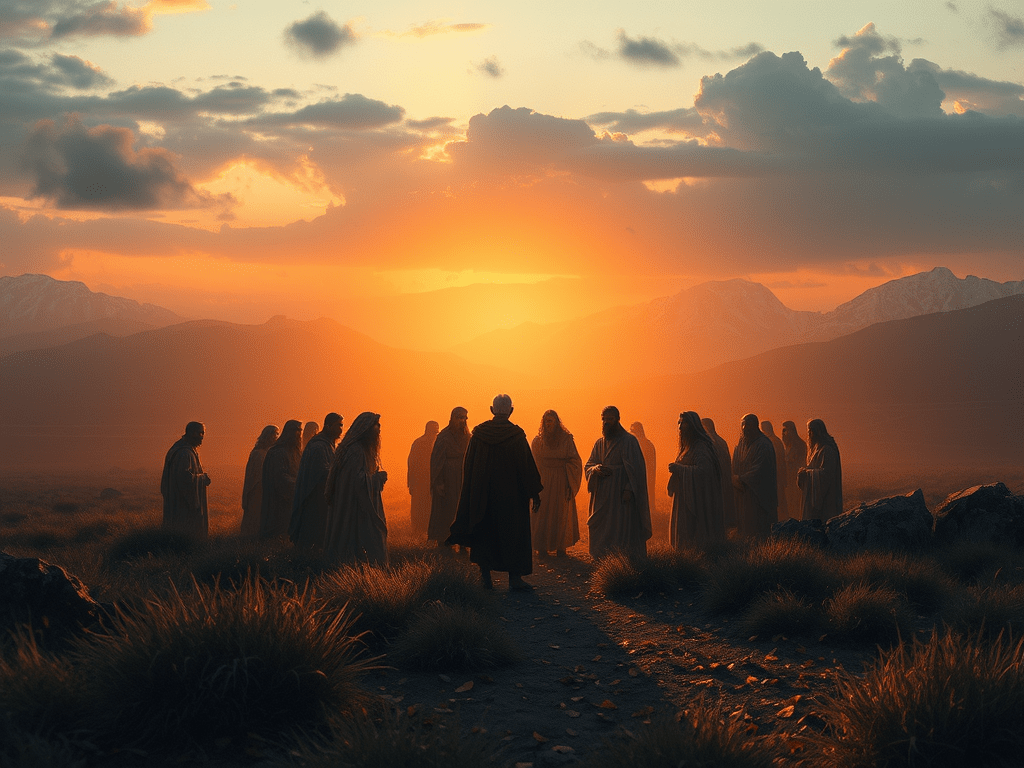
Titles for God’s people: the Remnant and the Elect

What do the terms remnant and elect mean, and to whom do they apply?

Core of the Bible podcast #126: Titles for God’s people – The Remnant and the Elect

As I mentioned last time, we are currently doing a little miniseries on the titles for God’s people. Over these few episodes, we are looking at the following terms in some detail: believer and Christian, the Remnant and the Elect, the Church and the Body, and the Bride of Christ. These are all terms that by most accounts are considered synonymous and applicable to the people today who claim to believe in Messiah. However, I intend to look at scriptural reasons as to why I believe this is not the case, how most of those terms do not apply to God’s people today, and yet how God has worked within these various aspects of his people over the ages to accomplish specific things for the good of all.

The Remnant

Throughout Scripture, the remnant is pictured as a unique group of people who were to be a small portion of all of Israel with whom God would maintain his covenant promises. The term itself means “that which remains” or those who are “left over” or “left behind”. This demonstrates how it has never been the entire nation which was in view, but a specific portion of the nation who were to receive the inheritance.

In modern Christian theology, the idea of a remnant of God’s faithful people is usually thought to be a group of  Christians who are currently remaining faithful during a period of hardship, ultimately to be culminated in the tribulation period at some future time. This comes from a passage in the book of Revelation, especially as it is rendered in the King James Version.

Revelation 12:16-17 KJV – And the earth helped the woman, and the earth opened her mouth, and swallowed up the flood which the dragon cast out of his mouth. And the dragon was wroth with the woman, and went to make war with the remnant of her seed, which keep the commandments of God, and have the testimony of Jesus Christ.

The Seventh Day Adventists have taken this remnant idea and even made it one of their primary points of confession.

  • “The universal church is composed of all who truly believe in Christ, but in the last days, a time of widespread apostasy, a remnant has been called out to keep the commandments of God and the faith of Jesus. This remnant announces the arrival of the judgment hour, proclaims salvation through Christ, and heralds the approach of His second advent.” – Seventh-day Adventist fundamental Belief # 13
  • The remnant spoken of in the Bible is the last group of people living on the earth that God claims as His own. A remnant is exactly the same as the first piece; just so, God’s remnant, His last church, must have the same characteristics as His first church.” – Pastor John J. Grosboll is Director of Steps to Life and pastors the Prairie Meadows Free Seventh-day Adventist Church in Wichita, Kansas

Whether or not you are a Seventh Day Adventist, maybe you agree with that or perhaps you haven’t really considered it in depth, but today I would like to explore the biblical concept of the remnant and the elect and demonstrate how these terms are biblically related, and who they apply to.

So, for a quick historical background, I found that the Wikipedia entry on this topic actually provides some reasonable information to build on.

“The remnant is a recurring theme throughout the Hebrew and Christian Bible. The Anchor Bible Dictionary describes it as “What is left of a community after it undergoes a catastrophe”. The concept has stronger representation in the Hebrew Bible and Christian Old Testament than in the Christian New Testament.

“According to the Book of Isaiah, the “remnant” is a small group of Israelites who will survive the invasion of the Assyrian army under Tiglath-Pileser III (Isaiah 10:20–22). The remnant is promised that they will one day be brought back to the Promised Land by Yahweh (Isaiah 11:11–16). Isaiah again uses the terminology during Sennacherib’s siege of Jerusalem (Isaiah 37).

“The concept of the remnant is taken up by several other prophets, including Micah, Jeremiah and Zephaniah. In Jeremiah 39–40, the “poor people, who had nothing”,[2] who remained in Judah when the rest of its population were deported to Babylon, are referred to as a “remnant”.[3] The post-exilic biblical literature (Ezra–Nehemiah, Haggai and Zechariah) consistently refers to the Jews who have returned from the Babylonian captivity as the remnant.

“New Testament verses that refer to a faithful “remnant” include Romans 11:5 (“Even so then at this present time also there is a remnant according to the election of grace”) and Revelation 12:17 (“And the dragon was wroth with the woman, and went to make war with the remnant of her seed, which keep the commandments of God, and have the testimony of Jesus Christ”). – https://en.wikipedia.org/wiki/Remnant_(Bible)

Now, to get an accurate depiction of who this remnant is, we would do best to refer back to the original scriptures that mention the remnant, and how they are pictured in the prophecies of old.

  • Isaiah 10:21 – The remnant will return, the remnant of Jacob, to the Mighty God.
  • Isaiah 37:31-32 – “The surviving remnant of the house of Judah will again take root downward and bear fruit upward. For a remnant will go out from Jerusalem, and survivors from Mount Zion. The zeal of Yahweh of Armies will accomplish this.’
  • Jeremiah 23:3 – “I will gather the remnant of my flock from all the lands where I have banished them, and I will return them to their grazing land. They will become fruitful and numerous.
  • Micah 2:12 – I will indeed gather all of you, Jacob; I will collect the remnant of Israel. I will bring them together like sheep in a pen, like a flock in the middle of its pasture. It will be noisy with people.
  • Zephaniah 3:13 – The remnant of Israel will no longer do wrong or tell lies; a deceitful tongue will not be found in their mouths. They will pasture and lie down, with nothing to make them afraid.
  • Zechariah 8:12 – “For they will sow in peace: the vine will yield its fruit, the land will yield its produce, and the skies will yield their dew. I will give the remnant of this people all these things as an inheritance.

In these prophetic passages, we can see how this Remnant was identified as a faithful group of believing Israelites or some other title related directly to Israel (Jacob, Judah, “my flock”, this people). These are described as the people who were to receive an inheritance. The apostle Paul captures this remnant terminology in his epistle to the Romans as he quotes Isaiah:

Romans 9:27 – But Isaiah cries out concerning Israel, Though the number of Israelites is like the sand of the sea, only the remnant will be saved…

Paul takes an extended prophecy from Isaiah 10 regarding a judgment upon Israel during the Assyrian captivity and applies it to the events of that first century generation. Isaiah had said only a remnant of Israel would remain faithful during a time of great destruction. Paul then takes that imagery and makes its ultimate application to his generation and the coming destruction upon Jerusalem in that day. He is explaining how much he longs for his Jewish brothers to come to understand the truth, but he knows only a portion will do so. In fact, all of Romans 9-11 is essentially a plea from Paul to God to reconsider his judgment regarding the house of Israel at large.

Romans 10:1-2 – Brothers and sisters, my heart’s desire and prayer to God for Israel is for their salvation. I can testify about them that they have zeal for God, but not according to knowledge.

Throughout these chapters, Paul concedes that the larger group of Israel is being rejected because they are clinging to their own righteousness instead of accepting God’s mercy and grace through Messiah. However, the remnant who have accepted Messiah were to be the light to the rest of the nation, and to the nations in which they had been scattered, thereby including those from among the nations. In this way, representatives from each of the tribes who had been dispersed would also be brought back to God, and in this way “all Israel”, that is, members from all of the twelve tribes, would be saved.

If you’ve reviewed the information covered in my last essay on Believers and Christians, you may recall how I mentioned the terms believer and non-believer were commonly used in the context of those within Israel: some would believe (i.e., the remnant) and others would not believe and remain faithless. This shows how a specific group within the larger population of Israel would be the group that God would “save”, that they would receive the benefits that the rest do not. Paul’s line of reasoning from here in Romans 9 then goes on through chapter 10 into chapter 11, outlining how the majority of Israel is rejected for their faithlessness, while only a portion, the remnant, will be saved by God’s grace.

Romans 11:5 – In the same way, then, there is also at the present time a remnant chosen by grace.

In the same way as what? Using the example of Elijah, the previous verses describe how God always retained a faithful remnant of Israel, even when it was not apparent at that time.

Romans 11:2-5 – God has not rejected his people whom he foreknew. Or don’t you know what the Scripture says in the passage about Elijah ​– ​how he pleads with God against Israel? Lord, they have killed your prophets and torn down your altars. I am the only one left, and they are trying to take my life! But what was God’s answer to him? I have left seven thousand for myself who have not bowed down to Baal. In the same way, then, there is also at the present time a remnant chosen by grace.

Here Paul says there was a remnant “at the present time”. That remnant at that time was the number of faithful from among Israel and Judah, even scattered among the nations, who had placed their faith in Messiah during that generation. The rest of Israel and Judah who were apistos or not faithful were the majority from which the faithful remnant was distinguished. All of this took place in the days of the apostle Paul during the first century.

The Diaspora

In Paul’s day, Jews had remained scattered throughout the known world due to their previous captivities of both the Assyrian and Babylonian empires. This can be evidenced from the list of locations that are described for us in Acts 2, when Jews from all over the known world had returned to Jerusalem for the Feast of Weeks or Pentecost. As the disciples were filled with God’s Spirit and began to preach to all of them about the work of Messiah, a miraculous event of language translation took place:

Acts 2:8-11 – “How is it that each of us can hear them in our own native language? Parthians, Medes, Elamites; those who live in Mesopotamia, in Judea and Cappadocia, Pontus and Asia, Phrygia and Pamphylia, Egypt and the parts of Libya near Cyrene; visitors from Rome (both Jews and converts), Cretans and Arabs ​– ​we hear them declaring the magnificent acts of God in our own tongues.”

All of these place names that may sound strange to our ears today were locations spread out throughout the known world at that time. Notice how Jews had been living in all of these areas, and how God was miraculously drawing a faithful remnant to himself from all of these distant areas. In fact, the text tells us that three thousand from among those various locations became believers in Messiah that day. Peter, speaking to thousands of Jews who had gathered in Jerusalem for the Feast of Weeks speaks to them directly, saying:

Acts 2:39-41 – “For the promise is for you and for your children, and for all who are far off, as many as the Lord our God will call.” With many other words [Peter] testified and strongly urged them, saying, “Be saved from this corrupt generation! ” So those who accepted his message were baptized, and that day about three thousand people were added to them.

God was gathering up the remnant of the faithful Jews and their children from where they had been scattered “afar off” and was calling them to himself. In this way, “all Israel”, that is, representative believers from every tribe, was saved in that generation. The later missionary journeys of the apostle Paul and other disciples only added to this growing group of restored Israelites.

Because this restoration of those estranged tribes was based on faith in Messiah and not just on lineage or ancestry, many converts and “God fearers” (that is, non-Jews who accepted the truth of Yahweh and the Bible but had not officially converted to Judaism) also were considered by Paul to have been included in that “remnant” which was restored in that day.  This is why Paul could boldly state:

Colossians 3:11 – In Messiah there is not Greek and Jew, circumcision and uncircumcision, barbarian, Scythian, slave and free; but Messiah is all and in all.

Once the judgment came to pass on Jerusalem in 68-70 AD, the story of national Israel was concluded. The nation ceased to exist. The prophecies of restoration of the faithful remnant were fulfilled in those closing days before the destruction of Jerusalem, and the scriptural remnant of prophecy no longer exists today.

If we continue to maintain today that anyone who is faithful is included in the remnant, it robs the actual scriptural remnant prophecies of their fulfillment within the nation of Israel during the end of that age. So, if we are to consider ourselves to be in the scriptural remnant today, then we are saying all of those prophecies concerning the remnant have remained unfulfilled for thousands of years and God never fully reconciled his people to himself within that generation as Yeshua, Peter, and Paul had preached.

We know the prophetic perspective was describing a remnant who was to be a faithful minority within the larger nation of Israel. We know they were to be the ones who were to return to the truth of Yahweh compared to the rest of the nation. We know they were to be gathered from all the nations where they had been scattered. Likewise, we know that Messiah taught about this occurring within that generation at that point of time, and we know that the disciples were indeed faithful in reaching the rest of the scattered remnant of Israel throughout the known world with the message of the gospel of the Kingdom in that generation.

When all of these points are taken into consideration, then all of the symmetry of God’s faithfulness with his people is maintained in the fulfillment of everything he had promised them through his prophets. The remnant of that generation is the one that was saved from the disaster that came upon the nation as a whole because of its unfaithfulness, and that’s the meaningful story for the ages. That story is one that can give us confidence that Yahweh God is a God who keeps his word and is faithful to do all that he promises. It is a story that we can praise God for in the demonstration of all that he had promised. Believers today can rejoice that we benefit from the mercy shown to them that was written down for our understanding and recognition of God’s faithfulness with them.

The Elect

Closely aligned with the remnant is the term the “elect”.  In New Testament usage, the elect or election appears to be synonymous with the remnant, or those through whom God would be doing a specific work.

Romans 11:5 – In the same way, then, there is also at the present time a remnant chosen by grace.

The word used here for chosen comes from the same Greek root phrase that is used for the elect, and Paul, speaking of events taking place at that time, says that the elect group, the group of the chosen, was the remnant. Since we just reviewed how the remnant was prophesied to be the group of faithful ones from among Israel, “the elect” then, would be another way of describing those from among Israel who were considered the faithful ones with whom God maintained his covenant relationship in that generation, and through whom God would be glorified.

This term, the elect, is doctrinally charged today because there is a whole doctrine of election or predestination which is built upon this term. However, this is not how the Bible uses the term. Predestination is not an eternal principle for individuals in the sense of some individuals are chosen by God for eternal life and others are not. That is the horror of Calvinistic-type thinking; a philosophical phantom that still haunts the halls of Christendom today.

The elect were the ones who were, as Paul says, a predestined group to believe in Messiah because all of the prophecies had foretold that would occur. Their belief in Messiah during Paul’s generation was indeed the fulfillment of those prophecies! This is why Paul could write:

Romans 8:31-33 – What, then, are we to say about these things? If God is for us, who is against us? He did not even spare his own Son but gave him up for us all. How will he not also with him grant us everything? Who can bring an accusation against God’s elect? God is the one who justifies.

That’s the extent of the “predestination concept” in Scripture. Paul was confirming those remnant prophecies were coming to pass in his day. To be chosen in the sense of the elect was simply a description of active distinction of one group or individuals from others. If you were a believer in Messiah in Paul’s day, then you were a member of the elect group that had been prophesied; therefore who could come against them? It was a bold acknowledgement of prophecy coming to pass before their eyes, and a triumphant statement of hope that God would see them through the difficulties they faced during their extreme persecution in their day, because he had previously declared it to be so.

God’s plan for Israel was consummated within that first century generation, just as Yeshua had predicted that the elect would be gathered from “the four winds”, and the temple would fall before that generation all passed away.

Matthew 24:1-2, 24, 31, 34 – As Yeshua left and was going out of the temple, his disciples came up and called his attention to its buildings. He replied to them, “Do you see all these things? Truly I tell you, not one stone will be left here on another that will not be thrown down …For false messiahs and false prophets will arise and perform great signs and wonders to lead astray, if possible, even the elect. … He will send out his angels with a loud trumpet, and they will gather his elect from the four winds, from one end of the sky to the other…Truly I tell you, this generation will certainly not pass away until all these things take place.”

The apostles recognized the role of the elect during those days, and that they were the recipients and participants in all that had been prophesied before:

2 Timothy 2:10 – This is why I endure all things for the elect: so that they also may obtain salvation, which is in Messiah Yeshua, with eternal glory.

Titus 1:1 – Paul, a servant of God and an apostle of Yeshua Messiah, for the faith of God’s elect and their knowledge of the truth that leads to godliness,

2 John 1:1, 13 – The elder: To the elect lady and her children, whom I love in the truth ​– ​and not only I, but also all who know the truth ​– ​ … The children of your elect sister send you greetings.

Notice how all of these references speak of the elect in the present tense, as the ongoing participation of the Messiah believers in those days. The term itself means those who are chosen, and since they were referred to as “his elect” or “God’s elect”, then we can understand this is a choice that God had made to distinguish this group from others.

The chosen

This concept of being chosen would not be unfamiliar to Hebrew believers, as God had previously and many times demonstrated that the entire nation of Israel had been chosen from among the nations of the world to be the ones to carry his Name.

Ezekiel 20:5-6 – …’This is what the Lord Yahweh says: On the day I chose Israel, I swore an oath to the descendants of Jacob’s house and made myself known to them in the land of Egypt. I swore to them, saying, “I am Yahweh your God.” On that day I swore to them that I would bring them out of the land of Egypt into a land I had searched out for them, a land flowing with milk and honey, the most beautiful of all lands.

A further example of the use of this chosen concept which demonstrates how it is not a term restricted to individual, eternal salvation is how God had made a progression of choices amidst the tribe and family of David. David had been chosen out of all Israel and from among his own family to be king over Israel and Solomon to be king after him.

1 Chronicles 28:4-5 – “Yet Yahweh God of Israel chose me out of all my father’s family to be king over Israel forever. For he chose Judah as leader, and from the house of Judah, my father’s family, and from my father’s sons, he was pleased to make me king over all Israel. “And out of all my sons ​– ​for Yahweh has given me many sons ​– ​he has chosen my son Solomon to sit on the throne of Yahweh’s kingdom over Israel.

God is described here as having chosen Israel as a nation, then Judah as a leading tribe, then David’s family among that tribe, then David as king, then Solomon as king to follow him. All of these “choices” or “elections” are another way of saying those at a given time through whom God was working for his purpose and will to be accomplished. These distinctions of tribes, families, and individuals were isolated from the rest of the nations of the world and the rest of the nation of Israel as a whole because God was going to be working through these specific tribes and individuals during their lifetimes for specific purposes.

Interestingly, another way to demonstrate how this is not some kind of universal election or predestination for all eternity, one needs only to read how all of God’s “chosen” entities in this example, those who were considered “the elect”, had failed at some point. Israel as a whole did not maintain the covenant and was rejected; Judah had failed in his relationship with his father; David failed in the incident with Bathsheba; Solomon failed with corruption through his pagan wives. All these things occurred after they had been “chosen”. The concept of being elect doesn’t mean one is bullet-proof from judgment or failure for all eternity, only that one (or a group) is identified as being used for God’s specific purpose and will at a specific time.

The elect of the first century were simply those who believed Messiah and through whom God maintained his covenantal faithfulness, as contrasted with the rest or the majority of Israel which did not believe in Messiah. This was predestined to occur, being foretold, as we have seen, in all of the “remnant” prophecies.

If I was to try to create an analogy here, it’s as if God was writing a story as a novelist. His “elect” would be the main character (or characters), while all others would be supporting characters in the story he was telling. In this way, he could tell his story through his main characters, even though they were not perfect. They still had their flaws and made their mistakes, just like everyone else does, but they were the focus of the story he was telling, to the exclusion of all of the other details or people in other places that may not be pertinent to the specific story he was telling. This doesn’t mean that no one else was faithful, just that his main characters were living out the point that he was making.

Looked at in this light, the term election becomes less doctrinally charged regarding individual, eternal salvation and begins to take on its rightful meaning regarding the distinctions for specific purposes regarding the nation of Israel as a whole. It is used of those faithful believers amidst Israel through whom God’s will would be accomplished and those to whom his covenant and promises would be maintained. In New Testament application, it was because of the nation’s general disobedience and failing within the covenant (the faithless majority of Israel, the non-believers) that God then refined his chosen people to those who would believe his words through his chosen Messiah. This was a smaller group within the group, including those who had been scattered throughout the known world at that time. Once again, to my way of thinking, the symmetry of the concept is beautiful and poetic within the context of the entire Bible.

If we are to be good Bible students, we need to maintain the distinction that those who are called the elect mentioned in the New Testament writings refers specifically to those first-century believers who accepted the Messiah, both from Israel and from among the nations. Just as the remnant described those same believers, the elect is therefore its synonymous equivalent. Therefore, the remnant and the elect of biblical prophecy was consummated in the first century and no longer exists today.

Believers today

So what about believers today? If we are not to consider ourselves the remnant and we are not the elect, who are we within the biblical narrative? Have I just written us out of the story? By no means!

The apostle Paul speaks to the culmination of all of those prophecies with Israel being the very catalyst that would bring believers from all nations to Yahweh God.

Romans 15:8-9 – For I say that Messiah became a servant of the circumcised [i.e., the Jews] on behalf of God’s truth, to confirm the promises to the fathers, [all of those former prophecies] and so that nations may glorify God for his mercy.

Here Paul then goes into a list of quotes from the Tanakh that demonstrate how God’s ultimate purpose in fulfilling his word to the Jews would ultimately bring people from all nations to himself:

Romans 15:9-12 – As it is written, Therefore I will praise you among the nations, and I will sing praise to your name.  [Psalm 18:49] Again it says, Rejoice, you nations, with his people! [Deuteronomy 32:43] And again, Praise Yahweh, all you nations; let all the peoples praise him! [Psalm 117:1]  And again, Isaiah says, The root of Jesse [i.e., the Messiah] will appear, the one who rises to rule the nations; the nations will hope in him. [Isaiah 11:10]

Today, we are those from among all nations who have come to praise Yahweh through seeing the promises that were confirmed to Israel at the culmination of that age!  We can join together glorifying God for his mercy to his people at that time which has allowed us the same access to him through faith in Messiah, just as they had, and still have to this day. Our hope today is in the same Messiah whom they trusted in faith.

This is our identity in Messiah today: no longer a small remnant within the nation of Israel, but a vast multitude of those who are the receivers of the eternal Kingdom that Messiah inaugurated! We are a rag-tag lot from among every nation and tribe, worshiping the one true God through faith in his Messiah! We are the ongoing fulfillment of the promises made to Abraham (that all nations would be blessed through him), and the promises made to ancient Israel that nations would come to worship their God, Yahweh, and that his Messiah would also rule the nations and become their hope. We are still a people fulfilling prophecy, although we are now fulfilling the prophecies that relate, not to the remnant or the elect, but to the eternal Kingdom of God!

Daniel 2:44 – “In the days of those kings, the God of the heavens will set up a kingdom that will never be destroyed, and this kingdom will not be left to another people. It will crush all these kingdoms and bring them to an end, but will itself endure forever.

Though it may at first feel strange to not be a direct participant in the story of the prophetic remnant or the elect of Scripture, it does not diminish our responsibility to this generation, and every generation into the future. The consummation of the prophecies of the elect remnant of the first century should provide us the hope and inspiration we need to know that God never abandons his faithful, and that those who choose the path of life will be provided for and ultimately be participants in his purposes coming to pass for all eternity. If he fulfilled his prophecies to the elect remnant in the first century, then he will fulfill his prophecies to establish his Kingdom over all the earth. Therefore, we should be encouraged to press on; we must continue to stay on the path of life, to be the city on the hill, the light of the world, and the salt of the earth.

We should be able to pray with the Psalmist:

Psalm 57:11 – God, be exalted above the heavens; let your glory be over the whole earth.


Well, as we wrap up for today, I hope there are at least a couple of concepts and ideas to encourage you to meditate on and to study out further on your own. Next time, we will investigate another related term to this remnant and the elect, the “church”, or the assembly of “called-out-ones,” and how this term has been used in conjunction with another familiar phrase: the Body of Christ. I hope you will be able to come back and visit for more perspectives on these titles of God’s people. But remember, if you have thoughts or comments that you would like to explore further with me, feel free to email me at coreofthebible@gmail.com.

The Biblical Calendar and Shavuot, the Festival of Weeks or Pentecost

I believe the annual biblical holidays are the true appointments with God that he has established for all eternity.

Core of the Bible podcast #109 – The Biblical Calendar and Shavuot, the Festival of Weeks or Pentecost

In today’s episode, we are continuing our doctrinal topics but taking a slight detour from our study of the nature of God to discuss the biblical holiday of Shavuot, also known as Weeks and sometimes Firstfruits. Why is this significant, and why should believers today understand the biblical calendar and the feast days?

Most Christians today do not recognize or celebrate the biblical feast days. This is due primarily to the fact that Christianity teaches that the sacrificial aspect of the rites conveyed in the Torah have been fulfilled in Messiah Yeshua. I agree one hundred percent. But “fulfilled” does not mean “done away with.” I believe the Bible teaches that in Messiah, that which was a physical requirement for ancient Israel has become a spiritual reality for all time; more on that later. But what I want to focus on first is how the biblical calendar is filled with symbolism of the Kingdom and God’s relationship with his people. I believe it is as we maintain recognition of these days that we can be reminded of God’s, and our, purpose. These days become practical object lessons that point to the totality of God’s work among his people, and his presence in this world.

The annual biblical calendar contains seven appointed times known in Hebrew as moedim, meaning seasons or appointed times. I believe the annual biblical holidays are the true appointments with God, the seasonal moedim that he has established for all eternity. They are centered around three central “feasts” or “festival gatherings:” Unleavened Bread, Weeks/Shavuot, and Tabernacles/Sukkot. These occur in the first, third, and seventh months of the annual biblical calendar.

Deuteronomy 16:16 – “All your males are to appear three times a year before Yahweh your God in the place he chooses: at the Festival of Unleavened Bread (first month), the Festival of Weeks (third month), and the Festival of Tabernacles (seventh month).”

Interestingly, these festival-gatherings follow the agrarian timelines of the early barley harvest (first month), the early wheat harvest (third month) and the ingathering of all of the remaining crops (seventh month). All of these festivals surround God’s provision for his people. These three annual gathering seasons focus on seven appointed times which are described as memorials or re-enactments to be used to keep God’s people focused on his will and purpose.

I also find it fascinating that God has placed these appointments on the annual calendar in a way that can still be recognized today, even though worldly calendars and methods of timekeeping have come and gone. I believe this is why they are described the way they are, and why we are still able to keep those appointments with him.

How are we to keep these appointments? Certainly we are not to sacrifice animals; as mentioned earlier all sacrifice has been fulfilled in Messiah. However, on these special days we can still gather together as his people to review the symbolism of those sacrifices to bring greater awareness to our understanding of our relationship with God. Whether it is through deeper fellowship and community among his people, as well as renewing our total devotion to him and consummation in his service, we can become serious about our faith by living it out as object lessons that others can see and learn from, as well. After all, as you may know from previous episodes, I believe that God’s Torah or Word is eternal, and therefore has lasting influence on those who approach the God of the Bible as his people. These should be as much a part of our doctrinal understanding as any other major proposition such as the study of who God is or the Kingdom of God.

I would like to discuss all of these biblical holidays throughout the course of the coming year, but as I record today’s podcast, we are in the season of Shavuot or Weeks, which was recently completed. It is the festival which follows Passover and Unleavened Bread by seven weeks, hence its immediate namesake in Hebrew. The day itself falls on the day following the conclusion of 49 days from the barley firstfruits. This was technically the 50th day and became known by its Greek title of Pentecost, meaning “fiftieth.” 

Many Christians may recognize Pentecost as the day the holy Spirit came upon the disciples in a powerful way, allowing them to speak in different languages to the assembled Jews in Jerusalem, telling the Good News about the Kingdom of God. It is defined by many as “the birthday of the church,” but I believe that definition is not only a misnomer about its purpose, but a misunderstanding of the nature of the day itself.

To gain a better grasp of this holiday, we need to go back to its ancient Hebrew understanding as it is related in Torah.

Leviticus 23:16-21 – “You are to count fifty days until the day after the seventh Sabbath [that is, seven weeks after the barley firstfruits] and then present an offering of new grain to Yahweh. Bring two loaves of bread from your settlements as a presentation [wave] offering, each of them made from four quarts of fine flour, baked with yeast, as firstfruits to Yahweh. You are to present with the bread seven unblemished male lambs a year old, one young bull, and two rams. They will be a burnt offering to Yahweh, with their grain offerings and drink offerings, a fire offering of a pleasing aroma to Yahweh. You are also to prepare one male goat as a sin offering, and two male lambs a year old as a fellowship sacrifice. The priest will present the lambs with the bread of firstfruits as a presentation offering before Yahweh; the bread and the two lambs will be holy to Yahweh for the priest. On that same day you are to make a proclamation and hold a sacred assembly. You are not to do any daily work. This is to be a permanent statute wherever you live throughout your generations.”

Okay, so in this detailed passage we can learn several things. Shavuot was to be a special appointed day where no customary work was done, in which the people of God would gather and sacrifices and offerings were brought to the Temple. The primary offering of this day involves two loaves of bread as a grain offering of the firstfruits of the wheat harvest. Along with the loaves are included burnt offerings, drink offerings, sacrifices for sin and sacrifices for fellowship.

How do these ancient sacrifices and offerings apply to believers today? Even though we don’t bring actual sacrificial animals before Yahweh anymore, I believe these offerings were designed by Yahweh to represent real aspects of our spiritual lives, and I think it’s important that we continue to recognize these. So let’s take a look at what each of these different types of sacrifices means from a symbolic perspective:

  • A burnt offering represents total consummation in God’s service.
  • A sin offering represents that which is a substitute for us due to our disobedience to God’s torah.
  • The trespass offering was offered for unintentional or unknown sin.
  • A fellowship or peace offering represents thankfulness for God’s mercy and enjoyment of his relationship.
  • The grain and drink offerings represent our gratitude for God’s provision as firstfruits of all he has provided us.

I think it becomes readily apparent how these emblematic sacrifices apply in the life of the modern believer. If we are to honor these appointed times throughout the year, I believe they should be memorialized in the spirit of these attributes.

There are many facets to the symbolism of the biblical moedim or appointed times, but one of the most glaring attributes relates to their numerical significance. As rich and enlightening as this can be to review, unfortunately, many people over the centuries have taken to a kind of numerology or study of biblical numbers which has become quite complex and frankly, unhelpful. Even the contemporary expression of Judaism has devised a whole system of numerology and mysticism known as Kabbalah, which is not at all what I am proposing here. I simply look for patterns in the Bible to see how they relate to and bring meaning to one another.

For example, the Bible outlines seven days in a week. Shavuot pertains to seven “sevens” of weeks. On the day of Shavuot, all of the sacrificial symbolism falls on the fiftieth day that occurs after the week of Passover and Unleavened Bread, both of which represent the miraculous rescue from the worldliness and slavery of Egypt.

Now it’s important to understand something here from a Hebraic perspective. In this worldly existence, seven is a number that represents this Creation. Why? Well, the weekly Sabbath was given to God’s people as a reminder that God is the Creator of all.

Exodus 20:8, 11 – Remember the Sabbath day, to keep it holy:  … For Yahweh made the heavens and the earth, the sea, and everything in them in six days; then he rested on the seventh day. Therefore Yahweh blessed the Sabbath day and declared it holy.

In Hebraic understanding, the weekly Sabbath is the Sabbath of Creation. Everything in this Creation is governed by the limit of a cycle of seven. For example, a week is a cycle of seven days; there are seven appointed times throughout the year occurring within a seven-month time period. Even in the broader calendrical cycle of the Bible, every seventh year was to be a sabbatical year, a year of rest for the land.

Leviticus 25:1-4 – Yahweh spoke to Moses on Mount Sinai: “Speak to the Israelites and tell them: When you enter the land I am giving you, the land will observe a Sabbath to Yahweh. “You may sow your field for six years, and you may prune your vineyard and gather its produce for six years. “But there will be a Sabbath of complete rest for the land in the seventh year, a Sabbath to Yahweh: you are not to sow your field or prune your vineyard.

Additionally, after seven “sevens” of sabbath years, or forty-nine years, the Israelites were to set aside the fiftieth year as a “Jubilee,” a sort of re-set for all economic activity, freedom for all slaves, and a realignment of all of the tribes with their heritage.

Leviticus 25:8-10 – “You are to count seven sabbatical years, seven times seven years, so that the time period of the seven sabbatical years amounts to forty-nine. Then you are to sound a trumpet loudly in the seventh month, on the tenth day of the month; you will sound it throughout your land on the Day of Atonement. You are to consecrate the fiftieth year and proclaim freedom in the land for all its inhabitants. It will be your Jubilee, when each of you is to return to his property and each of you to his clan.”

Through these we can see how the Bible relates sevens of days, sevens of weeks, sevens of months and sevens of years, but the fiftieth is something special, something that points to realities beyond these sevens of this world.

I found this editorial comment in the Voice version of the Bible, relating the nature of the Jubilee in Leviticus 25:

“The year of jubilee is a far-reaching idea in the ancient world. In the 50th year, land that has been sold to pay debts during the preceding 49 years returns to its original owners. Israelites who had to sell themselves into slavery to pay debts are set free. All debts are declared “paid in full.” The jubilee is a regular reminder to God’s covenant people that every acre of ground, every soul belongs to God, not to those rich enough to buy them.”

So, the timing of the annual festival of Shavuot also has great significance mirroring that of the sabbatical years and the year of Jubilee which focuses on the centrality of Yahweh as Creator and Owner of all that exists. Shavuot, also being based on this principle of fifty, is a fulfillment of seven weeks (seven “sevens” of days) and then takes place on “the day after the seventh sabbath,” the fiftieth day. The remembrance, this regular reminder every year of the Exodus events on this fiftieth day represents a re-set, a new beginning, freedom from captivity and a restoration of all things to the God of the universe.  In a spiritual sense, it points to realities beyond this Creation, to eternal principles that exist outside of the sevens of this world. To my way of thinking, this is a perfect illustration of what occurred on that very famous Restoration Shavuot two thousand years ago.

Let’s take a closer look at that famous Restoration Shavuot or Day of Pentecost in which the holy Spirit came upon the disciples in a powerful way, allowing them to speak in different languages to the assembled Jews in Jerusalem, telling the Good News about the Kingdom of God. I said a few moments ago that this event is defined by many as “the birthday of the church,” and that I believe that this definition is not only a misnomer about its purpose, but a misunderstanding of the nature of the day itself.

You see, to say that is the birthday of the church is to imply that the “church” never existed prior to that time. What many call the “church” today (universally speaking) is called the ekklesia in Greek terminology, and it simply means “a called out assembly.” But the ekklesia was not “born” on that day, it had existed since the times of Moses. This is revealed in the speech of Stephen in his defense before the Sanhedrin.

Acts 7:38  – “He [Moses] is the one who was in the assembly in the wilderness, with the angel who spoke to him on Mount Sinai, and with our ancestors. He received living oracles to give to us.”

If you check your King James or American Standard Versions of the Bible, you may notice that this verse here says that it was the “church in the wilderness” who received the living oracles. The translators were simply using the Greek word in a consistent fashion. But this highlights the point: if there was an assembly, something which could be called the church which was present in the wilderness with Moses, how could it have been “born” on Pentecost in the early part of the first century? I believe it can be shown that the ekklesia, the called out assembly, was always present in those through whom God was working at any given time in the biblical narrative.

For us to approximate a Hebraic understanding of this, it can be said that there has always been a faithful remnant among God’s people, even when the nation as a whole was steeped in idolatry and wickedness. For example, when Jerusalem was being attacked by Sennacherib’s Syrian army, Isaiah the prophet revealed how God would protect them:

2 Kings 19:30-31 – “The surviving remnant of the house of Judah will again take root downward and bear fruit upward. “For a remnant will go out from Jerusalem, and survivors, from Mount Zion. The zeal of Yahweh of Armies will accomplish this.”

When returning from captivity in Babylon with only the few thousand faithful who desired to reestablish the Temple, Ezra prayed the following prayer:

Ezra 9:8 – But now, for a brief moment, grace has come from Yahweh our God to preserve a remnant for us and give us a stake in his holy place. Even in our slavery, God has given us a little relief and light to our eyes.

Even the apostle Paul, in teaching about the faithful among God’s people in that day, illustrates this idea of the remnant with the story of Elijah:

Romans 11:2-5 – God has not rejected his people whom he foreknew. Or don’t you know what the Scripture says in the passage about Elijah ​– ​how he pleads with God against Israel? Lord, they have killed your prophets and torn down your altars. I am the only one left, and they are trying to take my life! But what was God’s answer to him? I have left seven thousand for myself who have not bowed down to Baal. In the same way, then, there is also at the present time a remnant chosen by grace.

This “remnant” of God’s people was the assembly at each point in Israel’s history, sometimes even down to one person and their family, such as a Noah or an Abraham, or a Jacob. God’s purpose has always been based on the assembly of those who are faithful to him, so the ekklesia throughout the ages has been comprised of those who feared and served Yahweh.

So to carry this mental understanding into the events of the first century day of Pentecost, we can see that same principle applying there: a faithful remnant, the disciples, faithful to the principles of the Kingdom which Messiah had taught them, were given miraculous abilities by the Spirit of God to testify to the truth of the gospel of the Kingdom to the rest of the Jews who had come from all over the world. This faithful remnant was not “born” on that day, but, in alignment with the Jubilee symbolism of the day of Shavuot, they were the ones proclaiming the eternal re-set, freedom from captivity to sin, and a restoration of all things through the Kingdom of God. In a sense, this was the ultimate Jubilee.

Just as the original ekklesia was comprised of those who were assembled at Sinai and heard Yahweh speak the Ten Commandments of his Kingdom which were written in stone, the renewed ekklesia on that famous Day of Pentecost proclaimed the principles of God’s Kingdom which were to be written on their hearts.

The connection between these events is further established when it can be shown that, at the receiving of the Ten Commandments, due to their rebelliousness and idolatry, three thousand people were killed.

Exodus 32:28 – The Levites did as Moses commanded, and about three thousand men fell dead that day among the people.

However, at the Restoration Pentecost, due to their obedience, three thousand people were added to the ekklesia.

Acts 2:41 – So those who accepted [Peter’s] message were baptized, and that day about three thousand people were added to them.

As another example, the big picture of the Bible story can be described in a similar type of parallelism. God established a physical Kingdom when he revealed his Ten Commandments to his assembled people at Mount Sinai. Those commandments were written in stone by his own finger. In the first century, God established an eternal, spiritual Kingdom when, through his Messiah, he revealed those principles to the to the assembled people listening to the Sermon on the Mount. These were spiritually based on the same commandments, but now they were to be written on the heart by God’s own finger, no longer in stone. These types of parallels and symbolisms are all through the Bible.

The apostle Paul, in the context of speaking about the comparison and contrast of Adam and Yeshua, states a principle that I believe carries over into a well-ordered understanding of the Bible.

1 Corinthians 15:46 – But it is not the spiritual that is first but the natural, and then the spiritual.

In the Bible, the natural things, people, and events were real things that happened to real people, just like those who heard the commandments at Mount Sinai, or those who heard Messiah preach his Sermon on the Mount. But I believe we are to look to those things as types, shadows, and examples of the spiritual realities that have become evident through the restoration of all things in Messiah Yeshua. The prophesied remnant was that first-century assembly, but with all things consummated by the destruction of Jerusalem in 70 AD, believers from that point on up until today are simply members of God’s eternal, universal Kingdom. Since the age of natural Israel ended at that time, there is no longer a “remnant” ekklesia or assembly; it had been fulfilled in that generation in that time.

When Paul illustrated his teaching with stories from Israel’s wilderness journeys, he also emphasizes the purpose of learning and re-telling these stories.

1 Corinthians 10:11 – Now these things happened to them as an example, but they were written down for our instruction, on whom the end of the ages has come.

That first century ekklesia or assembly of Messiah believers in the natural world was to become the touchstone for all future generations of believers as spiritual descendants. The ancient biblical ages, the ages of Abraham, Moses, and of natural Israel, were coming to a consummation in the soon destruction of the city in 70 AD. Beyond that event, the spiritual principles of the Bible would be cast forward into the future, lighting the way for all future generations of believers as the eternal Kingdom of God would continue to spread throughout the world.

So I believe that Shavuot has not been done away, nor have any of the other biblical holidays, but I believe they have been renewed and elevated in this great spiritual restoration accomplished by Messiah. Paul writes how even believers were to view themselves as having been completely renewed within their faith in Messiah.

2 Corinthians 5:17 – Therefore, if anyone is in Messiah, he is a new creation. The old has passed away; behold, the new has come.

In Messiah, all things are new now, not just in the future!

So as we view this seasonal moed or appointed time of Shavuot, we can catch a glimpse of its renewed nature and purpose in the symbolism of its biblical parameters. That first-century restoration Pentecost was the fulfillment of the Jubilee symbolism, the fifty beyond the sevens and forty-nines of this world, declaring the eternal nature of the Kingdom of God. Just as Yeshua taught, this was to be a Kingdom based on the structure of the Ten Commandments, as both a near and present reality, a realm where vigilance would be required of those who sought to participate. These believers would be set apart and holy, trusting God for all of their needs, just as he did, and they would operate with God’s characteristics of forgiveness and compassion, demonstrating that they are the children of God.


Well, I hope this brief introduction to the biblical holidays and the restoration Shavuot or Pentecost brought you some concepts and ideas to meditate on and to study out further on your own. But remember, there is also a Core of the Bible virtual Bible study group that is hosted through the Marco Polo video chat app. It is designed to discuss the topics that we cover each week and to help people with responses to questions that may come up. If you are interested in joining the discussion, simply download the free Marco Polo app and email me a request to join the group at coreofthebible@gmail.com. I will be happy to send you a link to join the virtual Bible study group. You can also feel free to email me any of your thoughts or comments at that email, as well.

Standing for the truth of God’s word above the philosophies of men

We need to be aware of, and reject, false religious traditions.

We need to be aware of, and reject, false religious traditions.

  • Colossians 2:8 – Be careful that no one takes you captive through philosophy and empty deceit based on human tradition, based on the elements of the world, rather than Messiah.

This admonition from the apostle Paul strikes at the heart of the major conflict that the first century believers faced: the resistance of the orthodox Jews of their day who did not accept their Messiah. The Messiah-believing Jews were coming out from among the ranks of orthodox Judaism into what was considered a new sect. However, what was happening biblically was the remnant of true Israelites was being separated from the rest of unbelieving Judaism, even among those who had been dispersed, as had been prophesied.

  • Isaiah 10:20-22 – On that day the remnant of Israel and the survivors of the house of Jacob will no longer depend on the one who struck them, but they will faithfully depend on the Yahweh, the Holy One of Israel. The remnant will return, the remnant of Jacob, to the Mighty God. Israel, even if your people were as numerous as the sand of the sea, only a remnant of them will return. Destruction has been decreed; justice overflows.
  • Isaiah 11:10-12 – On that day the root of Jesse will stand as a banner for the peoples. The nations will look to him for guidance, and his resting place will be glorious. On that day the Lord will extend his hand a second time to recover the remnant of his people who survive ​– ​from Assyria, Egypt, Pathros, Cush, Elam, Shinar, Hamath, and the coasts and islands of the west. He will lift up a banner for the nations and gather the dispersed of Israel; he will collect the scattered of Judah from the four corners of the earth.

This process required immense vigilance, determination, and faith in God. They were being persecuted (that is, hunted with intent to harm) by their very own brothers. They were being challenged in their faith on principles they had grown up believing, being taught in the synagogues throughout the areas where they lived. They were coming to see that many of the traditions and ideas that had been created by the religious elite were being cast away because they were not God’s design for his spiritual people.

Yeshua had railed against the religious leaders for their adherence to their traditions and philosophies above the both the clear and symbolic teachings of Scripture.

  • Matthew 15:3-6 – He [Yeshua] answered them, “And why do you break the commandment of God for the sake of your tradition? For God commanded, ‘Honor your father and your mother,’ and, ‘Whoever reviles father or mother must surely die.’ But you say, ‘If anyone tells his father or his mother, “What you would have gained from me is given to God,” he need not honor his father.’ So for the sake of your tradition you have made void the word of God.

Besides their hypocrisy and pride, Yeshua was calling them out on their observance to their own philosophical traditions that they held to above Scripture. They had created traditions around the teachings of Scripture, traditions that were contrary to the spirit and purpose of the law.

The apostle Paul in like fashion condemned the man-made restrictions and rules that had been added to the clear teaching and meaning of Scripture:

  • Colossians 2:23 – These have indeed an appearance of wisdom in promoting self-made religion and asceticism and severity to the body, but they are of no value in stopping the indulgence of the flesh.

The true message of the kingdom was not more restrictions and rules by the letter of the law, but the fulfillment of those things in Messiah and the advent of the spiritual kingdom adhering to the spirit of the law. The oral laws and traditions that had been added to the law of Moses were being shed as people began to understand Messiah’s teaching in light of the spiritual kingdom.

For example, physical circumcision had become a “badge of honor” among the Jews regardless of any spiritual or ethical practices. Paul preached that this was no longer necessary, but spiritual circumcision through a removal of the flesh through baptism was.

  • Colossians 2:11 – In him also you were circumcised with a circumcision made without hands, by putting off the body of the flesh, by the circumcision of Messiah…

Temple worship and practices were no longer needed, because the body of believers themselves had become the dwelling place of God, as taught by both Paul and Peter.

  • 2 Corinthians 6:16 – What agreement has the temple of God with idols? For we are the temple of the living God; as God said, “I will make my dwelling among them and walk among them, and I will be their God, and they shall be my people.
  • 1 Peter 2:4-5 – As you come to him, a living stone rejected by men but in the sight of God chosen and precious, you yourselves like living stones are being built up as a spiritual house, to be a holy priesthood, to offer spiritual sacrifices acceptable to God through Yeshua Messiah.

These were the types of teachings that continued to separate the remnant of Israel from the orthodox Judaism of the day.

We also have a responsibility to confront the false teachings, traditions, and philosophies that have grown up around the true faith of Messiah in the centuries since these brave and faithful forefathers stood their ground in the first century. Through our institutions, organizations, and denominations, we have created a new “oral law,” a set of trappings that continue to divide and separate God’s people. We have created holy days not listed in Scripture, constructed networks of churches around the dynamics of charismatic leaders and humanistic teachings, and built a theology of orthodoxy on the philosophies of men rather than the truth of Scripture.

We have strayed from the spiritual nature of the kingdom into the realm of trying to build a physical kingdom representation in our own image. We must return to the roots of biblical faith and the spiritual kingdom that Messiah established two millennia ago. We, like our spiritual forefathers, must remain vigilant in the face of those who, as the apostle Paul admonished, would seek to take us “captive through philosophy and empty deceit based on human tradition, based on the elements of the world, rather than Messiah.”

  • Colossians 3:23-24 – Whatever you do, work heartily, as for the Lord and not for men, knowing that from the Lord you will receive the inheritance as your reward. You are serving the Lord Messiah.

If you enjoy these daily articles, be sure to visit the growing archive of the Core of the Bible podcast. Each week we take a more in-depth look at one of the various topics presented in the daily blog. You can view the podcast archive on our Podcast Page, at Core of the Bible on Simplecast, or your favorite podcast streaming service.

Now also on YouTube, find us at: Core of the Bible on YouTube.

Questions or comments? Feel free to email me at coreofthebible@gmail.com.

The holiness of marriage

Why the representation of intimacy between a man and a woman is regarded so highly by God.

Matthew 5:32 – “But I tell you, everyone who divorces his wife, except in a case of sexual immorality, causes her to commit adultery. And whoever marries a divorced woman commits adultery.”

According to Yeshua, the holiness of the marriage union is essential. In fact, it is so critical, that he provides heart-insight on the command against adultery by saying:

Matthew 5:28 – “But I tell you, everyone who looks at a woman lustfully has already committed adultery with her in his heart.”

The sanctity of marriage is fueled and kept in check by the man and the woman continually setting apart their spouse from all others, so much so that to even lust after anyone else can be considered an emotional violation of the marriage vow.

The reason this is so is because the marriage union of a man and a women is symbolic of our faithful relationship to God. Anything else outside the singular and faithful union of a man and a woman is considered a form of idolatry to God. This is illustrated by the fact that, throughout the Bible, whenever Israel began to go after other gods, they were accused of spiritual adultery.

In the book of Judges, when Israel was newly settling in the land of Canaan, they demonstrated their unfaithfulness by almost immediately “prostituting themselves” by following other gods.

Judges 2:11-12, 16-17 – “The Israelites did what was evil in Yahweh’s sight. They worshiped the Baals and abandoned Yahweh, the God of their fathers, who had brought them out of Egypt. They followed other gods from the surrounding peoples and bowed down to them. They angered Yahweh, … Yahweh raised up judges, who saved them from the power of their marauders, but they did not listen to their judges. Instead, they prostituted themselves with other gods, bowing down to them. They quickly turned from the way of their fathers, who had walked in obedience to Yahweh’s commands. They did not do as their fathers did.”

Hundreds of years later, after the reigns of David and Solomon and many other kings who continued to rebel against God, he raised up firebrand prophets like Jeremiah and Ezekiel to declare their judgment for their unfaithfulness. In a scathing commentary by the prophet Ezekiel throughout the entire chapter of Ezekiel 16, he confronts the religious elite of Jerusalem with the following accusation:

Ezekiel 16:2-3, 32-33 – “Son of man, confront Jerusalem with her detestable practices. “You are to say, ‘This is what Yahweh GOD says to Jerusalem: … “You adulterous wife, who receives strangers instead of her husband! “Men give gifts to all prostitutes, but you gave gifts to all your lovers. You bribed them to come to you from all around for your sexual favors.”

In like fashion, Jeremiah recounts the list of Israel’s rebellious and wayward prophets, likening them to acts of adultery.

Jeremiah 23:14 – “Among the prophets of Jerusalem also I saw a horrible thing: They commit adultery and walk in lies. They strengthen the hands of evildoers, and none turns his back on evil. They are all like Sodom to me; Jerusalem’s residents are like Gomorrah.”

The sanctity of the nation that God had set apart from all others was gone. They had compromised their unique marriage relationship with the one true God by succumbing to the allure of the gods of the competing cultures.

Even after their captivity and up until the time of Yeshua, they never regained their relationship with God. This is blatantly recognized within the imagery of the Revelation, as religious Israel of the first century is represented as the whore, the adulteress, who rides the political beast of Rome.

Revelation 17:3-4 – Then he carried me away in the Spirit to a wilderness. I saw a woman sitting on a scarlet beast that was covered with blasphemous names and had seven heads and ten horns. The woman was dressed in purple and scarlet, adorned with gold, jewels, and pearls. She had a golden cup in her hand filled with everything detestable and with the impurities of her prostitution.

Because of her continual and unrelenting rebellion against God’s marriage union with Israel as his own bride, Jerusalem was destroyed and her temple worship, the unique system of worship that set her apart from all other nations, was abolished.

However, there was a faithful remnant who had come out of the nation: those who believed in the Messiah God had sent to rescue them. The true marriage and spiritual worship was established with the faithful remnant, with the New Jerusalem, the kingdom of God, becoming the new and eternally faithful bride.

Revelation 21:2, 9-10 – I also saw the holy city, the new Jerusalem, coming down out of heaven from God, prepared like a bride adorned for her husband. … Then one of the seven angels, who had held the seven bowls filled with the seven last plagues, came and spoke with me: “Come, I will show you the bride, the wife of the Lamb.” He then carried me away in the Spirit to a great, high mountain and showed me the holy city, Jerusalem, coming down out of heaven from God,

This should be a clear message about how seriously God views the marriage bond between a man and a woman. From God’s perspective, true intimacy, whether between a man and a woman or the representative spiritual union between a person and himself, is valued so highly that it is represented as a sparkling kingdom utopia of his blessing and mercy. This is where God dwells with his faithful and set apart people, and where we dwell with him. This is the holiest of all marriage relationships.

Revelation 21:3 – Then I heard a loud voice from the throne: Look, God’s dwelling is with humanity, and he will live with them. They will be his peoples, and God himself will be with them and will be their God.


If you enjoy these daily blog posts, be sure to visit the growing archive of the Core of the Bible podcast. Each week we take a more in-depth look at one of the various topics presented in the daily blog. You can view the podcast archive on our Podcast Page, at Core of the Bible on Simplecast, or your favorite podcast streaming service.

Now also on YouTube, find us at: Core of the Bible on YouTube.

Questions or comments? Feel free to email me directly at coreofthebible@gmail.com.

Being mindful and vigilant with the message of the Bible

Not everyone will be receptive to the message of the kingdom. And that’s ok.

In our desire to share the good news of the kingdom with others, we need to be mindful that not everyone will be receptive to the message. This is a difficult lesson, as we may have sincere desires to see those around us come to a knowledge of the truths of God and his kingdom as he has revealed them in the Bible. However, the biblical standard, and the instruction of Yeshua, is that those who are resistant to the instruction of God should be left to their own perceptions.

Matthew 7:6 – “Don’t give what is holy to dogs or toss your pearls before pigs, or they will trample them under their feet, turn, and tear you to pieces.

Yeshua used the example of “dogs” and “pigs” not being receptive to the “holy things” or “pearls” being offered to them. The designation of dogs and pigs typically was used of those outside of the house of Israel. We know that Yeshua himself used this imagery in his discussion with the woman from the region of Tyre and Sidon (outside of Israel proper) as she begged him to help her daughter.

Matthew 15:21-22, 24-27 – When Jesus left there, he withdrew to the area of Tyre and Sidon. Just then a Canaanite woman from that region came and kept crying out, “Have mercy on me, Lord, Son of David! My daughter is severely tormented by a demon.” … He replied, “I was sent only to the lost sheep of the house of Israel.” But she came, knelt before him, and said, “Lord, help me! ” He answered, “It isn’t right to take the children’s bread and throw it to the dogs.” “Yes, Lord,” she said, “yet even the dogs eat the crumbs that fall from their masters’ table.”

While this type of apparent profiling may be unseemly to our modern ears, the truth of the matter is that Yeshua clearly stated his mission in his day was “to the lost sheep of the house of Israel.” The disciples were carrying on that work as they ministered first and foremost to the Israelites in Israel, and then to those whom had been scattered throughout various regions during the Dispersions which had occurred hundreds of years earlier due to the conquests of Assyria and Babylon.

1 Peter 1:1 – Peter, an apostle of Jesus Christ: To those chosen, living as exiles dispersed abroad in Pontus, Galatia, Cappadocia, Asia, and Bithynia…
Romans 1:16 – For I am not ashamed of the gospel, because it is the power of God for salvation to everyone who believes, first to the Jew, and also to the Greek.

That the message of the kingdom was being shared with the scattered Israelites first was a fulfillment of prophecy; God was reclaiming and regathering his people, his faithful “remnant.”

Deuteronomy 30:4 – “Even if your exiles are at the farthest horizon, he will gather you and bring you back from there.
Ezekiel 20:41 – “When I bring you from the peoples and gather you from the countries where you have been scattered, I will accept you as a pleasing aroma. And I will demonstrate my holiness through you in the sight of the nations.
Zephaniah 3:20 – At that time I will bring you back, yes, at the time I will gather you. I will give you fame and praise among all the peoples of the earth, when I restore your fortunes before your eyes. The LORD has spoken.

Isaiah 10:21 – The remnant will return, the remnant of Jacob, to the Mighty God.
Isaiah 11:11 – On that day the Lord will extend his hand a second time to recover the remnant of his people who survive ​– ​from Assyria, Egypt, Pathros, Cush, Elam, Shinar, Hamath, and the coasts and islands of the west.
Micah 5:7 – Then the remnant of Jacob will be among many peoples like dew from the LORD, like showers on the grass, which do not wait for anyone or linger for mankind.
Romans 9:27 – But Isaiah cries out concerning Israel, Though the number of Israelites is like the sand of the sea, only the remnant will be saved;
Romans 11:5 – In the same way, then, there is also at the present time a remnant chosen by grace.

As the door of faith was opened to those scattered among the nations, this also provided the opportunity for non-Israelites, the Greeks and “gentiles,” to also come to God through belief in his Messiah.

Romans 15:8-12 – For I say that Christ became a servant of the circumcised on behalf of God’s truth, to confirm the promises to the fathers, and so that Gentiles may glorify God for his mercy. As it is written, Therefore I will praise you among the Gentiles, and I will sing praise to your name. Again it says, Rejoice, you Gentiles, with his people! And again, Praise the Lord, all you Gentiles; let all the peoples praise him! And again, Isaiah says, The root of Jesse will appear, the one who rises to rule the Gentiles; the Gentiles will hope in him.

The wonder and beauty of the message of the kingdom is that as God reclaimed his remnant from among the nations as he had promised, the door was opened to all to come to the God of Israel in the eternal kingdom. There would no longer be the distinction between Jews and everyone else; all could become one in the Messiah.

Galatians 3:28 – There is no Jew or Greek, slave or free, male and female; since you are all one in Christ Jesus.
Colossians 3:11 – In Christ there is not Greek and Jew, circumcision and uncircumcision, barbarian, Scythian, slave and free; but Christ is all and in all.

While our enthusiasm in our inclusion among the people of God may cause us to want all others to share in these truths, we must remember temper our enthusiasm with vigilance in recognizing our audience. If we are sharing with those who are unreceptive to the message, we should recognize that they are simply following a pattern that has been evident even from the days of Messiah. We should follow Yeshua’s instruction and not continue to throw our “pearls” and “holy things” before them, and focus rather on those who do have a sincere interest and desire in learning more about the God of Israel.

Acts 10:34-36, 43 – Peter began to speak: “Now I truly understand that God doesn’t show favoritism, “but in every nation the person who fears him and does what is right is acceptable to him. He sent the message to the Israelites, proclaiming the good news of peace through Jesus Christ ​– ​he is Lord of all. … All the prophets testify about him that through his name everyone who believes in him receives forgiveness of sins.”


If you enjoy these daily blog posts, be sure to visit the growing archive of the Core of the Bible podcast. Each week we take a more in-depth look at one of the various topics presented in the daily blog. You can view the podcast archive at https://core-of-the-bible.simplecast.com/ or your favorite podcast streaming service. Questions or comments? Feel free to email me directly at coreofthebible@gmail.com.

The continual, watchful prayer for all of God’s people

Paul admonishes believers to pray vigilantly and unceasingly for all of God’s people.

Pray in the Spirit at all times, with every kind of prayer and petition. To this end, stay alert with all perseverance in your petitions for all the saints.

Ephesians 6:18

This passage comes on the heels of a very famous passage from Paul regarding the putting on of the armor of God, and yet this integral instruction on perseverance in prayer for all of God’s people is often omitted.

Paul’s original audience for this instruction was experiencing persecution: real, life-endangering persecution on a regular basis, and this type of exhortation would not have fallen on deaf ears. While most of us can only imagine the severity of their situation, in a crisis it becomes quite natural, almost a reflex, to defer to prayer on a regular basis. But this type of crisis-prayer is typically centered around the individual, and praying for personal safety. However, Paul is here admonishing the Ephesian believers to pray vigilantly and unceasingly for all of God’s people, not just for their own personal needs and desires.

Two types of prayer are mentioned here: prayer which is a type of worship, and petitions for specific needs that are urgent and immediate. All of these are to be offered “in the Spirit,” that is, in accordance with the operation and fruit of the spirit.

Galatians 5:22-23 But the fruit of the Spirit is love, joy, peace, longsuffering, gentleness, goodness, faith, meekness, temperance…Galatians 5:16, 25 I say then, walk in the Spirit, and you will not fulfil the lust of the flesh. … If we live in the Spirit, let us also walk in the Spirit.

To walk in the Spirit is to have the path of one’s life patterned on the principles of the Spirit that Paul mentioned in this very passage.

Paul was encouraging the believers to pray in this fashion for all of “the saints,” that is, all of those who were set apart within the remnant of Israel, for their specific needs and protection during a time of extreme social and civil duress.

The urgent necessity of this praying for the saints is highlighted by a term that is used for wakefulness and alertness; they should never stop lifting up their brothers and sisters with all the principles of the Spirit: love, joy, peace, etc.

I believe this type of dynamic, urgent, and constant prayer lifting up their brothers and sisters in the Spirit is what allowed that generation to be a positive example for all time, through which God ushered in the new life of the eternal kingdom to all nations.

The example is there for us to receive this instruction for our own generation.

If you enjoy these daily blog posts, be sure to visit the growing archive of the Core of the Bible podcast. Each week we take a more in-depth look at one of the various topics presented in the daily blog. You can view the podcast archive here. Questions or comments? Feel free to email me directly at coreofthebible@gmail.com.