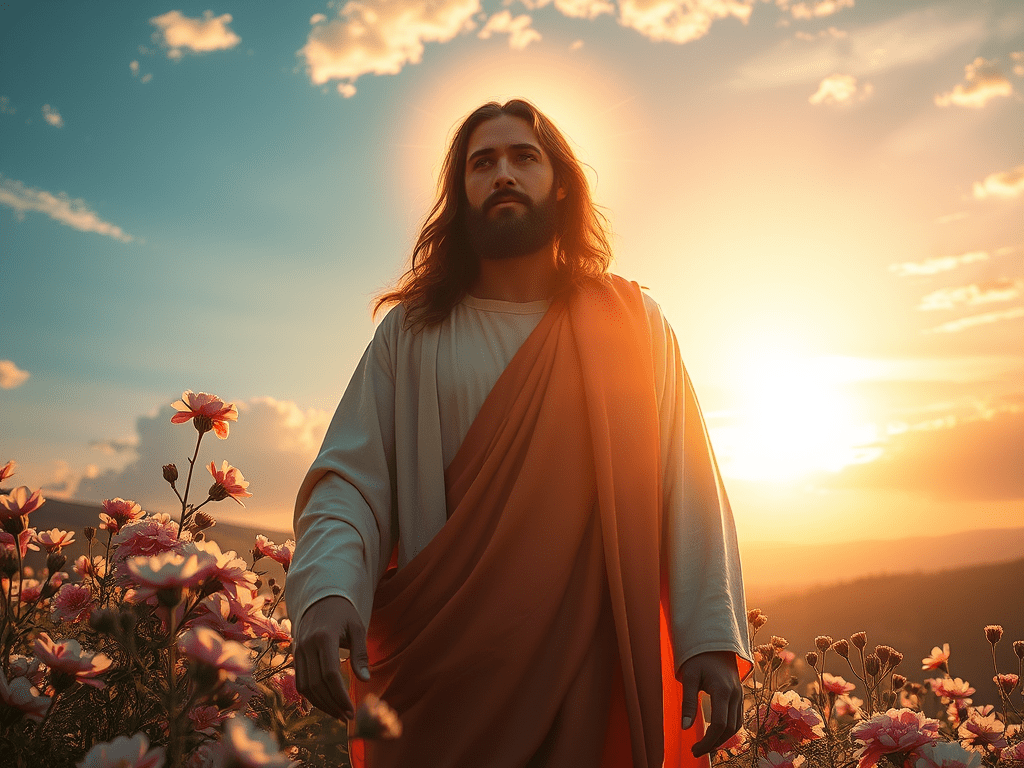
Resurrection part 1: What Yeshua taught

According to Yeshua, the resurrection is eternal life. This is both the present state and the living hope of every believer.

Core of the Bible podcast #121 – Resurrection part 1: What Yeshua taught

Today we are starting a new, four-part series on the topic of resurrection. When believers today consider the topic of resurrection, they will typically be focusing on the resurrection of Messiah, and they would be right to do so. The resurrection of Messiah has immense significance, and because of this, we will be concluding this series with a whole episode on its ramifications.

However, if most Bible believers today are discussing personal or general resurrection, they will usually point to the lengthy passage on resurrection penned by the apostle Paul in 1 Corinthians 15.  In fact, the apostle Paul explains how the concept of resurrection is an essential doctrine for those who believe in Messiah.

1 Corinthians 15:12-14 – Now if Messiah is proclaimed as raised from the dead, how can some of you say, “There is no resurrection of the dead”? If there is no resurrection of the dead, then not even Messiah has been raised; and if Messiah has not been raised, then our proclamation is in vain, and so is your faith.

Paul’s logic is simple and bold: if there is no such thing as resurrection, then Messiah has not been raised, and therefore the faith stemming from Messiah’s teachings is pointless and of no value. This is because one of the key things Messiah taught was that not only was resurrection was a reality, it was that he himself was the embodiment of resurrection and life. Therefore, personal resurrection is an integral hope of every believer in Messiah.

Like every other grand doctrine in the Bible, the topic of resurrection is not without its own complexity. I have found that resurrection is a wide-ranging topic in the Bible. Within its pages there are mentions of many individual resurrections, but there are also indications of collective types of resurrection, as well. Additionally, in a prophetic sense, resurrection is tied together with aspects of judgment which helps to illustrate the national arc of ancient Israel. All of this is combined with the use of ancient metaphorical and literary word pictures which can further distance us from the culture in which these concepts are presented.

The complexity of this concept is evident even among the Jews in the time of Yeshua, as there was sharp disagreement between the Pharisees and Sadducees on the nature and reality of resurrection, a topic we will touch on in today’s episode as we explore Yeshua’s teachings on this subject.

Because of this complexity, I am going to be spending the next several episodes reviewing resurrection from several different perspectives, grouped into four broad categories:

  1. Instances of individual resurrections, and also how Yeshua taught about resurrection
  2. Prophetic indications of collective resurrection and judgment
  3. The resurrection at the last day
  4. The implications of the resurrection of Messiah

So, to begin with, let’s start our journey by looking at some of the original language definitions of what resurrection actually means. In the Hebrew of the Tanakh several different words describe resurrection: chaya meaning to live or be revived, quts meaning to awaken (as from sleep or death), and qum meaning to arise or stand up. As we move into the Greek of the New Testament writings, the terms which include resurrection, or being raised, combine to form one of the most pervasive topics in the New Testament as a whole, occurring in all four gospels and over one hundred times total in the Greek. In the Greek, resurrection is based primarily on the Greek word anistemi which means to arise or stand up, very closely aligned with the Hebrew qum. It is used in the sense of arising as from a seated or lying position to standing, to raise up (either from the dead, or as an instance of causing to be born), or to rise up against an enemy.

Now that we have some basic definitions in place, we can begin reviewing a biblical record of resurrections in the Bible. Did you know that there were at least 8 different individuals listed in the Bible as being resurrected from the dead besides Messiah? In each of these instances, based on the original language definitions we have just reviewed, the individual was described as being revived, awakened, and then they rose up.

  1. Resurrection of the widow’s son in Zarephath through the prophet Elijah (1 Kgs 17:17–22)
  2. Resurrection of the Shunammite’s son through the prophet Elisha (2 Kgs 4:18–37)
  3. Resurrection of the man thrown into Elisha’s grave (2 Kgs 13:20)
  4. Resurrection of Jairus’ daughter (Mark 5:41)
  5. Resurrection of the young man at Nain (Luke 7:14)
  6. Resurrection of Lazarus (John 11:38–44)
  7. Resurrection of Tabitha/Dorcas (Acts 9:36–42)
  8. Resurrection of Eutychus (Acts 20:7–12)

So, what is it that we can discern from reviewing all of these instances of physical, individual resurrections throughout the Bible?

First of all, I think it’s worth noting that there are quite a few; eight individuals who were raised from the dead! Interestingly, if you have listened to the previous study on the biblical holiday of Yom HaShemini, the Eighth Day, you may recall how the number eight is typically used throughout the biblical narrative in the context of new beginnings and new life, and here we see eight individual raised to life!

Additionally, if you take the time to read each of these accounts, you may find some striking similarities between these events.

  • An individual has died but then is brought back to physical life through the actions or the presence of a prophet or man of God.
  • God is glorified
  • The ministry of the prophet is validated

And while we don’t have scriptural records to indicate this, there is no reason to think that any of these individuals were raised to physical eternal existence; it is assumed that they once again died ordinary deaths at some point after having been raised.

For now, we can see how resurrection is simply an accepted reality throughout the entire Bible to demonstrate the power of God and to validate the teachings of his prophets. God repeatedly used these individual resurrection events to encourage his people that his power extends beyond death, and how this physical life is only one part of our conscious existence. What these accounts do for us is to set a baseline understanding that something is going on with the conscious existence of those whom God loves: they appear to continue to exist as individuals beyond their physical life, and are somehow “brought back” to live out the remainder of their physical lives.

For each of these individuals, their bodies were dormant and cold, and yet through the process of resurrection, their life returned, their bodies grew warm, and they opened their eyes and began to move again, as if simply being awakened from sleep. So, one of the primary metaphors used for death is this idea of sleep. Yeshua used this term in speaking of his friend Lazarus.

John 11:11-13  – He said this, and then he told them, “Our friend Lazarus has fallen asleep, but I’m on my way to wake him up.”  Then the disciples said to him, “Lord, if he has fallen asleep, he will get well.”  Yeshua, however, was speaking about his death, but they thought he was speaking about natural sleep.

The apostle Paul also used this metaphor of sleep for death.

1 Thessalonians 4:13-14  – We do not want you to be uninformed, brothers and sisters, concerning those who are asleep, so that you will not grieve like the rest, who have no hope. For if we believe that Yeshua died and rose again, in the same way, through Yeshua, God will bring with him those who have fallen asleep.

So, here’s something a little off the beaten path to consider: because of this symbolic relationship of death with sleep, what if the natural process of sleep and awaking from sleep is simply a daily illustration that God has given us of the very real hope of life after death? Just as we all sleep, we all are subject to death. But as we all awake, we are all subject to the power of God in maintaining our essence, our spiritual existence, beyond this physical life.

While this may be an interesting rabbit hole to go down, for now, we must keep the biblical passages in their context and what these events accomplished. Through each of the individual resurrections, God was glorified through his servant, and the authority of his prophets and disciples in conveying the truth of God was confirmed. This is a powerful testimony to the work of God in establishing the principles of his Kingdom in this world, and providing hope to his people that some form of conscious existence continues beyond this physical lifetime.

Now, let’s turn to the teaching of Messiah on this subject. As I have said many times before, Yeshua did not arrive on the scene in first century Israel and just invent a bunch of new ideas, including the idea of resurrection. What he taught about it builds on examples and representations, sparse as they may be, that come from the Tanakh, or Old Testament. These expectations would have been the ones he was building on as he explained the true meaning of resurrection as it is intended for those in the Kingdom. Besides the references to individual resurrections in the Tanakh that we just reviewed, there are really only three main passages which discuss a larger, corporate resurrection of some kind:

  • Isaiah 26:19  – Your dead will live; their bodies will rise. Awake and sing, you who dwell in the dust! For you will be covered with the morning dew, and the earth will bring out the departed spirits.
  • Ezekiel 37:12  – “Therefore, prophesy and say to them, ‘This is what the Lord Yahweh says: I am going to open your graves and bring you up from them, my people, and lead you into the land of Israel.
  • Daniel 12:2  – Many who sleep in the dust of the earth will awake, some to eternal life, and some to disgrace and eternal contempt.

So, while I mentioned resurrection is only briefly described in these few passages of the Tanakh (each of which we will review in more detail next time), there is an understanding that of the two ruling religious groups in Israel at the time of Yeshua, the Pharisees and the Sadducees, only the Pharisees believed in a collective resurrection. The Sadducees were not fully accepting of the prophetic writings outside the core books of Moses, and therefore would not typically give much credence these passages we just reviewed. So, in order to justify their own position and to possibly discredit Yeshua, they planned to confront him and test him to see what his doctrine was on the topic of resurrection. To do so, we can see how the Sadducees posed a “thought experiment” that was designed to force Yeshua to choose sides on the resurrection question, and potentially disqualify him as the Messiah.

Matthew 22:23-28  – That same day some Sadducees, who say there is no resurrection, came up to him and questioned him: “Teacher, Moses said, if a man dies, having no children, his brother is to marry his wife and raise up offspring for his brother. Now there were seven brothers among us. The first got married and died. Having no offspring, he left his wife to his brother. The same thing happened to the second also, and the third, and so on to all seven. Last of all, the woman died. In the resurrection, then, whose wife will she be of the seven? For they all had married her.”

We know they didn’t really believe in the resurrection, so they just took the concept and mockingly strung together a logical conclusion based on the Mosaic rules of Levirate marriage, or the familial responsibility for close relatives to maintain the family name. However, rather than take the bait of their straw man argument, Yeshua decides to take a different tack, and in so doing, he reveals for us an aspect of resurrection that many to this day may not have seen.

So, after hearing the carefully staged question of the Sadducees regarding how the rules of marriage could possibly apply in the resurrection, Yeshua provides a direct response:

Matthew 22:29 – Yeshua answered them, “You are mistaken, because you don’t know the Scriptures or the power of God.”

Right to the point, Yeshua immediately recognizes their attempt at creating conflict with an absurdly speculative scenario on a point of Mosaic law. He simply shrugs it off by saying, “You’re wrong.” He then implies their non-acceptance of the prophetic writings is also incorrect by saying, “you don’t know the Scriptures.” And finally, he states their ignorance of the truth demonstrates they don’t really understand “the power of God.”

Then he directly answered their thought experiment: “For in the resurrection they neither marry nor are given in marriage but are like angels in heaven,” (Matthew 22:30). Yeshua states there is no marriage in the resurrection state, therefore the Levirate rules of marriage would no longer apply. But he decided to take this opportunity to push their thinking on the topic a little further and in the process provides insight on what true resurrection looks like:

Matthew 22:31-32 – “Now concerning the resurrection of the dead [that is, since you brought it up], haven’t you read what was spoken to you by God: ‘I am the God of Abraham and the God of Isaac and the God of Jacob?’ He is not the God of the dead, but of the living.”

By redirecting their focus to the story of the burning bush in Exodus, he now confronts them squarely on their own turf, as they would be forced to agree with a concept directly taught from one of the books of Moses. He basically pulled a checkmate on their little thought experiment, and then redirected them to a passage they would have to agree was Scripture, and he confounded them in the process.

So what exactly was Yeshua driving at by bringing up this statement of Yahweh at the burning bush? This same passage is related by Matthew, Mark and Luke, so it obviously carried some heavy weight with the early believers. By saying that “God is not the God of the dead, but of the living,” Yeshua appears to be teaching that at least the righteous dead (exemplified by Abraham, Isaac, and Jacob) were to be considered alive to God, and therefore, already in a resurrection state. While the Sadducees were talking of a general resurrection in a future tense (who’s wife will she be?), Yeshua speaks about it in the present tense (they do not marry and are like angels in heaven). This implied that Abraham, Isaac, and Jacob, all of whom had lived physical lives fifteen hundred to two thousand years prior to the time of Yeshua, by the power of God had been retaining their identities and were to be considered already living in the resurrection state.

Luke’s account adds even a few additional snippets of information in Yeshua’s response to the Sadducees.

Luke 20:34-36 – Yeshua told them, “The children of this age marry and are given in marriage. “But those who are counted worthy to take part in that age and in the resurrection from the dead neither marry nor are given in marriage. For they can no longer die, because they are like angels and are children of God, since they are sons of the resurrection.”

In this telling, Luke emphasizes a new facet of this confrontation: that Yeshua contrasts what he calls “this age” (marrying and giving in marriage) with “the resurrection from the dead” (where no marriage takes place). But he distinguishes a conditional participation in this resurrection (those who have been deemed deserving).

Just like the other passages, he also focuses on the (then) present nature of that resurrection age by saying that the dead are raised, and God is not the God of the dead, and that all (who are worthy) live to (or in) him. All of these points would have been revolutionary considerations for the Sadducees who were confronting him. This is why the passage concludes:

Matthew 22:33  – And when the crowds heard this, they were astonished at his teaching.

Yeshua would have made his point clearly that the Sadducees not only did not understand the true nature of Scripture but also the power of God to provide life after physical death for the faithful. In these passages Yeshua seems to me to be implying that the righteous dead are already living in a resurrected state of some sort. For us, this broadens the meaning of the resurrection to become illustrative of the reality of life after physical death for believers.

To illustrate this further, in other instances Yeshua also teaches that those who could kill the body are unable to kill the true living essence of the individual; however, God has the ability to do so.

  • Matthew 10:28-31 – “Do not fear those who kill the body but are unable to kill the soul; but rather fear Him who is able to destroy both soul and body in [Gehenna]. Are not two sparrows sold for a cent? And yet not one of them will fall to the ground apart from your Father. But the very hairs of your head are all numbered. So do not fear; you are more valuable than many sparrows.”
  • Luke 12:4-7 – “I say to you, My friends, do not be afraid of those who kill the body and after that have no more that they can do. But I will warn you whom to fear: fear the One who, after He has killed, has authority to cast into [Gehenna]; yes, I tell you, fear Him! Are not five sparrows sold for two cents? Yet not one of them is forgotten before God. Indeed, the very hairs of your head are all numbered. Do not fear; you are more valuable than many sparrows.”

In these passages, Yeshua appears to be making a distinction between the body and the soul (life). One (the body) is able to be killed by men, but the other (soul/life) is not. However, God has the ability to destroy both body and soul/life of those who do not fear him, represented by the fires of the Gehenna trash dump. This is also brought out in another famous passage:

Matthew 25:41, 46  – “Then he will also say to those on the left, ‘Depart from me, you who are cursed, into the eternal fire prepared for the devil and his angels! … “And they will go away into eternal punishment, but the righteous into eternal life.”

Now, to be fair, none of these statements made by Yeshua were provided in the context of a teaching on the reality of some sort of conscious existence beyond this life, but instead these ideas are intermixed with teachings of the coming judgment upon that generation. However, this aspect of God as the life-giver and life-taker is a corroboration with the rest of Scripture that all life is in God’s hands; he provides life, and he can also cause those who remain rebellious to perish.

Job 33:4 – The Spirit of God has made me, And the breath of the Almighty gives me life.

Even in one of the most famous passages of the Bible, Yeshua is quoted as speaking of belief in him as the Messiah is an indication of an eternal life that will never perish.

John 3:14-16  – “Just as Moses lifted up the snake in the wilderness, so the Son of Man must be lifted up, so that everyone who believes in him may have eternal life. For God loved the world in this way: He gave his one and only Son, so that everyone who believes in him will not perish but have eternal life.”

Now, to also carry the idea of “sons of the resurrection” forward that Luke had mentioned previously, I am reminded of Yeshua’s discussion with Nicodemus earlier on in this same passage.

John 3:3-7 – Yeshua replied, “Truly I tell you, unless someone is born again, he cannot see the kingdom of God.”  “How can anyone be born when he is old? ” Nicodemus asked him. “Can he enter his mother’s womb a second time and be born? ”  Yeshua answered, “Truly I tell you, unless someone is born of water and the Spirit, he cannot enter the kingdom of God. Whatever is born of the flesh is flesh, and whatever is born of the Spirit is spirit. Do not be amazed that I told you that you must be born again.”

Yeshua seems to be teaching that being born again or born from above is a spiritual reality that doesn’t have to wait for some future resurrection, but is something that can begin to be experienced in this life. This is also what he appears to have been discussing with Martha at the tomb of Lazarus before Lazarus was raised from the dead.

John 11:23-26  – “Your brother will rise again,” Yeshua told her.  Martha said to him, “I know that he will rise again in the resurrection at the last day.”  Yeshua said to her, “I am the resurrection and the life. The one who believes in me, even if he dies, will live. Everyone who lives and believes in me will never die. Do you believe this?”

This seems to indicate to me that this resurrection life, exhibited by faith in Messiah, overlaps and is contemporaneous with this physical life. Here is another indication within John’s gospel:

John 5:21, 24 – “For just as the Father raises [present tense] the dead and gives them life, even so the Son also gives [present tense] life to whom He wishes…Truly, truly, I say to you, he who hears My word, and believes Him who sent Me, has eternal life, and does not come into judgment, but has passed out of death into life.”

Again, Yeshua seems to be teaching that eternal life was something that was being bestowed within the physical lifetime of the believer, where a future judgment was already bypassed due to the possession of this life by being faithful to God’s word in believing in his Messiah. However, he was also clear that this was not to forego the coming judgment upon those who refused to believe.

John 5:25-29 – Truly, truly, I say to you, an hour is coming and now is, when the dead will hear the voice of the Son of God, and those who hear will live. For just as the Father has life in Himself, even so He gave to the Son also to have life in Himself; and He gave Him authority to execute judgment, because He is the Son of Man. Do not marvel at this; for an hour is coming, in which all who are in the tombs will hear His voice, and will come forth;those who did the good deeds to a resurrection of life, those who committed the evil deeds to a resurrection of judgment.

In this passage Yeshua appears to be teaching of a (then) present reality of passing from death to life, but also an event which was yet to happen in which the prior dead would come forth to a resurrection of judgment, both good and bad. In reality, he is drawing on the prophetic imagery of a collective resurrection and judgment which we encountered earlier from Isaiah, Ezekiel, and Daniel. This theme of collective resurrection and judgment in the prophets has a unique and significant meaning. Because it is so critical to our understanding of resurrection, these passages will be the subject of our next couple of visits to the resurrection topic.

From our brief introduction to the concept of resurrection today, we can summarize some of the main ideas of what we have examined in the following statements:

  • Individual resurrections hinted that conscious existence for the faithful is maintained beyond this lifetime.
  • The individual resurrections glorified the power of God, and validated the ministries of those who participated in them.
  • In the New Testament writings, Yeshua seems to be redefining resurrection with the Sadducees to mean something more than just a future, collective event. It was instead a present and active activity of the Father with the righteous dead who still consciously lived, since “God is not the God of the dead, but of the living.”
  • Resurrection as defined by Yeshua also seems to have been connected as a continuance of conscious existence for the righteous who have been “born again” and who believed in him as Messiah, since “he who believes in me will never die.”

Yeshua had modeled in prayer for his disciples what eternal life was.

John 17:3 – And this is [present tense] eternal life, that they know you, the only true God, and Yeshua Messiah whom you have sent.

The disciples would then carry this message forward to the scattered Israelites among the nations.

1 Thessalonians 5:8-10: “But let us, since we belong to the day, be sober, putting on the breastplate of faith and love, and, for a helmet, the hope of salvation. For God didn’t appoint us to wrath, but to the obtaining of salvation through our Lord Yeshua Messiah, who died for us, that, whether we wake or sleep, we should live together with him.

According to Yeshua, the Old Testament saints experienced a resurrection state since he taught that they “all are alive to God.” In his view, it seems eternal life was a by-product of a life lived by simple faith in Yahweh. It was not necessarily an end to be sought in and of itself,  but it was a consequence or result of being a faithful believer in Yahweh, just as Abraham, Isaac, and Jacob were. And, in New Testament times, if one truly believed in Yahweh, then it follows they would believe in the testimony he provided about his son, Messiah Yeshua.

According to Yeshua, the resurrection is eternal life. This is both the present state and the living hope of every believer. I believe it is in this sense that Yeshua truly conquered death and provided life eternal in the Kingdom for those who were to believe in him.

Next time, in the second installment of this study, we will explore the prophetic teachings of a collective future resurrection and how that concept squares with these ideas of eternal life.


Well, it’s my sincere hope that this introduction to the topic of resurrection has brought you some concepts and ideas to meditate on and to study out further on your own. But remember, if you have thoughts or comments that you would like to explore further with me, feel free to email me at coreofthebible@gmail.com.

God dwells among his separated people

Paul’s admonition is for believers to cleanse themselves from everything that can defile body and spirit.

Core of the Bible podcast #89 – God dwells among his separated people

Today we will be looking at the topic of holiness or separation from uncleanness, and how Paul reminded the early believers how they were not to join in any effort or activity where the Name or character of God would be maligned or disdained. In doing so, God promised to dwell among his own sons and daughters.

  • 2 Corinthians 7:1 – Because we have these promises, dear friends, let us cleanse ourselves from everything that can defile our body or spirit. And let us work toward complete holiness because we fear God.

Paul’s admonition here is for believers to cleanse themselves from everything that can defile body and spirit. This, he says, is working toward complete holiness; that is, with holiness as the fulfillment or the end goal of this cleansing.

However, the motivation for this goal comes from some promises he has just mentioned. Since this is the first verse of chapter seven in our Bibles, this must mean he mentioned some promises at the end of chapter six. What promises is he referring to?

  • 2 Corinthians 6:16-18 – And what agreement does the temple of God have with idols? For we are the temple of the living God, as God said: I will dwell and walk among them, and I will be their God, and they will be my people.  Therefore, come out from among them and be separate, says Yahweh; do not touch any unclean thing, and I will welcome you. And I will be a Father to you, and you will be sons and daughters to me, says Yahweh Almighty.

These are, indeed, amazing promises:

  • that God would dwell among them
  • that he would be their God, and they his people
  • that he would welcome them
  • that he would be a Father to them, and they would be as sons and daughters

But all of these wonderful promises are contingent on this cleansing of defilement of body and spirit, involving a setting apart of some sort. Let’s review the passage in full to see the context:

  • 2 Corinthians 6:14-18 – Don’t be unequally yoked with unbelievers, for what fellowship have righteousness and iniquity? Or what fellowship has light with darkness? What agreement has Christ with Belial? Or what portion has a believer with an unbeliever? What agreement has a temple of God with idols? For you are a temple of the living God. Even as God said, “I will dwell in them, and walk in them; and I will be their God, and they will be my people.” Therefore, “‘Come out from among them, and be separate,’ says Yahweh. ‘Touch no unclean thing. I will receive you. I will be to you a Father. You will be to me sons and daughters,’ says Yahweh Almighty.”

So we can see the promises that God would dwell among them and they would be sons and daughters hinges on the condition that they separate themselves from all uncleanness of the idolatry of those who do not believe.

I know this passage has classically been used for the purpose of warning believers to not marry non-believers, and while that is certainly a valid recommendation, that is not the context of this passage; marriage is nowhere in Paul’s sights here.

The real message is that separation from non-believers is required in any type of joint-effort where a compromise of God’s principles would become involved. Believers are not to join in any effort or activity where the Name or character of God would be maligned or disdained.

Two of the primary challenges believers faced in Paul’s day included the practice of eating food in a temple of a local deity, and by eating food purchased in the marketplace that had been previously offered to an idol. In that time, a fellowship meal in an idol’s temple was the ancient approximation of what we might today consider going out to eat in a restaurant. It was also a challenge for Jews to purchase meat in the market, not knowing if the food had already been in an idol’s temple prior to being offered for sale in the local market. These were such serious issues that Paul devotes a whole chapter (chapter 8) in his first letter to the Corinthians to these practices.

Paul devotes so much focus on these topics because it was a primary social practice that was a restriction for the new believers in Messiah, as well. Avoiding idolatrous food was one of the main points that had come out of the first Jerusalem Council decision. You may recall how in Acts 15, a convening of various sects of Messiah believers was called to establish consistency on how the Torah was to be applied among the believing congregations. And out of that discussion and debate came the following summarized conclusions:

  • Acts 15:20 – Instead, we should write and tell them [that is, new believers in Messiah] to abstain from food polluted by idols, from sexual immorality, from the meat of strangled animals, and from blood.

This instruction from the Jerusalem Council highlights how Torah was still the guiding principle of the early believing communities. All of these restrictions that were reported out to the fledgling congregations of Messiah are based in Leviticus and Deuteronomy.

  • Leviticus 19:4 – Do not turn to idols or make cast images of gods for yourselves; I am Yahweh your God.
  • Deuteronomy 6:14 – Do not follow other gods, the gods of the peoples around you…
  • Leviticus 18:26 – But you are to keep my statutes and ordinances. You must not commit any of these detestable [sexually immoral] acts ​– ​not the native or the alien who resides among you.
  • Leviticus 17:12 – Therefore I say to the Israelites: None of you and no alien who resides among you may eat blood.

The council had rightfully deferred to God’s Word to establish fellowship guidelines of the mixed congregations who had participants from varied traditions and backgrounds. These were necessary as part of the practices to allow for shared meals; they had to all be on the same page as far as acceptable meats and personal sanctification in relationships.

So, while the conclusions of the council were designed to allow for fellowship and create unity among believers, it also delineated the separation that was necessary for the promises of God to be fulfilled among them. They would need to be diligent in separating themselves from the accepted social norms in order to be united together in solidarity as God’s people.

In a moment, we will return to the instruction of Paul in his second letter to the Corinthians explaining the importance of why believers should not be unequally yoked with non-believers. In doing so, I am hopeful we can learn some principles for application within our own lives and social situations in our current generation.


As Paul writes to the congregation in Corinth, he apparently feels compelled to provide a stark contrast between believers and non-believers as a way of shaking them out of a sense of complacency that they may have lapsed into regarding idolatry. Of course, ancient Greece was awash with all forms of varied idolatry, testified to this day by the literature of the time and the surviving architecture. To remind the believers of the severity of this command against idolatry, Paul, as he is known to do, quotes from several selections of Torah, or God’s instruction, to make his point:

2 Corinthians 6:16 – And what agreement does the temple of God have with idols? For we are the temple of the living God, as God said: I will dwell and walk among them, and I will be their God, and they will be my people.

  • Leviticus 26:11-12 – I will live among you, and I will not despise you. I will walk among you; I will be your God, and you will be my people.
  • Ezekiel 37:27 – I will make my home among them. I will be their God, and they will be my people.

2 Corinthians 6:17 – Therefore, come out from among them and be separate, says Yahweh; do not touch any unclean thing, and I will welcome you.

  • Leviticus 7:21 – If you touch anything that is unclean (whether it is human defilement or an unclean animal or any other unclean, detestable thing) and then eat meat from a peace offering presented to Yahweh, you will be cut off from the community.
  • Isaiah 52:10-11 – Yahweh has displayed his holy arm in the sight of all the nations; all the ends of the earth will see the salvation of our God.  Leave, leave, go out from there! Do not touch anything unclean; go out from her, purify yourselves, you who carry the vessels of Yahweh.

2 Corinthians 6:18 – And I will be a Father to you, and you will be sons and daughters to me, says Yahweh Almighty.

  • Isaiah 43:5-6 – “Do not fear, for I am with you; I will bring your descendants from the east, and gather you from the west.  “I will say to the north, ‘Give them up! ‘ and to the south, ‘Do not hold them back! ‘ Bring my sons from far away, and my daughters from the ends of the earth
  • Hosea 1:10 – Yet the number of the Israelites will be like the sand of the sea, which cannot be measured or counted. And in the place where they were told: You are not my people, they will be called: Sons of the living God.

Paul pulls together principles rooted in the holiness of God. Avoiding ceremonial uncleanness is the model, the example, of how believers were to ensure they were continuing to pattern their lives after Messiah within their assemblies, and to demonstrate how they had become God’s sons and daughters. If they did so, God would be among them and he would regather them to himself.

Uncleanness practices outlined in Torah went beyond just what types of animals one was permitted to eat to other sanitary practices among the people of God, from bodily fluids to accidentally touching dead bodies. But the overarching principle of all of these commands was the same: separating oneself from these things was an act of holiness, which by its very definition means to be set apart.

Paul is using that same established Torah logic among the believers in Corinth to remind them of their unique position among their generation, and that they should not forfeit their standing with God on the accepted conventions and customs of the day. According to Yeshua’s admonition of Matthew 5:8, believers were to have a pure and blameless heart at all times.

  • Matthew 5:8 – Blessed are the pure in heart: for they shall see God.

Separation from all unclean practices was necessary to achieve this.

You may have noticed that none of the passages that Paul references in his instruction are direct quotes, but they have a common theme of the restoration of God’s people to himself. Isaiah 43 and Hosea 1 are great and pivotal prophecies describing the long-awaited migration of God’s people returning back to Jerusalem from among the nations.

As such, we can gain an even greater understanding of the separateness that Paul is speaking to. As these believers had been scattered throughout the nations in the past, they had become susceptible to the idolatrous practices of their various cultures. Paul is using these passages as a way of weaning them off of their cultural traditions and practices that were hindering their walk with Yahweh through their new-found faith in Messiah Yeshua. He is using these texts to remind them of their true purpose as God’s people, and God’s care and concern for them as his own children. If they were to forsake their idolatry, God would indeed live among them and be a Father to them.

But if this is how Paul is applying these texts, then we can also begin to see how these wonderful prophetic indicators were not necessarily meant to be about a literal migration back to Israel, but a spiritual one. God was indeed calling his people back to himself from among the nations, but they were not necessarily returning to physical Jerusalem, but instead to the prophetic Zion, the New Jerusalem.

If this was the principle in Paul’s day, then how much more does that same principle apply in our day? How can we apply this same principle of separation? What types of accepted conventions in social discourse today compromise the principles of God and his character according to his Word, his Torah? What activities demean and denigrate God’s glory, yet are considered “ok” by the rest of our society?

These are questions that we need to be able to answer within the context of our own social environments wherever we are. When we can take a serious look at how we are potentially compromising our faith within our social arenas, we can then open the door to further obedience to God’s Word.

With our eyes open and our hearts guided by the eternal Torah of God, we can begin to understand the types of things we are to avoid being “yoked” together (i.e., going along with) non-believers for the sake of fellowship. We cannot be united with non-believers in those things because they compromise God’s integrity and honor, and violate the sanctity not only of his Word, but of our united fellowship together as God’s people.

Paul’s admonition is that when we do actively separate ourselves, when we cleanse ourselves from these things, then we are truly behaving like God’s sons and daughters, and only then will he be present among us. This is the fulfillment of those ancient promises that generations have looked forward to. When we take decisive actions to maintain our holiness out of godly respect and honoring of him, we demonstrate the validity of God’s Word and the kingdom of God becomes visible to others in our actions.


If you enjoy these daily articles, be sure to visit the growing archive of the Core of the Bible podcast. Each week we take a more in-depth look at one of the various topics presented in the daily blog. You can view the podcast archive on our Podcast Page, at Core of the Bible on Simplecast, or your favorite podcast streaming service.

Now also on YouTube, find us at: Core of the Bible on YouTube.

Questions or comments? Feel free to email me at coreofthebible@gmail.com.

The water of life flowing everywhere

It is now available for all who are thirsty.

John 4:13-14 – Yeshua said, “Everyone who drinks from this water will get thirsty again. “But whoever drinks from the water that I will give him will never get thirsty again. In fact, the water I will give him will become a well of water springing up in him for eternal life.”

When Yeshua met with the woman at Jacob’s well in Samaria, he was revealing to this woman more than she understood. When offered living water, she instead thought of natural water that would not require her to come to the well every day to draw it out. However, Yeshua was not speaking to her of water to physically drink, but of a type of water that would bring spiritual life to those who partook of it.

Since the Samaritans did not accept the prophetic writings as Scripture but just the five books of Moses, it is likely she did not recognize that the reference Yeshua makes is to a passage in Ezekiel. This is where the spiritual temple that Ezekiel describes in great detail concludes with a description of a river which flows from the temple.

Ezekiel 47:1, 9 – Then he brought me back to the entrance of the temple and there was water flowing from under the threshold of the temple toward the east, for the temple faced east. The water was coming down from under the south side of the threshold of the temple, south of the altar. … “Every kind of living creature that swarms will live wherever the river flows, and there will be a huge number of fish because this water goes there. Since the water will become fresh, there will be life everywhere the river goes.

The life-giving water in the prophecy of Ezekiel is described as growing in depth, from ankle-deep, to waist-deep, to a river that cannot be crossed as it flows. While this river may have at one point been confined to the temple and to the nation of Israel, the picture Ezekiel paints is one where the holiness or set-apartness of the life-giving water would be spread far beyond its banks.

Throughout the Bible, life is said to flow from the fear and respect of Yahweh, and from wisdom and understanding that come from him.

Psalm 111:10 – The fear of Yahweh is the beginning of wisdom; all who follow his instructions have good insight. His praise endures forever.
Proverbs 14:27 – The fear of Yahweh is a fountain of life, turning people away from the snares of death.
Proverbs 9:10 – “The fear of Yahweh is the beginning of wisdom, and the knowledge of the Holy One is understanding.
Proverbs 3:13, 18 – Happy is a man who finds wisdom and who acquires understanding, … She is a tree of life to those who embrace her, and those who hold on to her are happy.
2 Peter 1:3 – His divine power has given us everything required for life and godliness through the knowledge of him who called us by his own glory and goodness.

Ezekiel’s picture of the river of life concludes with trees along the banks of the river that bear continual fruit and the leaves of the trees being used for medicine.

Ezekiel 47:12 – “All kinds of trees providing food will grow along both banks of the river. Their leaves will not wither, and their fruit will not fail. Each month they will bear fresh fruit because the water comes from the sanctuary. Their fruit will be used for food and their leaves for medicine.”

This is a direct correlation with the consummation of the New Jerusalem in the book of Revelation:

Revelation 22:1-2 – Then he showed me the river of the water of life, clear as crystal, flowing from the throne of God and of the Lamb down the middle of the city’s main street. The tree of life was on each side of the river, bearing twelve kinds of fruit, producing its fruit every month. The leaves of the tree are for healing the nations…

The good news is that this water that was once set-apart and holy as only for one people is now flowing freely everywhere and is available to all who are thirsty. This is not a physical thirst, but a thirst for spiritual wisdom and understanding that only God can provide. This is the knowledge of him who fills all things and makes all things new. This is the medicine that is now for the healing of the nations.

Revelation 21:6 – Then he said to me, “It is done! I am the Alpha and the Omega, the beginning and the end. I will freely give to the thirsty from the spring of the water of life.
Revelation 22:17 – Both the Spirit and the bride say, “Come! ” Let anyone who hears, say, “Come! ” Let the one who is thirsty come. Let the one who desires take the water of life freely.


If you enjoy these daily blog posts, be sure to visit the growing archive of the Core of the Bible podcast. Each week we take a more in-depth look at one of the various topics presented in the daily blog. You can view the podcast archive on our Podcast Page, at Core of the Bible on Simplecast, or your favorite podcast streaming service.

Now also on YouTube, find us at: Core of the Bible on YouTube.

Questions or comments? Feel free to email me directly at coreofthebible@gmail.com.

The holiness of marriage

Why the representation of intimacy between a man and a woman is regarded so highly by God.

Matthew 5:32 – “But I tell you, everyone who divorces his wife, except in a case of sexual immorality, causes her to commit adultery. And whoever marries a divorced woman commits adultery.”

According to Yeshua, the holiness of the marriage union is essential. In fact, it is so critical, that he provides heart-insight on the command against adultery by saying:

Matthew 5:28 – “But I tell you, everyone who looks at a woman lustfully has already committed adultery with her in his heart.”

The sanctity of marriage is fueled and kept in check by the man and the woman continually setting apart their spouse from all others, so much so that to even lust after anyone else can be considered an emotional violation of the marriage vow.

The reason this is so is because the marriage union of a man and a women is symbolic of our faithful relationship to God. Anything else outside the singular and faithful union of a man and a woman is considered a form of idolatry to God. This is illustrated by the fact that, throughout the Bible, whenever Israel began to go after other gods, they were accused of spiritual adultery.

In the book of Judges, when Israel was newly settling in the land of Canaan, they demonstrated their unfaithfulness by almost immediately “prostituting themselves” by following other gods.

Judges 2:11-12, 16-17 – “The Israelites did what was evil in Yahweh’s sight. They worshiped the Baals and abandoned Yahweh, the God of their fathers, who had brought them out of Egypt. They followed other gods from the surrounding peoples and bowed down to them. They angered Yahweh, … Yahweh raised up judges, who saved them from the power of their marauders, but they did not listen to their judges. Instead, they prostituted themselves with other gods, bowing down to them. They quickly turned from the way of their fathers, who had walked in obedience to Yahweh’s commands. They did not do as their fathers did.”

Hundreds of years later, after the reigns of David and Solomon and many other kings who continued to rebel against God, he raised up firebrand prophets like Jeremiah and Ezekiel to declare their judgment for their unfaithfulness. In a scathing commentary by the prophet Ezekiel throughout the entire chapter of Ezekiel 16, he confronts the religious elite of Jerusalem with the following accusation:

Ezekiel 16:2-3, 32-33 – “Son of man, confront Jerusalem with her detestable practices. “You are to say, ‘This is what Yahweh GOD says to Jerusalem: … “You adulterous wife, who receives strangers instead of her husband! “Men give gifts to all prostitutes, but you gave gifts to all your lovers. You bribed them to come to you from all around for your sexual favors.”

In like fashion, Jeremiah recounts the list of Israel’s rebellious and wayward prophets, likening them to acts of adultery.

Jeremiah 23:14 – “Among the prophets of Jerusalem also I saw a horrible thing: They commit adultery and walk in lies. They strengthen the hands of evildoers, and none turns his back on evil. They are all like Sodom to me; Jerusalem’s residents are like Gomorrah.”

The sanctity of the nation that God had set apart from all others was gone. They had compromised their unique marriage relationship with the one true God by succumbing to the allure of the gods of the competing cultures.

Even after their captivity and up until the time of Yeshua, they never regained their relationship with God. This is blatantly recognized within the imagery of the Revelation, as religious Israel of the first century is represented as the whore, the adulteress, who rides the political beast of Rome.

Revelation 17:3-4 – Then he carried me away in the Spirit to a wilderness. I saw a woman sitting on a scarlet beast that was covered with blasphemous names and had seven heads and ten horns. The woman was dressed in purple and scarlet, adorned with gold, jewels, and pearls. She had a golden cup in her hand filled with everything detestable and with the impurities of her prostitution.

Because of her continual and unrelenting rebellion against God’s marriage union with Israel as his own bride, Jerusalem was destroyed and her temple worship, the unique system of worship that set her apart from all other nations, was abolished.

However, there was a faithful remnant who had come out of the nation: those who believed in the Messiah God had sent to rescue them. The true marriage and spiritual worship was established with the faithful remnant, with the New Jerusalem, the kingdom of God, becoming the new and eternally faithful bride.

Revelation 21:2, 9-10 – I also saw the holy city, the new Jerusalem, coming down out of heaven from God, prepared like a bride adorned for her husband. … Then one of the seven angels, who had held the seven bowls filled with the seven last plagues, came and spoke with me: “Come, I will show you the bride, the wife of the Lamb.” He then carried me away in the Spirit to a great, high mountain and showed me the holy city, Jerusalem, coming down out of heaven from God,

This should be a clear message about how seriously God views the marriage bond between a man and a woman. From God’s perspective, true intimacy, whether between a man and a woman or the representative spiritual union between a person and himself, is valued so highly that it is represented as a sparkling kingdom utopia of his blessing and mercy. This is where God dwells with his faithful and set apart people, and where we dwell with him. This is the holiest of all marriage relationships.

Revelation 21:3 – Then I heard a loud voice from the throne: Look, God’s dwelling is with humanity, and he will live with them. They will be his peoples, and God himself will be with them and will be their God.


If you enjoy these daily blog posts, be sure to visit the growing archive of the Core of the Bible podcast. Each week we take a more in-depth look at one of the various topics presented in the daily blog. You can view the podcast archive on our Podcast Page, at Core of the Bible on Simplecast, or your favorite podcast streaming service.

Now also on YouTube, find us at: Core of the Bible on YouTube.

Questions or comments? Feel free to email me directly at coreofthebible@gmail.com.