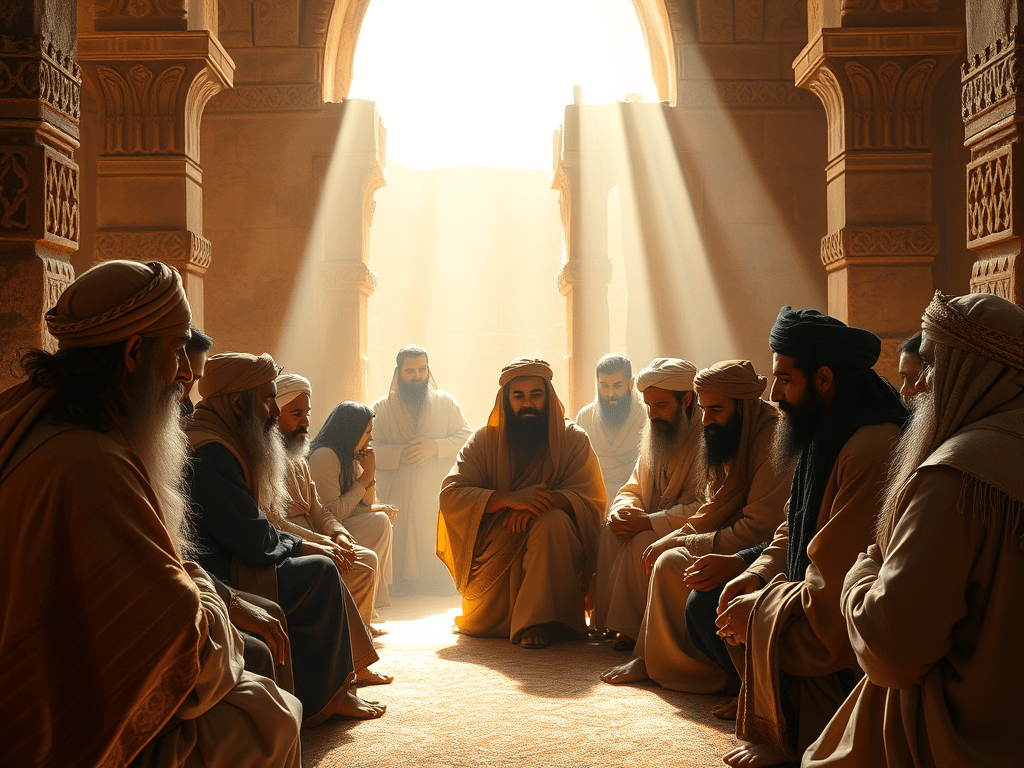
Titles for God’s people: Believers and Christians

Not all of the titles we see in the Bible apply to God’s people today.

Core of the Bible podcast #125: Titles for God’s people – Believers and Christians

Over the next several weeks, I will be exploring the topic of titles used to describe God’s people throughout the Bible, but primarily titles used for his first century people in the writings of the New Testament. These terms do indeed all have significance and definitions are important, which is why I am taking the time to break down biblical terms so we can have a better grasp of how to apply them appropriately.

We will be looking at the following terms in some detail: believer and Christian, the Remnant and the Elect, the Church and the Body, and the Bride of Christ. These are all terms that by most accounts are considered synonymous and applicable to the people today who claim to believe in Messiah. However, I intend to look at scriptural reasons as to why I believe this is not the case, how most of those terms do not apply to God’s people today, and yet how God has worked within these various aspects of his people over the ages to accomplish specific things for the good of all.

As is usually the case, I began this as a single essay, but as I continued to delve into the particulars of these various designations I found that more and more details would present themselves for further study. Hopefully, breaking some of these up into smaller segments will be easier to grasp the essential points along with some relatively unusual perspectives for further study on your own.

Believers

Let’s begin with a basic term that is used to describe God’s people throughout the Bible: belief. You may notice that generally when I speak of those who follow Yahweh and Messiah Yeshua, I choose to use the term believers rather than Christians. This is the one term out of all of those previously mentioned which I believe does apply to God’s people today. This stems from the thrust of the biblical narrative and some particulars about the designation of Christian (which we will explore in a little bit).

All throughout the Bible there are people who are listed as those who believe and also those who do not believe.

Exodus 4:5 – “This will take place,” he continued, “so that they will believe that Yahweh, the God of their ancestors, the God of Abraham, the God of Isaac, and the God of Jacob, has appeared to you.”

Deuteronomy 9:23 – “When Yahweh sent you from Kadesh-barnea, he said, ‘Go up and possess the land I have given you’; you rebelled against the command of Yahweh your God. You did not believe or obey him.

2 Kings 17:14 – But they would not listen. Instead they became obstinate like their ancestors who did not believe Yahweh their God.

Psalm 78:32 – Despite all this, they kept sinning and did not believe his wondrous works.

Isaiah 43:10 – “You are my witnesses” — this is Yahweh’s declaration — “and my servant whom I have chosen, so that you may know and believe me and understand that I am he. No god was formed before me, and there will be none after me.

An interesting facet to all of these belief passages in the Tanakh is that they are expressed within the context of Israel; as in, there are those who believe and who do not believe in Yahweh within the nation of Israel. It is not used as a phrase for those outside of the national identity. As we move through the discussion in the coming studies, you will see how that becomes an important understanding in terms of God’s dealings with his people, especially when we come to consider the terms “remnant” and “elect”.

In the New Testament, we find belief, especially a belief in Messiah (which is said to be an indication of receiving him) to be a core aspect of Messiah’s purpose:

John 1:11-12 – He came to his own, and his own people did not receive him. But to all who did receive him, he gave them the right to be children of God, to those who believe in his name,

John 6:29 – Yeshua replied, “This is the work of God ​– ​that you believe in the one he has sent.”

John 14:1 – “Don’t let your heart be troubled. Believe in God; believe also in me.

Followers of Messiah even used this type of descriptive terminology:

Acts 16:15 – After she and her household were baptized, she urged us, “If you consider me to be believing in the Lord, come and stay at my house.” And she persuaded us.

Acts 16:34 – He brought them into his house, set a meal before them, and rejoiced because he had come to believe in God with his entire household.

The writer to the Hebrews makes it clear that faith is essential to pleasing God:

Hebrews 11:6 – Now without faith it is impossible to please God, since the one who draws near to him must believe that he exists and that he rewards those who seek him.

The apostle Paul emphasized that belief was the foundation of the collective group of those who were in Messiah:

Romans 3:22 – The righteousness of God is through faith in Yeshua Messiah to all who believe, since there is no distinction.

But then, in another passage, Paul draws a more specific distinction between those who were to be considered believers with those who were non-believers. In contrast with the Tanakh passages which seemed to focus on believers and non-believers within the nation of Israel, Paul appears to be discussing non-believers in the wider context of the general population of Corinth, known for its idolatry.

2 Corinthians 6:14-15 – Do not be yoked together with those who do not believe. For what partnership is there between righteousness and lawlessness? Or what fellowship does light have with darkness? What agreement does Messiah have with Belial? Or what does a believer have in common with an non-believer?

Now, it could be argued that Paul was addressing those who claimed to be among the scattered Israelites in Corinth who gave lip service to Yahweh and yet were just as likely to be found among the idolatrous temples of the culture around them. In this passage, Paul uses this unusual term Belial, along with lawlessness and darkness, as contrasting terms to Messiah. Since this appears to be the only place this term Belial is used in the New Testament Greek, if we pursue this term back to its Hebrew root, we find it less of a proper name and more of a description of those who were considered wicked or worthless.

Deuteronomy 13:12-14 – “If you hear it said about one of your cities Yahweh your God is giving you to live in, “that wicked men have sprung up among you, led the inhabitants of their city astray, and said, ‘Let’s go and worship other gods,’ which you have not known, “you are to inquire, investigate, and interrogate thoroughly…

1 Samuel 2:12 – Eli’s sons were wicked men; they did not respect Yahweh

2 Samuel 23:6 – But all the wicked are like thorns raked aside; they can never be picked up by hand.

2 Chronicles 13:7 – “Then worthless and wicked men gathered around him to resist Rehoboam son of Solomon when Rehoboam was young, inexperienced, and unable to assert himself against them.

Proverbs 6:12 – A worthless person, a wicked man goes around speaking dishonestly,

Nahum 1:11 – One has gone out from you, who plots evil against Yahweh, and is a wicked counselor.

Sometimes the term used in these passages is the phrase ben belial, meaning “a son of wickedness/worthlessness”. It is from this Hebraism that the term could be considered as a proper name of some wicked entity, sometimes associated with Satan. But to be a “son of” something was to be considered the offspring of, or participant in, something larger than oneself.

Exodus 19:6 – and you shall be to Me a kingdom of priests and a holy nation.’ These are the words that you shall speak to the sons of Israel.”

  • These sons of Israel weren’t just Jacob’s sons particularly, because there were also some Egyptians and others who had come out of Egypt with the Hebrews at that time, but it is here speaking of participants in the nation of Israel, much like we might say “sons of America” today.

Matthew 8:12 – “But the sons of the kingdom will be thrown into the outer darkness where there will be weeping and gnashing of teeth.”

  • Here, Yeshua uses the same type of language regarding those who were considered to be participants within the Kingdom of God, yet were being rejected for their lack of faith.

To be a son in the most basic sense of the Hebrew is to be a builder, as in the builder of the family line or family name. In this sense, to be a son of the Kingdom is to be a builder of the Kingdom. To be a son of belial is to be a builder of wickedness and worthlessness. And in the passage of 2 Corinthians where Paul is drawing a distinction between those of Messiah and those of Belial, whether these individuals were simply wicked fellow citizens of their pagan culture or if they were lawless scattered Israelites, either way, these individuals are the ones whom Paul is warning believers in Messiah to stay away from.

In the Bible, it is also clear that belief is closely aligned with and only visible through actions and lifestyle. You may recall that the Tanakh passages we reviewed earlier use this phrase as a verb describing an action, believing and obeying or not believing and remaining obstinate or disobedient. In the New Testament writings, James defines this Hebraic way of understanding faith a little further:

James 2:17-18 – In the same way faith, if it does not have works, is dead by itself.  But someone will say, “You have faith, and I have works.” Show me your faith without works, and I will show you faith by my works.

And this is one of the places where I get on my little hobby horse about English translations (and there are many!). In the 2 Corinthians 6 passage, Paul uses the term “non-believer” as a contrast to those who are in Messiah. Many English Bibles might phrase this statement by rendering it as “unbeliever”. While this is most likely just me splitting semantic hairs (please bear with me), this term “unbeliever” in English is a phrase which I greatly dislike because it seems imprecise when discussing this biblical concept. To me it is a nonsensical term; how can you un-believe something? You either believe it or you don’t. In the original Greek, non-believers are called apistos which literally means faithless,  without demonstrating faith in Yahweh.

I think the phrase “unbeliever” bothers me because it appears to describe an inherent characteristic of unbelief, like it’s just some sort of opinion one holds. But we just saw how the Bible uses the term faith as a verb describing an action, not just a static state of being or an opinion. Those who do not believe are actively not believing, and their lifestyles and their actions show it. To say someone is apistos does not just mean they are unbelieving in opinion, they are literally without faithful actions. I know that unbeliever is an acceptable use of the term in English, but for some reason it just gets under my skin and seems inaccurate. To me, those who demonstrate by their actions that they do not believe are not “unbelievers”, they are more accurately without faithful actions and are, by default (whether knowingly or unknowingly), obstinately living in disobedience to God.

So as we begin this journey on titles used to describe God’s people, I would strongly argue that the concept of faith must be included. While biblical faith is used in the verb sense throughout the Bible, I am of the opinion that to call someone a believer in the noun sense still adequately describes who they are by what they do. My definition of a biblical believer is someone whose actions and lifestyle express their faith in Yahweh as the one true God, and in Yeshua as his Messiah, or Anointed One. A non-believer’s actions demonstrate that they have no faith in Yahweh as the one true God, or in Yeshua as the Messiah, even if they claim to be associated with believers.

Christians

While the term Christian has become an acceptable description of one who follows Christ, or the Messiah, in our present day it is actually a term that has come to mean anyone who believes a specific orthodoxy about the person of Messiah and the message of the Bible as a whole. To be a Christian today, one must affirm that they agree with a framework of stated beliefs in order to qualify as a Christian. Most congregations today even have a public “statement of faith” which defines how they choose to align with the major Christian propositions, such as the trinity, virgin birth of Messiah, and perspectives on eschatology like the end times. This is understandable, for to belong to any type of specific group one must have points of agreement in order to be in fellowship.

However, in point of fact, there is a scholarly perspective that the term Christian as it is actually used in the Bible was not a statement of belief but it was initially used as a pejorative term against the believers in the first century.

The term itself is used only in three New Testament passages:

Acts 11:26 –  The disciples were first called Christians at Antioch.

Acts 26:28 – Agrippa said to Paul, “Are you going to persuade me to become a Christian so quickly? “

1 Peter 4:14-16 – If you are ridiculed for the name of Christ, you are blessed, because the Spirit of glory and of God rests on you. Let none of you suffer as a murderer, a thief, an evildoer, or a meddler. But if anyone suffers as a Christian, let him not be ashamed but let him glorify God in having that name.

Now, most people who call themselves Christians today are not aware of the academic dispute about the actual phrase used in the Greek: was it christianoi meaning “anointed ones” or “those who follow the anointed” or was the term chrestianoi meaning “good ones” or “those who do good”? There is only one letter difference in the Greek between these two terms, and based on some convincing manuscript evidence (like the Codex Sinaiticus of the 4th century), some scholars think that chrestianoi is the original or preferred rendering. Someone who is a chrestianon is considered useful, pleasant, kind, or good. Believers living out the teachings of Messiah could certainly be classified as such, since they were instructed by Messiah not only to be kind to one another, but to extend that kindness even to their enemies. This would definitely be a distinctive characteristic worthy of some unique terminology.

The influential Biblical scholar of the last century, F.F. Bruce, wrote the following in his commentary on the book of Acts:

“Xrestus (“useful, kindly”) was a common slave-name in the Graeco-Roman world. It appears as a spelling variant for the unfamiliar Christus (Xristos). (In Greek the two words were pronounced alike.)” – F. F. Bruce, The Books of Acts, 368.

We can see how there was a close correlation between the two terms, and how the term chrestianoi could be applied to those who saw themselves as slaves to that which is good, because they would be known for always doing good to others. However, in a negative connotation, a chrestianon could also have been someone whom we might call today a “goody two-shoes”, or a “do-gooder”; as someone who is annoyingly righteous in what they say and do. And to be honest, this seems to me to be the way the term was employed in Scripture.

Notice, in the passages we just reviewed how if we substitute the negative connotation for the traditional rendering of Christian, it can apply equally as well as the positive.

  • Acts 11:26 – The disciples were first called Christians at Antioch.
    • It could just as easily be said that the disciples were first called “do-gooders” at Antioch. This would mean that this would have been the first place that believers were recognized collectively as a group with characteristics of doing good that were unique enough to have earned the name.
  • Acts 26:28 – Agrippa said to Paul, “Are you going to persuade me to become a Christian in so little time?”
    • Again, if we substitute the alternative, it could be that Agrippa said to Paul, “Are you going to persuade me to becomea ‘do-gooder’ in so little time?” Agrippa, in context, is sarcastically accusing Paul of trying to convert him to become something he is not. If this “do-gooder” tag was a name that had been applied to the movement many years before, Agrippa, as a controversial politician at best, could easily be seen as conveying his unlikely conversion to being someone who is considered “doing good”.
  • 1 Peter 4:16 – But if anyone suffers as a Christian, let him not be ashamed but let him glorify God in having that name.
    • Peter here is contrasting the believers with those who are murderers, thieves, evildoers and those who defraud others (v. 15). “But if anyone suffers as a “doer of good”, let him not be ashamed but let him glorify God in having that name,” (v. 16). This rendering can be further substantiated by v. 19 which says, “So then, let those who suffer according to God’s will entrust themselves to a faithful Creator while doing what is good.” Peter could easily be saying the “doer of good” term was used as a way of ridiculing those who had chosen to follow the Messiah, and he is encouraging them to not be ashamed of those who would use this term in a derogatory fashion. It’s as if Peter is saying, “Don’t stop doing good just because people are making fun of you for doing so.”

To me, this does not seem to be such a difficult perspective to hold, as even today, many believers are ridiculed for having integrity and doing what is right when peer pressure or cultural dictates are otherwise. If we are truly living according to the teachings of Yeshua, then exhibiting forgiveness to others and extending compassion when it is not customary to do so can certainly be considered abrasive amidst a culture that primarily promotes self-benefit in every aspect. Some things regarding human nature don’t appear to have changed in the millennia since Messiah walked the earth, but then again, as followers of Messiah and slaves to that which is good, we are still called to be the light of the world (that which illuminates) and the salt of the earth (that which heals and preserves).

SUMMARY

Let’s summarize what we have looked at so far in this study on titles for God’s people. We saw that faith was the primary distinction of those who followed the Messiah, so using the term believers seems appropriate and right, as long as the actions of those who claim to be believers bear out their testimony. However, we noted that the term “unbeliever” seems unusual when the actual phrase used in Scripture means one who is faithless or without faithful actions, and is actively living in disobedience. We also saw how there could be both believers and faithless within the group of those considered as God’s people at any given time, based on how they demonstrated their faith (or lack of it) by their ongoing actions.

We then considered how, in today’s usage, a Christian is typically defined as one who holds to a certain set of orthodox beliefs about Christ and the Bible worldview as a whole. However, from the passages where the term may have been used in Scripture, we then saw how the term (whether meaning slave of Christ or one who does good) was likely used in a derogatory way to malign those who were known for excessive acts of kindness and charity amidst a corrupt society.  As “slaves” of Christ, according to Peter, believers were to consider that term a badge of honor rather than the term of derision that it was.


Well, as we wrap up for today, I hope there are at least a couple of concepts and ideas to encourage you to meditate on and to study out further on your own. Next time, we’ll be looking at the terms “remnant and elect”, so be sure to come back and visit for more perspectives on these titles of God’s people. But remember, if you have thoughts or comments that you would like to explore further with me, feel free to email me at coreofthebible@gmail.com.

Children of Abraham, children of promise

According to Yeshua, the biblical concept of being considered a child of Abraham is to demonstrate the same type of faith that Abraham exhibited when he simply believed what God said.

Core of the Bible podcast #113 – Children of Abraham, children of promise

In my last post, we reviewed the concept of covenants in the Bible, and I concluded by stating how believers today can participate in the promises that God made to Abraham when we simply come to God in faith, believing in his Messiah, Yeshua.

Many people today believe the children of Abraham to be a specific race or line of descendants that can trace their lineage back to him. This was believed in the time of Yeshua, as well. However, we will see that the biblical concept of being considered a child of Abraham is to demonstrate the same type of faith that Abraham exhibited when he simply believed what God said. To understand this, we will need to begin by exploring God’s dealings with Abraham himself.

Promises made to Abram before the covenants

While most people studying the Bible recognize that God made covenants with Abraham, they misunderstand or overlook how Abraham’s relationship with God came about. To begin with, God simply made seven promises to Abraham before any covenants were enacted.

Genesis 12:1-4 Now Yahweh said to Abram, “Go forth from your country, And from your relatives And from your father’s house, To the land which I will show you;

  1. And I will make you a great nation,
  2. And I will bless you,
  3. And make your name great;
  4. And so you shall be a blessing;
  5. And I will bless those who bless you,
  6. And the one who curses you I will curse.
  7. And in you all the families of the earth [ha’adamah] will be blessed.”

So Abram went forth as Yahweh had spoken to him; and Lot went with him. Now Abram was seventy-five years old when he departed from Haran.

At this point, no covenant was in place; God simply promised that all of these things would come about.

Next in the narrative, we find God reaffirming the promise to Abram that he would have numberless descendants, and now he adds the promise that they would also inherit the land of Canaan.

Genesis 13:14-17 Yahweh said to Abram, after Lot had separated from him, “Now lift up your eyes and look from the place where you are, northward and southward and eastward and westward; for all the land which you see, I will give it to you and to your descendants forever. I will make your descendants as the dust of the earth, so that if anyone can number the dust of the earth, then your descendants can also be numbered. Arise, walk about the land through its length and breadth; for I will give it to you.”

God then also promises that a very specific individual, one of his direct descendants, would be receiving the fulfillment of these promises that God was making to Abraham.

Genesis 15:1-4  After these things the word of Yahweh came to Abram in a vision, saying, “Do not fear, Abram, I am a shield to you; Your reward shall be very great.” Abram said, “O Lord Yahweh, what will You give me, since I am childless, and the heir of my house is Eliezer of Damascus?” And Abram said, “Since You have given no offspring to me, one born in my house is my heir.” Then behold, the word of Yahweh came to him, saying, “This man will not be your heir; but one who will come forth from your own body, he shall be your heir.

Then, once again, God reaffirms his promise of many, numerous descendants that Abraham would have.

Genesis 15:5-6 And He took him outside and said, “Now look toward the heavens, and count the stars, if you are able to count them.” And He said to him, “So shall your descendants be.” Then he believed in Yahweh; and He reckoned it to him as righteousness.

So far, no covenants have been enacted; these are all promises that God made with Abraham. At this point, the Bible tells us that Abraham simply believed in these promises of the one true God. This is the exhibition of faith that Abraham is primarily remembered for. Understanding this principle is key to how the apostle Paul would use this simple faithfulness of Abraham later on in his letters to illustrate faith in Messiah.

The first covenant with Abraham

As the narrative now moves from promises to covenants, the focus shifts from the spiritual aspect of God’s promises to the concrete realities of what, to a middle eastern person living in ancient times, would be the realization of the spiritual realities coming to pass. The first covenant God made with Abraham was to guarantee him and his descendants the physical land of Canaan in a way that he would recognize and understand its reality. God was simply using the covenant process as a way of guaranteeing to Abraham that it would come to pass. It is important to also note that this was an unconditional covenant; there was nothing Abraham needed to do to bring it about.

Genesis 15:7-21 And He said to him, “I am Yahweh who brought you out of Ur of the Chaldeans, to give you this land to possess it.” He said, “O Lord Yahweh, how may I know that I will possess it?” So He said to him, “Bring Me a three year old heifer, and a three year old female goat, and a three year old ram, and a turtledove, and a young pigeon.” Then he brought all these to Him and cut them in two, and laid each half opposite the other; but he did not cut the birds. The birds of prey came down upon the carcasses, and Abram drove them away. Now when the sun was going down, a deep sleep fell upon Abram; and behold, terror and great darkness fell upon him. God said to Abram, “Know for certain that your descendants will be strangers in a land that is not theirs, where they will be enslaved and oppressed four hundred years. But I will also judge the nation whom they will serve, and afterward they will come out with many possessions. As for you, you shall go to your fathers in peace; you will be buried at a good old age. Then in the fourth generation they will return here, for the iniquity of the Amorite is not yet complete.” It came about when the sun had set, that it was very dark, and behold, there appeared a smoking oven and a flaming torch which passed between these pieces. On that day Yahweh made a covenant with Abram, saying, “To your descendants I have given this land, From the river of Egypt as far as the great river, the river Euphrates: the Kenite and the Kenizzite and the Kadmonite and the Hittite and the Perizzite and the Rephaim and the Amorite and the Canaanite and the Girgashite and the Jebusite.”

The first covenant with Abraham was a guarantee of the promise that God had previously made to Abraham, granting him and his descendants the physical land of Canaan, from river to river. There was nothing Abraham needed to do for this to come about; God alone passed between the animal pieces in the vision Abraham saw. This was an illustration that it was assured God would accomplish this, and Abraham was not a participant to bring it about in any way.

God faithfully delivered on his covenant agreement to give them all of the land by the end of the book of Joshua:

Joshua 21:43-45 – “So the Lord gave Israel all the land which He had sworn to give to their fathers, and they possessed it and lived in it. And the Lord gave them rest on every side, according to all that He had sworn to their fathers, and no one of all their enemies stood before them; the Lord gave all their enemies into their hand. Not one of the good promises which the Lord had made to the house of Israel failed; all came to pass.”

The second covenant with Abraham

The second covenant God made with Abraham was a conditional covenant that would establish Yahweh as the God of Abraham’s descendants. However, it would require a practice for Abraham and any participants in the covenant; circumcision. Participants in this covenant would have to abide by the condition or they would not be included within the parameters of the covenant. This would be the distinguishing mark of the people that God was setting apart for his own purposes, to be their God and for them to be his people.

Genesis 17:1-14 Now when Abram was ninety-nine years old, Yahweh appeared to Abram and said to him, “I am God Almighty; Walk before Me, and be blameless. I will establish My covenant between Me and you, And I will multiply you exceedingly.” Abram fell on his face, and God talked with him, saying, “As for Me, behold, My covenant is with you, And you will be the father of a multitude of nations. No longer shall your name be called Abram, But your name shall be Abraham; For I have made you the father of a multitude of nations. I will make you exceedingly fruitful, and I will make nations of you, and kings will come forth from you. I will establish My covenant between Me and you and your descendants after you throughout their generations for an everlasting covenant, to be God to you and to your descendants after you. I will give to you and to your descendants after you, the land of your sojournings, all the land of Canaan, for an everlasting possession; and I will be their God.”

God said further to Abraham, “Now as for you, you shall keep My covenant, you and your descendants after you throughout their generations. This is My covenant, which you shall keep, between Me and you and your descendants after you: every male among you shall be circumcised. And you shall be circumcised in the flesh of your foreskin, and it shall be the sign of the covenant between Me and you. And every male among you who is eight days old shall be circumcised throughout your generations, a servant who is born in the house or who is bought with money from any foreigner, who is not of your descendants. A servant who is born in your house or who is bought with your money shall surely be circumcised; thus shall My covenant be in your flesh for an everlasting covenant. But an uncircumcised male who is not circumcised in the flesh of his foreskin, that person shall be cut off from his people; he has broken My covenant.”

Twenty-four years after the original promises made to Abraham, God asks Abraham and all of his physical descendants to participate in a covenant of circumcision. This was a fleshly covenant, to participate in a physical community with Yahweh as their God. The land had already been covenanted unconditionally; however, this conditional covenant would regulate the descendant community of Abraham as believers in Yahweh to distinguish them from the current possessors of Canaan.

It would also serve to confirm the original promise God made with him in Genesis 15 that “one who will come forth from your own body [that is, a physical descendant], he shall be your heir.” Thinking that God was primarily speaking of his immediate heirs, Abraham pleads for his son Ishmael to receive God’s favor.

Genesis 17:19-21 – But God said, “No. Your wife Sarah will bear you a son, and you will name him Isaac. I will confirm my covenant with him as a permanent covenant for his future offspring. As for Ishmael, I have heard you. I will certainly bless him; I will make him fruitful and will multiply him greatly. He will father twelve tribal leaders, and I will make him into a great nation. But I will confirm my covenant with Isaac, whom Sarah will bear to you at this time next year.”

Isaac, the miraculous child through Abraham’s wife Sarah,  a child of promise, would be the immediate heir that Abraham was looking for. However, the covenantal practice of ongoing circumcisions in the community would ensure that a future descendant, another child of promise who would be the ultimate recipient of the spiritual promises made previously to Abraham, would be able to be recognized as coming from Abraham’s line.

Since we read in the book of Joshua how the promise to Abraham that his descendants would receive the land was fulfilled, it then makes sense the Bible would also record the fulfilled promise of how a physical descendant beyond the immediate family of Abraham would become his ultimate spiritual heir, the heir of the promises that were originally made to Abraham.

Yeshua as the seed of Abraham

Now we fast-forward almost two thousand years to the time of Yeshua. Abraham’s descendants, through Isaac and then Jacob and his twelve sons, have been faithfully circumcising their male infants and keeping genealogical records throughout their history. There were a few exceptions, such as Israel’s time in the wilderness and some of their captivity, but those were accounted for and rectified upon their return to their land. Based on these records and the faithful practice of circumcision within the community, we know, therefore, that Yeshua was a fleshly descendant of Abraham from these genealogies as recorded in the accounts of Matthew and Luke.

Matthew 1:1 The record of the genealogy of Yeshua the Messiah, the son of David, the son of Abraham:

Luke 3:23, 34 When He began His ministry, Yeshua Himself was about thirty years of age, being, as was supposed, the son of Joseph, the son of Eli, … the son of Jacob, the son of Isaac, the son of Abraham

This lineage is critical to recognizing Yeshua as the rightful heir of the promise that was made to Abraham.

Genesis 15:2-4 Abram said, “O Lord Yahweh, what will You give me, since I am childless, and the heir of my house is Eliezer of Damascus?” And Abram said, “Since You have given no offspring to me, one born in my house is my heir.” Then behold, the word of Yahweh came to him, saying, “This man will not be your heir; but one who will come forth from your own body, he shall be your heir.”

The apostle Paul confirms that this promise of God to Abraham, while immediately fulfilled through Isaac, was ultimately fulfilled in Messiah, the descendant or seed of Abraham.

Galatians 3:16 – Now the promises were spoken to Abraham and to his seed. He does not say, “And to seeds,” as referring to many, but rather to one, “And to your seed,” that is, Messiah.

Yeshua defines who the true children of Abraham are

As the genealogical and covenantal end-stop of the promise made to Abraham, Yeshua is fully qualified to define who the true children of Abraham are. Several times in his teachings, Yeshua equates being a son or daughter of Abraham with being a person of faith in the working of God, NOT just a product of a physical lineage.

Luke 19:1-10 [Yeshua] entered Jericho and was passing through. And there was a man called by the name of Zaccheus; he was a chief tax collector and he was rich. Zaccheus was trying to see who Yeshua was, and was unable because of the crowd, for he was small in stature. So he ran on ahead and climbed up into a sycamore tree in order to see Him, for He was about to pass through that way. When Yeshua came to the place, He looked up and said to him, “Zaccheus, hurry and come down, for today I must stay at your house.” And he hurried and came down and received Him gladly. When they saw it, they all began to grumble, saying, “He has gone to be the guest of a man who is a sinner.” Zaccheus stopped and said to the Lord, “Behold, Lord, half of my possessions I will give to the poor, and if I have defrauded anyone of anything, I will give back four times as much.” And Yeshua said to him, “Today salvation has come to this house, because he, too, is a son of Abraham. “For the Son of Man has come to seek and to save that which was lost.”

Zaccheus may have been a natural descendant of Abraham, but the context demonstrates Yeshua was speaking about his faith which resulted in action. This is what truly qualified him as a son of Abraham. When Yeshua used this phrase, as shown above, it was in the context of someone exhibiting great faith, especially faith in him as the Messiah.

Conversely, when confronted by the Jewish leaders who were clearly physical descendants of Abraham and had the genealogies to prove it, Yeshua contradicts their fleshly ideas that just because of their physical lineage they were entitled to the blessings of Abraham.

John 8:39-40, 47 – They [the Jewish leaders] answered and said to Him, “Abraham is our father.” Yeshua said to them, “If you are Abraham’s children, do the deeds of Abraham. But as it is, you are seeking to kill Me, a man who has told you the truth, which I heard from God; this Abraham did not do. … “He who is of God hears the words of God; for this reason you do not hear them, because you are not of God.”

This shows how the “works of Abraham” are once again equated with faith in Messiah. Since the Jewish leaders did not believe, Yeshua did not consider them in the category of children of Abraham, even though they were Abraham’s physical descendants.

In a similar style, John the baptizer had held nothing back when it came to confronting the religious leaders as he was paving the way for the work of Messiah to follow. Concerning Abraham’s fleshly lineage, he said the following:

Matthew 3:7-9  But when he [John] saw many of the Pharisees and Sadducees coming for baptism, he said to them, “You brood of vipers, who warned you to flee from the wrath to come? “Therefore bear fruit in keeping with repentance; and do not suppose that you can say to yourselves, ‘We have Abraham for our father’; for I say to you that from these stones God is able to raise up children to Abraham.”

Once again, the Jewish leaders were not believing in the work that God was doing at that time in preparing people for the coming Messiah. So John dramatically states that God can create a child of Abraham out of anything, even stones!

Yeshua expands the term to non-Israelites

Matthew 8:5-12 And when Yeshua entered Capernaum, a centurion came to Him, imploring Him, and saying, “Lord, my servant is lying paralyzed at home, fearfully tormented.” Yeshua said to him, “I will come and heal him.” But the centurion said, “Lord, I am not worthy for You to come under my roof, but just say the word, and my servant will be healed. “For I also am a man under authority, with soldiers under me; and I say to this one, ‘Go!’ and he goes, and to another, ‘Come!’ and he comes, and to my slave, ‘Do this!’ and he does it.” Now when Yeshua heard this, He marveled and said to those who were following, “Truly I say to you, I have not found such great faith with anyone in Israel. “I say to you that many will come from east and west, and recline at the table with Abraham, Isaac and Jacob in the kingdom of heaven; but the sons of the kingdom will be cast out into the outer darkness; in that place there will be weeping and gnashing of teeth.”

This passage shows that a centurion, a non-Israelite who expressed faith in Yeshua, was qualified by him to be in the kingdom of God with Abraham. This was due to his faith in the Messiah. However, the “sons of the kingdom,” those Israelites in the physical descendant lineage of Abraham, but not of the faith of Abraham, would be cast out.

From these passages, I believe both John the baptizer and Yeshua defined a child of Abraham, or someone who would be blessed along with Abraham, as someone who exhibited faith in God, just like Abraham did.

The apostle Paul continues the teaching of John and Yeshua

Paul also confirms this is an appropriate view of the term when he writes:

Galatians 3:6-9 Even so Abraham believed God, and it was reckoned to him as righteousness. Therefore, be sure that it is those who are of faith who are sons of Abraham. The Scripture, foreseeing that God would justify the [nations] by faith, preached the gospel beforehand to Abraham, saying, “All the nations will be blessed in you.” So then those who are of faith are blessed with Abraham, the believer.

Galatians 3:26-29 For you are all sons of God through faith in Messiah Yeshua. For all of you who were baptized into Messiah have clothed yourselves with Messiah. There is neither Jew nor Greek, there is neither slave nor free man, there is neither male nor female; for you are all one in Messiah Yeshua. And if you belong to Messiah, then you are Abraham’s descendants, heirs according to promise.

Paul equates the promise that was made to Abraham as being effective for all who exhibit faith in Messiah, just as Abraham exhibited faith in Yahweh.

Romans 4:13-14, 16 For the promise to Abraham or to his descendants that he would be heir of the world was not through the Law, but through the righteousness of faith. For if those who are of the Law are heirs, faith is made void and the promise is nullified; … For this reason it is by faith, in order that it may be in accordance with grace, so that the promise will be guaranteed to all the descendants, not only to those who are of the Law, but also to those who are of the faith of Abraham, who is the father of us all…

We have to remember that Abraham had two prominent sons: Ishmael (born through a slave woman, Hagar) and Isaac (born miraculously through Sara). Isaac was the child of promise through whom God chose to continue the preferred line of Abraham’s descendants.

Genesis 21:12 – But God said to Abraham, “Do not be distressed because of the lad and your maid; whatever Sarah tells you, listen to her, for through Isaac your descendants shall be named.

Isaac then had two twin sons: Jacob and Esau. Jacob gained the name Israel (Genesis 32:28) and was the child through whom God chose to continue Abraham’s fleshly lineage all the way down to his Messiah, almost two thousand years later. So, while both Isaac and Jacob were “children” (that is, descendants) of Abraham, one was the miraculous child of promise chosen by God, and the other was the physical descendant chosen by God.

The apostle Paul capitalizes on this distinction by quoting that Genesis passage in his argument as to why those who believe in Messiah are counted above the physical descendants of Abraham:

Romans 9:6-8 – Now it is not as though the word of God has failed, because not all who are descended from Israel [Jacob] are Israel. Neither is it the case that all of Abraham’s children are his descendants. On the contrary, [the Bible says,] “your offspring will be traced through Isaac.” That is, it is not the children by physical descent who are God’s children, but the children of the promise are considered to be the offspring.

Therefore, while the physical covenants belonged to the physical descendants, the spiritual promises and blessings belong to the miraculous descendants: those who exhibit faith in the promises of God, just like Abraham did. Isaac was the miraculous result of Abraham’s faith, therefore, in like fashion, those who exhibit faith in God receive a miraculous adoption into Abraham’s line of spiritual descendants through Isaac. It can be said that Jews were physically Abraham’s descendants through Jacob, but anyone believing in the Messiah became Abraham’s spiritual descendants through Isaac.

Using the analogy of the long history of Israel as a cultivated olive tree, the apostle Paul wrote about how it was not just the connection to the physical tree that mattered, but belief in the Messiah that allowed the branches to prosper.

Romans 11:17, 24 – Now if some of the branches were broken off, and you, though a wild olive branch, were grafted in among them and have come to share in the root and richness of the cultivated olive tree, … For if you were cut off from your native wild olive tree and against nature were grafted into a cultivated olive tree, how much more will these ​– ​the natural branches ​– ​be grafted into their own olive tree?

According to the Bible, it is the natural thing for Jews to believe in their own Messiah, and they can flourish when they do so. But because of their unbelief, God had chosen to break off some of the natural branches and miraculously graft in believers from among the nations into that same olive tree. But all of the remaining branches stand by faith in Messiah, so technically, all of the remaining branches are branches of promise, according to faith.

For those of us who believe in Yeshua today, we are counted as Abraham’s children (that is, we are considered as descended from the patriarchal olive tree root that Paul mentions) but only because of our faith in God by believing in his Messiah. This is the same type of faith that Abraham exhibited, and we are considered heirs only because we believe in the promised seed of Abraham, the Messiah. We are heirs according to the promise of God to Abraham, NOT by seeking God’s favor through fleshly rule-following (like the Jews of Yeshua’s day), NOT directly by covenant (since God’s New Covenant was made with Israel and Judah), and NOT by genealogy (since we are not direct descendants of Abraham), but strictly by faith in God’s promise, just like Abraham.

As I mentioned in our last study, in the book of Hebrews, quoting from Jeremiah, it is clear that the new covenant was not about starting a new religion with a new group of people, but it was about fulfilling the promises made to Abraham on behalf of Israel and Judah, and it described where God’s eternal law or torah was to be placed.

Heb 8:8-10 For finding fault with them, he saith, Behold, the days come, saith Yahweh, when I will make a new covenant with the house of Israel and with the house of Judah: Not according to the covenant that I made with their fathers in the day when I took them by the hand to lead them out of the land of Egypt; because they continued not in my covenant, and I regarded them not, saith Yahweh. For this is the covenant that I will make with the house of Israel after those days, saith Yahweh; I will put my laws into their mind, and write them in their hearts: and I will be to them a God, and they shall be to me a people…

While the law originally written on stone was placed inside the ark of the covenant within the holiest of places in the tabernacle and then the temple, the new covenant provided for the law to be written on the heart so it could be lived out in practice through his eternal temple, the body of Messiah believers in each generation.

1 Corinthians 3:16 – Don’t you yourselves know that you [plurally] are God’s temple and that the Spirit of God lives in you?

This new covenant was made specifically with and for Judah and Israel, yet it is available to all who would believe in Abraham’s descendant, the Messiah. Though the covenant was not made with believers in this generation directly, we have the privilege of participating in it since we, by faith, are considered to be IN Messiah who was the goal and end of the promise made to Abraham.

Galatians 3:16, 29 Now the promises were spoken to Abraham and to his seed. He does not say, “And to seeds,” as referring to many, but rather to one, “And to your seed,” that is, Messiah … for you are all one in Messiah Yeshua. And if you belong to Messiah, then you are Abraham’s descendants, heirs according to promise.

The physical covenants and genealogies were for physical blessings for Abraham’s fleshly descendants through Jacob. They were necessary and proper until the fulfillment of the promises and covenants in Messiah. From Yeshua’s time on, genealogies would no longer be necessary, since they had served their purpose of identifying Abraham’s ultimate “seed,” Messiah. Physical covenants related to blessings of the land would also no longer be necessary, as the children of Abraham would be defined by their simple faith in God’s Messiah. And this would not be to gain or prosper in a specific, physical land but to live in an eternal, universal Kingdom covering the entire earth.

However, just because the covenants were fulfilled in Messiah, it does not mean that the instruction of God contained within the covenant language has been completely abandoned. It has not been abolished, but fulfilled! Even better, it is my belief that the torah instruction of God has been simplified and elevated into the moral and spiritual principles taught by Yeshua which are summarized in the Sermon on the Mount. These include primarily the principles of the Kingdom (a Kingdom which has been forever established by God upon the Ten Commandments), integrity, vigilance, holiness, trust, forgiveness, and compassion. These are the core Bible principles allowing believers to truly love God and to love others from the heart which is the fulfillment of having the law or torah of the Kingdom placed within the heart. The new covenant is genuinely fulfilled in us when we abide by these principles, and the Kingdom of God then has potential to continue to expand further in each generation!

Those who exhibit this faith in God by believing in his Messiah, just like Abraham’s elementary faith, will be counted within the idiomatic expression of believers spanning many ages, known collectively as “children of Abraham.” These are the ones whom, like Yeshua taught, will “come from east and west, and recline at the table with Abraham, Isaac and Jacob in the kingdom of heaven,” (Matthew 8:11).


Well, I hope this deeper dive into the promises made with Abraham brought you some concepts and ideas to meditate on and to study out further on your own. But remember, if you have thoughts or comments that you would like to explore further with me, feel free to email me at coreofthebible@gmail.com.

Digging into doctrines

Rather than showing where believers all agreed, creeds began to reveal how believers had many different opinions about many important biblical topics.

Core of the Bible podcast #103 – Digging into doctrines

For those of you who have been regular readers, today we will be doing something a little different. As I have now been doing this blog and podcast for a couple of years, I feel that I have made it pretty clear that the core principles of Kingdom, integrity, vigilance, holiness, trust, forgiveness and compassion resonate throughout the entire Bible. Any Bible believer can produce fruit in keeping with God’s will by staying focused on these principles which I believe are contained within the Ten Commandments and the Sermon on the Mount.

But lately I have felt a need to expand the scope of this podcast, and to broaden the application of those principles in light of wider doctrinal topics and issues. For the past couple of years I have been focused on showing how those core principles apply in practical ways in the life of the believer, but I have done so by skirting around many doctrinal issues, and purposely so, in an effort to maintain as wide a reach as possible that almost anyone from any Christian denomination could relate to.

Now, however, I have come to realize that in order to continue to build on these core principles, I’ll have to begin delving into areas of historical doctrine and show not only how those core principles apply, but also reveal a more detailed rendering of my own personal, biblical worldview.

It seems that everywhere we look for information on religious institutions today, whether churches or schools or even online ministries, they will typically have a Statement of Faith or What We Believe section to provide the reader with a broad understanding of their worldview. This is nothing new, as denominations have had creedal statements all the way back to the earliest days of Christianity with what has been called the Apostles’ Creed. The Billy Graham website, answering the question, “What is the Apostles’ Creed?” states the following:

“The Apostles’ Creed, though not written by the apostles, is the oldest creed of the Christian church and is the basis for others that followed. Its most used form is:

“I believe in God the Father Almighty, Maker of heaven and earth, And in Jesus Christ his only Son our Lord, Who was conceived by the Holy Ghost, Born of the Virgin Mary, Suffered under Pontius Pilate, Was crucified, dead, and buried. He descended into hell; The third day He rose again from the dead; He ascended into heaven, And sits on the right hand of God the Father Almighty; From thence he shall come to judge the quick and the dead. I believe in the Holy Ghost; The Holy catholic Church, the Communion of Saints; The Forgiveness of sins; The Resurrection of the body, And the Life everlasting. Amen.

“In its oldest form, the Apostles’ Creed goes back to at least 140 A.D. Many of the early church leaders summed up their beliefs as they had an opportunity to stand for their faith—see, for example, 1 Timothy 6:12. These statements developed into a more standard form to express one’s confession of faith at the time of baptism. It is not Scripture, but it is a simple list of the great doctrines of the faith.”

As ancient Christianity was trying to understand itself, its writings, and its beliefs, there were historical councils that were organized to make official statements about these types of practices and beliefs. While too numerous to explore here, any interested student can search “early christian councils” and find a host of information on details of these various gatherings and how they impacted the growth of Christianity over the centuries.

For our purposes here, the relevance of these types of councils was to provide official stances on biblical topics ranging from the nature of God to what religious holidays should be celebrated and when. However, while the intent may have been to unify believers into a cohesive orthodoxy, the end result was that these councils actually tended to cause fragmentation, as people began to choose sides over various important biblical topics. Rather than showing where believers all agreed, they began to reveal how believers had many different opinions about many important biblical topics.

For example, not all Bible believers agree even on the ramifications of the topics mentioned in the Apostles’ creed: did Jesus really descend into a fiery hell? Is his coming to judge the living and dead something future or past? Is the Holy Ghost the third person of a trinitarian godhead? Who makes up the holy catholic or universal church? What is the communion of the saints and who are they? What is the resurrection of the body, is it something personal or united with other believers? And so on…

Below are some examples of concepts taken from church Statements of Faith that have created schisms over the centuries when in reality they should be just sub-categories of those things that could unite believers.

  • The nature of God the Father
  • The nature of Jesus Christ
  • The Holy Spirit
  • The Trinity
  • Inerrancy of Scripture and the Bible
  • Role of the “Church”
  • Creation
  • Salvation
  • Revelation (or eschatology)
  • Sacraments
  • Sin (or good and evil)
  • Heaven and Hell
  • Human nature
  • The believer’s mission (as it pertains to these topics)

Two thousand years later, we now have a wide diversity of versions of Christianity that exist among the various denominations. Almost all of these versions exist due to some theological philosophy, or geographical or cultural ideologies that are distinct from one another.  According to various online sources, the number of Christian denominations worldwide can be viewed as reflecting the cultural and theological diversity of Christianity, as well as the historical and contemporary factors that have led to its fragmentation. Some critics of Christianity view this as a sign of division and contradiction, while others see it as a manifestation of the richness and complexity of the Christian faith. Add to this the fact that polls of Christians have shown repeatedly that the majority of adherents to the various denominations do not agree with the “official” denominational stance on many issues, even though they may continue to remain engaged with their local congregation, and we end up with an even wider variation of beliefs among those who claim to be Christians.

In light of this overwhelming diversity of historical opinion, I feel I am in good company as I explore what it is that I personally believe about the Bible, and these are the thoughts that I will continue to share here. For the record, I am not affiliated with any denomination or specific branch of Christianity. I consider myself merely a student of the Bible, but I also cannot elude the ideas of others through my studies of history and commentary about the Bible. While I have studied some Hebrew and Greek, I am no linguist and I am limited to evaluating the various English translations and versions of the original documents. Like every other historical denomination to date, I have personally been on a long and winding journey of creating some sort of systematic theology of the Bible, seeing how all of the various pieces fit together, and making the best sense out of them that I can with my knowledge of the culture and times within which they were originally written.

To this end, as of this recording in 2023 I am embarking on a new project for the next year and beyond, and I invite you to come along with me as I explore 52 different aspects of my worldview and the doctrines that form its basis. Each week, I intend to focus on a brief overview of my understanding of some of the key topics that are usually brought up in statements of faith or denominational creeds, like “the Character of God,” or “Man and Sin,” along with some additional insights into topics that may not typically be covered within other denominational literature and thinking, like studies on the biblical feasts.

I understand that, based on the history of the creeds over the centuries, my perspective of many of these topics is not likely to be in agreement with the doctrinal positions you may have grown up with, or that your congregation or denomination may hold, and that may be uncomfortable. But I believe that honestly exploring these topics and why I have arrived at the conclusions I have has the potential to encourage open dialogue between some of these philosophical differences. For honest seekers of the wisdom of the Bible, it is my hope this can help to build bridges across denominational divides.

It is not my goal to say my worldview is the only way to understand the Bible, as my own views on many of these topics continue to be refined with further study. However, I do believe my current understanding on many of these topics combine to make a compelling and unified story that has value for the daily life of those who believe in the God of the Bible, as well as hope for the future of its continued influence in our societies. If I can effectively share ideas, planting seeds that others can take to new levels, then this has the potential to grow God’s Kingdom in ways that even I do not have the ability to foresee.

As a unique experiment tied to this project, I would like to interact on a more personal level regarding these topics with anyone who is interested in doing so. I am always available by email at coreofthebible@gmail.com. However, for those who may want a more immersive communication style, there is an app that allows people to create video discussion groups called Marco Polo. It is a free app that you can download to your phone that allows you to have video conversations back and forth, kind of like video messages that can be watched and responded to by anyone else who is in the group. It is not publicly shared online, but anyone in the group can see and respond to anyone else’s video conversation. Additionally, joining the group does not require one to talk on video; members can simply watch the conversations going on in the group. The goal is to have this as a kind of on-going virtual Bible study in between the weekly podcast episodes.

Just to be clear, I have no affiliation with the Marco Polo program but only suggest it here as another method of communication. It is a free service to use, but like everything these days, it also has a paid subscription level that allows you to access other features. But the paid features are not necessary to simply be in the group and interact with others. Again, I want to make it clear that I am not affiliated with Marco Polo and am not supported by any of its paid features; I only mention this in full disclosure.

If anyone on this journey would like to join the Core of the Bible virtual Bible study, simply download the free Marco Polo app and email me a request to join the group at coreofthebible@gmail.com to receive a link to join the Core of the Bible group. Once you’re in, you’re free to watch and listen to everyone’s video chats and add your own comments, as well.

But I caution anyone wanting to join the group with the caveat that I am experimenting with this as a way of opening dialogue and sharing encouraging ideas and genuine interest in furthering our collective understanding of the Bible, not as a way of providing anyone an opportunity for denomination- or doctrine-bashing. The group will be administered by me accordingly, so I hope we can remain respectful, abiding by the biblical principles of maintaining peace with all men as much as is possible by us. We have to remember that differences of opinion are just that, opinions, and for those of us who claim to be believers, we are all at different areas in our walk with God and we should extend much grace to one another in love.

Finally, throughout this upcoming project of worldview exploration, I also do not want to lose sight of the Core of the Bible topics, as that is the overall focus of my endeavors with this podcast. I hope to show how the wider theological topics are imperative to the core principles which should guide the daily lifestyle of the Bible believer. So, since today’s episode is essentially an introduction to the launch of this new project, let me just restate those core values so that we can keep an understanding of where all of these larger theological discussions should end up.

Remember, I believe the core principles of practice for any believer of the God of the Bible should be based on the spirit of the Ten Commandments and the principles of the Sermon on the Mount written on the heart. These are what I believe to be the foundational statements of the Kingdom of God, imbued with the heart of God for every person who would reflect his image in this world. So I have summarized it into three simple statements:

  • Separate yourself to seek first the Kingdom with vigilance.
  • Love God with all of your heart, mind, and strength, trusting him for everything.
  • And love others as yourself with integrity, forgiveness, and compassion.

It is my belief that these simple principles sincerely put into practice from the heart have the ability to produce godly fruit in the life of any believer, and are the ultimate goal of the establishment of the Kingdom of God on the earth. 

Next week, we are going to begin the worldview discussions with “The Bible: A Divine Revelation.”

I look forward to having you along on this journey of exploration in the coming weeks and months, both as listeners to the podcast and potentially joining the Core of the Bible virtual study group in the Marco Polo app. 

Trusting God for ransom and atonement

The ancient practice of Israel regarding the Day of Atonement is rooted in the depths of the Torah.

The ancient practice of Israel regarding the Day of Atonement (Yom haKippurim) is rooted in the depths of the Torah.

Leviticus 16:29-31 – “This shall be a permanent statute for you: in the seventh month, on the tenth day of the month, you shall humble your souls and not do any work, whether the native, or the alien who sojourns among you; for it is on this day that atonement shall be made for you to cleanse you; you will be clean from all your sins before Yahweh. It is to be a sabbath of solemn rest for you, that you may humble your souls; it is a permanent statute.”

Yom Kippur differs from Passover (Pesach) in that Pesach represents God redeeming his first born people from out of slavery, while Yom Kippur was meant to cleanse and purify sin from the nation. The redemption accomplished at Pesach set the people free from their forced obligation to unwillingly serve the harsh taskmasters of Egypt. God “paid the price” as it were so their indebtedness to slavery was removed and those who sought to drag them back to slavery were wiped out in the Red Sea. But at Yom Kippur, any collective sin that may have been unaccounted for throughout the year was removed from them through the symbolic act of a representative goat that was sacrificed and of a second live goat bearing their sin into the wilderness. As these acts were concluded, the people were to consider themselves cleansed and pure for service to God once again.

Both of these holidays on the biblical calendar balance each other out. One must be delivered from oppression in order to act freely. Yet, with that freedom comes the ability to act rebelliously, wherein a secondary cleansing process is provided to remove that potential sin from the community. In this way, there is no excuse before God as to why an individual might act in defiance to God’s word. He has provided the redemption price from unwilling servitude to sin (represented by Egypt/Pharaoh) and he has also provided the means of ongoing cleansing from inadvertent rebellious acts (due to freedom) through the dual goats at Yom Kippur. Both of these days represent the symbolic work of Messiah Yeshua for the nation of Israel and any who would also place their faith in him. Yeshua became the symbolic ransom of Pesach and also the ongoing cleansing of sin symbolized in the goat ceremony at Yom Kippur.

  • Mark 10:45 – “For even the Son of Man did not come to be served, but to serve, and to give His life a ransom for many.”
  • 1 Timothy 2:5-6 – For there is one God, [and] one mediator also between God and men, [the] man Messiah Yeshua, who gave Himself as a ransom for all, the testimony [given] at the proper time.
  • Hebrews 9:24-26 – For Messiah did not enter a sanctuary made with hands (only a model of the true one) but into heaven itself, so that he might now appear in the presence of God for us. He did not do this to offer himself many times, as the high priest enters the sanctuary yearly with the blood of another. Otherwise, he would have had to suffer many times since the foundation of the world. But now he has appeared one time, at the end of the ages, for the removal of sin by the sacrifice of himself.
  • Hebrews 7:25 – Therefore he is able to save completely those who come to God through him, because he always lives to intercede for them.

On the day of atonement, one goat was sacrificed, while another had the sins of the nation pronounced upon it and was sent alive out into the wilderness to remove sin from the community. This duality was fulfilled in the imagery provided by not only the death of Messiah as the King of Israel, but also his resurrection to the right hand of the Father as the first-born son of God.

To the common believer in ancient Israel, it required trust in God to know that they were not only ransomed from involuntary solitude at Pesach, but also that their sins were removed from them at Yom Kippur. The work of God among his people has always been by faith.

Romans 1:16-17 – For I am not ashamed of the gospel, because it is the power of God that brings salvation to everyone who believes: first to the Jew, then to the Gentile. For in the gospel the righteousness of God is revealed–a righteousness that is by faith from first to last, just as it is written: “The righteous will live by faith.”

Messiah’s sacrificial obedience to the Father not only fulfilled these foreshadowing biblical types, but also demonstrated a life that was yielded 100% by faith to the purpose of God and his kingdom coming to this earth. Our faith in observing these days represents our commitment to God and our faith in him. Setting these days aside to reflect on the marvelous provision of God for his people is representative of our love for him.

Of course, there are no longer any actual animal sacrifices that can be (or should be performed). However, what remains is the potential for our own sacrificial obedience to his word. Observing biblical sabbaths revealed in God’s word is an act of faith, just as it was for the ancient Israelites. It should not be a matter of obligation or duty, but a desire from the heart to recount his faithfulness in these past events and to memorialize these events for our families and future generations within the ever-growing kingdom of God.


If you enjoy these daily articles, be sure to visit the growing archive of the Core of the Bible podcast. Each week we take a more in-depth look at one of the various topics presented in the daily blog. You can view the podcast archive on our Podcast Page, at Core of the Bible on Simplecast, or your favorite podcast streaming service.

Now also on YouTube, find us at: Core of the Bible on YouTube.

Questions or comments? Feel free to email me directly at coreofthebible@gmail.com

Encouraging trust in God through the good news of the Kingdom

Our objective is to overcome the stereotypes of Christianity to share the message of righteousness in the Kingdom of God.

Our objective is to overcome the stereotypes of Christianity to share the message of righteousness in the Kingdom of God.

It has been said that in order to trust someone, you have to know them. If this is true, then the same standard holds true for Yahweh and his Messiah. How can anyone trust God if they don’t know about him and what he has done throughout history? How can anyone trust in Messiah Yeshua if they don’t know who he is or what a Messiah is?

Romans 10:14-15 – But how are men to call upon him in whom they have not believed? And how are they to believe in him of whom they have never heard? And how are they to hear without a preacher? And how will they preach, if they may not be sent? According as it has been written: “How beautiful the feet of those proclaiming good tidings of peace, of those proclaiming good tidings of the good things!”

As the apostle Paul suggests here with the Roman congregation, the preaching of good news is a beautiful thing.

Isaiah 52:6-7 – Therefore my people shall know my name; therefore in that day they shall know that it is I who speak; here am I. How beautiful upon the mountains are the feet of him who brings good tidings, who publishes peace, who brings good tidings of good, who publishes salvation, who says to Zion, “Your God reigns.”

While Paul’s argument is to substantiate how God had revealed himself and his Messiah to his people, the Jews, he mourns how not all of them in his day had received it. Those of the nations were accepting the message of the Kingdom while Israel would not.

Romans 10:20-21 – Then Isaiah is so bold as to say, “I have been found by those who did not seek me; I have shown myself to those who did not ask for me.” But of Israel he says, “All day long I have held out my hands to a disobedient and contrary people.”

Based on this type of scriptural logic, I am of the mind that most people today who have rejected the Bible, God, and Yeshua, is because they haven’t actually heard the true message. Like the Jews of old, I believe most people are rejecting the Bible and its message of God’s Kingdom because of their own understanding of a caricaturized version of the good news.

In my view, the mainstream Christian message in America today is one of contradiction and conservative politics. On the one hand, Christians say God loves everyone. On the other, they say that God is about to destroy the world because of everyone’s sinfulness. Political rallies are promoted with the same zeal, if not more, than that for the message of the Kingdom itself. There are tens of thousands of denominations due to differences many times over minor points of emphasis, and sometimes outright error. It’s no wonder younger people are leaving denominations in droves because they are seeing the hypocrisy, confusion, and hopelessness of it all.

But, put in its proper context and perspective, the Bible message is one of good news! God, as the Creator of all, provided an eternal object lesson through a people he chose to represent him in the ancient Hebrew kingdom of Israel. They were the seed-bed for the Messiah, the anointed one through whom God established his eternal spiritual Kingdom on the earth two thousand years ago. God invited all people to be at peace with him through faith in his Messiah. God had installed Yeshua as the reigning monarch of his Kingdom in heaven until Yeshua turned everything over to the Father at the culmination of that age.

Since that time, God’s Kingdom has been expanding amidst every new generation as hearts are turned to him. Righteousness and truth live among these people of Zion, the spiritual Kingdom of God. God does want all people to know him, and to come to him in faith through his anointed one, his Messiah. Through the principles of the Ten Commandments and the Sermon on the Mount, he has provided a guide for righteous and holy living that honors him and respects others. As prophesied by Daniel and Yeshua, at some point this Kingdom will grow to fill the earth. People will truly know the God of the Bible, not a caricaturized, politicized, and divided version of him.

In the meantime, it remains our objective to be the bearers of this news to those who have not heard, or who have only heard the corrupted version of the story. It is time for the light of God to shine out from the ruined shambles of tradition and orthodoxy. As we seek to deepen our own understanding and faithfulness, we should likewise pray for the ability to make him known to others, that we may become like the messenger of Isaiah proclaiming to all who are willing to hear, “Your God reigns.”


If you enjoy these daily articles, be sure to visit the growing archive of the Core of the Bible podcast. Each week we take a more in-depth look at one of the various topics presented in the daily blog. You can view the podcast archive on our Podcast Page, at Core of the Bible on Simplecast, or your favorite podcast streaming service.

Now also on YouTube, find us at: Core of the Bible on YouTube.

Questions or comments? Feel free to email me directly at coreofthebible@gmail.com

Believers can’t make people trust in God

When it comes to those opposed to believing in him, God can’t seem to win.

When it comes to those opposed to believing in him, God can’t seem to win.

When Israel was led out of Egypt, God performed miraculous signs by destroying the land of Egypt and also drowning their army in the Red Sea. He guided them in the desert with a pillar of fire and protected them from the sun with a cloud that covered them throughout the heat of the day.

Yet, as they were poised to enter the land of Canaan and take it over, the people became fearful of the land’s inhabitants, and instead decided to elect a new leader and return to Egypt. This, of course, enraged Yahweh, who was prepared to strike the entire assembly with a plague and wipe them out.

Numbers 14:11 – Yahweh said to Moses, “How long will these people despise me? How long will they not trust in me despite all the signs I have performed among them?

See, when it comes to those who are hesitant or rebellious about exhibiting faith in God, God can’t seem to win. If he doesn’t do miraculous deeds, then people scoff and say that he either doesn’t exist or he doesn’t intervene in life situations. If he does miraculous deeds, the people continually doubt his ability to do the next miraculous thing.

The issue isn’t about God’s ability to do or not do miraculous things. It’s about a person’s heart condition and willingness to accept God’s authority in their life. For those who can accept the authority of a God of all the universe, there is plenty of evidence to corroborate his glory and majesty in both the created world and in his interventions throughout the history of his people. However, for those who cannot accept the authority of an all powerful God, all of the evidence in the world will not convince them it is so.

This is not a dilemma for believers to solve; it is simply the way it is. Our purpose is to share the truth of God’s Word with those who are willing to listen, and to be faithful in not compromising the Word with those who may not be accepting of its conclusions. Like the apostle Paul, we need to do our best to be “all things to all people, so that I may by every possible means save some. Now I do all this because of the gospel, so that I may share in the blessings,” (1 Corinthians 9:22-23).

The Israelites simply had to learn the hard way to trust in Yahweh. Those who didn’t and chose instead to do things their own way ended up perishing in the desert; there was nothing else for Yahweh to do with their non-belief. In the same way, we need to have the maturity to allow people to make their own choices when it comes to trusting in Yahweh. All we can do is point the way, but they are the ones who need to step through the door. Let’s just do all we can to remove every hindrance possible and leave the rest in God’s capable hands.


If you enjoy these daily blog posts, be sure to visit the growing archive of the Core of the Bible podcast. Each week we take a more in-depth look at one of the various topics presented in the daily blog. You can view the podcast archive on our Podcast Page, at Core of the Bible on Simplecast, or your favorite podcast streaming service.

Now also on YouTube, find us at: Core of the Bible on YouTube.

Questions or comments? Feel free to email me directly at coreofthebible@gmail.com.

The tangible benefits of sincere faith

Both the spiritual and the natural realms harmonize in God.

The third chapter of the Proverbs of Solomon is known most popularly for its declaration of trust in Yahweh which will lead believers in truth.

Proverbs 3:5-6 Trust in Yahweh with all your heart, and do not rely on your own understanding; in all your ways acknowledge him, and he will make your paths straight.

As I reviewed the entirety of this passage recently, I noticed that the first ten verses of this chapter are a collection of five different Hebrew parallelisms. In each one, an action is encouraged and then a benefit is described by following that action.

Proverbs 3:1-2
Action: My son, don’t forget my teaching, but let your heart keep my commands;
Benefit: for they will bring you many days, a full life, and well-being.

Proverbs 3:3-4
Action: Never let loyalty and faithfulness leave you. Tie them around your neck; write them on the tablet of your heart.
Benefit: Then you will find favor and high regard with God and people.

Proverbs 3:5-6
Action: Trust in Yahweh with all your heart, and do not rely on your own understanding; in all your ways acknowledge him,
Benefit: and he will make your paths straight.

Proverbs 3:7-8
Action: Don’t be wise in your own eyes; fear Yahweh and turn away from evil.
Benefit: This will be healing for your body and strengthening for your bones.

Proverbs 3:9-10
Action: Honor Yahweh with your possessions and with the first produce of your entire harvest;
Benefit: then your barns will be completely filled, and your vats will overflow with new wine.

The Hebrew mindset all throughout the Bible is that trusting in Yahweh and patterning one’s life to honor him has a direct impact on the quality of life that one lives during our time here on earth. The Hebrew faith is not just one of pie-in-the-sky hope for eternity beyond this life, but for a lifestyle faith that has tangible benefits and rewards during this lifetime.

Our Western culture and mindset has separated the spiritual from the natural and stripped the Bible of its relevance for real world application in the process. If the Bible is only a book to guide us to some sort of spiritual bliss beyond this life, then it is only as beneficial as any other of the thousands of sacred traditions that promise similar utopian myths. By that logic, none of them can be demonstrated as valid, since the life is lived by the unseen faith of the individual with no real evidence of truth until after the individual dies and experiences whatever their utopian myths promise them.

To the contrary, the Bible is practical and impacts the lives of believers, and those around them, in this life. The Bible encourages positive behaviors that honor God and serve others in his name. This brings benefit to oneself and to those in need around them.

The extreme flipside of this ideal is when believers take all of the Bible benefits, plucking them from their contexts and seeking for them as being deserved or “owed” to them because they are claiming those for themselves. This “name it and claim it” mentality is the epitome of selfishness: giving to God only to get something in return, or providing some sort of lip-service to God to seek physical healing or benefit for oneself. It’s as if we suffer from a type of biblical schizophrenia and can’t maintain a consistent theology; either everything is spiritual or every earthly benefit can be selfishly claimed for ourselves.

But in reality, the Bible isn’t there to exploit for our own benefit, either spiritually or physically. It exists to point us to the Creator of all and to help us understand we exist in this world to represent him and his principles to others. We are encouraged to lay down our own lives and aspirations to serve him from the heart, and when we do so, our lives line up harmoniously with his universal spiritual principles which resonate within this physical realm. In the process, the natural benefits mentioned throughout the Bible are realized, not instantly or every time, but as a wave-form that becomes more settled and consistent over time as we pattern our lives after his will.

The walk of faith is one of consistent effort and growth as we continue to understand more of who God is and how he desires us to live our lives and interact with others. When we are faithfully following his spiritual principles of wisdom and service to others, our physical lives begin to radiate in tandem with the beneficial outcomes he provides. This is how the believing life is lived and demonstrated as real.


If you enjoy these daily blog posts, be sure to visit the growing archive of the Core of the Bible podcast. Each week we take a more in-depth look at one of the various topics presented in the daily blog. You can view the podcast archive on our Podcast Page, at Core of the Bible on Simplecast, or your favorite podcast streaming service.

Now also on YouTube, find us at: Core of the Bible on YouTube.

Questions or comments? Feel free to email me directly at coreofthebible@gmail.com.

Our integrity has real consequence

What we do is who we are.

Job 35:5-8 – Look at the heavens and see; gaze at the clouds high above you. If you sin, how does it affect God? If you multiply your transgressions, what does it do to him? If you are righteous, what do you give him, or what does he receive from your hand? Your wickedness affects a person like yourself, and your righteousness, a son of man.

One of the biggest cultural differences between Hebraic and Western thought has to do with worldview motivation. What I mean by this is that in Western thought, what one believes is what’s most important. In Hebraic thought, what one does is what’s most important. In fact, the biblical view is that what you believe is demonstrated by what you do. This is amply attested to by James in his famous passage:

James 2:17-18 – “In the same way faith, if it doesn’t have works, is dead by itself. But someone will say, “You have faith, and I have works.” Show me your faith without works, and I will show you faith by my works.”

In the story of Job, Elihu illustrates this for Job by pointing to the clouds, imagery which is employed throughout the Bible as representing the over-arching presence of God.

Deuteronomy 33:26 – “There is none like the God of Jeshurun, who rides the heavens to your aid, the clouds in his majesty.”
Psalm 18:11 – “He made darkness his hiding place, dark storm clouds his canopy around him.”
Psalm 104:2-3 – “He wraps himself in light as if it were a robe, spreading out the sky like a canopy, laying the beams of his palace on the waters above, making the clouds his chariot, walking on the wings of the wind…”

Elihu establishes the idea that if Job thinks his righteous somehow affects God directly, or that wickedness of a person creates havoc in the realm where God exists, we misunderstand our sphere of influence. No, he argues, the clouds have no noticeable change due to our actions, good or bad. In like fashion, he states, God is unaffected by our specific actions. However, our actions, good or bad, righteous or wicked, do have an impact on others, and that is why we should be motivated to do what’s right.

This sounds a bit foreign to our Western sensibilities, since we are typically focused on believing what is right and rejecting what is wrong at all costs. This is certainly a significant aspect of our role: ensuring our doctrine is sound. However, what most times is lost in the culture shift between Hebraic and Western thought is the emphasis on our physical actions. These are many times downplayed at the expense of “right” beliefs.

The Bible tells a little bit different story, though. For example, Zacchaeus demonstrated the sincerity of his faith by what he did.

Luke 19:8-9 – “But Zacchaeus stood there and said to the Lord, “Look, I’ll give half of my possessions to the poor, Lord. And if I have extorted anything from anyone, I’ll pay back four times as much.” “Today salvation has come to this house,” Yeshua told him, because he too is a son of Abraham.”

Tabitha was recognized for the acts of kindness she performed in her life. The text doesn’t say what she believed, but what she did.

Acts 9:36 – “In Joppa there was a disciple named Tabitha (which is translated Dorcas). She was always doing good works and acts of charity.”

Yeshua was righteous because he went about doing good, not just teaching what was good.

Acts 10:38 – “how God anointed Yeshua of Nazareth with the Holy Spirit and with power, and how he went about doing good and healing all who were under the tyranny of the devil, because God was with him.”

Those who are affected by our actions are the very ones whom God desires we be positive examples to. If we truly desire to have an impact in this world for God, and if we are seeking righteousness and integrity, then our lives should be examples to those around us who can benefit from our righteous actions. God doesn’t receive a direct benefit from our righteousness, but others do.

The one benefit God receives is that when we act in righteous ways, his Name is honored among the nations, and the Kingdom has more opportunity to continue to grow.


If you enjoy these daily blog posts, be sure to visit the growing archive of the Core of the Bible podcast. Each week we take a more in-depth look at one of the various topics presented in the daily blog. You can view the podcast archive on our Podcast Page, at Core of the Bible on Simplecast, or your favorite podcast streaming service.

Now also on YouTube, find us at: Core of the Bible on YouTube.

Questions or comments? Feel free to email me directly at coreofthebible@gmail.com.

Acceptance by God has always been by faith

The principles of Torah are eternal.

Leviticus 4:27, 29-31 – “Now if any of the common people sins unintentionally by violating one of Yahweh’s commands, does what is prohibited, and incurs guilt, … “He is to lay his hand on the head of the sin offering and slaughter it at the place of the burnt offering. “Then the priest is to take some of its blood with his finger and apply it to the horns of the altar of burnt offering. He is to pour out the rest of its blood at the base of the altar. … The priest is to burn it on the altar as a pleasing aroma to Yahweh. In this way the priest will make atonement on his behalf, and he will be forgiven.”

In our modern view of the Torah, we typically are taught to look at the sacrifices offered according to the methods that God instructed as being works designed to bring forgiveness; as if the offerer is doing some kind of work to gain their “salvation,” or their right-standing with God. We then paint with a broad brush the entire Torah and say, “See, the whole system was a system of works that God abhors, since there is nothing we can do to become righteous with God on our own.”

Nothing could be further from the truth.

First of all, why would God abhor the very system he himself put in place for the Israelites to follow? The reason the system had validity was because God designed and commanded it.

The whole system was not a system of works for personal righteousness (even though that is what it had become over time). It was a system designed to bring the offerer before God in faith that the sacrifice they were bringing would be accepted by him. To bring a sacrifice according to Torah was to approach God in faith of being forgiven.

Through all of the sacrifices and offerings prescribed by Torah, there had to be an element of faith that the offerer brought with their sacrifice, otherwise, there would be no point to the sacrifice. If the offerer did not believe that they would be forgiven of their offense against God after following the prescribed method, then there would be no need to do so at all. The sacrifice or offering meant nothing without faith.

Through this process, God was attempting to teach the Israelites (and now, the rest of the world) that every action according to Torah is an act of faith, and it is only on the basis of faith that God would accept anyone.

Paul even taught that faith was the very basis of what maintained the structure of the Torah.

Romans 3:31 – Do we then nullify the law through faith? Absolutely not! On the contrary, we uphold the law.

If the ancient Israelites were to bring a sacrifice without faith, God would not accept it. If they performed the rituals of the annual festivals without faith, God would not be pleased. Inspired by the Spirit of God, the prophet Amos condemned the nation for these very things.

Amos 5:12, 21-22 – For I know your crimes are many and your sins innumerable. [You] oppress the righteous, take a bribe, and deprive the poor of justice at the city gates. … I hate, I despise, your feasts! I can’t stand the stench of your solemn assemblies. Even if you offer me your burnt offerings and grain offerings, I will not accept them; I will have no regard for your fellowship offerings of fattened cattle.

The reason God would not accept them was not because they were following Torah commandments, but because the people were only doing them for “religious” reasons, not because they actually had faith in Yahweh. They would offer these sacrifices and celebrate the feasts and then turn right around and worship the idols of Molech and Remphan and take advantage of their countrymen, denying them the justice due them. This demonstrated that their hearts were far from God, and they were not operating within the parameter of Torah in faith. The actual practices of Torah themselves, the sacrifices and offerings, did not have magical abilities to wipe away sinfulness of those who were not interested in bringing them in the first place; their hearts had to be right in order for the sacrifices to become effective.

The writer of Hebrews alludes to this same principle at the height of his epistle to the early believers in Messiah:

Hebrews 10:4, 26-27 – For it is impossible for the blood of bulls and goats to take away sins. … For if we deliberately go on sinning after receiving the knowledge of the truth, there no longer remains a sacrifice for sins, but a terrifying expectation of judgment and the fury of a fire about to consume the adversaries.

Whether the sacrifice was an animal or a grain offering or the symbolic sacrifice of the Messiah himself, they would only become effective when offered or accepted in faith with hearts that were sincere before God. Someone today who claims to believe in Yeshua within the congregation of believers and yet lives like every other non-believer the rest of the week is not a person of faith and does not stand forgiven of their sins. This is the same eternal principle of Torah for all time, and will never change.

We must always approach God in faith, with hearts that are truly repentant and sincere for God to restore us. Thankfully for believers today, the animal sacrifices of Torah are no longer necessary since all of the priestly rites and temple rituals have been fulfilled once for all in the symbolic offering of Messiah.

Hebrews 10:10 – By this will, we have been sanctified through the offering of the body of Yeshua Messiah once for all time.

We can now boldly approach God according to Torah, now through Messiah, but only with humility and true faith.

Hebrews 4:16 – Therefore, let us approach the throne of grace with boldness, so that we may receive mercy and find grace to help us in time of need.


If you enjoy these daily blog posts, be sure to visit the growing archive of the Core of the Bible podcast. Each week we take a more in-depth look at one of the various topics presented in the daily blog. You can view the podcast archive on our Podcast Page, at Core of the Bible on Simplecast, or your favorite podcast streaming service.

Now also on YouTube, find us at: Core of the Bible on YouTube.

Questions or comments? Feel free to email me directly at coreofthebible@gmail.com.

Biblical faith is never blind faith

Biblical faith is obedient action based on confident assurance and conviction.

Core of the Bible podcast #55 – Biblical faith is never blind faith

Today we will be looking at the topic of trust or faith, and how biblical faith is never expected to be a blind faith. Believers have chosen a worldview that is consistent with God’s revelation of himself in his word, and he has demonstrated that he is worthy of our trust.

The life of a believer is just that: a life of faith. But to understand more about faith, we may need to lay down some definitions. Now a quick internet search on the definition of faith yields the following results:

complete trust or confidence in someone or something.
strong belief in God or in the doctrines of a religion
a strongly held belief or theory

From Wikipedia, their definition of faith begins with the following:

Faith, derived from Latin fides and Old French feid, is confidence or trust in a person, thing, or concept. In the context of religion, one can define faith as “belief in God or in the doctrines or teachings of religion”. Religious people often think of faith as confidence based on a perceived degree of warrant, while others who are more skeptical of religion tend to think of faith as simply belief without evidence.

That is the contrast that I want to highlight: faith based on evidence (what Wikipedia calls “a perceived degree of warrant), and blind faith, or faith with no evidence at all.

To believe in God is to be confident that God exists. While many people may say that is all there is to faith, in truth, most people have confidence in God because of some other reassurance they have received that he indeed exists, whether this reassurance was public or private. Perhaps it was a “miraculous” healing or rescue from a harmful situation (like a car accident), or a near-death experience with a spiritual vision of some kind. Perhaps it was some inspired preaching other type of learning experience.

For myself, I can say that I have faith in God because I believe that God has revealed himself in history through the Bible and the historical example of Israel. For me, this historical reassurance provides a foundation upon which a living faith can emerge. This living faith is a demonstration of knowledge and practices that are rooted in principles of the Bible. This is not just an expression of personal beliefs with no basis, but an expression of a specific worldview that springs from a repository of knowledge and spiritual understanding handed down through the ages.

All people operate within a specific worldview; that’s just how we are wired. The specifics of that worldview are shaped by how one interprets knowledge and understanding that one has been exposed to. For believers, these various interpretations of biblical knowledge and understanding are why we have different religious traditions all saying they are based on the Bible. Each of the various traditions emphasizes different aspects of that body of information. Some traditions focus on liturgy; others focus on social justice, while yet others focus on separation from society. Those of us who claim to believe in God have all made and are making choices about the expression of our faith that are influenced by culture, tradition, and familial upbringing.

While all of this may just sound like just a big hot mess of philosophical opinion, allow me to demonstrate from the Bible how a biblical faith is not a blind faith, but a worldview that is based on evidential experience and knowledge. To do so, we need to look no further than the examples of Gideon and Abraham. Let’s start by looking at Gideon, who is recognized as one of the great examples of faith who is memorialized for us in the eleventh chapter of the book of Hebrews.


Hebrews 11:6, 32-34 – “Now without faith it is impossible to please God, since the one who draws near to him must believe that he exists and that he rewards those who seek him.  … And what more can I say? Time is too short for me to tell about Gideon, Barak, Samson, Jephthah, David, Samuel, and the prophets, who by faith conquered kingdoms, administered justice, obtained promises, shut the mouths of lions, quenched the raging of fire, escaped the edge of the sword, gained strength in weakness, became mighty in battle, and put foreign armies to flight.”

Now, if we review some of the accomplishments of Gideon, we may find there is more to them than simply trusting without question what God was asking of him. Gideon’s trust that God would do what he said was based on evidential reassurances that God had provided him. This was demonstrated all along in his journey to becoming a savior of Israel from the oppression of the Midianites.

Judges 6:11-12 – The angel of Yahweh came, and he sat under the oak that was in Ophrah, which belonged to Joash, the Abiezrite. His son Gideon was threshing wheat in the winepress in order to hide it from the Midianites. Then the angel of Yahweh appeared to him and said: “Yahweh is with you, valiant warrior.”

When Gideon was first called by God through an angel, Gideon asked for a sign to confirm this was truly God’s plan.

Judges 6:17, 20-23 – Then he [Gideon] said to him, “If I have found favor with you, give me a sign that you are speaking with me. … The angel of God said to him, “Take the meat with the unleavened bread, put it on this stone, and pour the broth on it.” So he did that. The angel of Yahweh extended the tip of the staff that was in his hand and touched the meat and the unleavened bread. Fire came up from the rock and consumed the meat and the unleavened bread. Then the angel of Yahweh vanished from his sight. When Gideon realized that he was the angel of Yahweh, he said, “Oh no, Lord Yahweh! I have seen the angel of Yahweh face to face! ” But Yahweh said to him, “Peace to you. Don’t be afraid, for you will not die.”

So Gideon’s first evidential sign was demonstrated by a dramatic acceptance of his sacrificial offering. Immediately after this, God instructed him to tear down his father’s idolatrous altar.

Judges 6:25 – “On that very night Yahweh said to him, “Take your father’s young bull and a second bull seven years old. Then tear down the altar of Baal that belongs to your father and cut down the Asherah pole beside it.”

Gideon acted in faith, but it was faith based on the evidential sign he had previously received.

Soon after, when he was instructed by God to attack the Midianite armies, Gideon asked God for a sign by placing a fleece of wool on the ground overnight. If the fleece demonstrated wetness or dryness opposite to the normal dew patterns, he would know that it was really God who was asking this of him.

Judges 6:36-40 – “Then Gideon said to God, “If you will deliver Israel by my hand, as you said, “I will put a wool fleece here on the threshing floor. If dew is only on the fleece, and all the ground is dry, I will know that you will deliver Israel by my strength, as you said.” And that is what happened. When he got up early in the morning, he squeezed the fleece and wrung dew out of it, filling a bowl with water. Gideon then said to God, “Don’t be angry with me; let me speak one more time. Please allow me to make one more test with the fleece. Let it remain dry, and the dew be all over the ground.” That night God did as Gideon requested: only the fleece was dry, and dew was all over the ground.”

Once this evidential sign was confirmed, Gideon rallied his troops for battle.

Judges 7:1-2 – “Jerubbaal (that is, Gideon) and all the troops who were with him, got up early and camped beside the spring of Harod. The camp of Midian was north of them, below the hill of Moreh, in the valley. Yahweh said to Gideon, “You have too many troops for me to hand the Midianites over to them, or else Israel might elevate themselves over me and say, ‘My own strength saved me.'”

As a final act of trust, God asked him to reduce his forces to just 300 men. When he did so, he was still fearful that they would potentially be overwhelmed by the Midianite forces.

Judges 7:9-11 – That night Yahweh said to him, “Get up and attack the camp, for I have handed it over to you. “But if you are afraid to attack the camp, go down with Purah your servant. “Listen to what they say, and then you will be encouraged to attack the camp.” So he went down with Purah his servant to the outpost of the troops who were in the camp.”

God still provided him reassurance as he and his servant spied on the enemy camp and overheard their fear based on a dream that Gideon was going to overtake their army.

Judges 7:13-15 – “When Gideon arrived, there was a man telling his friend about a dream. He said, “Listen, I had a dream: a loaf of barley bread came tumbling into the Midianite camp, struck a tent, and it fell. The loaf turned the tent upside down so that it collapsed.” His friend answered: “This is nothing less than the sword of Gideon son of Joash, the Israelite. God has handed the entire Midianite camp over to him.” When Gideon heard the account of the dream and its interpretation, he bowed in worship. He returned to Israel’s camp and said, “Get up, for Yahweh has handed the Midianite camp over to you.”

Of course, the famous story is that Gideon and his 300 troops were able to put an “innumerable” host of Midianite aggressors to flight along with their allies.

Judges 7:20-22 – “The three companies blew their trumpets and shattered their pitchers. They held their torches in their left hands, their trumpets in their right hands, and shouted, “A sword for Yahweh and for Gideon! ” Each Israelite took his position around the camp, and the entire Midianite army began to run, and they cried out as they fled. When Gideon’s men blew their three hundred trumpets, Yahweh caused the men in the whole army to turn on each other with their swords. They fled to Acacia House in the direction of Zererah as far as the border of Abel-meholah near Tabbath.”

All of these examples in the life of Gideon point to an interesting facet of trusting God: if we are sincere in wanting to accomplish God’s will, God can provide reassurances when he asks for our trustful actions. In these examples, these were not outward signs to all of Israel, but were private and personal reassurances that gave Gideon the confirmation that God was communicating with him, and that he would come through for Gideon if Gideon would act in faith by trusting in what he asked of him.


Now, at one point in my journey of faith, when I came across this concept, I determined that I would seek God’s direction in my life in a similar fashion as Gideon, asking for verification of what I thought I was hearing by seeking specific signs and indications ahead of time. If the indication occurred, then that would serve as the confirmation needed to take action. Sounds good, right?

Well, if you thought that didn’t sound right, you would be correct. What ended up happening is I began crafting a whole process for ascertaining what I thought would be God’s will in any big life decision I was facing. I kept a journal for things I was praying about, and if the indication came to pass or not. Based on the indication I would take the appropriate action “in faith.” However, I began to ask for indications or signs on anything, not just what God may have been trying to communicate to me, and this is where I believe the whole thing went off the rails. I began to use this journal as a “magic 8-ball” of sorts to determine important things.

For those of you not familiar with the magic 8-ball, just Google it. It was a party game where you would ask a question of the 8-ball, shake it up, and then a generic “answer” to your question would show up in a liquid-filled window on the 8-ball. The answer might go beyond just yes or no to something like “not at this time,” or “outlook not good.” Essentially, I was conducting my faith-life like a party game on whether or not a junior-high crush liked me or not.

Needless to say, I did not continue with this method of determining God’s will, even after making some hefty life decisions with it which, fortunately, I believe God still worked out in spite of my own ignorance. But I will say, one of the positive aspects of this concept is that my awareness of God’s communication with me was heightened throughout the day. I was literally looking for these indications to occur, just like Gideon might have been looking to see if the fleece was wet or not. The problem was that I was not asking for confirmation of something I thought God was trying to communicate to me; instead, I was basically telling God to provide me an answer to a question of my own choosing. That is a radically different thing all together, expecting God to be the genie to magically answer any question that I might pose to him. Gideon did not do this; Gideon was simply seeking confirmation of something God had already revealed to him that he wanted to be sure was legitimately God speaking to him. I hope you can see the difference between those two things, because for a very long time, I did not.

If I was to contemporize Gideon’s experience, it might go something like this: It starts with hearing something from God. Today, we have God’s word to inspire and encourage us to obedient actions. Perhaps it is an admonition from a sermon or bible study, or more typically, a spark of inspiration from personal meditation in God’s word. Then, we respond by reaching out to him in prayer to make sure we understand clearly what we think we heard. This can be done by verifying with other scripture passages to ensure we are being contextually faithful, or it can also be a recognition of some internal confirmation that still lines up with Scripture. If we are sincere and attentive, we will likely find God responding to us in a way that only we can know, a way that has his “fingerprints” all over it but may not be recognizable to others.

In our lives today, we may not have visions of angels or miraculous fleeces to provide us confirmation of God’s direction. However, if we are attentive and serious about understanding what we believe we have heard from God, we receive confirmations that are private and personal to us. Perhaps it may be a saying on a billboard which you pass on the freeway that resonates in answer to prayer, or a song that comes up in your playlist with encouraging lyrics that match what you believe God is conveying to you.

This is the relationship God wishes to have with us: an active, living relationship based on trust. And for trust to take place, there has to be back and forth communication between both parties to establish that trust on which our actions are based.


Even Abraham did not respond in blind faith to God when he famously accepted the understanding that God would make him the “father of many nations.” While it may have been presented to us that way when it says “Abraham believed God and it was credited to him as righteousness,” the apostle Paul goes into greater detail on Abraham’s experience, and reveals a little closer look into the mechanics of Abraham’s faith.

Romans 4:3, 17-22 – “For what does the Scripture say? ‘Abraham believed God, and it was credited to him for righteousness.’ … As it is written: ‘I have made you the father of many nations.’ He is our father in God’s sight, in whom Abraham believed ​– ​the God who gives life to the dead and calls things into existence that do not exist. He [Abraham] believed, hoping against hope, so that he became the father of many nations according to what had been spoken: ‘So will your descendants be.’

“He did not weaken in faith when he considered his own body to be already dead (since he was about a hundred years old) and also the deadness of Sarah’s womb. He did not waver in unbelief at God’s promise but was strengthened in his faith and gave glory to God, because he was fully convinced that what God had promised, he was also able to do. Therefore, it was credited to him for righteousness.”

Abraham could only demonstrate faith in God because he already believed in God. The text says he did not weaken or waver in the faith he already had, simply because his reason was telling him he and Sarah were both way too old to have a child. He continued to maintain his existing faith in God and merely accepted that what God said would come to pass somehow.

Hebrews 11:6 – “Now without faith it is impossible to please God, since the one who draws near to him must believe that he exists and that he rewards those who seek him.”

If we accept this as a principle of faith, then we can understand Abraham already had a faith in God in order to even be hearing from him about being the father of many nations. While we don’t have specifics in Scripture, we can see a glimmer of the establishment of that faith in Genesis chapter 11.

Genesis 11:31-32 – “Terah took his son Abram, his grandson Lot (Haran’s son), and his daughter-in-law Sarai, his son Abram’s wife, and they set out together from Ur of the Chaldeans to go to the land of Canaan. But when they came to Haran, they settled there. Terah lived 205 years and died in Haran.”

Why was Terah heading out to the land of Canaan? The text doesn’t say, but immediately following this passage in the first verses of chapter 12 we read the following:

Genesis 12:1, 4-5 – Yahweh said to Abram: Go out from your land, your relatives, and your father’s house to the land that I will show you. … So Abram went, as Yahweh had told him, and Lot went with him. Abram was seventy-five years old when he left Haran. He took his wife Sarai, his nephew Lot, all the possessions they had accumulated, and the people they had acquired in Haran, and they set out for the land of Canaan…”

Is it possible that Abraham’s father Terah had already heard from God about taking his family to Canaan and simply got waylaid in Haran on their way? Perhaps he became ill on the journey and they had to settle there hoping for his recovery, but then died. Then Abraham, hearing and recognizing the call of the God he already believed in, picked up where his father had left off to continue the family’s journey to Canaan as originally intended. If so, this could indicate that Abraham already had a familial understanding of Yahweh as the one true God, and he could then obey in faith based on an understanding of how God had already protected their family from Ur to Haran (which was a huge journey in and of itself).

While this may be speculative based on the lack of detail in the text, it is not entirely unfounded based on the pattern of faith in the Bible. The writer of Hebrews says that to have faith in God, one must believe he exists. To think that a God exists means one must have heard of him somehow, and must believe that account of God is reasonable. For anyone to be able to call on Yahweh in the first place, Paul writes:

Romans 10:14 – How, then, can they call on him they have not believed in? And how can they believe without hearing about him? …

Somehow Abraham had come to know Yahweh, whether in Ur or Haran, or perhaps through his father Terah, or by straight-up self-revelation of God directly to Abraham. However it occurred, I believe it is very likely that Abraham had reason to recognize that God was trustworthy in order to place his faith in him and to become the father of a multitude of nations.

What this means is that when Abraham believed God that he would be the father of many nations, he did not need to look for evidence of this, even though he knew that both he and Sarah were typically too old to have children. Abraham knew God was trustworthy and simply believed without trying to figure out how it could be accomplished, and that type of faith was what God honored and considered righteous.


So, to summarize all of the distance we have covered today, I believe it can be shown that faith is something that is based on a multitude of factors that we have been exposed to in our lives. Whether by tradition or society, the individual interpretation of that information will lead to a specific worldview. Within the biblical worldview, we can receive personal guidance if we sincerely seek God’s direction, which may be known to us but unseen by others, and this direction will be in harmony with God’s revealed will in his word.

Gideon acted in faith even though he had received confirmations or indications from Yahweh before he took action. This does not necessarily mean his faith is any less worthy or valid, as is demonstrated by the fact that he is included in the “Hall of Faith” of Hebrews 11. However, it does indicate to us that even though God may ask his people to do unusual things at times, it is still a demonstration of courageous faith to recognize a personal indication that may be received and then to act on that direction from God. Obeying direction from God is still obedience.

It is my belief that the Bible knows nothing of a blind faith, only a trust and confidence in what may be unseen to others but known to be real to us.

Hebrews 11:1 – “Now faith is the reality of what is hoped for, the conviction of things not being seen.”

Biblical faith, then, is obedient action based on confident assurance and conviction. This confident assurance may simply be an individual recognition of specific direction that agrees with the revealed principles in the Bible.

Another way to say this is we can trust God today for what he has revealed to us yesterday. And we can trust God for tomorrow and beyond when we trust him for today. Acting on that unseen conviction is how we demonstrate our faith in God and fulfill his purposes in this world.


If you enjoy these daily blog posts, be sure to visit the growing archive of the Core of the Bible podcast. Each week we take a more in-depth look at one of the various topics presented in the daily blog. You can view the podcast archive on our Podcast Page, at Core of the Bible on Simplecast, or your favorite podcast streaming service.

Now also on YouTube, find us at: Core of the Bible on YouTube.

Questions or comments? Feel free to email me directly at coreofthebible@gmail.com.