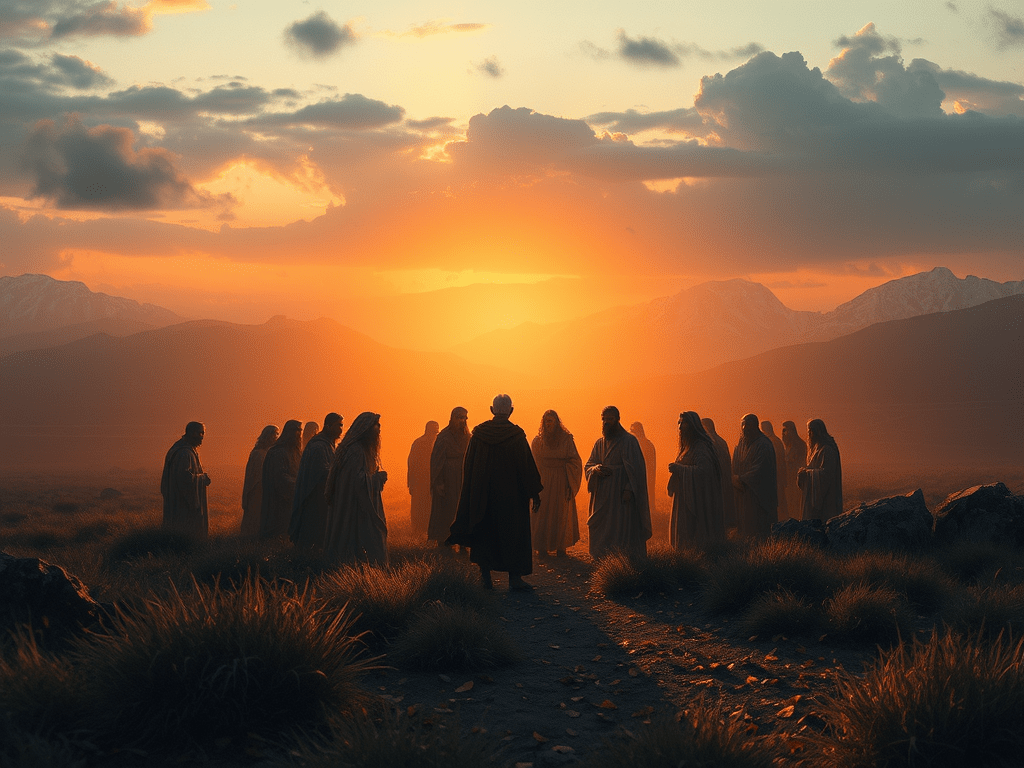
Titles for God’s people: the Remnant and the Elect

What do the terms remnant and elect mean, and to whom do they apply?

Core of the Bible podcast #126: Titles for God’s people – The Remnant and the Elect

As I mentioned last time, we are currently doing a little miniseries on the titles for God’s people. Over these few episodes, we are looking at the following terms in some detail: believer and Christian, the Remnant and the Elect, the Church and the Body, and the Bride of Christ. These are all terms that by most accounts are considered synonymous and applicable to the people today who claim to believe in Messiah. However, I intend to look at scriptural reasons as to why I believe this is not the case, how most of those terms do not apply to God’s people today, and yet how God has worked within these various aspects of his people over the ages to accomplish specific things for the good of all.

The Remnant

Throughout Scripture, the remnant is pictured as a unique group of people who were to be a small portion of all of Israel with whom God would maintain his covenant promises. The term itself means “that which remains” or those who are “left over” or “left behind”. This demonstrates how it has never been the entire nation which was in view, but a specific portion of the nation who were to receive the inheritance.

In modern Christian theology, the idea of a remnant of God’s faithful people is usually thought to be a group of  Christians who are currently remaining faithful during a period of hardship, ultimately to be culminated in the tribulation period at some future time. This comes from a passage in the book of Revelation, especially as it is rendered in the King James Version.

Revelation 12:16-17 KJV – And the earth helped the woman, and the earth opened her mouth, and swallowed up the flood which the dragon cast out of his mouth. And the dragon was wroth with the woman, and went to make war with the remnant of her seed, which keep the commandments of God, and have the testimony of Jesus Christ.

The Seventh Day Adventists have taken this remnant idea and even made it one of their primary points of confession.

  • “The universal church is composed of all who truly believe in Christ, but in the last days, a time of widespread apostasy, a remnant has been called out to keep the commandments of God and the faith of Jesus. This remnant announces the arrival of the judgment hour, proclaims salvation through Christ, and heralds the approach of His second advent.” – Seventh-day Adventist fundamental Belief # 13
  • The remnant spoken of in the Bible is the last group of people living on the earth that God claims as His own. A remnant is exactly the same as the first piece; just so, God’s remnant, His last church, must have the same characteristics as His first church.” – Pastor John J. Grosboll is Director of Steps to Life and pastors the Prairie Meadows Free Seventh-day Adventist Church in Wichita, Kansas

Whether or not you are a Seventh Day Adventist, maybe you agree with that or perhaps you haven’t really considered it in depth, but today I would like to explore the biblical concept of the remnant and the elect and demonstrate how these terms are biblically related, and who they apply to.

So, for a quick historical background, I found that the Wikipedia entry on this topic actually provides some reasonable information to build on.

“The remnant is a recurring theme throughout the Hebrew and Christian Bible. The Anchor Bible Dictionary describes it as “What is left of a community after it undergoes a catastrophe”. The concept has stronger representation in the Hebrew Bible and Christian Old Testament than in the Christian New Testament.

“According to the Book of Isaiah, the “remnant” is a small group of Israelites who will survive the invasion of the Assyrian army under Tiglath-Pileser III (Isaiah 10:20–22). The remnant is promised that they will one day be brought back to the Promised Land by Yahweh (Isaiah 11:11–16). Isaiah again uses the terminology during Sennacherib’s siege of Jerusalem (Isaiah 37).

“The concept of the remnant is taken up by several other prophets, including Micah, Jeremiah and Zephaniah. In Jeremiah 39–40, the “poor people, who had nothing”,[2] who remained in Judah when the rest of its population were deported to Babylon, are referred to as a “remnant”.[3] The post-exilic biblical literature (Ezra–Nehemiah, Haggai and Zechariah) consistently refers to the Jews who have returned from the Babylonian captivity as the remnant.

“New Testament verses that refer to a faithful “remnant” include Romans 11:5 (“Even so then at this present time also there is a remnant according to the election of grace”) and Revelation 12:17 (“And the dragon was wroth with the woman, and went to make war with the remnant of her seed, which keep the commandments of God, and have the testimony of Jesus Christ”). – https://en.wikipedia.org/wiki/Remnant_(Bible)

Now, to get an accurate depiction of who this remnant is, we would do best to refer back to the original scriptures that mention the remnant, and how they are pictured in the prophecies of old.

  • Isaiah 10:21 – The remnant will return, the remnant of Jacob, to the Mighty God.
  • Isaiah 37:31-32 – “The surviving remnant of the house of Judah will again take root downward and bear fruit upward. For a remnant will go out from Jerusalem, and survivors from Mount Zion. The zeal of Yahweh of Armies will accomplish this.’
  • Jeremiah 23:3 – “I will gather the remnant of my flock from all the lands where I have banished them, and I will return them to their grazing land. They will become fruitful and numerous.
  • Micah 2:12 – I will indeed gather all of you, Jacob; I will collect the remnant of Israel. I will bring them together like sheep in a pen, like a flock in the middle of its pasture. It will be noisy with people.
  • Zephaniah 3:13 – The remnant of Israel will no longer do wrong or tell lies; a deceitful tongue will not be found in their mouths. They will pasture and lie down, with nothing to make them afraid.
  • Zechariah 8:12 – “For they will sow in peace: the vine will yield its fruit, the land will yield its produce, and the skies will yield their dew. I will give the remnant of this people all these things as an inheritance.

In these prophetic passages, we can see how this Remnant was identified as a faithful group of believing Israelites or some other title related directly to Israel (Jacob, Judah, “my flock”, this people). These are described as the people who were to receive an inheritance. The apostle Paul captures this remnant terminology in his epistle to the Romans as he quotes Isaiah:

Romans 9:27 – But Isaiah cries out concerning Israel, Though the number of Israelites is like the sand of the sea, only the remnant will be saved…

Paul takes an extended prophecy from Isaiah 10 regarding a judgment upon Israel during the Assyrian captivity and applies it to the events of that first century generation. Isaiah had said only a remnant of Israel would remain faithful during a time of great destruction. Paul then takes that imagery and makes its ultimate application to his generation and the coming destruction upon Jerusalem in that day. He is explaining how much he longs for his Jewish brothers to come to understand the truth, but he knows only a portion will do so. In fact, all of Romans 9-11 is essentially a plea from Paul to God to reconsider his judgment regarding the house of Israel at large.

Romans 10:1-2 – Brothers and sisters, my heart’s desire and prayer to God for Israel is for their salvation. I can testify about them that they have zeal for God, but not according to knowledge.

Throughout these chapters, Paul concedes that the larger group of Israel is being rejected because they are clinging to their own righteousness instead of accepting God’s mercy and grace through Messiah. However, the remnant who have accepted Messiah were to be the light to the rest of the nation, and to the nations in which they had been scattered, thereby including those from among the nations. In this way, representatives from each of the tribes who had been dispersed would also be brought back to God, and in this way “all Israel”, that is, members from all of the twelve tribes, would be saved.

If you’ve reviewed the information covered in my last essay on Believers and Christians, you may recall how I mentioned the terms believer and non-believer were commonly used in the context of those within Israel: some would believe (i.e., the remnant) and others would not believe and remain faithless. This shows how a specific group within the larger population of Israel would be the group that God would “save”, that they would receive the benefits that the rest do not. Paul’s line of reasoning from here in Romans 9 then goes on through chapter 10 into chapter 11, outlining how the majority of Israel is rejected for their faithlessness, while only a portion, the remnant, will be saved by God’s grace.

Romans 11:5 – In the same way, then, there is also at the present time a remnant chosen by grace.

In the same way as what? Using the example of Elijah, the previous verses describe how God always retained a faithful remnant of Israel, even when it was not apparent at that time.

Romans 11:2-5 – God has not rejected his people whom he foreknew. Or don’t you know what the Scripture says in the passage about Elijah ​– ​how he pleads with God against Israel? Lord, they have killed your prophets and torn down your altars. I am the only one left, and they are trying to take my life! But what was God’s answer to him? I have left seven thousand for myself who have not bowed down to Baal. In the same way, then, there is also at the present time a remnant chosen by grace.

Here Paul says there was a remnant “at the present time”. That remnant at that time was the number of faithful from among Israel and Judah, even scattered among the nations, who had placed their faith in Messiah during that generation. The rest of Israel and Judah who were apistos or not faithful were the majority from which the faithful remnant was distinguished. All of this took place in the days of the apostle Paul during the first century.

The Diaspora

In Paul’s day, Jews had remained scattered throughout the known world due to their previous captivities of both the Assyrian and Babylonian empires. This can be evidenced from the list of locations that are described for us in Acts 2, when Jews from all over the known world had returned to Jerusalem for the Feast of Weeks or Pentecost. As the disciples were filled with God’s Spirit and began to preach to all of them about the work of Messiah, a miraculous event of language translation took place:

Acts 2:8-11 – “How is it that each of us can hear them in our own native language? Parthians, Medes, Elamites; those who live in Mesopotamia, in Judea and Cappadocia, Pontus and Asia, Phrygia and Pamphylia, Egypt and the parts of Libya near Cyrene; visitors from Rome (both Jews and converts), Cretans and Arabs ​– ​we hear them declaring the magnificent acts of God in our own tongues.”

All of these place names that may sound strange to our ears today were locations spread out throughout the known world at that time. Notice how Jews had been living in all of these areas, and how God was miraculously drawing a faithful remnant to himself from all of these distant areas. In fact, the text tells us that three thousand from among those various locations became believers in Messiah that day. Peter, speaking to thousands of Jews who had gathered in Jerusalem for the Feast of Weeks speaks to them directly, saying:

Acts 2:39-41 – “For the promise is for you and for your children, and for all who are far off, as many as the Lord our God will call.” With many other words [Peter] testified and strongly urged them, saying, “Be saved from this corrupt generation! ” So those who accepted his message were baptized, and that day about three thousand people were added to them.

God was gathering up the remnant of the faithful Jews and their children from where they had been scattered “afar off” and was calling them to himself. In this way, “all Israel”, that is, representative believers from every tribe, was saved in that generation. The later missionary journeys of the apostle Paul and other disciples only added to this growing group of restored Israelites.

Because this restoration of those estranged tribes was based on faith in Messiah and not just on lineage or ancestry, many converts and “God fearers” (that is, non-Jews who accepted the truth of Yahweh and the Bible but had not officially converted to Judaism) also were considered by Paul to have been included in that “remnant” which was restored in that day.  This is why Paul could boldly state:

Colossians 3:11 – In Messiah there is not Greek and Jew, circumcision and uncircumcision, barbarian, Scythian, slave and free; but Messiah is all and in all.

Once the judgment came to pass on Jerusalem in 68-70 AD, the story of national Israel was concluded. The nation ceased to exist. The prophecies of restoration of the faithful remnant were fulfilled in those closing days before the destruction of Jerusalem, and the scriptural remnant of prophecy no longer exists today.

If we continue to maintain today that anyone who is faithful is included in the remnant, it robs the actual scriptural remnant prophecies of their fulfillment within the nation of Israel during the end of that age. So, if we are to consider ourselves to be in the scriptural remnant today, then we are saying all of those prophecies concerning the remnant have remained unfulfilled for thousands of years and God never fully reconciled his people to himself within that generation as Yeshua, Peter, and Paul had preached.

We know the prophetic perspective was describing a remnant who was to be a faithful minority within the larger nation of Israel. We know they were to be the ones who were to return to the truth of Yahweh compared to the rest of the nation. We know they were to be gathered from all the nations where they had been scattered. Likewise, we know that Messiah taught about this occurring within that generation at that point of time, and we know that the disciples were indeed faithful in reaching the rest of the scattered remnant of Israel throughout the known world with the message of the gospel of the Kingdom in that generation.

When all of these points are taken into consideration, then all of the symmetry of God’s faithfulness with his people is maintained in the fulfillment of everything he had promised them through his prophets. The remnant of that generation is the one that was saved from the disaster that came upon the nation as a whole because of its unfaithfulness, and that’s the meaningful story for the ages. That story is one that can give us confidence that Yahweh God is a God who keeps his word and is faithful to do all that he promises. It is a story that we can praise God for in the demonstration of all that he had promised. Believers today can rejoice that we benefit from the mercy shown to them that was written down for our understanding and recognition of God’s faithfulness with them.

The Elect

Closely aligned with the remnant is the term the “elect”.  In New Testament usage, the elect or election appears to be synonymous with the remnant, or those through whom God would be doing a specific work.

Romans 11:5 – In the same way, then, there is also at the present time a remnant chosen by grace.

The word used here for chosen comes from the same Greek root phrase that is used for the elect, and Paul, speaking of events taking place at that time, says that the elect group, the group of the chosen, was the remnant. Since we just reviewed how the remnant was prophesied to be the group of faithful ones from among Israel, “the elect” then, would be another way of describing those from among Israel who were considered the faithful ones with whom God maintained his covenant relationship in that generation, and through whom God would be glorified.

This term, the elect, is doctrinally charged today because there is a whole doctrine of election or predestination which is built upon this term. However, this is not how the Bible uses the term. Predestination is not an eternal principle for individuals in the sense of some individuals are chosen by God for eternal life and others are not. That is the horror of Calvinistic-type thinking; a philosophical phantom that still haunts the halls of Christendom today.

The elect were the ones who were, as Paul says, a predestined group to believe in Messiah because all of the prophecies had foretold that would occur. Their belief in Messiah during Paul’s generation was indeed the fulfillment of those prophecies! This is why Paul could write:

Romans 8:31-33 – What, then, are we to say about these things? If God is for us, who is against us? He did not even spare his own Son but gave him up for us all. How will he not also with him grant us everything? Who can bring an accusation against God’s elect? God is the one who justifies.

That’s the extent of the “predestination concept” in Scripture. Paul was confirming those remnant prophecies were coming to pass in his day. To be chosen in the sense of the elect was simply a description of active distinction of one group or individuals from others. If you were a believer in Messiah in Paul’s day, then you were a member of the elect group that had been prophesied; therefore who could come against them? It was a bold acknowledgement of prophecy coming to pass before their eyes, and a triumphant statement of hope that God would see them through the difficulties they faced during their extreme persecution in their day, because he had previously declared it to be so.

God’s plan for Israel was consummated within that first century generation, just as Yeshua had predicted that the elect would be gathered from “the four winds”, and the temple would fall before that generation all passed away.

Matthew 24:1-2, 24, 31, 34 – As Yeshua left and was going out of the temple, his disciples came up and called his attention to its buildings. He replied to them, “Do you see all these things? Truly I tell you, not one stone will be left here on another that will not be thrown down …For false messiahs and false prophets will arise and perform great signs and wonders to lead astray, if possible, even the elect. … He will send out his angels with a loud trumpet, and they will gather his elect from the four winds, from one end of the sky to the other…Truly I tell you, this generation will certainly not pass away until all these things take place.”

The apostles recognized the role of the elect during those days, and that they were the recipients and participants in all that had been prophesied before:

2 Timothy 2:10 – This is why I endure all things for the elect: so that they also may obtain salvation, which is in Messiah Yeshua, with eternal glory.

Titus 1:1 – Paul, a servant of God and an apostle of Yeshua Messiah, for the faith of God’s elect and their knowledge of the truth that leads to godliness,

2 John 1:1, 13 – The elder: To the elect lady and her children, whom I love in the truth ​– ​and not only I, but also all who know the truth ​– ​ … The children of your elect sister send you greetings.

Notice how all of these references speak of the elect in the present tense, as the ongoing participation of the Messiah believers in those days. The term itself means those who are chosen, and since they were referred to as “his elect” or “God’s elect”, then we can understand this is a choice that God had made to distinguish this group from others.

The chosen

This concept of being chosen would not be unfamiliar to Hebrew believers, as God had previously and many times demonstrated that the entire nation of Israel had been chosen from among the nations of the world to be the ones to carry his Name.

Ezekiel 20:5-6 – …’This is what the Lord Yahweh says: On the day I chose Israel, I swore an oath to the descendants of Jacob’s house and made myself known to them in the land of Egypt. I swore to them, saying, “I am Yahweh your God.” On that day I swore to them that I would bring them out of the land of Egypt into a land I had searched out for them, a land flowing with milk and honey, the most beautiful of all lands.

A further example of the use of this chosen concept which demonstrates how it is not a term restricted to individual, eternal salvation is how God had made a progression of choices amidst the tribe and family of David. David had been chosen out of all Israel and from among his own family to be king over Israel and Solomon to be king after him.

1 Chronicles 28:4-5 – “Yet Yahweh God of Israel chose me out of all my father’s family to be king over Israel forever. For he chose Judah as leader, and from the house of Judah, my father’s family, and from my father’s sons, he was pleased to make me king over all Israel. “And out of all my sons ​– ​for Yahweh has given me many sons ​– ​he has chosen my son Solomon to sit on the throne of Yahweh’s kingdom over Israel.

God is described here as having chosen Israel as a nation, then Judah as a leading tribe, then David’s family among that tribe, then David as king, then Solomon as king to follow him. All of these “choices” or “elections” are another way of saying those at a given time through whom God was working for his purpose and will to be accomplished. These distinctions of tribes, families, and individuals were isolated from the rest of the nations of the world and the rest of the nation of Israel as a whole because God was going to be working through these specific tribes and individuals during their lifetimes for specific purposes.

Interestingly, another way to demonstrate how this is not some kind of universal election or predestination for all eternity, one needs only to read how all of God’s “chosen” entities in this example, those who were considered “the elect”, had failed at some point. Israel as a whole did not maintain the covenant and was rejected; Judah had failed in his relationship with his father; David failed in the incident with Bathsheba; Solomon failed with corruption through his pagan wives. All these things occurred after they had been “chosen”. The concept of being elect doesn’t mean one is bullet-proof from judgment or failure for all eternity, only that one (or a group) is identified as being used for God’s specific purpose and will at a specific time.

The elect of the first century were simply those who believed Messiah and through whom God maintained his covenantal faithfulness, as contrasted with the rest or the majority of Israel which did not believe in Messiah. This was predestined to occur, being foretold, as we have seen, in all of the “remnant” prophecies.

If I was to try to create an analogy here, it’s as if God was writing a story as a novelist. His “elect” would be the main character (or characters), while all others would be supporting characters in the story he was telling. In this way, he could tell his story through his main characters, even though they were not perfect. They still had their flaws and made their mistakes, just like everyone else does, but they were the focus of the story he was telling, to the exclusion of all of the other details or people in other places that may not be pertinent to the specific story he was telling. This doesn’t mean that no one else was faithful, just that his main characters were living out the point that he was making.

Looked at in this light, the term election becomes less doctrinally charged regarding individual, eternal salvation and begins to take on its rightful meaning regarding the distinctions for specific purposes regarding the nation of Israel as a whole. It is used of those faithful believers amidst Israel through whom God’s will would be accomplished and those to whom his covenant and promises would be maintained. In New Testament application, it was because of the nation’s general disobedience and failing within the covenant (the faithless majority of Israel, the non-believers) that God then refined his chosen people to those who would believe his words through his chosen Messiah. This was a smaller group within the group, including those who had been scattered throughout the known world at that time. Once again, to my way of thinking, the symmetry of the concept is beautiful and poetic within the context of the entire Bible.

If we are to be good Bible students, we need to maintain the distinction that those who are called the elect mentioned in the New Testament writings refers specifically to those first-century believers who accepted the Messiah, both from Israel and from among the nations. Just as the remnant described those same believers, the elect is therefore its synonymous equivalent. Therefore, the remnant and the elect of biblical prophecy was consummated in the first century and no longer exists today.

Believers today

So what about believers today? If we are not to consider ourselves the remnant and we are not the elect, who are we within the biblical narrative? Have I just written us out of the story? By no means!

The apostle Paul speaks to the culmination of all of those prophecies with Israel being the very catalyst that would bring believers from all nations to Yahweh God.

Romans 15:8-9 – For I say that Messiah became a servant of the circumcised [i.e., the Jews] on behalf of God’s truth, to confirm the promises to the fathers, [all of those former prophecies] and so that nations may glorify God for his mercy.

Here Paul then goes into a list of quotes from the Tanakh that demonstrate how God’s ultimate purpose in fulfilling his word to the Jews would ultimately bring people from all nations to himself:

Romans 15:9-12 – As it is written, Therefore I will praise you among the nations, and I will sing praise to your name.  [Psalm 18:49] Again it says, Rejoice, you nations, with his people! [Deuteronomy 32:43] And again, Praise Yahweh, all you nations; let all the peoples praise him! [Psalm 117:1]  And again, Isaiah says, The root of Jesse [i.e., the Messiah] will appear, the one who rises to rule the nations; the nations will hope in him. [Isaiah 11:10]

Today, we are those from among all nations who have come to praise Yahweh through seeing the promises that were confirmed to Israel at the culmination of that age!  We can join together glorifying God for his mercy to his people at that time which has allowed us the same access to him through faith in Messiah, just as they had, and still have to this day. Our hope today is in the same Messiah whom they trusted in faith.

This is our identity in Messiah today: no longer a small remnant within the nation of Israel, but a vast multitude of those who are the receivers of the eternal Kingdom that Messiah inaugurated! We are a rag-tag lot from among every nation and tribe, worshiping the one true God through faith in his Messiah! We are the ongoing fulfillment of the promises made to Abraham (that all nations would be blessed through him), and the promises made to ancient Israel that nations would come to worship their God, Yahweh, and that his Messiah would also rule the nations and become their hope. We are still a people fulfilling prophecy, although we are now fulfilling the prophecies that relate, not to the remnant or the elect, but to the eternal Kingdom of God!

Daniel 2:44 – “In the days of those kings, the God of the heavens will set up a kingdom that will never be destroyed, and this kingdom will not be left to another people. It will crush all these kingdoms and bring them to an end, but will itself endure forever.

Though it may at first feel strange to not be a direct participant in the story of the prophetic remnant or the elect of Scripture, it does not diminish our responsibility to this generation, and every generation into the future. The consummation of the prophecies of the elect remnant of the first century should provide us the hope and inspiration we need to know that God never abandons his faithful, and that those who choose the path of life will be provided for and ultimately be participants in his purposes coming to pass for all eternity. If he fulfilled his prophecies to the elect remnant in the first century, then he will fulfill his prophecies to establish his Kingdom over all the earth. Therefore, we should be encouraged to press on; we must continue to stay on the path of life, to be the city on the hill, the light of the world, and the salt of the earth.

We should be able to pray with the Psalmist:

Psalm 57:11 – God, be exalted above the heavens; let your glory be over the whole earth.


Well, as we wrap up for today, I hope there are at least a couple of concepts and ideas to encourage you to meditate on and to study out further on your own. Next time, we will investigate another related term to this remnant and the elect, the “church”, or the assembly of “called-out-ones,” and how this term has been used in conjunction with another familiar phrase: the Body of Christ. I hope you will be able to come back and visit for more perspectives on these titles of God’s people. But remember, if you have thoughts or comments that you would like to explore further with me, feel free to email me at coreofthebible@gmail.com.

Resurrection part 3: Daniel’s “end of days” resurrection prophecy

A collective resurrection in the last days of the nation of ancient Israel would culminate not just in restoration to the land, but in eternal life.

Core of the Bible podcast #123 – Resurrection part 3: Daniel’s “end of days” resurrection prophecy

We are continuing the third essay today in a four-part series on the topic of resurrection. So far in our exploration of this far-reaching topic, we have viewed instances of individual, bodily resurrections throughout the Bible. We also looked at what Yeshua taught about all the righteous throughout the history of Israel who were still considered as alive to God, since “God is not the God of the dead, but of the living” (Matthew 22:32). And, if you have not yet reviewed part 2 of this study, you may want to take some time do so as I laid down some foundational ideas about motifs and patterns in the Tanakh there.

Last time, we discussed the judgment/restoration motif or theme of collective resurrection, and how judgment is always mentioned in connection with collective resurrection passages. In the prophecies of Isaiah and Ezekiel, judgment had come to pass because of Israel’s unfaithfulness to the covenant of God, and God removed them from the land (the inheritance). We also saw how the language of resurrection was an indicator of restoration to the land and renewal of the inheritance. It wasn’t describing a literal rising of dead bodies from their graves; it was as if the nation were coming back to life from the dead condition of a wasteland after the preceding judgment. If those were the themes that were laid down as foundations prior to the writings of Daniel, then it makes sense to me those same principles should apply to what he wrote, as well.

So, let’s now look at the final description of a collective resurrection in the Tanakh which is written about in the book of Daniel. This passage is unique from the Isaiah and Ezekiel resurrection passages because the result of the collective resurrection that Daniel mentions has to do with not just restoration to the land, but eternal life.

Daniel 12:2  – Many who sleep in the dust of the earth will awake, some to eternal life, and some to disgrace and eternal contempt.

Interestingly, this description of a collective resurrection seems to parallel identically with the teaching of Messiah:

John 5:28-29  – “Do not be amazed at this, because a time is coming when all who are in the graves will hear his voice and come out ​– ​those who have done good things, to the resurrection of life, but those who have done wicked things, to the resurrection of condemnation.

I believe for us to understand Daniel better, we will need to view it together with the teachings of Yeshua. Both of these passages have a larger context which can help us gain some of these insights.

Since we are talking about the judgment/resurrection theme, let’s begin by expanding the scope of Yeshua’s statements in John 5:

John 5:24-30  – “Truly I tell you, anyone who hears my word and believes him who sent me has eternal life and will not come under judgment but has passed from death to life.  Truly I tell you, an hour is coming, and is now here, when the dead will hear the voice of the Son of God, and those who hear will live. For just as the Father has life in himself, so also he has granted to the Son to have life in himself. And he has granted him the right to pass judgment, because he is the Son of Man. Do not be amazed at this, because a time is coming when all who are in the graves will hear his voice and come out ​– ​those who have done good things, to the resurrection of life, but those who have done wicked things, to the resurrection of condemnation.  I can do nothing on my own. I judge only as I hear, and my judgment is just, because I do not seek my own will, but the will of him who sent me.”

Notice, as we saw last time with the prophecies of Isaiah and Ezekiel, Yeshua’s mention of a great resurrection is in conjunction with a great judgment. This judgment is identified as death and condemnation, which are both contrasted with life. Whatever this judgment is, Yeshua explains how he is authorized by the Father to facilitate this judgment as simply a matter of carrying out the Father’s will.

Now, if we turn our attention back to Daniel’s prophecy and widen the context of that passage a little, we will see that the resurrection Daniel talks about is also connected to a great judgment:

Daniel 12:1-2  – At that time Michael, the great prince who stands watch over your people, will rise up. There will be a time of distress such as never has occurred since there was a nation until that time. But at that time all your people who are found written in the book will be delivered.  Many who sleep in the dust of the earth will awake, some to eternal life, and some to disgrace and eternal contempt. 

Notice, there would be an unparalleled time of distress in the time of Daniel’s resurrection. It would be a distress to come upon a nation, the nation of Israel, since the angel mentions it would come upon “your [Daniel’s] people”. This is where some modern translations show their bias by saying something like this time would be the worst time of destruction since “any of the nations have ever existed,” or something along those lines. But the Hebrew says “nation” singular, and the context points to Daniel’s people: Israel. So, Daniel appears to be discussing a specific destruction and judgment which would be coming specifically upon his people, Israel. This will be brought out in little bit as we widen the context of Daniel’s prophecy further.

CONTEXT FOR DANIEL’S PROPHECY

Just as we did with Isaiah’s prophecy last time, we have to remember that the original text of Scripture does not have chapter divisions, so if we are to understand the judgment and resurrection of Daniel 12, we need to find out where this particular vision of Daniel begins so we can determine if there is any mention of when this “time of distress” for Daniel’s people was to take place. In the beginning of chapter 10, we read the following:

Daniel 10:1 – In the third year of King Cyrus of Persia, a message was revealed to Daniel, who was named Belteshazzar. The message was true and was about a great conflict. He understood the message and had understanding of the vision.

This same vision of a great conflict spans all of chapters 10 and 11 and then culminates in chapter 12. Throughout the prophecy, we see that the angelic messenger hints at time markers of when in Israel’s history this vision takes place:

Daniel 10:14 – “Now I have come to help you understand what will happen to your people in the last days, for the vision refers to those days.

So here we see that this vision that Daniel has is going to be taking place to Daniel’s people “in the last days.” In chapter 11 and 12:1 and 4, we receive several more time markers:

Daniel 11:40  – “At the time of the end, the king of the South will engage him in battle, but the king of the North will storm against him with chariots, horsemen, and many ships. He will invade countries and sweep through them like a flood.”

Daniel 12:1-4  – “At that time [the time of the end mentioned at 11:40] Michael, the great prince who stands watch over your people, will rise up. There will be a time of distress such as never has occurred since there was a nation until that time. But at that time all your people who are found written in the book will escape. Many who sleep in the dust of the earth will awake, some to eternal life, and some to disgrace and eternal contempt.  Those who have insight will shine like the bright expanse of the heavens, and those who lead many to righteousness, like the stars forever and ever.  But you, Daniel, keep these words secret and seal the book until the time of the end…”

As captivating as the entirety of Daniel’s vision is, in this study we are focused on the final stage of a collective resurrection and when it was to take place. Throughout the vision this resurrection is described as being at “the time of the end”, “the last days”, “at that time”. But the last days of what? Is it talking about the last days of life on earth as we know it, or possibly something else?

If we continue reading, we see that we receive some additional information that helps to identify these last days.

Daniel 12:5-7  – Then I, Daniel, looked, and two others were standing there, one on this bank of the river and one on the other. One of them said to the man dressed in linen, who was above the water of the river, “How long until the end of these wondrous things? ” Then I heard the man dressed in linen, who was above the water of the river. He raised both his hands toward heaven and swore by him who lives eternally that it would be for a time, times, and half a time.When the power of the holy people is shattered, all these things will be completed.

When was the power of the holy people (Israel) shattered “for a time, times, and half a time”? Again, we must keep in mind that this vision is all about Daniel’s people, Israel, and their history and influence within the world. As the holy people of God, those whom he set apart for himself, it seems to me to make sense that it would have to be a time when their “power” was to be shattered, destroyed and spread around, which is what the word means.

I would submit for your consideration that this shattering into pieces and dispersion occurred at the destruction of the second temple in the three and a half years between 67-70 AD (the time, times, and half a time of Daniel’s prophecy) almost two thousand years ago. At that time Jerusalem was completely destroyed, the Jews that survived were permanently removed from the land, and the temple was brought to the ground with “not one stone left upon another”. The destruction of the temple would be the final indication of “when the power of the holy people is shattered”. If Daniel’s prophecy was completed at that time, then that was the conclusive “end of the days”, the last day and the end of the age of the holy people of Daniel’s time: ancient Israel.

Daniel also mentions the great resurrection was to happen “at that time”. In reading about what Yeshua taught, we see he also discussed a resurrection on something he called “the last day”. Daniel’s “last days” and “time of the end” appear to be equated with the “last day” terminology used by Yeshua and in general understanding among the people of his day. Could these two descriptions be describing the same thing?

RESURRECTION AND THE LAST DAY

John 6:39 – “This is the will of him who sent me: that I should lose none of those he has given me but should raise them up on the last day.

That by Yeshua’s day there was already a general conception of this collective resurrection of the dead is evidenced by Martha as she speaks to Yeshua outside the tomb of her recently deceased brother, Lazarus:

John 11:24 – Martha said to Him, “I know that he will rise again in the resurrection onthe last day.”

I believe Martha’s statement was based on her understanding of Daniel’s collective resurrection. As we saw last time, Yeshua doesn’t correct Martha’s understanding of a collective resurrection, but simply redirects her to an understanding that he himself is the agent of resurrection: “I am the resurrection and the life”. He plainly taught that those who believed in him as the Messiah would receive eternal life, which in Yeshua’s teaching was to be equated with this resurrection life.

In John 6, Yeshua had spoken at length about this resurrection and who would be qualified to participate in it. So, since this “last day rising” seems to be a very specific teaching of Yeshua which is tied to the prophecy of Daniel, let’s take a closer look at how we should be viewing this resurrection perspective which he taught.

John 6:39-40, 44, 54 – And this is the will of him who sent me, that I should lose nothing of all that he has given me, but raise it up on the last day. For this is the will of my Father, that everyone who looks on the Son and believes in him should have eternal life, and I will raise him up on the last day.” … No one can come to me unless the Father who sent me draws him. And I will raise him up on the last day. … Whoever feeds on my flesh and drinks my blood has eternal life, and I will raise him up on the last day.

These four verses in the gospel of John make references to “the last day” that involves a “raising” of some sort as opposed to a possible “losing” of it. Verse 39 states: “And this is the will of him who sent me, that I should lose nothing of all that he has given me, but raise it up on the last day.” In fact, the Greek word used here for lose, apoleso, is used only in this one place in our Greek New Testaments. But it is based on the root appolumi, which can imply a type of destruction, or more accurately, a “losing of something left for destruction”. Looked at in this light, v. 39 can read in a bit more insightful way more literally rendered along these lines:

“And this is the will of him who sent me, that I should lose nothing [to destruction] of all that he has given me, but [instead] raise it up on the last day.”

So this “all” that was given to Yeshua by God is the subject of the raising, as opposed to destruction. He then goes on to explain who it is who will make up the “all”:

John 6:40 – For this is the will of my Father, that everyone who looks on the Son and believes in him should have eternal life, and I will raise him up on the last day.

In this passage, Yeshua is here proclaiming the centrality of faith in him as the Messiah as the qualifier for eternal life and this rising on the last day.Those who were to “look on the Son and believe in him” are the participants in the “all” who will be raised “on the last day”.

And this is where we come to what I consider to be a key teaching in the New Testament writings: Everyone who believed in Yeshua in that day were considered to be the true remnant of faithful Israel. That was the contingent with whom God maintained covenant: those who listened to and obeyed his word through his Messiah. That they would be “raised up” on the last day, using the language of national restoration that we learned from Isaiah and Ezekiel, sets the stage for a great restoration of some type for the believing remnant on the last day.

So, now we know from the passage in John who the “all” are who would be raised up in the last day (the faithful remnant of Israel), and we know how they are qualified for this resurrection (i.e., faith in Messiah). It now becomes natural to ask what is the possible destruction or judgment that they are saved from, and when is the “last day” when this rising was to occur. It then follows to understand what does this resurrection/restoration look like? If we return to the vision of Daniel and link his indicators to the teachings of Yeshua, I think we will find the answers to these very important questions.

THE DESTRUCTION/JUDGMENT

What was the destruction or judgment from which Yeshua was saving the faithful remnant?

Daniel 12:7 – When the power of the holy people is shattered, all these things will be completed.

As I have already suggested earlier, the judgment that was imminent in the day of Yeshua and his disciples was the complete annihilation of the city of Jerusalem, and the removal of the temple system, both of which had become extremely corrupt. The power of the holy people was about to be shattered, once and for all time. This theme of the coming judgment was the theme of both John the baptizer and Yeshua:

Matthew 3:7, 10, 12 – But when he saw many of the Pharisees and Sadducees coming to his baptism, he [John] said to them, “You brood of vipers! Who warned you to flee from the wrath to come? … Even now the axe is laid to the root of the trees. Every tree therefore that does not bear good fruit is cut down and thrown into the fire. … His winnowing fork is in his hand, and he will clear his threshing floor and gather his wheat into the barn, but the chaff he will burn with unquenchable fire.

Matthew 4:17 – From then on Yeshua began to preach, “Repent, because the kingdom of heaven has come near.”

This was to be a judgment on Jerusalem and Israel, not the whole world, as can be seen in the prophecies concerning the resurrection concept. Consider the following statement as Yeshua lashed out against the self-righteous Pharisees and scribes:

Luke 11:50 – …so that the blood of all the prophets [that is, the prophets of Israel], shed from the foundation of the world, may be charged against this generation…”

As we are about to explore further, the coming destruction was to be upon Israel collectively and Jerusalem specifically, in that generation. They had rejected God’s continued efforts through his prophets to bring them back to himself, yet they persisted in pursuing the idolatry of national independence over being the light to the nations as the representative Kingdom of God on the earth. Because of this, they would face the complete destruction, not only of their capital, but of the covenantal system of worship that he had provided them. They had broken the covenant by pursuing idolatry and their priesthood had become corrupt; therefore, it would no longer be a viable means of approaching God. Even so, the covenantal priestly system had served its purpose, and its culmination in producing the Messiah was its fulfillment. However, in rejecting the Anointed One of God, his very own son, they were essentially rejecting Yahweh as their ultimate King and Father, and instead they were choosing to set up their own false and idolatrous king and priesthood.

THE TIMING OF THE LAST DAY

Now that we have established what the coming destruction was, it remains for us to find out if these passages tell us when this judgment was to be poured out. The apostles, represented by Peter’s speech on Pentecost, had picked up on this judgment as a day that was to be occurring soon, within that generation:

Acts 2:40 – And with many other words he bore witness and continued to exhort them, saying, “Save yourselves from this crooked generation.”

Why were the disciples so focused on that generation? Well, we can see that they were simply following the lead of their Master. A simple search of the phrase “this generation” provides many provocative verses illustrating the fact that Yeshua, along with his disciples, had an urgent sense of imminency, warning the people that this judgment would soon be carried out.

Mark 13:30 – Truly, I say to you, this generation will not pass away until all these things take place.

Luke 21:31-32, 34 – So also, when you see these things taking place, you know that the kingdom of God is near. Truly, I say to you, this generation will not pass away until all has taken place. … “But watch yourselves lest your hearts be weighed down with dissipation  and drunkenness and cares of this life, and that day come upon you suddenly like a trap.

Once again, this was to be a judgment on Israel, not the whole world, as can be seen in the teachings of the apostles:

Acts 2:14-18  – Peter stood up with the Eleven, raised his voice, and proclaimed to them, “Fellow Jews and all you residents of Jerusalem, let this be known to you, and pay attention to my words. “For these people are not drunk, as you suppose, since it’s only nine in the morning. “On the contrary, this [what you are seeing and hearing right now] is what was spoken through the prophet Joel:  “And it will be in the last days, says God, [that is, the last days of Israel, according to Daniel] that I will pour out my Spirit on all people; then your sons and your daughters will prophesy, your young men will see visions, and your old men will dream dreams.  I will even pour out my Spirit on my servants in those days, both men and women and they will prophesy.”

Hebrews 1:1-2  – Long ago God spoke to our ancestors by the prophets at different times and in different ways. In these last days, he has spoken to us by his Son…

1 John 2:18  – Children, it is the last hour. And as you have heard that antichrist is coming, even now many antichrists have come. By this we know that it is the last hour.

Peter, under the inspiration of the holy Spirit, prophesied that Joel’s prophecy of the last days was taking place at that time through the pouring out of the Spirit on that day of Pentecost, and that that generation was the one on which judgment was also about to be poured out. The writer of Hebrews says “these last days”, the days in which they were living. John goes even further and says “it is the last hour”.

The destruction of that day, that last day, was to be hanging over that generation in their day, not all generations moving forward for thousands of years. The judgment that was coming upon Jerusalem and the religious system was pointed straight at that specific generation two thousand years ago, and came to pass just as Yeshua predicted when Jerusalem fell to the Roman armies in 68-70 AD; within that generation.

So, now that we have seen what was the judgment to come (the destruction of Jerusalem/temple) and when it was to take place (that generation in the first century, when the power of the holy people was shattered), what was this resurrection and restoration supposed to be?

WHAT THE FINAL RESTORATION WOULD LOOK LIKE

After relating the parable of the vineyard owner to the unfaithful chief priests and elders, Yeshua summarized its message by stating the following:

Matthew 21:43 – Therefore I tell you, the kingdom of God will be taken away from you and given to a people producing its fruits.

To their shame, Israel as a whole no longer carried the Name of God, and Yahweh was beholden to renew his faithful people (the remnant who believed in Messiah) from not only Israel, but from those scattered among the nations at that time. While Yeshua said he was only sent to the lost sheep of Israel (Matthew 15:24), he also knew that he would be reaching out to the scattered remnant of Israel among the diaspora. The diaspora was the dispersion of Israelites that had taken place during the Assyrian and Babylonian captivities hundreds of years earlier during the times of Isaiah and Ezekiel which we reviewed last time. Not all of the Jews had returned to Israel after those captivities; in fact there were contingents of Jewish communities all throughout the Roman empire in Yeshua’s day. Some of them, such as Alexandria and Babylon, were quite large.

John 10:16 – And I have other sheep that are not of this fold. I must bring them also, and they will listen to my voice. So there will be one flock, one shepherd.

Yeshua was teaching that he would reunite these “lost tribes” with Judah once again, as was prophesied by God through Ezekiel:

  • Ezekiel 34:22-23 – I will rescue my flock; they shall no longer be a prey. And I will judge between sheep and sheep. And I will set up over them one shepherd, my servant David, and he shall feed them: he shall feed them and be their shepherd.
  • Ezekiel 37:19, 21-24 – say to them, Thus says the Lord Yahweh: Behold, I am about to take the stick of Joseph (that is in the hand of Ephraim) and the tribes of Israel associated with him. And I will join with it the stick of Judah, and make them one stick, that they may be one in my hand. … then say to them, Thus says the Lord Yahweh: Behold, I will take the people of Israel from the nations among which they have gone, and will gather them from all around, and bring them to their own land. And I will make them one nation in the land, on the mountains of Israel. And one king shall be king over them all, and they shall be no longer two nations, and no longer divided into two kingdoms. They shall not defile themselves anymore with their idols and their detestable things, or with any of their transgressions. But I will save them from all the backslidings in which they have sinned, and will cleanse them; and they shall be my people, and I will be their God. “My servant David shall be king over them, and they shall all have one shepherd. They shall walk in my rules and be careful to obey my statutes.

This was the urgency with which the disciples preached the message of the Kingdom to that generation, and those spread out throughout the known world via the missionary journeys. The disciples had heard Yeshua issue the “Great Commission” and they ardently strove for the completion of that task.

  • Matthew 28:18-20 – Yeshua came near and said to them, “All authority has been given to me in heaven and on earth. “Go, therefore, and make disciples of all nations, baptizing them in the name of the Father and of the Son and of the Holy Spirit, “teaching them to observe everything I have commanded you. And remember, I am with you always, to the end of the age.
  • Acts 1:8 – “But you will receive power when the Holy Spirit has come on you, and you will be my witnesses in Jerusalem, in all Judea and Samaria, and to the ends of the earth.”

Although these passages have spurred many great missionary efforts in the centuries since that time, we read that the apostle Paul says this mission of reaching the known world was actually accomplished within his lifetime, through his ministry and the ministry of the disciples of Messiah within that generation.

Colossians 1:23  –  …This gospel has been [past tense] proclaimed in all creation under heaven, and I, Paul, have become a servant of it.

Additionally, in the process of rescuing the “lost sheep” of Israel, many non-Jewish God-fearers who attended the synagogues and had learned about the God of the Hebrews would also be brought in to the faithful remnant of that generation. This is how God’s Kingdom would grow beyond the nation and scattered communities of Israel into the whole world.

Yeshua had even spoken about how some non-Jews would be in a more righteous position than the wicked Jews of his day.

Matthew 12:41-42  – “The men of Nineveh will stand up at the judgment with this generation and condemn it, because they repented at Jonah’s preaching; and look ​– ​something greater than Jonah is here. “The queen of the south will rise up at the judgment with this generation and condemn it, because she came from the ends of the earth to hear the wisdom of Solomon; and look ​– ​something greater than Solomon is here.

This teaching implies that Yeshua’s righteous declarations from Yahweh were to be corroborated by the righteous dead from the past, and they would, in a sense, stand in agreement with his decision when judgment was to come upon Israel. Interestingly, he lists Ninevites and the Queen of the South (Sheba) as being witnesses to the righteousness of his teaching, none of whom are Israelites. It follows, then, that even those of the Gentile nations who were obedient to Yahweh and who revered his majesty would be considered righteous in God’s eyes and stand in agreement with the judgment that was about to come upon the nation of Israel.

Acts 10:34-35  – Peter began to speak: “Now I truly understand that God doesn’t show favoritism, “but in every nation the person who fears him and does what is right is acceptable to him.

Paul hints at this as well:

Romans 9:30  – What should we say then? [those among] the nations who did not pursue righteousness, have obtained righteousness ​– ​namely the righteousness that comes from faith.

Romans 10:19-21  – But I ask, “Did Israel not understand? ” First, Moses said, I will make you jealous of those who are not a nation; I will make you angry by a nation that lacks understanding.  And Isaiah says boldly, I was found by those who were not looking for me; I revealed myself to those who were not asking for me.  But to Israel he says, All day long I have held out my hands to a disobedient and defiant people.

So those Ninevites who actually repented at Jonah’s preaching, and the Queen of Sheba who glorified Yahweh at the wisdom and majesty of Solomon would be in a position to condemn the Jewish leaders in Yeshua’s day because the Jewish leaders did not accept their own Messiah. These non-Hebrew God-fearers would, in a sense, “stand up” in condemnation upon all in that wicked generation who rejected Messiah. The resurrection of condemnation was upon those who rejected Messiah (those who did wicked things). However, the righteous who had obeyed and glorified Yahweh (those who have done good things) would receive eternal life because of their righteous actions.

This type of language seems to me to imply it was not a literal resurrection that is being talked about in any of these passages, but the language of resurrection is being used to illustrate an historical witness to the truth of Messiah and his teachings which would be demonstrated as judgment came to pass upon the nation of Israel in that generation.

As we have seen,  the theme of resurrection is restoration to the inheritance. However, now that eternal life has entered the picture through Daniel and Yeshua’s prophecies, Israel (the righteous remnant inclusive of Messiah-believing God-fearers) is not just being restored to the land, but is being created into something new: the eternal spiritual city of Zion, their true inheritance.

ETERNAL LIFE IN DANIEL

Let’s return to Daniel again, as we need to be reminded of the main thrust of the resurrection Daniel discusses: eternal life. As mentioned earlier, this element of eternal life is what separates Daniel’s prophecy from those of Isaiah and Ezekiel that we reviewed last time. This fact, along with its specific timing and corroboration with Yeshua’s teaching places the representative resurrection/restoration of believers into the sphere of the eternal, and not just a worldly kingdom. The corrupted fleshly city of Jerusalem was about to be transformed into the spiritual city on a hill, the “true light of the world which could not be hidden,” (Matthew 5:14).

Indications given by Yeshua suggest that he is talking beyond just a national restoration to a spiritual one. He connects this resurrection on the last day with eternal life within the Kingdom of God.

John 6:40 – For this is the will of my Father, that everyone who looks on the Son and believes in him should have eternal life, and I will raise him up on the last day.

That this was to be a spiritual kingdom and not a fleshly one is evidenced by the additional element of eternal life in both Daniel’s prophecy and the teaching of Yeshua on resurrection. Eternal life and principles can only be obtained in a spiritual reality, not a physical kingdom. Everything within this natural world is temporary and subject to decay.

2 Corinthians 4:18  – So we do not focus on what is seen, but on what is unseen. For what is seen is temporary, but what is unseen is eternal.

Ezekiel had said the people of Israel would be gathered as “one nation in the land, on the mountains of Israel”.

Ezekiel 37:21-22  – “tell them, ‘This is what the Lord Yahweh says: I am going to take the Israelites out of the nations where they have gone. I will gather them from all around and bring them into their own land. “I will make them one nation in the land, on the mountains of Israel, and one king will rule over all of them. They will no longer be two nations and will no longer be divided into two kingdoms.

The truest mountain of Israel is Mount Zion, the prophetic new Jerusalem. The writer of Hebrews illustrated this contrast between Mount Sinai (fleshly Israel) with Mount Zion (spiritual Israel):

Hebrews 12:18, 22-24  – For you have not come to what could be touched, to a blazing fire, to darkness, gloom, and storm, … Instead, you have come to Mount Zion, to the city of the living God (the heavenly Jerusalem), to myriads of angels, a festive gathering, to the assembly of the firstborn whose names have been written in heaven, to a Judge, who is God of all, to the spirits of righteous people made perfect, and to Yeshua, the mediator of a new covenant, and to the sprinkled blood, which says better things than the blood of Abel.”

Verse 23 says it is on this mountain, Mount Zion, where the “spirits of righteous people” are made perfect. I believe this is a description of the resurrection of the righteous, something which the writer to the Hebrews was saying was accomplished in that day. This could only have come to pass in a spiritual sense, and not a literal, earthly sense.

To carry this idea further, let’s look at the apostle Paul’s writings about resurrection. Yeshua had taught that his Kingdom was a spiritual Kingdom, not an earthly one. When conversing with Pilate before his crucifixion he said the following:

John 18:36 – “My kingdom is not of this world,” said Yeshua. “If my kingdom were of this world, my servants would fight, so that I wouldn’t be handed over to the Jews. But as it is, my kingdom is not from here.”

In a similar sense, the apostle Paul taught that flesh and blood could not inherit the true Kingdom.

1 Corinthians 15:50  – What I am saying, brothers, is this: Flesh and blood cannot inherit the kingdom of God, nor can corruption inherit incorruption.

This shows how fleshly Israel could never become the true Kingdom of God; a transformation had to take place. He then goes on to explain the “mystery” of that transformation which was about to take place within that generation.

1 Corinthians 15:51-54 – Listen, I am telling you a mystery: We will not all fall asleep, but we will all be changed, in a moment, in the twinkling of an eye, at the last trumpet. For the trumpet will sound, and the dead will be raised incorruptible [judgment will be complete], and we will be changed. For this which is perishable [national Israel] must be clothed with imperishability [the eternal Kingdom], and this which is subject to death must be clothed with immortality. When this perishable is clothed with imperishability, and this which is subject to death is clothed with immortality, then the saying that is written will take place: Death has been swallowed up in victory.

We have been taught for so long that Paul is talking about individual resurrection bodies here that we have missed the “mystery” of what he is actually describing in this passage. I believe this famous passage of Paul is not describing individual resurrection, but the resurrection of the body of Israel into the body of Messiah; from old man (Adam, of the earth) to Messiah (the man of heaven); from a fleshly, corrupt nation into a spiritual, immortal entity; from old Jerusalem (earthly) to New Jerusalem (heavenly). This is what all of the prophetic pictures were pointing to and was to become the majestic culmination of the work of God in restoring his people to their true inheritance.

1 Corinthians 15:36-37  – …What you sow does not come to life unless it dies. And as for what you sow ​– ​you are not sowing the body that will be, but only a seed, perhaps of wheat or another grain.

Again, I believe he is not talking about individual bodies, but the seed of national Israel was planted (destroyed) only to become something much more than a seed can be. In order for the seed to sprout, it must die. However, it then nourishes and supports the growth of whatever type of plant will grow out of it.

1 Corinthians 15:22-23, 28  – For just as in Adam [the seed of Israel] all die, so also in Messiah [that which grows out of the seed] all will be made alive.  But each in his own order: Messiah, the firstfruits [fruit that comes from a seed]; afterward, at his coming, those who belong to Messiah [the faithful remnant]. … When everything is subject to Messiah, then the Son himself will also be subject to the one who subjected everything to him, so that God may be all in all.

Messiah had said he would pass judgment on that generation, which was accomplished through the destruction of Jerusalem and the temple by the Roman armies. In the process of destroying his enemies, the righteous dead were considered to have received their inheritance (the eternal Kingdom) jointly with the remaining living believers (i.e., the faithful remnant) who were delivered, just as he had said.

This entire process was the outworking of the the resurrection to life and the resurrection to condemnation that both Daniel and Yeshua prophesied. The resurrection of the wicked (that is, the wicked receiving their sentence) was evidenced by the destruction once and for all of the idolatrous nation, where the fruition of all past wickedness was judged in totality. This judgment is where God and his Messiah were vindicated against unfaithful Israel forever.

By contrast, the great resurrection of the righteous was the “mystery” transformation of earthly Israel into the eternal Israel, where all of the righteous from all ages would be united. The New Jerusalem, the great Zion of prophecy, would stand as an eternal habitation of those who would welcome believers in Messiah throughout all ages from that point forward.

In that generation, justice upon the enemies of God and his Messiah (the unfaithful Jews) had been completed and the eternal Kingdom was firmly established. The last days of ancient Israel was when this great judgment and resurrection took place.

SUMMARY

With the wide-ranging scope of all that we have covered in this series so far, let me see if I can somehow begin to pull some of the pieces together to summarize it.

Judgment: The prophecies of collective resurrection always occur with a theme of judgment. When Israel was unfaithful, they were destroyed and removed from the land. In the first century, this culminated in the non-believing Jews who were condemned and destroyed in the fires of Jerusalem’s destruction in 68-70 AD. The wicked dead were considered included in the judgment of that generation.

Restoration: Restoration to the inheritance is the theme of collective resurrection. There was always a faithful remnant who would become reestablished to their inheritance. In the first century, the faithful remnant of Israel (those who believed in Messiah) were collected from among the nations. The two sticks became one; the lost sheep were found. But their inheritance was no longer the physical land, but a spiritual inheritance. All of the righteous share in this inheritance.

Eternal life: The prophecy of Daniel and the teachings of Yeshua agree that a collective resurrection in the last days of the nation of ancient Israel would culminate not just in restoration to the land, but in eternal life. This life was granted to all who believed, and extended into the age to come beyond death, what Yeshua also calls the resurrection.

The resurrection written by Paul: the body (fleshly Israel) died and was resurrected into spiritual Israel as prophetic Zion. The resurrection body (of believers) grew from the seed of Israel into the eternal city on the hill, the new Jerusalem.

The spiritual and eternal nature of this Kingdom will be emphasized further in our next installment in this resurrection series as we look at the implications of the most famous resurrection in all of history: the resurrection of Yeshua the Messiah.


Well, with everything we’ve covered today, I’m hoping there’s at least a couple of concepts and ideas to meditate on and to study out further on your own. But remember, if you have thoughts or comments that you would like to explore further with me, feel free to email me at coreofthebible@gmail.com.

The eternal kingdom of faithfulness

Believers are challenged to demonstrate their true allegiance as citizens of an everlasting kingdom.

Believers are challenged to demonstrate their true allegiance as citizens of an everlasting kingdom.

If one thing is abundantly clear from the Bible, it is that the fate and longevity of the kingdom of Israel depended on the integrity and righteousness of the king. While there are numerous examples of this, Jeroboam son of Nebat , the first king over the ten tribes of the northern kingdom, set an awful precedent of idolatry which was followed by many kings after him. He created idols of golden calves in the north and south so people would not have to go to Jerusalem to worship. He created his own made-up holiday in the eighth month encouraging the Israelites to have a festival and make sacrifices. In short, he corrupted the northern kingdom with extreme idolatry. Other northern kings followed in his footsteps:

2 Kings 15:8-9 – In the thirty-eighth year of Judah’s King Azariah, Zechariah son of Jeroboam reigned over Israel in Samaria for six months. He did what was evil in Yahweh’s sight as his fathers had done. He did not turn away from the sins Jeroboam son of Nebat had caused Israel to commit.

2 Kings 15:17-18 – In the thirty-ninth year of Judah’s King Azariah, Menahem son of Gadi became king over Israel, and he reigned ten years in Samaria. He did what was evil in Yahweh’s sight. Throughout his reign, he did not turn away from the sins Jeroboam son of Nebat had caused Israel to commit.

2 Kings 15:23-24 – In the fiftieth year of Judah’s King Azariah, Pekahiah son of Menahem became king over Israel in Samaria, and he reigned two years. He did what was evil in Yahweh’s sight and did not turn away from the sins Jeroboam son of Nebat had caused Israel to commit.

The two southern tribes of Judah and Benjamin also had their own bad representative in the person of Ahaz.

2 Chronicles 28:1-4 – Ahaz was twenty years old when he became king, and he reigned sixteen years in Jerusalem. He did not do what was right in Yahweh’s sight like his ancestor David, for he walked in the ways of the kings of Israel and made cast images of the Baals. He burned incense in Ben Hinnom Valley and burned his children in the fire, imitating the detestable practices of the nations Yahweh had dispossessed before the Israelites. He sacrificed and burned incense on the high places, on the hills, and under every green tree.

The account in Chronicles relates that the result of this wickedness and rampant idolatry of Ahaz led to the humbling of the kingdom of Judah:

2 Chronicles 28:19 – For Yahweh humbled Judah because of King Ahaz of Judah, who threw off restraint in Judah and was unfaithful to Yahweh.

I could equally list a group of good kings who did what was right and good in God’s eyes, such as Joash or Hezekiah, who accomplished great reforms and sought to remove all idolatry and wrongdoing from the land.

But the point remains that the conditions in the kingdom were dependent on the attitude and actions of the king. If they obeyed, they were blessed; if they disobeyed, they suffered from foreign oppression, poor harvests, and war.

The good news is that the eternal kingdom of God has a righteous king! When Yeshua arrived to announce the kingdom of God, he represented it as a kingdom of repentance, holiness, integrity, peace, and faithful obedience to God.

Matthew 5:3-10 – “Blessed are the poor in spirit, for the kingdom of heaven is theirs. Blessed are those who mourn, for they will be comforted. Blessed are the humble, for they will inherit the earth. “Blessed are those who hunger and thirst for righteousness, for they will be filled. Blessed are the merciful, for they will be shown mercy. Blessed are the pure in heart, for they will see God. Blessed are the peacemakers, for they will be called sons of God. Blessed are those who are persecuted because of righteousness, for the kingdom of heaven is theirs.”

The writer of Hebrews tells us that the kingdom of Messiah is patterned after the example of Melchizedek, whose very name means “king of righteousness.”

Hebrews 6:19-20 – We have this hope as an anchor for the soul, firm and secure. It enters the inner sanctuary behind the curtain. Yeshua has entered there on our behalf as a forerunner, because he has become a high priest forever according to the order of Melchizedek.
Hebrews 7:1-2 – For this Melchizedek, king of Salem, priest of God Most High, met Abraham and blessed him as he returned from defeating the kings, and Abraham gave him a tenth of everything. First, his name means king of righteousness, then also, king of Salem, meaning king of peace.

However, Yeshua instructed Pilate that his kingdom was not one that was to be set up in this world. It was not to be a physical kingdom that would be established at that time to overthrow the Roman oppression that Israel was facing .

John 18:36 – “My kingdom is not of this world,” said Yeshua. “If my kingdom were of this world, my servants would fight, so that I wouldn’t be handed over to the Jews. But as it is, my kingdom is not from here.”

The apostle Paul continued this teaching that the kingdom of God is a spiritual kingdom, and not one that is on this earth.

1 Corinthians 15:50 – What I am saying, brothers and sisters, is this: Flesh and blood cannot inherit the kingdom of God, nor can corruption inherit incorruption.

The kingdom that was established at that time was a spiritual kingdom, because only a spiritual kingdom can last for eternity. And the king of this kingdom must be immortal, as Yeshua demonstrated by his resurrection. Anything that is physically of this world is temporary, even if it were a kingdom to last a thousand years or more. According to Daniel’s interpretation of Nebuchadnezzar’s dream, the kingdom that God set up through his Messiah was to be an everlasting kingdom.

Daniel 2:44 – “In the days of those kings [i.e., the Romans], the God of the heavens will set up a kingdom that will never be destroyed, and this kingdom will not be left to another people. It will crush all these kingdoms and bring them to an end, but will itself endure forever.

True to form, every kingdom of Daniel’s prophecy, including the rebellious kingdom of ancient Israel, had to be brought to an end. In the death of the national kingdom was the birth of the spiritual and everlasting kingdom. The physical kingdom by its very nature could not and would not last forever.

Daniel 12:6-7 – One of them said to the man dressed in linen, who was above the water of the river, “How long until the end of these wondrous things? ” Then I heard the man dressed in linen, who was above the water of the river. He raised both his hands toward heaven and swore by him who lives eternally that it would be for a time, times, and half a time. When the power of the holy people is shattered, all these things will be completed.

The power of the holy people, national Israel, was shattered after three and a half years of fighting with the Romans, and the city and temple fell in 70 AD. That was the time of the end spoken of by the angel to Daniel.

Daniel 12:8-9 – I heard but did not understand. So I asked, “My lord, what will be the outcome of these things? ” He said, “Go on your way, Daniel, for the words are secret and sealed until the time of the end.

Paul said that at the time of the end the kingdom of Messiah would be placed under the authority of God the Father for all eternity

1 Corinthians 15:24, 28 – Then comes the end, when he hands over the kingdom to God the Father, when he abolishes all rule and all authority and power. … When everything is subject to Messiah, then the Son himself will also be subject to the one who subjected everything to him, so that God may be all in all.

This is the kingdom that exists today. All rightful rule and authority belongs Messiah under the auspices of God the Father, not to the temporary nations and kingdoms of this world. Believers may be living in various kingdoms and nations today, but they are first and foremost citizens of the eternal spiritual kingdom that continues to grow throughout the earth. This is the high calling of those who have been drawn to God through faith in his Messiah. The kingdom of Messiah is a kingdom of repentance, holiness, integrity, peace, and faithful obedience to Yahweh. Nations of this earth may come and go, but it is the kingdom of God which will last throughout all eternity, and the eternal open invitation will continually remain for all who will hear:

Revelation 22:17 – Both the Spirit and the bride say, “Come! ” Let anyone who hears, say, “Come! ” Let the one who is thirsty come. Let the one who desires take the water of life freely.


If you enjoy these daily articles, be sure to visit the growing archive of the Core of the Bible podcast. Each week we take a more in-depth look at one of the various topics presented in the daily blog. You can view the podcast archive on our Podcast Page, at Core of the Bible on Simplecast, or your favorite podcast streaming service.

Now also on YouTube, find us at: Core of the Bible on YouTube.

Questions or comments? Feel free to email me directly at coreofthebible@gmail.comdcrex

How we can sanctify ourselves for God’s use in any situation

When we refine ourselves in God’s Word, we can continually prepare ourselves to be the most useful to him.

Core of the Bible podcast #82 – How we can sanctify ourselves for God’s use in any situation

Today we will be looking at the topic of holiness or sanctification, and how our ongoing commitment to God’s word distinguishes us beyond just participating in God’s Kingdom in ways that are more beneficial for God’s overall purposes.

Paul wrote to Timothy:

2 Timothy 2:20-21 – “In a large house there are dishes and bowls of all kinds: some are made of silver and gold, others of wood and clay; some are for special occasions, others for ordinary use. Those who make themselves clean from these things will be used for special purposes, because they are dedicated and useful to their Master, ready to be used for every good deed.”

Holiness is about being sanctified or set apart for God’s specific purposes. In the example that Paul uses here with Timothy, there is also an ongoing refinement that is similar to recognizing the differences between ordinary plates for everyday use and fine china that would be used for special occasions. There is a cleansing or refining process that he mentions: “those who make themselves clean.”

So, let’s take a closer look at this process of sanctification or being set apart. Sanctification is clearly a process that God performs by calling people to himself but is also partly a process that we are responsible for, as well, as we walk in the way that he has called us to.

To help break this down a little further, I’d like to focus on these two aspects in separate sections; the first part of the equation is God’s calling and setting apart his own for himself. The second part is how we continue that process of sanctification as we live out our lives within the Kingdom.

I believe this first part can best be illustrated by reviewing a parable of Yeshua in which he outlines this process of God calling a people to himself. Now, the context of Yeshua’s parable appears to have been given in the house of one of the Pharisees, who had invited many individuals to a banquet at his home.

Luke 14:1 – “One Sabbath, when he went in to eat at the house of one of the leading Pharisees, they were watching him closely.”

When Yeshua then sees how those who were invited chose the best seats, he taught them with a parable on humility.

Luke 14:7 – “He told a parable to those who were invited, when he noticed how they would choose the best places for themselves.”

This parable is summarized in the following verses:

Luke 14:10-11 – “But when you are invited, go and recline in the lowest place, so that when the one who invited you comes, he will say to you, ‘Friend, move up higher.’ You will then be honored in the presence of all the other guests. “For everyone who exalts himself will be humbled, and the one who humbles himself will be exalted.”

So this lesson in humility spurred on a further conversation, as he then received a question from one of those at the table:

Luke 14:15 – “When one of those who reclined at the table with him heard these things, he said to him, ‘Blessed is the one who will eat bread in the kingdom of God!'”

At this point, Yeshua spoke to the group in another parable, the parable of the wedding banquet. It appears to have been one of the central teachings of Yeshua as it is also recorded in a parallel passage in Matthew 22. Here is Matthew’s version regarding who is called.

Matthew 22:1-3 – “Once more Yeshua spoke to them in parables: ‘The kingdom of heaven is like a king who gave a wedding banquet for his son. He sent his servants to summon [call] those invited to the banquet, but they didn’t want to come.'”

This parable, which as we shall see is also a prophecy, neatly outlines the institution of the Kingdom of God at Messiah’s coming. Those who were invited to the banquet were the Jews, and yet most of them refused to recognize him as their Messiah.

Matthew 22:4-6 – “Again, he sent out other servants and said, ‘Tell those who are invited: See, I’ve prepared my dinner; my oxen and fattened cattle have been slaughtered, and everything is ready. Come to the wedding banquet.’ “But they paid no attention and went away, one to his own farm, another to his business, while the rest seized his servants, mistreated them, and killed them.”

This illustrates the period of persecution that was unleashed upon the believers in the first century. Yeshua had warned the religious leaders that they would do these horrendous things, and he also had prepared his followers that this will be done to them.

Matthew 23:34 – “This is why I am sending you [religious leaders] prophets, sages, and scribes. Some of them you will kill and crucify, and some of them you will flog in your synagogues and pursue from town to town.”

Matthew 24:9 – “Then they will hand you [you followers of mine] over to be persecuted, and they will kill you. You will be hated by all nations because of my name.”

So this parable can be shown to be more than just an illustration of a spiritual truth, but of a coming outworking of God’s purposes, as well. In a declaration of finality, Yeshua then explains the response of the king to those who had refused his call.

Matthew 22:7 – “The king was enraged, and he sent out his troops, killed those murderers, and burned down their city.”

This was the same prophetic foresight that Yeshua predicted in another context.

Luke 21:20 – “When you see Jerusalem surrounded by armies, then recognize that its desolation has come near.”

This actually did occur within that generation, as the city of Jerusalem was burned down and the temple was destroyed, just as Yeshua had predicted.

Now the completion of the parable is summarized succinctly by Luke in his gospel:

Luke 14:21-24 – “…Then in anger, the master of the house told his servant, ‘Go out quickly into the streets and alleys of the city, and bring in here the poor, maimed, blind, and lame.’ ” ‘Master,’ the servant said, ‘what you ordered has been done, and there’s still room.’ Then the master told the servant, ‘Go out into the highways and hedges and make them come in, so that my house may be filled. For I tell you, not one of those people who were invited will enjoy my banquet.’ “

This was an indication that the call of God had to be extended to the Jews first, but when they refused to come, the call or invitation then went out to whomsoever would come.

Peter had proclaimed this same message to the religious leaders in Jerusalem.

Acts 3:13, 15, 25-26 – “The God of Abraham, Isaac, and Jacob, the God of our ancestors, has glorified his servant Yeshua, whom you handed over and denied before Pilate, though he had decided to release him. … You killed the source of life, whom God raised from the dead; we are witnesses of this. … You are the sons of the prophets and of the covenant that God made with your ancestors, saying to Abraham, And all the families of the earth will be blessed through your offspring. God raised up his servant and sent him first to you to bless you by turning each of you from your evil ways.”

Paul reiterated this principle that was also used on his missionary journeys prior to the destruction of Jerusalem. He would visit a city and first present the kingdom message to the Jews, and then to a wider audience, whoever would listen.

Acts 13:45-48 – “But when the Jews saw the crowds, they were filled with jealousy and began to contradict what Paul was saying, insulting him. Paul and Barnabas boldly replied, ‘It was necessary that the word of God be spoken to you first. Since you reject it and judge yourselves unworthy of eternal life, we are turning to the Gentiles. For this is what Yahweh has commanded us: “I have made you a light for the Gentiles to bring salvation to the end of the earth.”‘ When the Gentiles heard this, they rejoiced and honored the word of Yahweh, and all who had been appointed to eternal life believed.”

Paul also taught the universality of the gospel of the Kingdom message to the Roman congregation.

Romans 1:16 – For I am not ashamed of the gospel, because it is the power of God for salvation to everyone who believes, first to the Jew, and also to the Greek.

The call or invitation of God was to become universal once the Jews had had an opportunity to respond first; if they rejected it, God would reach out to whoever would listen and believe. In the grandest sense, this opportunity of the Jews to respond to God’s mercy was demonstrated to have been completed once the destruction of Jerusalem had occurred. From that point on, all who would then hear with “ears to hear” would then be invited and called into the Kingdom.

In a moment, we will look more closely at how this calling is worked out in the life of a believer once they have responded favorably to God’s invitation.


So with the completion of the call of God going out specifically to his people of that day and age, the Jews, God’s call then moves into a universal sphere of all who will listen to the good news of the gospel of the Kingdom. This is why Paul and the early believers were so anxious to ensure as many as people as possible could hear and understand the gospel message.

Romans 10:14-15 – “How, then, can they call on him they have not believed in? And how can they believe without hearing about him? And how can they hear without a preacher? And how can they preach unless they are sent? As it is written: How beautiful are the feet of those who bring good news.”

Once a person has responded to the call of God, God then sets them apart, or sanctifies them by placing them within the body of believers who make up the Kingdom of God.

Ephesians 2:10 – “God has made us what we are. He has created us in Messiah Yeshua to live lives filled with good works that he has prepared for us to do.”

According to Paul, believers are “created in Messiah Yeshua.” This demonstrates how one becomes initially set apart by believing in Messiah; when that occurs, there is a “new creation” that takes place.

2 Corinthians 5:16-17 – “From now on, then, we do not know anyone from a worldly perspective. Even if we have known Messiah from a worldly perspective, yet now we no longer know him in this way. Therefore, if anyone is in Messiah, he is a new creation; the old has passed away, and see, the new has come!”

One becomes born again or born from above, and a new life in a new environment begins. The old worldly perspective no longer applies; all things are made new for the believer.

Additionally, one cannot be a believer without being “in him.” One can say they believe in God and be attached to any religious expression in the world, but one cannot be a believer in the God of the Bible without believing in Yeshua as the Messiah, the one sent by God to free people from bondage to sin.

Okay, now, so far, I realize we have traveled a lot of Scriptural miles today and covered some far-ranging concepts in the process, but let’s return back to the starting point of Paul’s original illustration of dishes and bowls in the large house.

2 Timothy 2:20-21 – “In a large house there are dishes and bowls of all kinds: some are made of silver and gold, others of wood and clay; some are for special occasions, others for ordinary use. Those who make themselves clean from these things will be used for special purposes, because they are dedicated and useful to their Master, ready to be used for every good deed.”

Paul tells Timothy that “In a large house there are dishes and bowls of all kinds…” The “large house” can be viewed as the Kingdom of God. Paul is not here discussing the condition of the world at large, but the conditions that exist among God’s own people. At this point, God has sanctified and set apart those who have responded to his call, as we have seen, and the large house can be viewed as where all the activity of the Kingdom takes place.

But now, Paul begins to make a distinction between that which is everyday from that which is special, and he intimates it is a process initiated by the believer by saying, “those who make themselves clean from these things will be used for special purposes…”

Not to belabor the illustration, but there appear to be distinctions of sanctification among believers as well. This is not outside the bounds of Scriptural precedent, either.

For example, the Levites were all priests, but the sons of Aaron held specific duties within the overall priesthood. In another example, Yeshua had twelve disciples, but we find Peter, James, and John as a kind of “inner circle” of the disciples, whom Paul semi-sarcastically refers to as “pillars of the faith.”

Galatians 2:9 – “When James, Peter, and John ​– ​those recognized as pillars ​– ​acknowledged the grace that had been given to me, they gave the right hand of fellowship to me and Barnabas, agreeing that we should go to the Gentiles and they to the circumcised.”

So once we are made pure by the act of God sanctifying us, we have a need to remain pure because of our ongoing association with the world and its influences. The psalmist also ponders this idea of keeping one’s way pure.

Psalm 119:9 – “How can a young man keep his way pure? By living according to your word.”

In an overall sense, God has set us apart by drawing us to faith in Messiah so that we may do the good things he has prepared for us to do, according to his word. But by continuing to sharpen our obedience to God’s word, we also distinguish ourselves from those in God’s household who are content to remain simply with their sanctification from the world.

In Paul’s example, these are the plates used for ordinary purposes, for the basics of eating and drinking, for the rough and tumble of everyday existence. These are the plates and bowls that have chips and cracks, that have rough edges, blemishes and marks from use. They are serviceable in the uses they are designed for, but they all carry evidence of that use, and are not as likely to be used for special occasions.

By contrast, the gold and silver plates and cups are those which would be used for specific events that are noteworthy: the holiday gatherings with friends and family, or the formal dinners with respected individuals and guests. Paul is implying that, apart from God’s sanctification from the rest of the world, believers can “cleanse themselves” further from rough, ordinary use into something that is more useful to God in special ways. But this has to be an intentional purpose on their part, something that is chosen to do by disciplining themselves in his word to create and maintain the luster and polish required of the fine china.

This is not to be a point of disagreement or schism within the body as if some are “more spiritual” than others, but only a distinction of growth, learning, and application. After all, an acorn is not yet an oak tree, but it contains within it every aspect of the mighty oak. Small seedlings may have sprouted, but they have not yet achieved the heights of the mature oak tree. In this sense, all of us “former acorns” are in various stages of our spiritual development within the Kingdom of God, and we need to support and encourage one another along the way, so that every believer grows to their fullest potential in the time given to us.

Ephesians 4:1-3 – “Therefore I, the prisoner in the Lord, urge you to live worthy of the calling you have received, with all humility and gentleness, with patience, bearing with one another in love, making every effort to keep the unity of the Spirit through the bond of peace.”

The context of the passage with the dishes, plates, and cups helps us frame a reference for this concept of living worthy of the calling, as Paul had just mentioned it to Timothy a few verses earlier.

2 Timothy 2:15 – “Make every effort to present yourself approved to God, an unashamed workman who accurately handles the word of truth.”

This is the same principle that he goes into further detail with the believers in Ephesus, encouraging them to make intentional choices and effort in living the new life, as he puts it, in the “putting on of the new man” or the new self.

Ephesians 4:17-24 – “Therefore, I say this and testify in the Lord: You should no longer live as the Gentiles live, in the futility of their thoughts. They are darkened in their understanding, excluded from the life of God, because of the ignorance that is in them and because of the hardness of their hearts. They became callous and gave themselves over to promiscuity for the practice of every kind of impurity with a desire for more and more. But that is not how you came to know Messiah, assuming you heard about him and were taught by him, as the truth is in Yeshua, to take off your former way of life, the old self that is corrupted by deceitful desires, to be renewed in the spirit of your minds, and to put on the new self, the one created according to God’s likeness in righteousness and purity of the truth.”

The making of the effort to present ourselves unashamedly to God demonstrates our willingness to manifest the great gifts that God has given us. Of course, God can use any vessel for his purpose, fine china or regular plates, but the fine china is designed for the most special of occasions to bear the finest foods. If this is the case, why shouldn’t we seek to improve the opportunities for God to use us by setting ourselves apart in ways that allow him to use us in any situation that he sees fit?

Let me hasten to add this is not in any way a justification for some who would try to intentionally set themselves above others just for the purpose of being considered better or more valuable to God than other believers. If this is the case, then Yeshua’s parable on humility has lost its footing. Instead, we should seek to continually sanctify ourselves not for our glory but for God’s. In this way, we can continually prepare ourselves to be the most useful to him and provide him the greatest amount of “special dishes” to use as he sets the banquet wide for any and all to come to him.


If you enjoy these daily articles, be sure to visit the growing archive of the Core of the Bible podcast. Each week we take a more in-depth look at one of the various topics presented in the daily blog. You can view the podcast archive on our Podcast Page, at Core of the Bible on Simplecast, or your favorite podcast streaming service.

Now also on YouTube, find us at: Core of the Bible on YouTube.

Questions or comments? Feel free to email me directly at coreofthebible@gmail.com

Vigilance in worship

It takes effort, consistency, and sacrifice to worship God in a way that he desires.

It takes effort, consistency, and sacrifice to worship God in a way that he desires.

Worship today has come to mean many different things to different people. For most, worship is what happens every Sunday at the local church building from 10:30 am to noon. The style of worship varies; some prefer traditional hymns in a quiet, classical style from the European Middle Ages; for others, it is a celebratory party-like atmosphere with flashy performances and contemporary, upbeat tunes. In yet other congregations, it is complete silence, waiting for God’s Spirit to move upon someone to speak and provide insights from God’s holy perspective.

In the Bible, we see that worship encompassed many of these different expressions. The priesthood of Israel had specific and intentional responsibilities within the service of the Temple that had grown and morphed over time. While their primary sacrificial duties were laid down by Moses, as the temple was established in the days of David and Solomon, we find that other duties relative to music and singing became established within the realm of the priestly worship.

1 Chronicles 23:1-5 – When David was old and full of days, he installed his son Solomon as king over Israel. Then he gathered all the leaders of Israel, the priests, and the Levites. The Levites thirty years old or more were counted; the total number of men was thirty-eight thousand by headcount. “Of these,” David said, “twenty-four thousand are to be in charge of the work on Yahweh’s temple, six thousand are to be officers and judges, four thousand are to be gatekeepers, and four thousand are to praise Yahweh with the instruments that I have made for worship.”

These traditions carried on throughout the years and became part of the Israelite priestly and liturgical environment. However, with the destruction of the second temple in 70 A.D., the earthly priesthood and the liturgy of the temple worship were abolished. There were no more proscribed rites or ceremonies for the people of God in relation to liturgical worship.

Now, don’t think that I am saying it is somehow wrong or misguided to continue to create songs or sing together to honor and praise God; that is not the point. In fact, believers in Messiah have been encouraged by Paul to do so.

Ephesians 5:18-20 – …be filled by the Spirit: speaking to one another in psalms, hymns, and spiritual songs, singing and making music with your heart to Yahweh, giving thanks always for everything to God the Father in the name of our Lord Yeshua Messiah…

Rather, I am describing something that goes beyond any type of liturgical and sometimes mechanical praise toward to God. Even though the second temple was still standing in Paul’s day, God had provided him insights into the future of his Kingdom and the coming age. Paul knew that God was working a spiritual work among his people that would far surpass any physical representation or temple service that God could provide.

When it came to describing the type of worship that was acceptable to God, Paul naturally grabbed hold of a principle taught by Yeshua about what true worship in the service of God looks like:

Romans 12:1 – Therefore, brothers and sisters, in view of the mercies of God, I urge you to present your bodies as a living sacrifice, holy and pleasing to God; this is your true worship.

The believers who were presenting themselves, body and spirit, to God were the ones who were honoring the true spirit of worship that God desires. Yeshua had taught this same principle.

John 4:23-24 – “But an hour is coming, and is now here, when the true worshipers will worship the Father in Spirit and in truth. Yes, the Father wants such people to worship him. “God is spirit, and those who worship him must worship in Spirit and in truth.”

Living a life of sacrifice means diligently and consistently laying down our own desires at the feet of God and seeking to accomplish his purpose in our life. This is the path of believers in abiding in him, walking according to his commandments above the demands of the culture around them. To love Yahweh your God with all your heart, mind, and strength, and to love your neighbor as yourself, to truly do this, is to walk a sacrificial path of true worship that honors God and brings glory to his name. The new covenant is a martyr’s covenant; we must die to ourselves in order to live for him.

Matthew 16:24-25 – Then Yeshua said to his disciples, “If anyone wants to follow after me, let him deny himself, take up his cross, and follow me. “For whoever wants to save his life will lose it, but whoever loses his life because of me will find it.

This is the heart of true worship: becoming a living sacrifice where every thought is captive to Messiah and every action is an action based on the love of God for all of his Creation. This is where true worship lies, not in the halls of music and self-performance, but in the quiet and determined attitude of self-sacrifice.


If you enjoy these daily articles, be sure to visit the growing archive of the Core of the Bible podcast. Each week we take a more in-depth look at one of the various topics presented in the daily blog. You can view the podcast archive on our Podcast Page, at Core of the Bible on Simplecast, or your favorite podcast streaming service.

Now also on YouTube, find us at: Core of the Bible on YouTube.

Questions or comments? Feel free to email me directly at coreofthebible@gmail.com

Out of the Kingdom

God removes from his Kingdom all that prohibits the light of truth and righteousness from shining.

God removes from his Kingdom all that prohibits the light of truth and righteousness from shining.

Yeshua had taught that the religious leaders of his day were so corrupt that God had no choice but to remove them. His Kingdom had suffered violence from those who tried to make their own traditions and rules equal to his Torah. Therefore, Yeshua warned them that they would lose the very thing they were trying so hard to hold on to by their own schemes.

Matthew 21:43, 45 – “‘Therefore I tell you, the kingdom of God will be taken away from you and given to a people producing its fruit.’ … When the chief priests and the Pharisees heard his parables, they knew he was speaking about them.”

Yeshua spared no mercies in confronting the leaders with the reality of how this was to be accomplished.

Matthew 13:40 – “‘Therefore, just as the weeds are gathered and burned in the fire, so it will be at the end of the age.'”

The end of that corrupt age was upon them, and a new age was about to be inaugurated: an age of righteousness and peace that had been predicted for centuries. But first, those who were standing in the way had to be removed for this to take place.

Matthew 13:41 – “‘The Son of Man will send out his angels, and they will gather from his kingdom all snares and those guilty of lawlessness.'”

Those things that were snares, traps, or hindrances (as many different versions translate the Greek word skandalon) were things that related to the concerns of men, not the concerns of God. These were things that distracted people from the true purpose of God, as Peter found out when he tried to insert his own agenda into the outworking of God’s plan with Messiah.

Matthew 16:21-23 – From then on Yeshua began to point out to his disciples that it was necessary for him to go to Jerusalem and suffer many things from the elders, chief priests, and scribes, be killed, and be raised the third day. Peter took him aside and began to rebuke him, “Oh no, Lord! This will never happen to you! ” Yeshua turned and told Peter, “Get behind me, Satan! You are a snare [skandalon] to me because you’re not thinking about God’s concerns but human concerns.”

Additionally, those guilty of lawlessness were, ironically, the scribes and Pharisees themselves. This pronouncement came directly from Yeshua in a long list of offenses they had committed against the righteous standards of God.

Matthew 23:27-28 – “‘Woe to you, scribes and Pharisees, hypocrites! You are like whitewashed tombs, which appear beautiful on the outside, but inside are full of the bones of the dead and every kind of impurity. In the same way, on the outside you seem righteous to people, but inside you are full of hypocrisy and lawlessness.'”

The destiny of those who were corrupting the remnant, the true believers, those who sided with Messiah, was to be burned.

Matthew 13:42 – “‘They will throw them into the blazing furnace where there will be weeping and gnashing of teeth.'”

This was the imagery Yeshua used to describe the destruction of Jerusalem; it was burned with fire and completely destroyed when it fell to the Roman army in 70 AD. Based on this historical reality, we can see how the prophecy of Yeshua came to pass within a generation, as he had predicted. All of those who were guilty of the snares of man-made concerns and lawlessness due to their hypocrisy were eliminated in the destruction of the beloved city.

It was only after that cleansing that the fullness of the Kingdom could be realized, as those who had believed in Messiah could fully live according to the righteous standards of Yahweh from the heart.

Matthew 13:43 – “‘Then the righteous will shine like the sun in their Father’s kingdom. Let anyone who has ears listen.'”

That was God’s plan all along, that the hearts of those who would seek him would be obedient to his Word, his Torah. When that happened, his enemies (those lawless who set snares of men) were removed from the Kingdom and then the remnant, the true believers who were pure of heart, could let their lights shine.

Matthew 5:14-16 – “‘You are the light of the world. A city situated on a hill cannot be hidden. No one lights a lamp and puts it under a basket, but rather on a lampstand, and it gives light for all who are in the house. In the same way, let your light shine before others, so that they may see your good works and give glory to your Father in heaven.'”

The city on the hill is the New Jerusalem, Zion, the righteous Kingdom of God, and it cannot be hidden. To this day it shines with the brightness of all those who are obedient to Yahweh, serving him from the heart and no longer by just the letter of the law, but by the Spirit.


If you enjoy these daily blog posts, be sure to visit the growing archive of the Core of the Bible podcast. Each week we take a more in-depth look at one of the various topics presented in the daily blog. You can view the podcast archive on our Podcast Page, at Core of the Bible on Simplecast, or your favorite podcast streaming service.

Now also on YouTube, find us at: Core of the Bible on YouTube.

Questions or comments? Feel free to email me directly at coreofthebible@gmail.com