Biblical Calendar: Unleavened Bread and Its Symbolism

The festival of Unleavened Bread symbolizes separation, sincerity, and provides a reminder of God’s deliverance.

Core of the Bible podcast #131 – The Biblical Calendar and Unleavened Bread

We have been reviewing the biblical calendar, and how it is filled with symbolism of the Kingdom and God’s relationship with his people. I believe it is as we maintain recognition of these days that we can be reminded of God’s, and our, purpose. These days become practical object lessons that point to the totality of God’s work among his people, and his presence in this world.

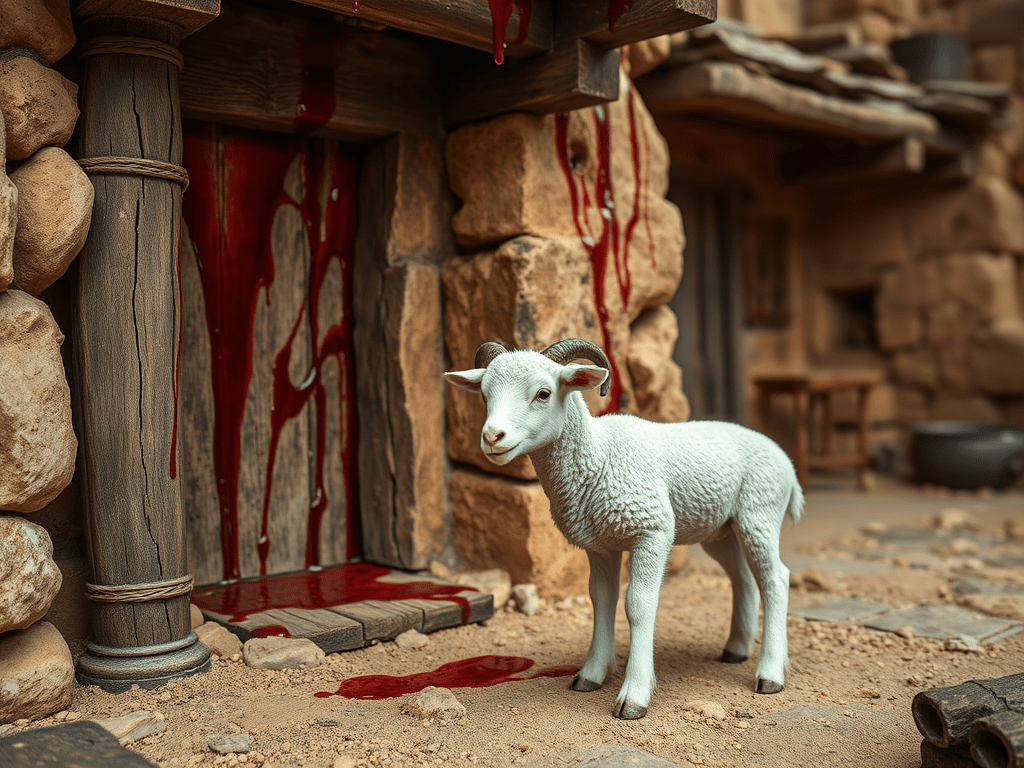
Last time we reviewed Passover; today we will be going over the second of the annual memorials: the week of Unleavened Bread. The narrative explaining this memorial is found in Exodus 12. Here we find the command to Israel to de-leaven their houses and eat unleavened bread for seven days during the year—the Days of Unleavened Bread.

Exodus 12:14-15, 17-20  – “This day is to be a memorial for you, and you must celebrate it as a festival to Yahweh. You are to celebrate it throughout your generations as a permanent statute. You must eat unleavened bread for seven days. On the first day you must remove yeast from your houses. Whoever eats what is leavened from the first day through the seventh day must be cut off from Israel. … You are to observe the Festival of Unleavened Bread because on this very day I brought your hosts out of the land of Egypt. You must observe this day throughout your generations as a permanent statute. You are to eat unleavened bread in the first month, from the evening of the fourteenth day of the month until the evening of the twenty-first day. Yeast must not be found in your houses for seven days. If anyone eats something leavened, that person, whether a resident alien or native of the land, must be cut off from the community of Israel. Do not eat anything leavened; eat unleavened bread in all your homes.”

Yahweh says that this memorial is a remembrance of how “on this very day I brought your hosts out of Egypt.” Besides the narrative here in Exodus, Unleavened Bread is also mentioned in Leviticus 23:4-8, Numbers 28:16-25 and Deuteronomy 16:1-8. Each of these mentions seems to have a slight difference in emphasis. Here in Exodus, the focus is on creating an annual memorial of how Yahweh delivered their hosts from Egypt. In Leviticus, the emphasis is on the first and last day being holy days of rest with offerings of fire made each day during the week. The Numbers narrative goes into further detail on the daily offerings to include bulls, goats, and grain offerings throughout the week. In Deuteronomy, the focus returns to the week being a remembrance of how Yahweh brought them out of Egypt “in haste.”

In general Hebraic practice, the eating of unleavened bread would begin with the Passover memorial on the evening of the 14th of Nisan, the 15th was a sabbath rest, and unleavened bread would be required through the evening of the 21st, which was also a sabbath rest. These commands were enjoined with the severity of being cut off from Israel if they were not practiced.

Exodus 12:19  – “Yeast must not be found in your houses for seven days. If anyone eats something leavened, that person, whether a resident alien or native of the land, must be cut off from the community of Israel.”

This demonstrates how the memorial of this time was to be universally recognized throughout the land, not just within each household, to where even resident aliens, those who were not Israelites, were to also be abstaining from leaven during this time. This universal observance would help to ensure the maintenance of the observance to future generations. Here we are, almost 3,500 years later, still discussing the significance of this observance!

IN THE NEW TESTAMENT

For believers in Messiah today, the recognition of this weeklong tradition stems from the mention of it within the apostolic writings of the New Testament. Not only is the practice mentioned within the gospels, it was brought out in a specific application by the apostle Paul in his letter to the Corinthian congregation:

1 Corinthians 5:6-8  – Your boasting is not good. Don’t you know that a little leaven leavens the whole batch of dough? Clean out the old leaven so that you may be a new unleavened batch, as indeed you are. For Messiah our Passover lamb has been sacrificed. Therefore, let us observe the feast, not with old leaven or with the leaven of malice and evil, but with the unleavened bread of sincerity and truth.

In this passage, Paul’s thoughts have been explained as enjoining believers to observe the week of Unleavened Bread. In reality, I believe he is using the traditional annual practice of Unleavened Bread that they would all have been familiar with to make a point about their pride in tolerance of sin. In the overall context of the passage, Paul is actually mocking their self-righteous pride by confronting their skewed perspective of sexuality (most likely influenced by the Hellenistic social scene) as “leaven which leavens the whole batch of dough.” Here is some of the wider context:

1 Corinthians 5:1, 9-11  – It is actually reported that there is sexual immorality among you, and the kind of sexual immorality that is not even tolerated among the Gentiles — a man is sleeping with his father’s wife. … I wrote to you in a letter not to associate with sexually immoral people. I did not mean the immoral people of this world or the greedy and swindlers or idolaters; otherwise you would have to leave the world. But actually, I wrote you not to associate with anyone who claims to be a brother or sister and is sexually immoral or greedy, an idolater or verbally abusive, a drunkard or a swindler. Do not even eat with such a person.

Paul seems to be making the point that even the smallest expression of “tolerance” of sexual perversion (according to God’s Torah) is like leaven that would begin to expand its way through the whole congregation. This is a great and useful analogy in which its wisdom is readily apparent. If leaven is likened to sin, then “unleavened-ness” is akin to holiness and righteousness. Paul seems to be analogizing how the sincere practice of God’s Torah and truth had the ability to overcome the “leaven” of unrighteous practices which were evident within the congregation.

Paul builds on a principle which was taught by Messiah, as well.

Matt 16:5-12 When the disciples reached the other side, they had forgotten to bring any bread. Yeshua said to them, “Take heed and beware of the leaven of the Pharisees and Sadducees.” And they discussed it among themselves, saying, “We brought no bread.” But Jesus, aware of this, said, “O men of little faith, why do you discuss among yourselves the fact that you have no bread? Do you not yet perceive? Do you not remember the five loaves of the five thousand, and how many baskets you gathered? Or the seven loaves of the four thousand, and how many baskets you gathered? How is it that you fail to perceive that I did not speak about bread? Beware of the leaven of the Pharisees and Sadducees.” Then they understood that he did not tell them to beware of the leaven of bread, but of the teaching of the Pharisees and Sadducees.

Mark 8:14-15 Now they had forgotten to bring bread; and they had only one loaf with them in the boat. And he cautioned them, saying, “Take heed, beware of the leaven of the Pharisees and the leaven of Herod.”

In these passages, Yeshua taught that the religious hypocrisy of the Pharisees and the political duplicity of Herod could be likened to leaven stealthily working its way through the pure dough of the righteous remnant, the lost sheep that he had been sent to call out from among the people of Israel. This is the same sense that Paul is using the analogy of leaven: as an insidious microbe that eventually encompasses the whole with its unrighteous influence.

Leaven in the Bible is simply a “spreading agent,” and while typically represented in the negative sense as we have just seen, it can also be a representation of positive influence. Yeshua was shown to have used the concept of leaven in a positive manner as an analogy of the Kingdom of God, illustrating how the spreading of the good news of the kingdom of God would be fulfilled throughout the world.

Matthew 13:33  – He told them another parable: “The kingdom of heaven is like leaven that a woman took and mixed into fifty pounds of flour until all of it was leavened.”

Luke 13:20-21  – Again he said, “What can I compare the kingdom of God to? It’s like leaven that a woman took and mixed into fifty pounds of flour until all of it was leavened.”

In this example shared by both Matthew and Luke, Yeshua appears to be sharing the inevitability of the Kingdom of God to become fully established.

Comparing both of these analogies, he seems to be illustrating how doctrines, both good and bad, have a way of working through the whole. A little bad doctrine, like that promoted by Herod and the Pharisees, can leaven all of the dough; likewise, the smallest spark of the gospel of the Kingdom of God can also work its way through the dough.

Once again, the Bible here presents another example of the duality of this life: hot and cold, light and dark, righteous and wicked, good doctrine and bad doctrine. Either one, like leaven, can continue to grow until it consumes the whole.

In Paul’s example, to refuse the perverted social tolerance of the day was to remain “unleavened” in the purity of sincerity and truth. In Yeshua’s example, to explore the Messiah’s expression of the Kingdom of God is to become leavened with positive doctrine. It’s not that these are contradictory teachings, just different emphases for the specific teaching at hand; both have merit from which we can learn.

“Bad” leaven has a way of unexpectedly influencing the whole; left to its own devices, a batch of dough will become leavened on its own, through its association with the air all around it. But in the Kingdom example, the woman specifically chose to add “good” leaven of the Kingdom to the dough, and it likewise consumed the whole. The key difference is that the woman intentionally added “good” leaven to the dough, while the “bad”  leaven was simply absorbed from the atmosphere around it.

In a moment, we will see how these principles come together in the ongoing memorials of the biblical calendar.

Closely attached to this week of Unleavened Bread is another annual occurrence known as Firstfruits. 

Leviticus 23:10-11 – “Speak to the Israelites and tell them: When you enter the land I am giving you and reap its harvest, you are to bring the first sheaf of your harvest to the priest. He will present the sheaf before Yahweh so that you may be accepted; the priest is to present it on the day after the Sabbath.”

While not another festival in and of itself, the day has significance in that the Israelites’ agrarian economy was at a standstill until the offering of the first sheaf of the barley harvest at the temple. In fact, the timing of the first ripe barley was one of the drivers of the start of the biblical calendar.

Exodus 12:2  – “This month is to be the beginning of months for you; it is the first month of your year.

Exodus 13:3-4  – Then Moses said to the people, “Remember this day when you came out of Egypt, out of the place of slavery, for the LORD brought you out of here by the strength of his hand. Nothing leavened may be eaten. Today, in the month of Abib, you are going out.”

The word abib means “green in the ears” as it relates to grain and crops. As each new year approached, it was customary in Israel to have trusted men go throughout Israel to check the condition of the barley (as the first of the spring crops) to see if it would be ripe within two weeks of the next new moon. If it was, that new moon was declared to be the first of the month Abib (which later came to be known as the month Nisan), the beginning month of the year, the month when the grain became green in the ears.

Only after the first sheaf was offered during the week of Unleavened Bread could full harvest proceed with the remainder of the barley crop. So the timing of this event was critical to the success of the overall harvest that year.

While being an important driver of the economy, the barley firstfruits is a minor notation within the biblical calendar, and not an official chag or feast in and of itself. The holiday that most Hebrews associate with Firstfruits is Shavuot: Weeks, or Pentecost. That is when the summer wheat harvest begins in full swing.

The principle of firstfruits in general has to do with honoring God with a primary offering, often considered the best, the freshest, or the strongest. It is closely tied to the principle of the firstborn:

Genesis 49:3  – “Reuben, you are my firstborn, my strength and the firstfruits of my virility, excelling in prominence, excelling in power.”

As for the offerings presented to Yahweh by the Israelites, the priest was to be the receiver of Yahweh’s firstfruits as his representative; this was also commanded for them since the priests did not have a land inheritance within Israel.

Deuteronomy 18:4-5  – “You are to give him [that is, the priest] the firstfruits of your grain, new wine, and fresh oil, and the first sheared wool of your flock. For Yahweh your God has chosen him and his sons from all your tribes to stand and minister in his name from now on.”

However, within Christendom, the barley firstfruits during the week of Unleavened Bread has significance because of its association with the resurrection of Messiah. This comes primarily from the writing of Paul to the Corinthian congregation:

1 Corinthians 15:20-23  – But as it is, Messiah has been raised from the dead, the firstfruits of those who have fallen asleep. For since death came through a man, the resurrection of the dead also comes through a man. For just as in Adam all die, so also in Messiah all will be made alive. But each in his own order: Messiah, the firstfruits; afterward, at his coming, those who belong to Messiah.

Here, Messiah is specifically listed as the firstfruits, using this firstfruits language to describe how the new resurrection life of all believers (those who belong to Messiah) will be as the fuller harvest that comes after the firstfruits have been presented to Yahweh.

The reason this resurrection firstfruits language is associated with the barley firstfruits is because that event takes place during the week of Unleavened Bread, “on the day after the Sabbath,” (Lev. 23:11). Since Messiah was seen alive on the day after the Sabbath of that week, this connection is typically drawn together.

APPLICATION FOR TODAY

Unleavened bread symbolizes separation, haste, vulnerability, and sincerity. It represents separation, as unleavened bread (while still bread) is distinct from other, regular bread. It also represents haste because it must be formed and cooked quickly to prevent the leavening process from starting. While full, natural leavening can take days, the leavening process can begin in as little as 20-30 minutes. This is how how temporary and vulnerable the condition of the dough is in its uncooked state. It is representative of how quickly the Hebrews had to leave Egypt when their deliverance was provided, and how vulnerable they were until they could be formed by God into the Kingdom people he desired them to be. In this sense, it can also be representative of believers who are separating from the worldliness around them, and how vulnerable they are to becoming consumed again by the things they just left, just as many of the Hebrews wanted to return to Egypt.

It is also representative of sincerity and holiness. According to both Yeshua and Paul, believers were to avoid the natural leavening of both corrupt doctrine and the natural social mores around them. Tolerance of false doctrine and unrighteous social practice have a way of ultimately consuming the whole.

But one cannot remain in an unleavened state permanently. In the annual calendar, Unleavened Bread is a week long observance that ultimately ends. The next seven weeks move toward the memorial of Pentecost or Weeks, an observance where the first harvest of the new wheat crops are brought to Yahweh in the form of two purposely-leavened bread loaves. It is believed that the Hebrews during the first Exodus received the Ten Commandments at that time. This suggests that the “good” leaven of the two loaves or tables of Commandments sets a baseline for Kingdom living.

Deuteronomy 8:3 …man does not live by bread alone, but that man lives by everything that proceeds out of the mouth of the Lord.

In his parable of the Kingdom regarding the woman adding yeast to the dough, Yeshua encourages believers to not remain in an unleavened state, but to intentionally add the “good” leaven of the “right” doctrine (that which proceeds out of the mouth of God, the Commandments) so that the dough can be consumed with the right kind of leaven. In this way, the purity and sincerity of the unleavened batch can rise to become the Kingdom people God desires.

Firstfruits is representative of the freshest, strongest, and best being offered to Yahweh. Messiah certainly qualifies in all of those respects. But those attributes should also apply to our own offerings we bring before Yahweh. Are we truly offering the best of our time and resources (that is, our firstfruits) to Yahweh, or are we focused more on our own plans and desires and only providing him with what is left over?

Observing this weeklong memorial of these events with these principles in mind can revitalize our faith through reflection on our practice of these qualities in our lives. Is there a sense of urgency in our ongoing separation from the world, or have we become vulnerably complacent? Is the practice of our faith leavened with hypocrisy and duplicity or is it sincere and from the heart? Are we committed to only leaven our loaves with the “good” leaven of that which comes out of the mouth of God?

If we observe this week by avoiding leaven and eating only unleavened bread, that which sustains us (the unleavened bread) is a reminder to us that that which ultimately sustains us as believers is based on sincerity and truth. Additionally, reflecting on the firstfruits pattern of Messiah’s resurrection should provide us the confirming hope that he has truly overcome death for all of us, and at the appropriate time of our “harvest” we will be bearing fruit for him.

In my opinion, an annual memorial which causes us to contemplate sincerity and truth in our daily practice while providing us hope for a future eternal life cannot be overrated.


Moses, Yeshua, and the Life-Giving Bread of Life

Yeshua exemplifies living by faith and obedience to God’s word.

Matthew 4:4 RSV – But he answered, “It is written, ‘Man shall not live by bread alone, but by every word that proceeds from the mouth of God.'”

When Yeshua was beginning the work that the Father had sent him to do, the gospels tell us that he was led into the desert wilderness to undergo some trials.

Matthew 4:1-4 RSV – Then Jesus was led up by the Spirit into the wilderness to be tempted by the devil. And he fasted forty days and forty nights, and afterward he was hungry. And the tempter came and said to him, “If you are the Son of God, command these stones to become loaves of bread.” But he answered,” It is written, ‘Man shall not live by bread alone, but by every word that proceeds from the mouth of God.‘”

Many people are not aware that the response of Yeshua here is actually a quote from the Tanakh, or the Old Testament. He says, “It is written,” but where was it written?

We have it recorded for us in the early chapters of the book of Deuteronomy. As Moses was preparing the Israelites to enter the land of Canaan, he was reminding them of all of the ways God had taken care of them during their wilderness journeys.

Deuteronomy 8:2-3 RSV – And you shall remember all the way which the LORD your God has led you these forty years in the wilderness, that he might humble you, testing you to know what was in your heart, whether you would keep his commandments or not. And he humbled you and let you hunger and fed you with manna, which you did not know, nor did your fathers know; that he might make you know that man does not live by bread alone, but that man lives by everything that proceeds out of the mouth of the LORD.

The meaning that Moses is conveying is that physical food alone may sustain physical life, but man truly lives only through obeying what God has said.

The parallels in Yeshua’s usage of this quotation are striking: the Israelites spent forty years in the wilderness; Yeshua spent forty days fasting. The Israelites had been tested in the wilderness; Yeshua was being tested during his wilderness experience. The Israelites were to trust and obey God in everything; Yeshua was demonstrating trust and obedience to God in everything.

Moses had taught the ancient Israelites that obeying God would not only help them survive in the wilderness but would bring them a measure of prosperity in the land of Canaan.

Deuteronomy 30:15-16 RSV – “See, I have set before you this day life and good, death and evil. If you obey the commandments of the LORD your God which I command you this day, by loving the LORD your God, by walking in his ways, and by keeping his commandments and his statutes and his ordinances, then you shall live and multiply, and the LORD your God will bless you in the land which you are entering to take possession of it.

What Moses taught ancient Israel about the physical blessings of obedience, Yeshua built upon to teach about a quality of life that would go far beyond temporal prosperity in a specific land. He came to elevate the teachings of Moses into an everlasting spiritual reality that, through his disciples, would spread across the world, touching people from every nation.

Matthew 28:19-20 RSV – Go therefore and make disciples of all nations…teaching them to observe all that I have commanded you….”

During his ministry and teaching, Yeshua further clarified his use of the manna/life metaphor when he was challenged by some Jewish critics:

John 6:28-35 RSV – Then they [the Jews] said to him, “What must we do, to be doing the works of God?” Jesus answered them, “This is the work of God, that you believe in him whom he has sent.” So they said to him, “Then what sign do you do, that we may see, and believe you? What work do you perform? Our fathers ate the manna in the wilderness; as it is written, ‘He gave them bread from heaven to eat.'” Jesus then said to them, “Truly, truly, I say to you, it was not Moses who gave you the bread from heaven; my Father gives you the true bread from heaven. For the bread of God is that which comes down from heaven, and gives life to the world.” They said to him, “Lord, give us this bread always.” Jesus said to them, “I am the bread of life; he who comes to me shall not hunger, and he who believes in me shall never thirst.

The life that God gives goes far beyond the life of the flesh, which is nourished only by physical bread. The life that God provides is present within the person of his Son: his life and teaching, and his subsequent sacrificial death and resurrection. The life, teachings, death, and resurrection of Yeshua are the very representation of the Father which can bring life, but only when they are mixed with the repentant and obedient faith of the believer.

The Jews of Yeshua’s day understood how the Scriptures were intended to bring life, at least in principle, yet many of them chose not to believe that Yeshua was the Messiah. At one point, Yeshua confronts him with the following statements:

John 5:39-40, 46-47 RSV – You [Jews] search the scriptures, because you think that in them you have eternal life; and it is they that bear witness to me; yet you refuse to come to me that you may have life. … If you believed Moses, you would believe me, for he wrote of me. But if you do not believe his writings, how will you believe my words?”

The Scriptures can bring us life, but only as we recognize their fulfillment in Messiah Yeshua. Apart from him, they can only bring partial life—what we might consider temporal blessings in this world. The wisdom that God’s word provides helps us to avoid traps like hypocrisy and covetousness and to pursue things like forgiveness and compassion. These things can help us in our interactions with others, thereby providing us with a better quality of life, and that certainly is not a bad thing in and of itself. However, if we accept Yeshua as the fulfillment of God’s word, all of the Scripture is now elevated to bring us not only an excelling quality of temporal life, but life that lasts forever.

John 12:49-50 NET – For I have not spoken from my own authority, but the Father himself who sent me has commanded me what I should say and what I should speak. And I know that his commandment is eternal life. Thus the things I say, I say just as the Father has told me.”

Yeshua equates his teachings with the very words of God, and as a faithful messenger, he spoke exactly what God had instructed him to say. This is why I contend that, as believers, we should filter everything related to biblical teaching through the words of Messiah. He presented himself as the sole example and instructor of truth amidst the varied and hypocritical leadership of the Jews in his day.

Matthew 23:1-12 NET – Then Jesus said to the crowds and to his disciples, “The experts in the law and the Pharisees sit on Moses’ seat. Therefore pay attention to what they tell you and do it. But do not do what they do, for they do not practice what they teach. They tie up heavy loads, hard to carry, and put them on men’s shoulders, but they themselves are not willing even to lift a finger to move them. They do all their deeds to be seen by people, for they make their phylacteries wide and their tassels long. They love the place of honor at banquets and the best seats in the synagogues and elaborate greetings in the marketplaces, and to have people call them ‘Rabbi.’ But you are not to be called ‘Rabbi,’ for you have one Teacher and you are all brothers. And call no one your ‘father’ on earth, for you have one Father, who is in heaven. Nor are you to be called ‘teacher,’ for you have one teacher, the Christ. The greatest among you will be your servant. And whoever exalts himself will be humbled, and whoever humbles himself will be exalted.

In his humility, ultimately exemplified in his sacrificial death and confirmed by his resurrection, Yeshua proved he was the one Teacher worthy of our attentiveness and our desire for learning about the true words of life.

This was aptly expressed by Peter when Yeshua’s teachings were challenged by the Jews.

John 6:66-69 NET – After this many of his disciples quit following him and did not accompany him any longer. So Jesus said to the twelve, “You don’t want to go away too, do you?” Simon Peter answered him, “Lord, to whom would we go? You have the words of eternal life. We have come to believe and to know that you are the Holy One of God!”

It is only our belief in and obedience to the words of God, and in the God-provided words and deeds of Yeshua, the true bread from heaven, that bring us true and everlasting life.

1 John 5:13 WEB – These things I have written to you who believe in the name of the Son of God, that you may know that you have eternal life, and that you may continue to believe in the name of the Son of God.

Titles for God’s People: The Bride

The miniseries on Titles for God’s people concludes with the Bride. This image of the Bride emphasizes all believers’ spiritual unity with Messiah, a narrative metaphor fulfilled in the Book of Revelation.

Core of the Bible podcast episode 129 – Titles for God’s people: The Bride of Christ

We are currently finishing up a little miniseries on the titles for God’s people. Over these few past episodes, we have been looking at the following terms in some detail: Believer and Christian, the Remnant and the Elect, and the Church and the Body of Christ. These are all terms that by most accounts are considered synonymous and applicable to the people today who claim to believe in Messiah. However, in these studies I have been looking at scriptural reasons as to why I believe some of those terms do not apply to God’s people today, and yet how God has worked within these various aspects of his people over the ages to accomplish specific things for the good of all.

Last time, we explored the Body of Christ and how that term is meant to reference the spiritual gathering of saints of all time, and not any one, physical organization on the earth. We now come to the final installment in this series on titles for God’s people: the Bride.

THE BRIDEGROOM IMAGERY

Before we begin to discuss the texts regarding the Bride of Christ, we would do well to review the basis or underpinning of this type of bride and bridegroom imagery as spoken of in the prophets. This would be the background canvas upon which Messiah would continue to paint during his ministry.

Some of the specific bridegroom terminology begins in the Messianic portions of Isaiah:

Isaiah 54:4-8 RSV – “Fear not, for you will not be ashamed; be not confounded, for you will not be put to shame; for you will forget the shame of your youth, and the reproach of your widowhood you will remember no more. For your Maker is your husband, the LORD of hosts is his name; and the Holy One of Israel is your Redeemer, the God of the whole earth he is called. For the LORD has called you like a wife forsaken and grieved in spirit, like a wife of youth when she is cast off, says your God. For a brief moment I forsook you, but with great compassion I will gather you. In overflowing wrath for a moment I hid my face from you, but with everlasting love I will have compassion on you, says the LORD, your Redeemer.

God is spoken of as having betrothed Israel to himself. While he had to forsake her due to her unfaithfulness, there remained a promise of everlasting compassion when they were to be “gathered” again.

This same theme of a renewed hope for prophetic Zion after being forsaken is carried over into Isaiah 62:

Isaiah 62:1-5 RSV – For Zion’s sake I will not keep silent, and for Jerusalem’s sake I will not rest, until her vindication goes forth as brightness, and her salvation as a burning torch. The nations shall see your vindication, and all the kings your glory; and you shall be called by a new name which the mouth of the LORD will give. You shall be a crown of beauty in the hand of the LORD, and a royal diadem in the hand of your God. You shall no more be termed Forsaken, and your land shall no more be termed Desolate; but you shall be called My delight is in her, and your land Married; for the LORD delights in you, and your land shall be married. For as a young man marries a virgin, so shall your sons marry you, and as the bridegroom rejoices over the bride, so shall your God rejoice over you.

Here, Isaiah relates how prophetic Zion will ultimately be reunited to God and he will rejoice over her, “as a bridegroom rejoices over the bride”.

Hosea also related how God had to forsake Israel because of her constant unfaithfulness through idolatry:

Hosea 2:2-4 RSV – “Plead with your mother, plead–for she is not my wife, and I am not her husband–that she put away her harlotry from her face, and her adultery from between her breasts; lest I strip her naked and make her as in the day she was born, and make her like a wilderness, and set her like a parched land, and slay her with thirst. Upon her children also I will have no pity, because they are children of harlotry.

And yet, Hosea immediately shares the vision of renewed promise and restoration:

Hosea 2:14-16, 19-20 RSV – “Therefore, behold, I will allure her, and bring her into the wilderness, and speak tenderly to her. And there I will give her her vineyards, and make the Valley of Achor a door of hope. And there she shall answer as in the days of her youth, as at the time when she came out of the land of Egypt. “And in that day, says the LORD, you will call me, ‘My husband,’ and no longer will you call me, ‘My Ba’al.’ … And I will betroth you to me for ever; I will betroth you to me in righteousness and in justice, in steadfast love, and in mercy. I will betroth you to me in faithfulness; and you shall know the LORD.

Now we have to exercise care with these passages, because God is not actually marrying Israel, but he is using that familiar imagery to describe his relationship with his people. He created them out of nothing and took them to himself AS a husband would care for his wife. Since they were unfaithful and continued to pursue their idolatry, he cast them away AS in an act of divorce. Yet, he promised to regather them and AS a betrothal, reunite with them in righteousness, faithfulness and justice.

INTO THE NEW TESTAMENT WRITINGS

Although there were hundreds of years between the prophecies of Isaiah and Hosea and the ministry of Yeshua, we see both John the baptizer and Yeshua picking up this theme as an indication of prophetic fulfillment in their day.

John 3:28-30 RSV – You yourselves bear me witness, that I said, I am not the Christ, but I have been sent before him. He who has the bride is the bridegroom; the friend of the bridegroom, who stands and hears him, rejoices greatly at the bridegroom’s voice; therefore this joy of mine is now full. He must increase, but I must decrease.”

John recognizes his own role as one who is the predecessor of the representative Bridegroom, Yeshua the Messiah. Yeshua also availed himself of this bridegroom motif in his teachings on the restoration of the faithful remnant.

Matthew 9:14-15 RSV – Then the disciples of John came to him, saying, “Why do we and the Pharisees fast, but your disciples do not fast?” And Jesus said to them, “Can the wedding guests mourn as long as the bridegroom is with them? The days will come, when the bridegroom is taken away from them, and then they will fast.

Additionally, in his famous Kingdom parable about the wise and foolish maidens, Yeshua described the prepared and faithful remnant as being those who would be joining the bridegroom in the wedding feast, while the unprepared were locked outside when the bridegroom was to arrive unexpectedly.

Matthew 25:1-13 RSV – “Then the kingdom of heaven shall be compared to ten maidens who took their lamps and went to meet the bridegroom. Five of them were foolish, and five were wise. For when the foolish took their lamps, they took no oil with them; but the wise took flasks of oil with their lamps. As the bridegroom was delayed, they all slumbered and slept. But at midnight there was a cry, ‘Behold, the bridegroom! Come out to meet him.’ Then all those maidens rose and trimmed their lamps. And the foolish said to the wise, ‘Give us some of your oil, for our lamps are going out.’ But the wise replied, ‘Perhaps there will not be enough for us and for you; go rather to the dealers and buy for yourselves.’ And while they went to buy, the bridegroom came, and those who were ready went in with him to the marriage feast; and the door was shut. Afterward the other maidens came also, saying, ‘Lord, lord, open to us.’ But he replied, ‘Truly, I say to you, I do not know you.’ Watch therefore, for you know neither the day nor the hour.

So we have seen how both Matthew and John conveyed this bridegroom motif in their gospels, but we can also point to Paul continuing this theme in his letters, as well.

2 Corinthians 11:2 LSB – For I am jealous for you [first century Corinthians] with a godly jealousy, for I betrothed you to one husband, so that I might present you [as] a pure virgin to Christ.

Ephesians 5:23, 25-27 – because the husband is the head of the wife as Christ is the head of the church. He is the Savior of the body. … Husbands, love your wives, just as Christ loved the church and gave himself for her to make her holy, cleansing her with the washing of water by the word. He did this to present the church to himself in splendor, without spot or wrinkle or anything like that, but holy and blameless.

Paul emphasized the self-sacrificial nature of the husband relationship of Messiah to the Church/Assembly, in order to make her clean, holy, and blameless before him.

This is an archetypical construct that harkens all the way back to the opening chapters of Genesis, revealing not only the fullness of the work of Messiah, but the fulfillment of the pattern laid down thousands of years earlier.

Ephesians 5:24, 28, 31-32 RSV – As the church is subject to Christ, so let wives also be subject in everything to their husbands. … Even so husbands should love their wives as their own bodies. He who loves his wife loves himself…For this reason a man shall leave his father and mother and be joined to his wife, and the two shall become one flesh.” This mystery is a profound one, and I am saying that it refers to Christ and the church…

There are many parallels between the example and type exhibited by Adam and Eve with Christ and his Church or Assembly. Many of these have been brought out by John Gill, and English Baptist writer and theologian who ministered in the 1700’s. While this is an extended quote of his commentary on Ephesians 5, he lines out some of the more relevant and revealing typology parallels:

“…and indeed, the marriage of Adam and Eve was a type of Christ and his church; for in this the first Adam was a figure of him that was to come, as well as in being a federal head to his posterity:

“Adam was before Eve, so Christ was before his church;

“God thought it not proper that man should be alone, so neither Christ, but that he should have some fellows and companions with him:

“the formation of Eve from Adam was typical of the church’s production from Christ; she [Eve] was made of him while he was asleep, which sleep was from the Lord, and it was not an ordinary one; which may resemble the sufferings and death of Christ, which were from the Lord, and were not common; and which are the redemption of his church and people; and which secure their comfort and happiness, and wellbeing:

“she was taken out of his side, and built up a woman of one of his ribs; both the justification and sanctification of the church are from Christ, from the water and the blood which issued out of his side, when on the cross:

“the bringing and presentation of Eve to Adam has its mystery; it was God that brought her to him; and she was the same that was made out of him; and to the same Adam was she brought of whose rib she was made, and that not against her will: so it is God that draws souls to Christ, and espouses them to him, even the same that he has chosen in him, and Christ has redeemed by his blood; and to the same are they brought, who was wounded for their transgressions, and bruised for their sins; and they are made willing in the day of his power upon them, to come and give themselves to him.

“Adam’s consent and acknowledgment of Eve to be his wife, shadow forth Christ’s hearty reception and acknowledgment of the saints, as being of him, and his, when they are brought unto him under the influences of his grace and Spirit.”

All of these typological parallels convey the beautiful unity of God’s word from beginning to end. In a very real sense, the end was prophesied from the very beginning in the pictorial story of Adam and Eve, culminating in the marriage of the Second Adam to his virginal Bride (Christ and the purified Church Assembly). The Bride was to consist of the faithful remnant of Israel and those from among the nations who would also believe.

ABIDING BY TORAH

Now, because there are laws in torah concerning marriage and re-marriage, this concept of God restoring and re-marrying Israel (even symbolically as mentioned in the prophets) needs to be addressed, as well.

God’s own torah does not allow for a previously divorced wife to re-marry the same man:

Deuteronomy 24:1-4 RSV – “When a man takes a wife and marries her, if then she finds no favor in his eyes because he has found some indecency in her, and he writes her a bill of divorce and puts it in her hand and sends her out of his house, and she departs out of his house, and if she goes and becomes another man’s wife, and the latter husband dislikes her and writes her a bill of divorce and puts it in her hand and sends her out of his house, or if the latter husband dies, who took her to be his wife, then her former husband, who sent her away, may not take her again to be his wife, after she has been defiled; for that is an abomination before the LORD, and you shall not bring guilt upon the land which the LORD your God gives you for an inheritance.

God had made it clear through the passages that we looked at in Isaiah and Hosea that he was, in no uncertain terms, forsaking his marital relationship with Israel and “sending her away” due to their unceasing idolatry. If this was the case, then how was God to gather, have compassion, and betroth himself once again to faithful Israel? How could he remarry the woman who had been defiled, since it’s technically a violation of his own torah?

We read earlier in Deuteronomy how divorce and/or death release a woman from the marriage covenant. Now if the woman is divorced only, the original husband is forbidden to remarry her after any subsequent marriage:

Deuteronomy 24:4 RSV – then her former husband, who sent her away, may not take her again to be his wife, after she has been defiled; for that is an abomination before the LORD

However, if a husband or a wife dies, the marriage is dissolved.

Deuteronomy 24:3 RSV – …or if the latter husband dies, who took her to be his wife…

Death, therefore, according to torah, releases one from the bonds of marriage.

1 Corinthians 7:39 RSV – A wife is bound to her husband as long as he lives. If the husband dies, she is free to be married to whom she wishes, only in the Lord.

So, here is how I believe God worked the sending away of unfaithful Israel and yet was also able to take her faithful remnant back to himself without violating torah.

When Yeshua arrived, he was announced as, and assumed the role of, God’s representative bridegroom, a man born “under the law.” Yet, his sacrificial death upon the cross released God from the original symbolic bond of marriage to unfaithful Israel.

Additionally, Yeshua had taught that anyone who believed in him must be willing to give up their own life for him.

Matthew 16:24-25 RSV – Then Jesus told his disciples, “If any man would come after me, let him deny himself and take up his cross and follow me. For whoever would save his life will lose it, and whoever loses his life for my sake will find it.

Accordingly, further instruction provided by the apostle Paul states that the faithful remnant of Israel who believed in Messiah were to consider themselves as having died.

Romans 6:3-4 RSV – Do you not know that all of us who have been baptized into Christ Jesus were baptized into his death? We were buried therefore with him by baptism into death

Colossians 2:12 RSV – and you were buried with him in baptism

Not only was the faithful remnant buried with Christ, but they were resurrected with Christ.

Romans 6:4 RSV – We were buried therefore with him by baptism into death, so that as Christ was raised from the dead by the glory of the Father, we too might walk in newness of life.

Colossians 2:12-13 RSV – and you were buried with him in baptism, in which you were also raised with him through faith in the working of God, who raised him from the dead. And you, who were dead in trespasses and the uncircumcision of your flesh, God made alive together with him, having forgiven us all our trespasses…

Colossians 3:1-3 RSV – If then you have been raised with Christ, seek the things that are above, where Christ is, seated at the right hand of God. Set your minds on things that are above, not on things that are on earth. For you have died, and your life is hid with Christ in God.

Since his representative Messiah was dead and resurrected, and the faithful remnant was also considered dead and resurrected (or, born again), God, though his Messiah, was then free to re-marry his wife (i.e., the faithful remnant of Israel). The marriage of unfaithfulness had been dissolved, and a new marriage with a renewed people could take place through God’s representative and resurrected Messiah. This resurrection marriage was to take place “above,” that is, in heaven (another indicator that the Church/Assembly is a spiritual entity, not an earthly one).

Now we know that Messiah taught in the age of the resurrection there is no longer physical marriage to one another.

Matthew 22:30 RSV – For in the resurrection they [the faithful saints] neither marry nor are given in marriage, but are like angels in heaven.

Yeshua taught that those who are considered worthy to attain to the age of resurrection would no longer marry one another. However, this also can imply that there would be no longer marriage to one another because all are then considered married to Messiah for eternity. The second Adam is wedded to his Bride eternally, and the fruitful multiplying of the family was to be in the continued addition of believers as the Kingdom of God was to expand over the earth.

Now, of course, this is all pictorial and typological symbols. The ideas being conveyed by this imagery is that of a magnificent, royal wedding. There is great joy and celebration in a wedding. There is provision for the bride and a unity of purpose between the bridegroom and the bride. The bride and the groom now live together in blessing to “be fruitful and multiply.” These various attributes are representative of how God’s people will rejoice in his presence for eternity.

THE BRIDE OF THE APOCALYPSE

Now, of course, the fullest picture of this bride motif reaches its apex in the book of Revelation. The symbols and types employed by John in his prophetic work sharpen the contrast between the Harlot (unfaithful Israel) and the Bride (the faithful remnant).

Revelation 19:1-2, 7-9 RSV – After this I heard what seemed to be the loud voice of a great multitude in heaven, crying, “Hallelujah! Salvation and glory and power belong to our God, for his judgments are true and just; he has judged the great harlot who corrupted the earth with her fornication, and he has avenged on her the blood of his servants.” … Let us rejoice and exult and give him the glory, for the marriage of the Lamb has come, and his Bride has made herself ready; it was granted her to be clothed with fine linen, bright and pure”–for the fine linen is the righteous deeds of the saints. And the angel said to me, “Write this: Blessed are those who are invited to the marriage supper of the Lamb.” And he said to me, “These are true words of God.”

The judgment and vengeance upon the harlot (unfaithful Israel) took place when Jerusalem was burned and the temple completely destroyed in 68-70 AD. It was at that time that the Bride (the faithful remnant) had made herself ready through the washing of her raiment in the blood of the Lamb, through martyrdom and through her righteous actions.

Revelation 21:9-10 RSV – Then came one of the seven angels who had the seven bowls full of the seven last plagues, and spoke to me, saying, “Come, I will show you the Bride, the wife of the Lamb.” And in the Spirit he carried me away to a great, high mountain, and showed me the holy city Jerusalem coming down out of heaven from God

At this point in the narrative of Revelation 21, the bride having already become the wife of the Lamb implies that the wedding already took place at the culmination of the vengeance upon the harlot (that is, unfaithful Jerusalem). This is suggested by the events of Revelation 19.

Revelation 19:7 RSV – Let us rejoice and exult and give him the glory, for the marriage of the Lamb has come, and his Bride has made herself ready…

Revelation 19:9, 17-18 RSV – And the angel said to me, “Write this: Blessed are those who are invited to the marriage supper of the Lamb.” And he said to me, “These are true words of God.” … Then I saw an angel standing in the sun, and with a loud voice he called to all the birds that fly in midheaven, “Come, gather for the great supper of God, to eat the flesh of kings, the flesh of captains, the flesh of mighty men, the flesh of horses and their riders, and the flesh of all men, both free and slave, both small and great.”

I believe the melding of the “marriage supper of the Lamb” with “the great supper of God” intimate that they were simultaneous events. The destruction of the unfaithful Harlot on the earth was the signification that the marriage of the Bride was taking place in the heavens.

The vision that John was seeing in Revelation 21 now shifts from the bride motif to the New Jerusalem/prophetic Zion motif. With the destruction of the unfaithful Harlot and the earthly city of Jerusalem, the Bride has now become signified by a New Jerusalem with all of the righteous influence of God, spiritually reigning above all those on the earth. The Bride now IS the New Jerusalem, “coming down out of heaven” from God. The Church/Assembly is that spiritual community of all time which is now to be over the world with its heavenly influence.

As we have seen in recent episodes, this was also ably captured by the writer of Hebrews:

Hebrews 12:22-24, 28 RSV – But you have come [perfect aorist/past tense] to Mount Zion and to the city of the living God, the heavenly Jerusalem, and to innumerable angels in festal gathering, and to the assembly of the first-born who are enrolled in heaven, and to a judge who is God of all, and to the spirits of just men made perfect, and to Jesus, the mediator of a new covenant, and to the sprinkled blood that speaks more graciously than the blood of Abel. … Therefore let us be grateful for receiving a kingdom that cannot be shaken, and thus let us offer to God acceptable worship, with reverence and awe…

THIS is who the Church/Assembly is, exemplified through multiple layers of typology and pictorial fulfillment: the heavenly Jerusalem, Mount Zion of prophecy, the Assembly of the Firstborn, the Kingdom which cannot be shaken. This is the imagery that John also saw in his vision in the closing chapters of the book of Revelation.

Revelation 21:24-27 RSV – By its light shall the nations walk [meaning it shall have influence over the entire earth]; and the kings of the earth shall bring their glory into it, and its gates shall never be shut by day–and there shall be no night there; they shall bring into it the glory and the honor of the nations. But nothing unclean shall enter it, nor any one who practices abomination or falsehood, but only those who are written in the Lamb’s book of life.

What’s fascinating in these closing chapters of Revelation is that even in the “new heavens and the new earth” of the restoration, there is still mention of unclean things, abominations, and falsehoods. These are further enumerated in chapter 22:

Revelation 22:14-15 RSV – Blessed are those who wash their robes, that they may have the right to the tree of life and that they may enter the city by the gates. Outside are the dogs and sorcerers and fornicators and murderers and idolaters, and every one who loves and practices falsehood.

If the new heavens and new earth is the restoration of the entire universe, why are there still dogs, sorcerers, fornicators, murderers, idolaters and liars outside of the City? I believe this is because new heavens and the new earth are representative, not of a new physical universe, but of the New Covenant in Messiah, the new paradigm which had begun two millennia ago. This new City, the Assembly of the Firstborn, exists above the ongoing immorality of the world, and yet is accessible to those who choose to “wash their robes,” that is, repent of their evil works and to give up their own lives, coming to Messiah through the always-open gates of the City. The City is designed to be the eternal light for all generations.

Remember what Yeshua taught in the Sermon on the Mount:

Matthew 5:14, 16 RSV – “You are the light of the world. A city set on a hill cannot be hid. … Let your light so shine before men, that they may see your good works and give glory to your Father who is in heaven.

I believe he was alluding to this state of the eternal new City: Zion.

Revelation 22:1-5 RSV – Then he showed me the river of the water of life, bright as crystal, flowing from the throne of God and of the Lamb through the middle of the street of the city; also, on either side of the river, the tree of life with its twelve kinds of fruit, yielding its fruit each month; and the leaves of the tree were for the healing of the nations. There shall no more be anything accursed, but the throne of God and of the Lamb shall be in it, and his servants shall worship him; they shall see his face, and his name shall be on their foreheads. And night shall be no more; they need no light of lamp or sun, for the Lord God will be their light, and they shall reign for ever and ever.

Revelation 22:14 RSV – Blessed are those who wash their robes, that they may have the right to the tree of life and that they may enter the city by the gates.

What is this talking about if not a restoration of all things to the original covenantal relationship with the archetypal Adam and Eve in the Garden of Eden? The City on the Hill is the New Jerusalem, the city where the ideals of Eden are restored. Within the New City is free access to the tree of life and the river of life. The throne of God is now where he dwells among his people, and that of the Lamb: the Second Adam, who, in the image of God, reigns and has dominion with his Bride over the entire earth, just as God designed all things to be from the very beginning.

Genesis 1:27-28 RSV – So God created man in his own image, in the image of God he created him; male and female he created them. And God blessed them, and God said to them, “Be fruitful and multiply, and fill the earth and subdue it; and have dominion over the fish of the sea and over the birds of the air and over every living thing that moves upon the earth.”

The mission of God’s people now is to “be fruitful and multiply, to fill the earth and subdue it.” However, the sea (typically representative of the gentile nations in the prophets) no longer exists, which suggests that the nations can now be blended with the faithful to participate in the City with the redeemed.

Revelation 22:17 RSV – The Spirit and the Bride say, “Come.” And let him who hears say, “Come.” And let him who is thirsty come, let him who desires take the water of life without price.

Notice, it is the Spirit who draws people to God, and the Bride is the example of God’s faithfulness as a standing invitation to all who will come to take the water of life.

At his meeting with the Samaritan woman at the well, Yeshua had stated:

John 4:10 RSV – “If you knew the gift of God, and who it is that is saying to you, ‘Give me a drink,’ you would have asked him, and he would have given you living water.”

John 7:38 RSV – He who believes in me, as the scripture has said, ‘Out of his heart shall flow rivers of living water.'”

Revelation 7:17 RSV – For the Lamb in the midst of the throne will be their shepherd, and he will guide them to springs of living water; and God will wipe away every tear from their eyes.”

In summary, then, the Bride of Christ is the spiritual community of the faithful saints through all ages. It is only when joined with Messiah that the Bride can bear fruit. As the New Jerusalem, the Bride is the habitation of God and the Lamb, and the gates are never shut, inviting all who will to come. The living water of the holy Spirit flows from the central heights of the City, and the tree of life provides healing for the nations.

This imagery is so vivid and compelling that it should inspire and energize us to be that faithful Bride, and to seek to bear fruit for God, faithfully representing the light of that City on a hill to all.


Well, this concludes not only our brief study of the Bride of Christ, but of our miniseries on the Titles for God’s People. Although this overall study has been wide-ranging and covered many different aspects of God’s relationship with his people, from the Hebrew qahal (congregation) through the Greek ekklesia (assembly), it is my sincere hope that you have had opportunities to explore ideas and connections that you may not have seen before. I hope those are points that you will continue to study out on your own with the goal of all of us growing closer to Messiah, and closer to one another.

Titles for God’s People: The Body of Christ

The true Body of Christ represents all believers unified by faith and love, transcending physical assemblies and denominations.

Last time, I discussed the Church (or the Assembly) and concluded that the true Church, the Assembly of Messiah, is that spiritual entity which is built upon faith in him. If you have not yet read or listened to that article, I would suggest reviewing it ahead of today’s discussion, as I will be building on terminology that was explained in detail there. Today, I will continue to focus on the spiritual nature of the Assembly of God’s people as we discuss the Body of Christ, because the two terms are equated in the biblical writings.

THE BODY OF CHRIST

In his writings to the various congregations, Paul began to use the term of the body of Messiah to mean the collective group of Messianic believers that was in the process of becoming a new sect amidst the synagogues.

That the body and the church (or the Assembly) were considered synonymous by Paul can be demonstrated in these famous passages he wrote to the believers in Ephesus and Colosse:

Ephesians 1:22-23 – And he [God] subjected everything under his [Messiah’s] feet and appointed him as head over everything for the assembly, which is his body, the fullness of the one who fills all things in every way.

Colossians 1:18, 24 – He [Messiah] is also the head of the body, the assembly … Now I rejoice in my sufferings for you, and I am completing in my flesh what is lacking in Messiah’s afflictions for his body, that is, the assembly.

So we can see how Paul clearly equated the body of Messiah with Messiah’s church/assembly. When the term body was used in the context of the Assembly, Paul was using the term in that universal, overall sense that we saw previously in Acts 9:31.

Acts 9:31 ESV – So the church [that is, the Assembly] throughout all Judea and Galilee and Samaria had peace and was being built up. And walking in the fear of the Lord and in the comfort of the Holy Spirit, it multiplied.

The body was never equated with the local assembly or gathering, as in “the body at Colosse” or “the body at Thessolonica.” It was also not used of a specific building or place of worship, but always with the generalized meaning of the ekklesia, the overall growing Assembly of “called out ones.”

The apostle Paul made ample use of the body as a metaphor for how the individual believers, when taken together as a whole group, collectively were to make up the “body” of Messiah as his representative people. These were the scattered believers among the synagogues in which he conducted his missionary activities, some of which had even begun new, Messianic-based synagogue/assemblies.

UNITY AND FUNCTION IN THE BODY

What is interesting about the term the body of Christ/Messiah as it occurred in Paul’s writings is that he always seemed to use it in the context of either defining the function of individual members within the larger group or providing a metaphor for unity among competing factions.

For example, Paul used the body metaphor as a way of describing the function of the different spiritual gifts that had been given to them, just like individual body parts, were to have been supplementing the unity they already possessed with each other, not creating further division.

  • Romans 12:4-6  – Now as we have many parts in one body, and all the parts do not have the same function, in the same way we who are many are one body in Messiah and individually members of one another. According to the grace given to us, we have different gifts
  • 1 Corinthians 12:4-7 – Now there are different gifts, but the same Spirit. There are different ministries, but the same Lord. And there are different activities, but the same God works all of them in each person. A manifestation of the Spirit is given to each person for the common good…

Notice how Paul said these gifts were individual manifestations of the spiritual unity they already possessed, by the grace of God, within the spiritual body of Messiah. The unique gifts of the Spirit had been given also for the good of the overall Assembly, the body of Messiah, and not just for the benefit of an individual or a local, earthly congregation. This is why we see gifted individuals like Paul, Barnabas, Timothy, Stephen, Mark, etc. traveling between congregations, to build up the overall Assembly, the Body of Messiah at that time.

1 Corinthians 12:12-14 – For just as the body is one and has many members, and all the members of the body, though many, are one body, so it is with Christ. For by one Spirit we were all baptized into one body–Jews or Greeks, slaves or free–and all were made to drink of one Spirit. For the body does not consist of one member but of many.

Paul says there is one Body, created by immersion into that one Body by one Spirit. This is the very definition of an eternal, spiritual entity. If it is a spiritual baptism that joins the body together, then that Body, by default, must be a spiritual body or collection of individuals; hence, a spiritual Assembly, not an earthly one. This is why the body of Messiah is not a single physical assembly of people on the earth, but rather a spiritual assembly of all those who have ever professed Yeshua as the Messiah. This is also why the Body, as a spiritual entity, was to have been manifested, not through physical organizations, but through spiritual gifts as signs to the non-believing Jews of the day.

Paul appeared to have been building on the foundation of spiritual baptism laid down by both John the Baptizer and Yeshua, as they had taught of the necessity of a spiritual baptism:

Mark 1:8 – I indeed have baptized you with water: but he will baptize you with the Holy Spirit.

Luke 3:16 – John answered, saying to [them] all, I indeed baptize you with water; but one mightier than I cometh, the latchet of whose shoes I am not worthy to unloose: he will baptize you with the Holy Spirit, and with fire:

Acts 1:5 – [Yeshua says:] for John baptized with water, but before many days you shall be baptized with the Holy Spirit.”

So it’s not surprising that the apostle Paul continued to build on that premise, that the believers had been spiritually baptized by one Spirit into one spiritual Body of believers.

UNITY THROUGH DIVERSITY IN STATION OF LIFE

In other instances, beyond the diversity of the spiritual gifts they had received, Paul uses the metaphor of the Body in the context of providing for spiritual unity through diversity of background or station in life: Jew or Greek, slave or free, man or woman. The radical ideal of this level of equality among believers in Paul’s day cannot be overstated. There have been no historical equivalents in antiquity. In first-century Judea and throughout the Roman world, class division, elitism, gender inequity and human rights abuses were more pervasive than in our current cultures, even with all of our current societal failings. Yet, Paul stressed the unity that should be evident among believing communities:

  • Galatians 3:27-28 – For those of you who were baptized into Messiah have been clothed with Messiah. There is no Jew or Greek, slave or free, male and female; since you are all one in Messiah Yeshua.
  • 1 Corinthians 12:12-14 – For just as the body is one and has many parts, and all the parts of that body, though many, are one body — so also is Messiah. For we were all baptized by one Spirit into one body — whether Jews or Greeks, whether slaves or free — and we were all given one Spirit to drink. Indeed, the body is not one part but many.
  • 1 Corinthians 12:23-25 – And those parts of the body that we consider less honorable, we clothe these with greater honor, and our unrespectable parts are treated with greater respect, which our respectable parts do not need. Instead, God has put the body together, giving greater honor to the less honorable, so that there would be no division in the body, but that the members would have the same concern for each other.

Paul taught that the best way to provide for the balance and overcome those divisions was not by seeking the best or most important spiritual gifts, or by emphasizing national or class supremacy, but through unified concern and love for one another, because only the love that was of God had the capacity to resolve everything and provide for lasting unity.

1 Corinthians 13:4-8 – Love is patient, love is kind. Love does not envy, is not boastful, is not arrogant, is not rude, is not self-seeking, is not irritable, and does not keep a record of wrongs. Love finds no joy in unrighteousness but rejoices in the truth. It bears all things, believes all things, hopes all things, endures all things. Love never ends…

If this kind of love is eternal, then it is a spiritual reality. But the beauty of the gospel message is that this type of love is a spiritual reality in heaven that can be uniquely expressed in the here and now. The entire summary of Paul’s argument over these chapters on spiritual gifts is that love is THE single spiritual ideal that ALL within the Body of Messiah were to attain to express here on earth. All of the other gifts combined are of no consequence if they were not expressing God’s love in their lives. Love is the “more excellent way” (1 Cor. 12:31).

Once again, Paul appeared to have been building on what Yeshua had previously taught about the primary importance of the expression of this spiritual love.

  • Mat 5:44 – But I say to you, Love your enemies and pray for those who persecute you,
  • Mat 22:37, 39 – 37 And he said to him, “You shall love the Lord your God with all your heart, and with all your soul, and with all your mind. … 39 And a second is like it, You shall love your neighbor as yourself.
  • Luke 6:35 – But love your enemies, and do good, and lend, expecting nothing in return; and your reward will be great, and you will be sons of the Most High; for he is kind to the ungrateful and the selfish.
  • John 13:35 – By this all men will know that you are my disciples, if you have love for one another.”
  • John 15:10, 12, 17 – 10 If you keep my commandments, you will abide in my love, just as I have kept my Father’s commandments and abide in his love. … 12 This is my commandment, that you love one another as I have loved you. … 17 This I command you, to love one another.

The other apostolic writings agree on expressing this spiritual love, even to the point that if one does not have love for others that it is likely an indicator that one needs to evaluate the sincerity of their own faith.

  • James 2:8 RSV – If you really fulfil the royal law, according to the scripture, “You shall love your neighbor as yourself,” you do well.
  • 1 Peter 1:22 RSV – Having purified your souls by your obedience to the truth for a sincere love of the brethren, love one another earnestly from the heart.
  • 1 Peter 3:8 RSV – Finally, all of you, have unity of spirit, sympathy, love of the brethren, a tender heart and a humble mind.
  • 1 Peter 4:8 RSV – Above all hold unfailing your love for one another, since love covers a multitude of sins.
  • 1 John 4:7-8 RSV – Beloved, let us love one another; for love is of God, and he who loves is born of God and knows God. He who does not love does not know God; for God is love.

Yeshua expected that his followers would love him as their Lord, love God as their Father, love one another, and even love their enemies. This is the root of the spiritual unity that would bind his spiritual Assembly, his body, together forever, and it transcends all space and time. I believe that this is why the body of Messiah, his assembly, feels like it should be present now, even though it is not discernible in any one physical organization. There is no one physical church, denomination, or  organization on the earth which currently can be identified as the place where his Body exists. And yet, every person who has encountered Yahweh God through his Spirit and his Word has been baptized by his Spirit into this eternal, unseen fellowship of the Kingdom. There is only one true church or assembly, but it is that spiritual assembly of Messiah which is eternal in the heavens. Believers today demonstrate their spiritual participation in that assembly by expressing the spiritual love that only God can provide when their hearts have been renewed. It is in this way that the Body of Christ becomes evident on the earth.

1 John 4:7-8 – Dear friends, let us love one another, because love is from God, and everyone who loves has been born of God and knows God. The one who does not love does not know God, because God is love.

Faith in Yeshua as God’s Son, the Anointed Lord of his Kingdom, and love born of a repentant and renewed heart is what defines the true Body of Messiah, his Assembly.

John 3:3, 6 KJV – (Yeshua speaking)…Except a man be born again, he cannot see the kingdom of God. … That which is born of the flesh is flesh; and that which is born of the Spirit is spirit.

Yeshua taught that the spiritual Kingdom of God had drawn near, and it required repentance and new birth from above to experience it. We, therefore, are a Kingdom people. Yeshua said his kingdom was “not of (or from) this world.” This type of love does not emanate from this world; it comes from above.

He also said his Assembly that he would build would exist beyond the gates of the realm of death. Everything he taught was fulfilling the natural types and shadows, and elevating them into eternal, spiritual realities where they could exist for all time.

THE BODY AS A TEMPLE

Yeshua, through the revelation expressed to the apostle John, taught about a spiritual temple where believers would dwell in God’s presence:

Revelation 3:12 RSV – He who conquers, I will make him a pillar in the temple of my God; never shall he go out of it, and I will write on him the name of my God, and the name of the city of my God, the new Jerusalem which comes down from my God out of heaven, and my own new name.

Likewise, both Peter and Paul taught that believers had come to that spiritual temple.

1 Peter 2:4-5 ESV – As you come to him, a living stone rejected by men but in the sight of God chosen and precious, you yourselves like living stones are being built up as a spiritual house, to be a holy priesthood, to offer spiritual sacrifices acceptable to God through Jesus Christ.

1 Corinthians 3:16-17 RSV – Do you not know that you are God’s temple and that God’s Spirit dwells in you? If any one destroys God’s temple, God will destroy him. For God’s temple is holy, and that temple you are.

1 Corinthians 6:19 RSV – Do you not know that your body is a temple of the Holy Spirit within you, which you have from God? You are not your own;

2 Corinthians 6:16 RSV – What agreement has the temple of God with idols? For we are the temple of the living God; as God said, “I will live in them and move among them, and I will be their God, and they shall be my people.

Ephesians 2:17-22 RSV – And he came and preached peace to you who were far off and peace to those who were near; for through him we both have access in one Spirit to the Father. So then you are no longer strangers and sojourners, but you are fellow citizens with the saints and members of the household of God, built upon the foundation of the apostles and prophets, Messiah Yeshua himself being the cornerstone, in whom the whole structure is joined together and grows into a holy temple in the Lord; in whom you also are built into it for a dwelling place of God in the Spirit.

If the physical body of Messiah was a temple of God because of the indwelling holy Spirit with which he was anointed, then it follows that the spiritual body of his believers would also become a spiritual temple in which God would dwell, as he had prophesied.

The physical temple in Jerusalem was in its final days during this covenantal transition until its destruction in 70 AD. Through this event, God was making it clear that the Jewish cultic sacrifices and rituals would no longer be necessary, as the new covenant was a spiritual covenant available to all people by faith in Messiah, no longer based in a central location, but would be spread to the world. This was also a fulfillment of the prophecy of Yeshua during his discussion with the Samaritan woman at the well:

John 4:20-21 CSB – “Our ancestors worshiped on this mountain, but you Jews say that the place to worship is in Jerusalem.” Jesus told her, “Believe me, woman, an hour is coming when you will worship the Father neither on this mountain nor in Jerusalem.

All of the prophecies foretold of nations coming to Zion, the spiritual city that would supersede the physical Jerusalem. It was to be a heavenly (spiritual) Jerusalem, as described by the writer of Hebrews, and the apostle John in the book of the Revelation:

Hebrews 12:22-23 RSV – But you have come to Mount Zion and to the city of the living God, the heavenly Jerusalem, and to innumerable angels in festal gathering, and to the assembly of the first-born who are enrolled in heaven, and to a judge who is God of all, and to the spirits of just men made perfect…

To further illustrate the spiritual nature of the new creation, not only is the temple shown to be the combined unity of all of those whom God has called, the temple imagery ultimately dissolves into the overall glory of the Father and the Son.

Revelation 21:22 RSV – And I saw no temple in the city, for its temple is the Lord God the Almighty and the Lamb.

Paul wrote about it this way:

1 Corinthians 15:28 CSB – When everything is subject to Christ, then the Son himself will also be subject to the one who subjected everything to him, so that God may be all in all.

This is the body of believers in and among whom God and the Lamb dwell. It is the body of believers from all ages who are in God’s presence for all eternity.

UNITY THROUGH LOVE

So, my question to you is this: why do we keep looking on the earth for that which is eternal only in the heavens?

And this is the conclusion I have reached regarding the assembly, the body of Christ. It does not reside in any one group or organization here on earth. Equally, it is not a sum of all of the different Christian factions present in the world today. It cannot be the collective of all denominations, as we continue to be separated by doctrinal minutiae and creedal stances, many of which are diametrically opposed to one another. Even the members within each faction do not subscribe completely to the creeds and doctrine of their respective denomination.  Each group also contains within itself its share of “tares among the wheat,” those insincere or hypocritical people who may only have a surface assent to biblical principles but who are not exhibiting the spiritual fruit of love in their lives. These facts alone demonstrate how a unified Body of Christ does not exist (in a physical sense) on the earth today.

As critical as that may make me appear, I’m beginning to believe that all of these differing theological positions are actually by way of intentional design by God, because the differing denominational beliefs among Bible believers should not be the barrier to unity among God’s people, but the means of reestablishing our true unity. True unity can only be established in love, and only love can overcome differences of opinion. When we learn to express our differences in love, we open lines of communication previously blocked by competing traditions. We may not all agree on everything, but we can be united in love in our devotion to God and to one another.

Psalm 133:1, 3 ESV – Behold, how good and pleasant it is when brothers dwell in unity! … It is like the dew of Hermon, which falls on the mountains of Zion! For there the LORD has commanded the blessing, life forevermore.

While the Bible states that it is a blessing to live in harmony and agreement with others, we must not hold out total agreement as the uniting factor. It must be love which reveals the unity we already possess in Christ, not creedal agreement. This is a difficult distinction but one that we must be mature enough to accept and to practice. If we are to love even our enemies, as Yeshua taught, we should certainly be able to love our brothers. When the rest of the world can begin to see God’s children loving one another in spite of their differences, they will be more likely to be drawn to a loving community rather than one that shoots arrows at each other.

Yeshua called us to be peace makers, not just peace lovers. We must actively work to make peace with all others, as much as it depends on us individually. This is not intuitive or natural from a fleshly perspective, but it is a godly ability that he provides when we become new creations in him.

Romans 15:1-7 NLT – We who are strong must be considerate of those who are sensitive about things like this. We must not just please ourselves. We should help others do what is right and build them up in the Lord. For even Christ didn’t live to please himself. As the Scriptures say, “The insults of those who insult you, O God, have fallen on me.” Such things were written in the Scriptures long ago to teach us. And the Scriptures give us hope and encouragement as we wait patiently for God’s promises to be fulfilled. May God, who gives this patience and encouragement, help you live in complete harmony with each other, as is fitting for followers of Christ Jesus. Then all of you can join together with one voice, giving praise and glory to God, the Father of our Lord Jesus Christ. Therefore, accept each other just as Christ has accepted you so that God will be given glory.

God, therefore, receives glory when we accept each other.

I have understood that this maturity could only be accomplished when faithful believers were to pass into the next age beyond this existence, the age of the resurrection. In that age, the believers would no longer be pulled apart by competing theological doctrines. While it is true the age of the resurrection began when God redeemed his first-century people, including the saints of old, that age continues to this day. The saints were raised and given immortal bodies, and were to exist in his presence forever. From that point forward, we now live in the age that when we, as believers, die, we are brought into his presence immediately. This is how Yeshua overcame death. He was the new Adam, the firstfruit of the new creation and we are the rest of the crop that is harvested as it ripens.

I believe it is in one sense that we are living in the age of resurrection predicted by Messiah, not because we have already attained our spiritual-body resurrection, but because death no longer has its grip on those who place their faith in Messiah. He has become the life-giving Spirit who provides eternal life to those who repent of sinfulness and trust in him. This will be fulfilled when we pass from this life into his eternal presence. Unity on the earth in this day and age is complicated with Statements of Faith and creeds and doctrinal disagreements over the minutiae of Scriptural texts. However, to be “in Christ” is to have life and unity within the spiritual Body of Christ now, by the grace of God, and these petty things shall be resolved when we are in his Presence forever.

HOW WE ARE TO LEARN AND GROW

If there is no one, true “church” on the earth, how are we to learn and grow in spiritual things? Don’t we need some sort of authoritative teacher or apostolic tradition to guide us? Well, we already have both!

Even though he never personally wrote a book, we have a single faithful Teacher: Messiah.

Matthew 23:8-10 NKJV – “But you, do not be called ‘Rabbi’; for One is your Teacher, the Christ, and you are all brethren. “Do not call anyone on earth your father; for One is your Father, He who is in heaven. “And do not be called teachers; for One is your Teacher, the Christ.

Additionally, those who were his apostles wrote down all doctrine necessary for our walk with God which has been provided to us in the Scriptures that we have.

2 Peter 1:13-15 ESV – I think it right, as long as I am in this body, to stir you up by way of reminder, since I know that the putting off of my body will be soon, as our Lord Jesus Christ made clear to me. And I will make every effort so that after my departure you may be able at any time to recall these things.

1 John 1:1-3 ESV – That which was from the beginning, which we have heard, which we have seen with our eyes, which we looked upon and have touched with our hands, concerning the word of life– the life was made manifest, and we have seen it, and testify to it and proclaim to you the eternal life, which was with the Father and was made manifest to us– that which we have seen and heard we proclaim also to you, so that you too may have fellowship with us; and indeed our fellowship is with the Father and with his Son Jesus Christ.

While this was written to first-century believers awaiting the imminent return of Messiah, I believe the same Spirit of God helps us understand Messiah’s teachings today because we are all baptized into that one spiritual Body by one Spirit for all time. Being led by the Spirit in the way of righteousness is the fulfillment of all that God had desired to do, as prophesied numerous times throughout the Scriptures:

Isaiah 2:3 – and many peoples shall come, and say: “Come, let us go up to the mountain of the LORD, to the house of the God of Jacob; that he may teach us his ways and that we may walk in his paths.” For out of Zion shall go forth the law, and the word of the LORD from Jerusalem.

Isaiah 54:13 – All your sons shall be taught by the LORD, and great shall be the prosperity of your sons.

Jeremiah 31:33-34 – But this is the covenant which I will make with the house of Israel after those days, says the LORD: I will put my law within them, and I will write it upon their hearts; and I will be their God, and they shall be my people. And no longer shall each man teach his neighbor and each his brother, saying, ‘Know the LORD,’ for they shall all know me, from the least of them to the greatest, says the LORD; for I will forgive their iniquity, and I will remember their sin no more.”

Micah 4:2 – and many nations shall come, and say: “Come, let us go up to the mountain of the LORD, to the house of the God of Jacob; that he may teach us his ways and we may walk in his paths.” For out of Zion shall go forth the law, and the word of the LORD from Jerusalem.

Hebrews 8:11 – And they shall not teach every one his fellow or every one his brother, saying, ‘Know the Lord,’ for all shall know me, from the least of them to the greatest.

John 6:45 – It is written in the prophets, ‘And they shall all be taught by God.’ Every one who has heard and learned from the Father comes to me.

I believe that God teaches those who are repentant, renewing their hearts and drawing them to himself through his Spirit, realized in Messiah, the Lord of his Kingdom.

In summary, I believe the Body of Christ/Messiah is synonymous with the universal Assembly/Church of Messiah. It is a spiritual collection of believers from all ages which is defined as those who have placed their faith in Yeshua as the Messiah (or Anointed One) of God, and who seek first his Kingdom by expressing God’s love from renewed hearts. We must exercise care if we look for a representative authoritative organization of his Body on the earth. If there was to be such a thing as a single, “true” Church, just like any other representative thing, it could become idolatrous because its adherents would begin to rely more on that Church than on the God of that church. This was what had happened to the Jews in Yeshua’s day; they had put their traditions above the true intent of God’s Torah and had created an idolatrous system, “the mother of all harlots” (Revelation 17:5) which God, in righteous judgment, had needed to destroy.

But out from the destruction of the idolatrous entity, a new body had been formed from the deep roots of Abraham’s faith: the Body of Christ. Therefore, by establishing his church as a spiritual assembly, Messiah placed his community outside the reach of sin and corruption in this world; a perfect Bride which would live and rule with him in God’s image for eternity.

This will be the final topic next time in our review of the titles for God’s people: the Bride of Christ.

Balancing Compassion and Discernment in Belief

This verse emphasizes compassion for doubters, balancing kindness with discernment in faith discussions.

“Be merciful to those who doubt.”

This verse from the NIV seems to be encouraging believers to a noble aspect of respecting those among themselves who may have doubts about certain aspects of the faith. If we bear with them in kindness and gentleness, they may be more thoroughly convinced after further consideration of the facts.

To me, this is a very appealing application of this ideal. It can be likened to Paul’s admonition to Timothy:

2 Timothy 2:24-25 RSV – And the Lord’s servant must not be quarrelsome but kindly to everyone, an apt teacher, forbearing, correcting his opponents with gentleness. God may perhaps grant that they will repent and come to know the truth…

While this may be a pleasing and not untrue application of that sentiment, it glosses over the context and the more likely application that the author of the little epistle may have intended.

You see, this verse will give you differing interpretations based on which English translation you are using. Here are some indications of the same passage in varying English translations below:

  • Good News Translation – Show mercy toward those who have doubts;
    • International Standard Version – Show mercy to those who have doubts.
  • Majority Standard Bible – And indeed, have mercy on some, making a distinction;
  • NET Bible – And have mercy on those who waver;
  • New Heart English Bible – And be merciful on those who doubt,
  • Webster’s Bible Translation – And of some have compassion, making a difference:
  • Weymouth New Testament – Some, when they argue with you, you must endeavor to convince;
  • World English Bible – On some have compassion, making a distinction,

Notice how interpretations can vary by translation. The idea of having compassion or mercy remains constant, but is it to have compassion for those who doubt, or have compassion by making a difference (Webster) or to have compassion by making some sort of a distinction (World English Bible)?

Looking at some of the older literal versions (those English versions that try to carry word for word meaning across into the language), they carry a slightly different meaning than having compassion on those who doubt:

  • Young’s Literal Translation – and to some be kind, judging thoroughly,
  • Smith’s Literal Translation – And truly compassionate some, discriminating:

These imply there is some type of discrimination or judgment that needs to be taking place, albeit with compassion. I think these are getting closer to the real meaning of the verse. This becomes more obvious when we look at the verse in its larger surrounding context:

Jude 1:17-23: “But you, beloved, remember the words which have been spoken before by the apostles of our Lord Jesus Christ. They said to you that “In the last time there will be mockers, walking after their own ungodly lusts.” These are they who cause divisions, and are sensual, not having the Spirit. But you, beloved, keep building up yourselves on your most holy faith, praying in the Holy Spirit. Keep yourselves in God’s love, looking for the mercy of our Lord Jesus Christ to eternal life. On some have compassion, making a distinction, and some save, snatching them out of the fire with fear, hating even the clothing stained by the flesh.”

This larger context provides us a little more guidance in how this verse can be righty understood. The “some” upon whom the believers were to “have compassion” appear to be those among the “mockers” who were only viewing things with their senses. These people, most likely from among the Jews who did not believe in Yeshua as Messiah, were causing divisions among the believers. These were the ones upon whom the believers were to have compassion, all the while “keeping themselves in God’s love.”

So, even though we should be caring and encouraging to those among the believers who may be having difficulties with the outworking of their faith, this verse appears to be more evangelistic in nature. We should always exhibit God’s love toward others; but in another sense, we constantly need to exercise godly discernment, “making a distinction,” to ensure we are not simply casting our pearls before swine, as Yeshua taught.

Understanding the Parable of the Mustard Seed

The Kingdom of God, like a mustard seed, grows significantly from humble beginnings.

Core of the Bible podcast #132 – Understanding the parable of the mustard seed

Luke 13:18-19 RSV – He said therefore, “What is the kingdom of God like? And to what shall I compare it? It is like a grain of mustard seed which a man took and sowed in his garden; and it grew and became a tree, and the birds of the air made nests in its branches.”

Messiah taught about the Kingdom of God using many different parables or brief, symbolic representations. In this instance, he compares the Kingdom of God to the life cycle of a mustard seed. It is one of the smallest seeds that exist, yet mustard seeds can grow to be large enough for people to sit under for shade or for birds to come and make nests within its branches.

Parables were designed to share spiritual truths but in symbolic ways. Even in the gospel narratives, not everyone understood all of the parables, but many times in private, Messiah would reveal the meaning of the symbolism to his disciples.

I believe the imagery Messiah uses here is drawn from the prophets, specifically Daniel. In one instance, Daniel was asked to interpret the dream of Nebuchadnezzar, who, at that time, was the dominant leader of the known world. King Nebuchadnezzar had dreamt of a large tree and shared the details with Daniel. Daniel replied:

Daniel 4:20-22 RSV – The tree you saw, which grew and became strong, so that its top reached to heaven, and it was visible to the end of the whole earth; whose leaves were fair and its fruit abundant, and in which was food for all; under which beasts of the field found shade, and in whose branches the birds of the air dwelt— it is you, O king, who have grown and become strong. Your greatness has grown and reaches to heaven, and your dominion to the ends of the earth.

This great tree, i.e., Nebuchadnezzar’s kingdom, had grown to have dominion over the known world. Messiah uses almost the exact same imagery in his parable of the Kingdom of God: “it grew and became a tree,” and “the birds of the air made nests in its branches.”

One of the early church fathers (that is, one of the early Christian leaders and thinkers) had this to say regarding this parable:

“The seed of the Gospel is the least of seeds, because the disciples were weaker than the whole of mankind; yet forasmuch as there was great might in them, their preaching spread throughout the whole world…”John Chrysostom (347-407 AD).

The original parable, while having many different interpretations assigned to various parts of the word picture, essentially explains itself when simply taken at face value. We know it is about the Kingdom of God because that is the comparison being made. It was explained as beginning as a very small seed. Consider that the movement began with Messiah and his twelve disciples. Yet, through their teaching and traveling in response to the Great Commission, they were able to spread the teaching of the Kingdom throughout the known world in less than forty years under the bitterest of persecution. As a result, the “greatness [of God’s Kingdom] has grown and reaches to heaven, and [God’s] dominion to the ends of the earth.”

Matthew 28:18-20 RSV – And Jesus came and said to them, “All authority in heaven and on earth has been given to me. Go therefore and make disciples of all nations, baptizing them in the name of the Father and of the Son and of the Holy Spirit, teaching them to observe all that I have commanded you; and lo, I am with you always, to the close of the age.”

Due to their faithfulness, the parable of the mustard seed became a reality in their generation. It is now up to each successive generation, with the abilities provided by God, to continue to work to reach the farthest limits of their own generations with the truths of the Kingdom of God.

The Significance of Passover for Modern Believers

As the Lamb of God, Yeshua demonstrated he was not only the one who reconciled Jacob’s people, but who would also become the light to the nations.

Core of the Bible podcast #130: The Biblical Calendar and Passover

At the time this essay is issued, we are in the season of Passover. Why is this significant, and why should believers today understand the biblical calendar and the feast days?

Most Christians today do not recognize or observe the biblical feast days. This is due primarily to the fact that Christianity teaches that the sacrificial aspect of the rites conveyed in the Torah have been fulfilled in Messiah Yeshua. I do not disagree. But “fulfilled” does not mean “done away with.” I believe the Bible teaches that in Messiah, that which was a physical requirement for ancient Israel has become a spiritual principle for all time; more on that later.

But what I want to focus on first is how the biblical calendar is filled with symbolism of the Kingdom and God’s relationship with his people. I believe it is as we maintain recognition of these days that we can be reminded of God’s, and our, purpose. These days become practical object lessons that point to the totality of God’s work among his people, and his presence in this world.

The annual biblical calendar contains seven appointed times known in Hebrew as moedim, meaning seasons or appointed times. I believe the annual biblical holidays are the true appointments with God, the seasonal moedim that he has established for all eternity. These moedim focus on seven appointed times which are described as memorials or re-enactments to be used to keep God’s people focused on his will and purpose.

I also find it fascinating that God has placed these appointed memorials on the annual calendar in a way that can still be recognized today, even though worldly calendars and methods of timekeeping have come and gone in the millennia since they have been established. I believe this is why they are described the way they are in the Bible, and why we are still able to observe these appointed memorials with him.

How are we to observe them? Certainly we are not to sacrifice animals; as mentioned earlier all sacrifice has been fulfilled in Messiah. However, on these special days we can still gather together as his people to review the symbolism of those sacrifices to bring greater awareness to our understanding of our relationship with God. Just as a memorial service causes us to reflect fondly on the life of an individual who is no longer physically present, a biblical memorial should also serve a similar purpose of reminding us of its purpose which is now fulfilled in Messiah. After all, it is the symbol and memorial of supreme sacrifice which undergirds the gospel message of Messiah to the nations.

Whether it is through deeper fellowship and community among his people, as well as renewing our total devotion to him and consummation in his service, we can become serious about our faith by living it out as object lessons that others can see and learn from, as well. After all, as you may know from previous episodes, I believe that God’s Torah or Word is eternal, and therefore has lasting influence on those who approach the God of the Bible as his people. These should be as much a part of our doctrinal understanding as any other major proposition such as the study of who God is or the Kingdom of God.

With these foundational statements as an underpinning to our discussion today, let’s review the biblical appointed memorial of Passover.

THE HISTORY

The night of the Passover is one of the pivotal events in the entire Bible. The story is told in the book of Exodus. God had been pronouncing judgment on the nation of ancient Egypt by manifesting various plagues related to their false gods. The final judgment was designed as a response to the horrific practice of the Egyptians killing Israel’s male infants as a way of keeping their slavery in check so they would not overrun the regular population of Egypt. As a result, the final plague from God was a sentence upon the firstborn throughout the land. However, he instructed his people, Israel, to protect their firstborn by remaining in their homes with friends and family and sharing a meal of lamb or goat, placing its blood on their doorway. In this way, any firstborn within the camp of Israel would be protected by the blood of the substitute animal. After the destruction, Pharaoh would be compelled to let the Israelites leave. On that night, God would conclude judgment upon the idolatry of ancient Egypt and at the very same time create a nation of his own people, bringing them out from slavery to become his representative people on the earth into the land he had promised their forefathers.

The story of the Exodus from Egypt has been re-told annually through the Jewish Seder, a story-telling meal on Passover evening as a remembrance of this event. This had been commanded by Moses:

Exodus 12:24-27 – “Keep this command permanently as a statute for you and your descendants. When you enter the land that Yahweh will give you as he promised, you are to observe this ceremony [that is, a re-enactment of the offering of the Passover lamb]. When your children ask you, ‘What does this ceremony mean to you?'” Then you will say, ‘This is the offering of Yahweh’s Passover; for he went over the houses of the children of Israel in Egypt, when he sent death on the Egyptians, and kept our families safe.'”

This was to later become one of the annual memorials that Israel was instructed to keep throughout the year.

Leviticus 23:4-5 – “‘These are Yahweh’s appointed festivals, the sacred assemblies you are to proclaim at their appointed times: Yahweh’s Passover begins at twilight on the fourteenth day of the first month…”

The term itself, pesach, means “to skip over, to leap over, to exempt”, and is used only of this offering in the Bible. It describes how God’s judgment upon the land “skipped over” the Israelites who conducted this ceremony. The word Passover in English seemed to be the closest translation of the Hebrew pesach, and has become the English name of this annual memorial.

The Passover also begins the week of Unleavened Bread, which was to be a reminder of the Israelites’ hurried departure from Egypt, as their dough would not have time to rise before they left on their desert journey. We will focus on that feature of the biblical calendar next time.

In Christendom today, Passover has significance mostly as the background story leading to the death and resurrection of Messiah, and has been superseded by the holiday now known as Easter. Saving the ancient origins of Easter for another essay, the reason this biblical holiday of Passover has significance for us today has to do with the representation of Yeshua as the Lamb of God. This Lamb of God concept forms doctrines relating to atonement, a subject which I covered over several episodes several months ago. If you haven’t listened to those, you may want to catch up on the details presented there. However, because of its extreme relevance to the Passover narrative, I will be revisiting some of those aspects that I discussed regarding the atonement at that time.

YESHUA AS THE LAMB OF GOD

John 1:29 – The next day John saw Yeshua coming toward him and said, “Look, the Lamb of God, who takes away the sin of the world!”

Christians today typically read this verse out of its prophetic context, as they have been taught to view this as John the baptizer proclaiming that Yeshua was destined to die as a literal human sacrifice for everyone who would ever live in the entire world, satisfying God’s bloodthirsty justice and wrath against the sin of all of mankind since the rebellion of Adam. What is implied in this type of interpretation of this verse is theology that wouldn’t even exist until hundreds of years after Messiah. That is a lot of medieval theology packed into a single verse!

We should always do our best to keep things in their contextual and cultural habitat where they belong and to seek to understand Scripture in the way that the original audience would most likely have understood it. From this perspective, we find that John was more likely to have been referencing an aspect of Yeshua’s role that had been conveyed through a prophecy of Isaiah which, at that time, had already been taught to Israel for hundreds of years. As the “Lamb of God who takes away the sin of the world,” John appears to have been referring not to the fall of Adam, but to a prophecy from Isaiah; specifically, that very famous passage in Isaiah 53.

Isaiah 53:5, 7-8, 11-12 – But he was pierced because of our rebellion, crushed because of our iniquities; punishment for our peace was on him, and we are healed by his wounds…He was oppressed and afflicted, yet he did not open his mouth. Like a lamb led to the slaughter and like a sheep silent before her shearers, he did not open his mouth. … For he was cut off from the land of the living; he was struck because of my people’s rebellion. … After his anguish, he will see light and be satisfied. By his knowledge, my righteous servant will justify many, and he will carry their iniquities.  Therefore I will give him the many as a portion, and he will receive the mighty as spoil, because he willingly submitted to death, and was counted among the rebels; yet he bore the sin of many and interceded for the rebels.

This whole passage is an allegory, not of a lamb per se, but of someone named the Servant. Isaiah began this allegory back in chapter 41. By the time the allegory reaches its apex, Isaiah is describing the Servant  who submits to the will of God as being “like a lamb”. This allegorical  “lamb” of God, the Servant of Israel, willingly carries the iniquity and bears the sin of Israel (i.e., “our” iniquities; “my people’s rebellion”) and those “many”  who would be given to him as “a portion” (i.e., the “remnant”). By referencing this passage directly, John the baptizer squarely assigns the role of the Servant in this Isaiah passage to Yeshua as the  Servant of Yahweh to the very Israelite people who have rejected him.

All of this tells us that the Lamb of God imagery here is not literal, but symbolic, representative, and allegorical. Isaiah says the Servant is silent “like” a lamb being led to slaughter or “as” a sheep to the shearer. Yeshua accepted the complicated role of fulfilling these prophetic passages by being the symbolic or representative, voluntarily submissive, lamb-like Servant on behalf of Yahweh’s new covenant with Judah and Israel, and all those from among the nations who would ultimately be joined to God’s people.

Jeremiah 31:31, 33 – “Look, the days are coming” — this is Yahweh’s declaration — “when I will make a new covenant with the house of Israel and with the house of Judah

Luke 22:20 – In the same way he also took the cup after supper and said, “This cup is the new covenant in my blood, which is poured out for you.

Romans 15:8-12 – For I say that Messiah became a servant of the circumcised on behalf of God’s truth, to confirm the promises to the fathers, and so that nations may glorify God for his mercy. As it is written, Therefore I will praise you among the nations, and I will sing praise to your name. Again it says, Rejoice, you nations, with his people! And again, Praise the Lord, all you nations; let all the peoples praise him! And again, Isaiah says, The root of Jesse will appear, the one who rises to rule the nations; the nations will hope in him.

Isaiah 49:5-6 – And now, says Yahweh, who formed me from the womb to be his servant, to bring Jacob back to him so that Israel might be gathered to him; for I am honored in the sight of Yahweh, and my God is my strength — he says, “It is not enough for you to be my servant raising up the tribes of Jacob and restoring the protected ones of Israel. I will also make you a light for the nations, to be my salvation to the ends of the earth.”

The Servant “Lamb of God” spoken of by Isaiah was indeed the Messiah, as proclaimed by John the baptizer. This willing “Lamb” would regain not only his own people, but would also become a light to all nations.

PASCHAL LAMB

Since most of us are so familiar with the Lamb of God imagery conveyed by Isaiah, it is understandable how some of those same principles get pulled into our modern understanding of the Passover lamb. This is evident most notably because the Bible tells us that Yeshua was crucified at the exact same moment the Passover lambs would have been killed in preparation for the Passover memorial in Israel that year. Because our minds are primed to see these lamb sacrifices as being made for sin, we assume that Yeshua, as the symbolic Passover lamb, was sacrificed for sin.

However, we would do better to separate the Servant Lamb of God carrying the sin of his people that Isaiah spoke of as being distinct from the Passover lamb offering. The Bible teaches us that the real reason for the pesach or Passover lamb was not to be a sacrifice for sin, but to redeem the firstborn son in each family and protect them from judgment about to be poured out on the whole land.

Exodus 12:12-13 – “I will pass through the land of Egypt on that night and strike every firstborn male in the land of Egypt, both people and animals. I am Yahweh; I will execute judgments against all the gods of Egypt. The blood on the houses where you are staying will be a distinguishing mark for you; when I see the blood, I will pass over you. No plague will be among you to destroy you when I strike the land of Egypt.”

By killing the pesach, the ransom-lamb, and applying its blood to the doorway, the families gathered in each home were essentially protecting the firstborn male of each family; no one else was in danger of dying.

Remember what Yeshua said about himself:

Mark 10:45  – “For even the Son of Man did not come to be served, but to serve, and to give his life as a ransom for many.”

A ransom is not a “sin-payment,” but an exchange or substitution of one thing for another. In this case, the life of the lamb (symbolized by the blood) had been exchanged for the life of the firstborn. The rest of the family was not at risk of death; however, through being identified by the blood on the doorposts and sharing in the lamb-meal that was meant for the redemption of the firstborn, the entire community participated in the Passover deliverance and was set free from captivity.

In past episodes I have defined a ransom as “a price to be paid, a value to be given, for the changing of a foregone outcome.” In the case of the Passover lamb, the lamb was a ransom for the life of the firstborn male in each family. If the lamb’s blood (the evidence of its life, for the life is in the blood) was on the doorway, the household would be spared the tragedy of losing their firstborn son, the “foregone outcome” that the rest of Egypt suffered.

And here is the critical thing for us to understand: the Passover lamb has nothing to do with forgiveness of sin; it is all and only about ransoming the firstborn from death. The lamb served as a substitute, a “proxy-death” for the firstborn among the houses of Israel. The lambs were the price paid to save the firstborns’ lives. Hence, the life of each firstborn was ransomed from death by the price of the life of the lamb. It could be said that the firstborn of each family gained “life from the dead” by giving up the life of the lamb.

Exodus 4:22-23 – “And you will say to Pharaoh: This is what Yahweh says: Israel is my firstborn son. I told you: Let my son go so that he may worship me, but you refused to let him go. Look, I am about to kill your firstborn son! “

In the New Testament writings, Yeshua was identified with the paschal lamb, not only in the perfect timing of his crucifixion, but even in his followers’ teaching as explained by Paul:

1 Corinthians 5:7 – …For Messiah our Passover lamb has been slaughtered.

In this passage, Paul is using the Passover imagery here as he carries over the statement that Messiah was the ultimate Passover lamb for his people. Since the pesach, the Passover lamb, was known to have redeemed the firstborn from death, and Israel is clearly referenced in the Bible as God’s firstborn, then Paul is communicating here how Messiah ransomed or redeemed his people, just as he had said he would.

Matthew 15:24 – Yeshua replied, “I was sent only to the lost sheep of the house of Israel.”

Mark 10:45 – “For even the Son of Man did not come to be served, but to serve, and to give his life as a ransom for many.”

Redemption has to do with being set free from a captive situation: an individual’s fate has been altered from one path (death/ongoing captivity) to another (life/freedom) through the redemption process. Through redemption, one can claim to have been rescued or saved from a particular fate.

During the original Exodus Passover, the redemption lamb had saved the lives of the firstborn who were protected within their homes by the token (sign) of the lamb’s life-blood on the doorways. As a result, all of the participants in the meal gained freedom from slavery in Egypt to become the nation of God, and representatives of his Kingdom on the earth.

SUMMARY

So we can see how the imagery of the Lamb of God language has multiple layers of meaning. In one sense, Messiah was the submissively lamb-like Servant who (representatively) took on (carried, bore) the iniquities of Israel and the remnant, and was therefore “cut off from the land of the living” on their behalf. That’s the Lamb of God aspect that John refers to in his gospel, harking back to the prophecy of Isaiah.

In another sense, Yeshua represented a different lamb, the Passover Lamb, which was to give its life, through its identifying blood, to ransom the firstborn (Israel) from judgment upon the land and to provide them freedom from slavery to sin.

These are two separate lamb analogies that tend to get run together in our theology of biblical concepts. The sin-bearing Servant of Isaiah who willingly dies “like a lamb” gets conflated with the Passover ransom-lamb. They are both lamb analogies, but they are different; they are both true symbolic representations of the work of Messiah, but with different emphases. The Servant was willing to die as a representative of sinful Israel before God. The Passover Lamb was a representative substitution, ransoming the firstborn (i.e., Israel) from judgment upon the land. These analogies are so closely aligned that it seems natural to blend them together.

Yeshua himself seems to identify directly with both analogies. As the Servant-lamb, he explained how he was giving his life to representatively bear their sin before God:

Matthew 26:28 – “For this is my blood of the covenant, which is poured out for many for the forgiveness of sins.

But Yeshua also identified his mission as the Passover-lamb, as we have just seen:

Mark 10:45 – “For even the Son of Man did not come to be served, but to serve, and to give his life as a ransom for many.”

Additionally, the apostles can be seen using both allegories throughout their writings. In fact, Paul pulls both of these together in his epistles to the Romans and the Ephesians:

Romans 5:8-9 – But God proves his own love for us in that while we were still sinners, Messiah died for us [as the Servant-lamb]. How much more then, since we have now been justified by his blood, will we be saved through him from wrath [the Passover lamb].

Ephesians 1:7 – In him we have redemption through his blood [i.e., the ransom-lamb of Passover], the forgiveness of our trespasses [the Servant-lamb], according to the riches of his grace.

Both serve to illustrate deliverance from God’s judgment: one from judgment upon their own sinful disobedience and the other from God’s righteous judgment upon the land as a whole. They both point to Messiah’s specific ministry to Israel, showing how he was delivering them not only from direct sins committed under the first covenant and their ongoing slavery to sin, but he was also ransoming them from the destruction about to come upon the whole land.

And this is where Yeshua and his disciples got into political hot water with their detractors among the leadership of Israel. By speaking about a coming judgment of God, just like the one that had come upon Egypt long ago, they were using those examples of judgment and applying them to the nation of Israel in that day. They were essentially preaching that Israel in that generation had become as corrupt as ancient Egypt, and was about to be judged in a similar destructive way.

That’s what all of these warnings from John the baptizer, Yeshua and his disciples were about!

Matthew 3:7 – When he [John the baptizer] saw many of the Pharisees and Sadducees coming to his baptism, he said to them, “Brood of vipers! Who warned you to flee from the coming wrath?

Matthew 24:1-2, 34 – As Yeshua left and was going out of the temple, his disciples came up and called his attention to its buildings. He replied to them, “Do you see all these things? Truly I tell you, not one stone will be left here on another that will not be thrown down.” … “Truly I tell you, this generation will certainly not pass away until all these things take place.

Acts 2:40 – With many other words he [Peter] testified and strongly urged them, saying, “Be saved from this corrupt generation! “

So we see how the Messiah had come not only to offer deliverance to Israel from their sinful state before God, but also from the wrath of God over the whole land which was only decades away. Through Messiah, God was focused on teaching Israel that he was redeeming them, his firstborn son, as it were, and providing a way out from death and the coming wrath on their nation. Just like the Hebrew people of old in Egypt, by placing their faith in the true pesach, Yeshua Messiah, they (the firstborn) would be spared the wrath of God to be poured out on Jerusalem and their nation in their day. That was the message to them of Passover and the fulfillment of Yeshua as the paschal lamb.

But at the same time God was also teaching them that Messiah was the fulfillment of that faithful Servant prophesied in Isaiah, and that he would represent them in their sinfulness and willingly die on their behalf. Both of these lamb analogies came to pass, were fulfilled, in the person and work of Messiah.

And because this had become a matter of faith in the Messiah as the sent one of God, the way was opened to anyone who placed their faith in Messiah, and the redemption of Israel became the door through which God’s Kingdom could then spread throughout the world.

APPLICATION FOR TODAY

So, how does all of this lamb-imagery apply to non-Jewish believers today? Why should we have an annual memorial of something that seems to have applied only to ancient Israel? Since I believe God’s Torah or instruction is eternal, it follows that I believe these examples are still valid. I believe it is because of these ancient themes that we are able to grasp the significance of our faith in Messiah today. He came as a fulfillment of these things to demonstrate the reality of who he was to them. The historical fact that his predictions of the judgment of God upon Jerusalem came to pass within that generation legitimize his claims, and those of his followers, that he was also the Servant-lamb predicted by Isaiah hundreds of years earlier. He demonstrated he was not only the one who reconciled Jacob’s people, but who would also become the light to the nations. How could we disregard the very things which help us to understand his role within the history of God’s people, and his influence over all nations as God’s representative king?

As the Servant-lamb, Yeshua symbolically carried the sins of his people and willingly died on their behalf as their representative. As the representative Ransom-lamb, he voluntarily offered himself in order to give them life from the coming judgment and also set them free from their slavery to sin. Because this freedom and life was only available to them through faith in himself fulfilling these symbolic roles, this allowed anyone who placed their faith in Yeshua as the Messiah of God to likewise participate in the reconciliation story of Israel for all time. When he redeemed those who believed in him, they also became an eternal example of God’s faithfulness with his own people, the prophetic City of Zion within God’s Kingdom. Their light now shines upon each generation, inviting all who desire to partake of the river of life and the healing leaves of the tree of life to freely do so.

Revelation 22:1-2, 14, 17 – Then he showed me the river of the water of life, clear as crystal, flowing from the throne of God and of the Lamb down the middle of the city’s main street. The tree of life was on each side of the river, bearing twelve kinds of fruit, producing its fruit every month. The leaves of the tree are for healing the nations, … “Blessed are those who wash their robes, so that they may have the right to the tree of life and may enter the city by the gates. … Both the Spirit and the bride say, “Come! ” Let anyone who hears, say, “Come!” Let the one who is thirsty come. Let the one who desires take the water of life freely.

This is the good news of the Kingdom: anyone can come! All with circumcised (repentant) hearts can join in the annual memorial of the Passover meal and participate in the great liberation of God’s firstborn people! Because Messiah has redeemed Israel as an eternal symbol of God’s faithfulness with his people, we, too can have confidence in Messiah that we may, in like fashion, take the water of life freely and join with the redeemed in the Kingdom of God.


Well, as we wrap up for today, I hope there are at least a couple of concepts and ideas to encourage you to meditate on and to study out further on your own. Next time, we will investigate the week of Unleavened Bread and Firstfruits to see what we can learn from these calendar appointments within the Biblical year. I hope you will be able to come back and visit as we further review these concepts. But remember, if you have thoughts or comments that you would like to explore further with me, feel free to email me at coreofthebible@gmail.com.

Titles for God’s people: the Remnant and the Elect

What do the terms remnant and elect mean, and to whom do they apply?

Core of the Bible podcast #126: Titles for God’s people – The Remnant and the Elect

As I mentioned last time, we are currently doing a little miniseries on the titles for God’s people. Over these few episodes, we are looking at the following terms in some detail: believer and Christian, the Remnant and the Elect, the Church and the Body, and the Bride of Christ. These are all terms that by most accounts are considered synonymous and applicable to the people today who claim to believe in Messiah. However, I intend to look at scriptural reasons as to why I believe this is not the case, how most of those terms do not apply to God’s people today, and yet how God has worked within these various aspects of his people over the ages to accomplish specific things for the good of all.

The Remnant

Throughout Scripture, the remnant is pictured as a unique group of people who were to be a small portion of all of Israel with whom God would maintain his covenant promises. The term itself means “that which remains” or those who are “left over” or “left behind”. This demonstrates how it has never been the entire nation which was in view, but a specific portion of the nation who were to receive the inheritance.

In modern Christian theology, the idea of a remnant of God’s faithful people is usually thought to be a group of  Christians who are currently remaining faithful during a period of hardship, ultimately to be culminated in the tribulation period at some future time. This comes from a passage in the book of Revelation, especially as it is rendered in the King James Version.

Revelation 12:16-17 KJV – And the earth helped the woman, and the earth opened her mouth, and swallowed up the flood which the dragon cast out of his mouth. And the dragon was wroth with the woman, and went to make war with the remnant of her seed, which keep the commandments of God, and have the testimony of Jesus Christ.

The Seventh Day Adventists have taken this remnant idea and even made it one of their primary points of confession.

  • “The universal church is composed of all who truly believe in Christ, but in the last days, a time of widespread apostasy, a remnant has been called out to keep the commandments of God and the faith of Jesus. This remnant announces the arrival of the judgment hour, proclaims salvation through Christ, and heralds the approach of His second advent.” – Seventh-day Adventist fundamental Belief # 13
  • The remnant spoken of in the Bible is the last group of people living on the earth that God claims as His own. A remnant is exactly the same as the first piece; just so, God’s remnant, His last church, must have the same characteristics as His first church.” – Pastor John J. Grosboll is Director of Steps to Life and pastors the Prairie Meadows Free Seventh-day Adventist Church in Wichita, Kansas

Whether or not you are a Seventh Day Adventist, maybe you agree with that or perhaps you haven’t really considered it in depth, but today I would like to explore the biblical concept of the remnant and the elect and demonstrate how these terms are biblically related, and who they apply to.

So, for a quick historical background, I found that the Wikipedia entry on this topic actually provides some reasonable information to build on.

“The remnant is a recurring theme throughout the Hebrew and Christian Bible. The Anchor Bible Dictionary describes it as “What is left of a community after it undergoes a catastrophe”. The concept has stronger representation in the Hebrew Bible and Christian Old Testament than in the Christian New Testament.

“According to the Book of Isaiah, the “remnant” is a small group of Israelites who will survive the invasion of the Assyrian army under Tiglath-Pileser III (Isaiah 10:20–22). The remnant is promised that they will one day be brought back to the Promised Land by Yahweh (Isaiah 11:11–16). Isaiah again uses the terminology during Sennacherib’s siege of Jerusalem (Isaiah 37).

“The concept of the remnant is taken up by several other prophets, including Micah, Jeremiah and Zephaniah. In Jeremiah 39–40, the “poor people, who had nothing”,[2] who remained in Judah when the rest of its population were deported to Babylon, are referred to as a “remnant”.[3] The post-exilic biblical literature (Ezra–Nehemiah, Haggai and Zechariah) consistently refers to the Jews who have returned from the Babylonian captivity as the remnant.

“New Testament verses that refer to a faithful “remnant” include Romans 11:5 (“Even so then at this present time also there is a remnant according to the election of grace”) and Revelation 12:17 (“And the dragon was wroth with the woman, and went to make war with the remnant of her seed, which keep the commandments of God, and have the testimony of Jesus Christ”). – https://en.wikipedia.org/wiki/Remnant_(Bible)

Now, to get an accurate depiction of who this remnant is, we would do best to refer back to the original scriptures that mention the remnant, and how they are pictured in the prophecies of old.

  • Isaiah 10:21 – The remnant will return, the remnant of Jacob, to the Mighty God.
  • Isaiah 37:31-32 – “The surviving remnant of the house of Judah will again take root downward and bear fruit upward. For a remnant will go out from Jerusalem, and survivors from Mount Zion. The zeal of Yahweh of Armies will accomplish this.’
  • Jeremiah 23:3 – “I will gather the remnant of my flock from all the lands where I have banished them, and I will return them to their grazing land. They will become fruitful and numerous.
  • Micah 2:12 – I will indeed gather all of you, Jacob; I will collect the remnant of Israel. I will bring them together like sheep in a pen, like a flock in the middle of its pasture. It will be noisy with people.
  • Zephaniah 3:13 – The remnant of Israel will no longer do wrong or tell lies; a deceitful tongue will not be found in their mouths. They will pasture and lie down, with nothing to make them afraid.
  • Zechariah 8:12 – “For they will sow in peace: the vine will yield its fruit, the land will yield its produce, and the skies will yield their dew. I will give the remnant of this people all these things as an inheritance.

In these prophetic passages, we can see how this Remnant was identified as a faithful group of believing Israelites or some other title related directly to Israel (Jacob, Judah, “my flock”, this people). These are described as the people who were to receive an inheritance. The apostle Paul captures this remnant terminology in his epistle to the Romans as he quotes Isaiah:

Romans 9:27 – But Isaiah cries out concerning Israel, Though the number of Israelites is like the sand of the sea, only the remnant will be saved…

Paul takes an extended prophecy from Isaiah 10 regarding a judgment upon Israel during the Assyrian captivity and applies it to the events of that first century generation. Isaiah had said only a remnant of Israel would remain faithful during a time of great destruction. Paul then takes that imagery and makes its ultimate application to his generation and the coming destruction upon Jerusalem in that day. He is explaining how much he longs for his Jewish brothers to come to understand the truth, but he knows only a portion will do so. In fact, all of Romans 9-11 is essentially a plea from Paul to God to reconsider his judgment regarding the house of Israel at large.

Romans 10:1-2 – Brothers and sisters, my heart’s desire and prayer to God for Israel is for their salvation. I can testify about them that they have zeal for God, but not according to knowledge.

Throughout these chapters, Paul concedes that the larger group of Israel is being rejected because they are clinging to their own righteousness instead of accepting God’s mercy and grace through Messiah. However, the remnant who have accepted Messiah were to be the light to the rest of the nation, and to the nations in which they had been scattered, thereby including those from among the nations. In this way, representatives from each of the tribes who had been dispersed would also be brought back to God, and in this way “all Israel”, that is, members from all of the twelve tribes, would be saved.

If you’ve reviewed the information covered in my last essay on Believers and Christians, you may recall how I mentioned the terms believer and non-believer were commonly used in the context of those within Israel: some would believe (i.e., the remnant) and others would not believe and remain faithless. This shows how a specific group within the larger population of Israel would be the group that God would “save”, that they would receive the benefits that the rest do not. Paul’s line of reasoning from here in Romans 9 then goes on through chapter 10 into chapter 11, outlining how the majority of Israel is rejected for their faithlessness, while only a portion, the remnant, will be saved by God’s grace.

Romans 11:5 – In the same way, then, there is also at the present time a remnant chosen by grace.

In the same way as what? Using the example of Elijah, the previous verses describe how God always retained a faithful remnant of Israel, even when it was not apparent at that time.

Romans 11:2-5 – God has not rejected his people whom he foreknew. Or don’t you know what the Scripture says in the passage about Elijah ​– ​how he pleads with God against Israel? Lord, they have killed your prophets and torn down your altars. I am the only one left, and they are trying to take my life! But what was God’s answer to him? I have left seven thousand for myself who have not bowed down to Baal. In the same way, then, there is also at the present time a remnant chosen by grace.

Here Paul says there was a remnant “at the present time”. That remnant at that time was the number of faithful from among Israel and Judah, even scattered among the nations, who had placed their faith in Messiah during that generation. The rest of Israel and Judah who were apistos or not faithful were the majority from which the faithful remnant was distinguished. All of this took place in the days of the apostle Paul during the first century.

The Diaspora

In Paul’s day, Jews had remained scattered throughout the known world due to their previous captivities of both the Assyrian and Babylonian empires. This can be evidenced from the list of locations that are described for us in Acts 2, when Jews from all over the known world had returned to Jerusalem for the Feast of Weeks or Pentecost. As the disciples were filled with God’s Spirit and began to preach to all of them about the work of Messiah, a miraculous event of language translation took place:

Acts 2:8-11 – “How is it that each of us can hear them in our own native language? Parthians, Medes, Elamites; those who live in Mesopotamia, in Judea and Cappadocia, Pontus and Asia, Phrygia and Pamphylia, Egypt and the parts of Libya near Cyrene; visitors from Rome (both Jews and converts), Cretans and Arabs ​– ​we hear them declaring the magnificent acts of God in our own tongues.”

All of these place names that may sound strange to our ears today were locations spread out throughout the known world at that time. Notice how Jews had been living in all of these areas, and how God was miraculously drawing a faithful remnant to himself from all of these distant areas. In fact, the text tells us that three thousand from among those various locations became believers in Messiah that day. Peter, speaking to thousands of Jews who had gathered in Jerusalem for the Feast of Weeks speaks to them directly, saying:

Acts 2:39-41 – “For the promise is for you and for your children, and for all who are far off, as many as the Lord our God will call.” With many other words [Peter] testified and strongly urged them, saying, “Be saved from this corrupt generation! ” So those who accepted his message were baptized, and that day about three thousand people were added to them.

God was gathering up the remnant of the faithful Jews and their children from where they had been scattered “afar off” and was calling them to himself. In this way, “all Israel”, that is, representative believers from every tribe, was saved in that generation. The later missionary journeys of the apostle Paul and other disciples only added to this growing group of restored Israelites.

Because this restoration of those estranged tribes was based on faith in Messiah and not just on lineage or ancestry, many converts and “God fearers” (that is, non-Jews who accepted the truth of Yahweh and the Bible but had not officially converted to Judaism) also were considered by Paul to have been included in that “remnant” which was restored in that day.  This is why Paul could boldly state:

Colossians 3:11 – In Messiah there is not Greek and Jew, circumcision and uncircumcision, barbarian, Scythian, slave and free; but Messiah is all and in all.

Once the judgment came to pass on Jerusalem in 68-70 AD, the story of national Israel was concluded. The nation ceased to exist. The prophecies of restoration of the faithful remnant were fulfilled in those closing days before the destruction of Jerusalem, and the scriptural remnant of prophecy no longer exists today.

If we continue to maintain today that anyone who is faithful is included in the remnant, it robs the actual scriptural remnant prophecies of their fulfillment within the nation of Israel during the end of that age. So, if we are to consider ourselves to be in the scriptural remnant today, then we are saying all of those prophecies concerning the remnant have remained unfulfilled for thousands of years and God never fully reconciled his people to himself within that generation as Yeshua, Peter, and Paul had preached.

We know the prophetic perspective was describing a remnant who was to be a faithful minority within the larger nation of Israel. We know they were to be the ones who were to return to the truth of Yahweh compared to the rest of the nation. We know they were to be gathered from all the nations where they had been scattered. Likewise, we know that Messiah taught about this occurring within that generation at that point of time, and we know that the disciples were indeed faithful in reaching the rest of the scattered remnant of Israel throughout the known world with the message of the gospel of the Kingdom in that generation.

When all of these points are taken into consideration, then all of the symmetry of God’s faithfulness with his people is maintained in the fulfillment of everything he had promised them through his prophets. The remnant of that generation is the one that was saved from the disaster that came upon the nation as a whole because of its unfaithfulness, and that’s the meaningful story for the ages. That story is one that can give us confidence that Yahweh God is a God who keeps his word and is faithful to do all that he promises. It is a story that we can praise God for in the demonstration of all that he had promised. Believers today can rejoice that we benefit from the mercy shown to them that was written down for our understanding and recognition of God’s faithfulness with them.

The Elect

Closely aligned with the remnant is the term the “elect”.  In New Testament usage, the elect or election appears to be synonymous with the remnant, or those through whom God would be doing a specific work.

Romans 11:5 – In the same way, then, there is also at the present time a remnant chosen by grace.

The word used here for chosen comes from the same Greek root phrase that is used for the elect, and Paul, speaking of events taking place at that time, says that the elect group, the group of the chosen, was the remnant. Since we just reviewed how the remnant was prophesied to be the group of faithful ones from among Israel, “the elect” then, would be another way of describing those from among Israel who were considered the faithful ones with whom God maintained his covenant relationship in that generation, and through whom God would be glorified.

This term, the elect, is doctrinally charged today because there is a whole doctrine of election or predestination which is built upon this term. However, this is not how the Bible uses the term. Predestination is not an eternal principle for individuals in the sense of some individuals are chosen by God for eternal life and others are not. That is the horror of Calvinistic-type thinking; a philosophical phantom that still haunts the halls of Christendom today.

The elect were the ones who were, as Paul says, a predestined group to believe in Messiah because all of the prophecies had foretold that would occur. Their belief in Messiah during Paul’s generation was indeed the fulfillment of those prophecies! This is why Paul could write:

Romans 8:31-33 – What, then, are we to say about these things? If God is for us, who is against us? He did not even spare his own Son but gave him up for us all. How will he not also with him grant us everything? Who can bring an accusation against God’s elect? God is the one who justifies.

That’s the extent of the “predestination concept” in Scripture. Paul was confirming those remnant prophecies were coming to pass in his day. To be chosen in the sense of the elect was simply a description of active distinction of one group or individuals from others. If you were a believer in Messiah in Paul’s day, then you were a member of the elect group that had been prophesied; therefore who could come against them? It was a bold acknowledgement of prophecy coming to pass before their eyes, and a triumphant statement of hope that God would see them through the difficulties they faced during their extreme persecution in their day, because he had previously declared it to be so.

God’s plan for Israel was consummated within that first century generation, just as Yeshua had predicted that the elect would be gathered from “the four winds”, and the temple would fall before that generation all passed away.

Matthew 24:1-2, 24, 31, 34 – As Yeshua left and was going out of the temple, his disciples came up and called his attention to its buildings. He replied to them, “Do you see all these things? Truly I tell you, not one stone will be left here on another that will not be thrown down …For false messiahs and false prophets will arise and perform great signs and wonders to lead astray, if possible, even the elect. … He will send out his angels with a loud trumpet, and they will gather his elect from the four winds, from one end of the sky to the other…Truly I tell you, this generation will certainly not pass away until all these things take place.”

The apostles recognized the role of the elect during those days, and that they were the recipients and participants in all that had been prophesied before:

2 Timothy 2:10 – This is why I endure all things for the elect: so that they also may obtain salvation, which is in Messiah Yeshua, with eternal glory.

Titus 1:1 – Paul, a servant of God and an apostle of Yeshua Messiah, for the faith of God’s elect and their knowledge of the truth that leads to godliness,

2 John 1:1, 13 – The elder: To the elect lady and her children, whom I love in the truth ​– ​and not only I, but also all who know the truth ​– ​ … The children of your elect sister send you greetings.

Notice how all of these references speak of the elect in the present tense, as the ongoing participation of the Messiah believers in those days. The term itself means those who are chosen, and since they were referred to as “his elect” or “God’s elect”, then we can understand this is a choice that God had made to distinguish this group from others.

The chosen

This concept of being chosen would not be unfamiliar to Hebrew believers, as God had previously and many times demonstrated that the entire nation of Israel had been chosen from among the nations of the world to be the ones to carry his Name.

Ezekiel 20:5-6 – …’This is what the Lord Yahweh says: On the day I chose Israel, I swore an oath to the descendants of Jacob’s house and made myself known to them in the land of Egypt. I swore to them, saying, “I am Yahweh your God.” On that day I swore to them that I would bring them out of the land of Egypt into a land I had searched out for them, a land flowing with milk and honey, the most beautiful of all lands.

A further example of the use of this chosen concept which demonstrates how it is not a term restricted to individual, eternal salvation is how God had made a progression of choices amidst the tribe and family of David. David had been chosen out of all Israel and from among his own family to be king over Israel and Solomon to be king after him.

1 Chronicles 28:4-5 – “Yet Yahweh God of Israel chose me out of all my father’s family to be king over Israel forever. For he chose Judah as leader, and from the house of Judah, my father’s family, and from my father’s sons, he was pleased to make me king over all Israel. “And out of all my sons ​– ​for Yahweh has given me many sons ​– ​he has chosen my son Solomon to sit on the throne of Yahweh’s kingdom over Israel.

God is described here as having chosen Israel as a nation, then Judah as a leading tribe, then David’s family among that tribe, then David as king, then Solomon as king to follow him. All of these “choices” or “elections” are another way of saying those at a given time through whom God was working for his purpose and will to be accomplished. These distinctions of tribes, families, and individuals were isolated from the rest of the nations of the world and the rest of the nation of Israel as a whole because God was going to be working through these specific tribes and individuals during their lifetimes for specific purposes.

Interestingly, another way to demonstrate how this is not some kind of universal election or predestination for all eternity, one needs only to read how all of God’s “chosen” entities in this example, those who were considered “the elect”, had failed at some point. Israel as a whole did not maintain the covenant and was rejected; Judah had failed in his relationship with his father; David failed in the incident with Bathsheba; Solomon failed with corruption through his pagan wives. All these things occurred after they had been “chosen”. The concept of being elect doesn’t mean one is bullet-proof from judgment or failure for all eternity, only that one (or a group) is identified as being used for God’s specific purpose and will at a specific time.

The elect of the first century were simply those who believed Messiah and through whom God maintained his covenantal faithfulness, as contrasted with the rest or the majority of Israel which did not believe in Messiah. This was predestined to occur, being foretold, as we have seen, in all of the “remnant” prophecies.

If I was to try to create an analogy here, it’s as if God was writing a story as a novelist. His “elect” would be the main character (or characters), while all others would be supporting characters in the story he was telling. In this way, he could tell his story through his main characters, even though they were not perfect. They still had their flaws and made their mistakes, just like everyone else does, but they were the focus of the story he was telling, to the exclusion of all of the other details or people in other places that may not be pertinent to the specific story he was telling. This doesn’t mean that no one else was faithful, just that his main characters were living out the point that he was making.

Looked at in this light, the term election becomes less doctrinally charged regarding individual, eternal salvation and begins to take on its rightful meaning regarding the distinctions for specific purposes regarding the nation of Israel as a whole. It is used of those faithful believers amidst Israel through whom God’s will would be accomplished and those to whom his covenant and promises would be maintained. In New Testament application, it was because of the nation’s general disobedience and failing within the covenant (the faithless majority of Israel, the non-believers) that God then refined his chosen people to those who would believe his words through his chosen Messiah. This was a smaller group within the group, including those who had been scattered throughout the known world at that time. Once again, to my way of thinking, the symmetry of the concept is beautiful and poetic within the context of the entire Bible.

If we are to be good Bible students, we need to maintain the distinction that those who are called the elect mentioned in the New Testament writings refers specifically to those first-century believers who accepted the Messiah, both from Israel and from among the nations. Just as the remnant described those same believers, the elect is therefore its synonymous equivalent. Therefore, the remnant and the elect of biblical prophecy was consummated in the first century and no longer exists today.

Believers today

So what about believers today? If we are not to consider ourselves the remnant and we are not the elect, who are we within the biblical narrative? Have I just written us out of the story? By no means!

The apostle Paul speaks to the culmination of all of those prophecies with Israel being the very catalyst that would bring believers from all nations to Yahweh God.

Romans 15:8-9 – For I say that Messiah became a servant of the circumcised [i.e., the Jews] on behalf of God’s truth, to confirm the promises to the fathers, [all of those former prophecies] and so that nations may glorify God for his mercy.

Here Paul then goes into a list of quotes from the Tanakh that demonstrate how God’s ultimate purpose in fulfilling his word to the Jews would ultimately bring people from all nations to himself:

Romans 15:9-12 – As it is written, Therefore I will praise you among the nations, and I will sing praise to your name.  [Psalm 18:49] Again it says, Rejoice, you nations, with his people! [Deuteronomy 32:43] And again, Praise Yahweh, all you nations; let all the peoples praise him! [Psalm 117:1]  And again, Isaiah says, The root of Jesse [i.e., the Messiah] will appear, the one who rises to rule the nations; the nations will hope in him. [Isaiah 11:10]

Today, we are those from among all nations who have come to praise Yahweh through seeing the promises that were confirmed to Israel at the culmination of that age!  We can join together glorifying God for his mercy to his people at that time which has allowed us the same access to him through faith in Messiah, just as they had, and still have to this day. Our hope today is in the same Messiah whom they trusted in faith.

This is our identity in Messiah today: no longer a small remnant within the nation of Israel, but a vast multitude of those who are the receivers of the eternal Kingdom that Messiah inaugurated! We are a rag-tag lot from among every nation and tribe, worshiping the one true God through faith in his Messiah! We are the ongoing fulfillment of the promises made to Abraham (that all nations would be blessed through him), and the promises made to ancient Israel that nations would come to worship their God, Yahweh, and that his Messiah would also rule the nations and become their hope. We are still a people fulfilling prophecy, although we are now fulfilling the prophecies that relate, not to the remnant or the elect, but to the eternal Kingdom of God!

Daniel 2:44 – “In the days of those kings, the God of the heavens will set up a kingdom that will never be destroyed, and this kingdom will not be left to another people. It will crush all these kingdoms and bring them to an end, but will itself endure forever.

Though it may at first feel strange to not be a direct participant in the story of the prophetic remnant or the elect of Scripture, it does not diminish our responsibility to this generation, and every generation into the future. The consummation of the prophecies of the elect remnant of the first century should provide us the hope and inspiration we need to know that God never abandons his faithful, and that those who choose the path of life will be provided for and ultimately be participants in his purposes coming to pass for all eternity. If he fulfilled his prophecies to the elect remnant in the first century, then he will fulfill his prophecies to establish his Kingdom over all the earth. Therefore, we should be encouraged to press on; we must continue to stay on the path of life, to be the city on the hill, the light of the world, and the salt of the earth.

We should be able to pray with the Psalmist:

Psalm 57:11 – God, be exalted above the heavens; let your glory be over the whole earth.


Well, as we wrap up for today, I hope there are at least a couple of concepts and ideas to encourage you to meditate on and to study out further on your own. Next time, we will investigate another related term to this remnant and the elect, the “church”, or the assembly of “called-out-ones,” and how this term has been used in conjunction with another familiar phrase: the Body of Christ. I hope you will be able to come back and visit for more perspectives on these titles of God’s people. But remember, if you have thoughts or comments that you would like to explore further with me, feel free to email me at coreofthebible@gmail.com.

Titles for God’s people: Believers and Christians

Not all of the titles we see in the Bible apply to God’s people today.

Core of the Bible podcast #125: Titles for God’s people – Believers and Christians

Over the next several weeks, I will be exploring the topic of titles used to describe God’s people throughout the Bible, but primarily titles used for his first century people in the writings of the New Testament. These terms do indeed all have significance and definitions are important, which is why I am taking the time to break down biblical terms so we can have a better grasp of how to apply them appropriately.

We will be looking at the following terms in some detail: believer and Christian, the Remnant and the Elect, the Church and the Body, and the Bride of Christ. These are all terms that by most accounts are considered synonymous and applicable to the people today who claim to believe in Messiah. However, I intend to look at scriptural reasons as to why I believe this is not the case, how most of those terms do not apply to God’s people today, and yet how God has worked within these various aspects of his people over the ages to accomplish specific things for the good of all.

As is usually the case, I began this as a single essay, but as I continued to delve into the particulars of these various designations I found that more and more details would present themselves for further study. Hopefully, breaking some of these up into smaller segments will be easier to grasp the essential points along with some relatively unusual perspectives for further study on your own.

Believers

Let’s begin with a basic term that is used to describe God’s people throughout the Bible: belief. You may notice that generally when I speak of those who follow Yahweh and Messiah Yeshua, I choose to use the term believers rather than Christians. This is the one term out of all of those previously mentioned which I believe does apply to God’s people today. This stems from the thrust of the biblical narrative and some particulars about the designation of Christian (which we will explore in a little bit).

All throughout the Bible there are people who are listed as those who believe and also those who do not believe.

Exodus 4:5 – “This will take place,” he continued, “so that they will believe that Yahweh, the God of their ancestors, the God of Abraham, the God of Isaac, and the God of Jacob, has appeared to you.”

Deuteronomy 9:23 – “When Yahweh sent you from Kadesh-barnea, he said, ‘Go up and possess the land I have given you’; you rebelled against the command of Yahweh your God. You did not believe or obey him.

2 Kings 17:14 – But they would not listen. Instead they became obstinate like their ancestors who did not believe Yahweh their God.

Psalm 78:32 – Despite all this, they kept sinning and did not believe his wondrous works.

Isaiah 43:10 – “You are my witnesses” — this is Yahweh’s declaration — “and my servant whom I have chosen, so that you may know and believe me and understand that I am he. No god was formed before me, and there will be none after me.

An interesting facet to all of these belief passages in the Tanakh is that they are expressed within the context of Israel; as in, there are those who believe and who do not believe in Yahweh within the nation of Israel. It is not used as a phrase for those outside of the national identity. As we move through the discussion in the coming studies, you will see how that becomes an important understanding in terms of God’s dealings with his people, especially when we come to consider the terms “remnant” and “elect”.

In the New Testament, we find belief, especially a belief in Messiah (which is said to be an indication of receiving him) to be a core aspect of Messiah’s purpose:

John 1:11-12 – He came to his own, and his own people did not receive him. But to all who did receive him, he gave them the right to be children of God, to those who believe in his name,

John 6:29 – Yeshua replied, “This is the work of God ​– ​that you believe in the one he has sent.”

John 14:1 – “Don’t let your heart be troubled. Believe in God; believe also in me.

Followers of Messiah even used this type of descriptive terminology:

Acts 16:15 – After she and her household were baptized, she urged us, “If you consider me to be believing in the Lord, come and stay at my house.” And she persuaded us.

Acts 16:34 – He brought them into his house, set a meal before them, and rejoiced because he had come to believe in God with his entire household.

The writer to the Hebrews makes it clear that faith is essential to pleasing God:

Hebrews 11:6 – Now without faith it is impossible to please God, since the one who draws near to him must believe that he exists and that he rewards those who seek him.

The apostle Paul emphasized that belief was the foundation of the collective group of those who were in Messiah:

Romans 3:22 – The righteousness of God is through faith in Yeshua Messiah to all who believe, since there is no distinction.

But then, in another passage, Paul draws a more specific distinction between those who were to be considered believers with those who were non-believers. In contrast with the Tanakh passages which seemed to focus on believers and non-believers within the nation of Israel, Paul appears to be discussing non-believers in the wider context of the general population of Corinth, known for its idolatry.

2 Corinthians 6:14-15 – Do not be yoked together with those who do not believe. For what partnership is there between righteousness and lawlessness? Or what fellowship does light have with darkness? What agreement does Messiah have with Belial? Or what does a believer have in common with an non-believer?

Now, it could be argued that Paul was addressing those who claimed to be among the scattered Israelites in Corinth who gave lip service to Yahweh and yet were just as likely to be found among the idolatrous temples of the culture around them. In this passage, Paul uses this unusual term Belial, along with lawlessness and darkness, as contrasting terms to Messiah. Since this appears to be the only place this term Belial is used in the New Testament Greek, if we pursue this term back to its Hebrew root, we find it less of a proper name and more of a description of those who were considered wicked or worthless.

Deuteronomy 13:12-14 – “If you hear it said about one of your cities Yahweh your God is giving you to live in, “that wicked men have sprung up among you, led the inhabitants of their city astray, and said, ‘Let’s go and worship other gods,’ which you have not known, “you are to inquire, investigate, and interrogate thoroughly…

1 Samuel 2:12 – Eli’s sons were wicked men; they did not respect Yahweh

2 Samuel 23:6 – But all the wicked are like thorns raked aside; they can never be picked up by hand.

2 Chronicles 13:7 – “Then worthless and wicked men gathered around him to resist Rehoboam son of Solomon when Rehoboam was young, inexperienced, and unable to assert himself against them.

Proverbs 6:12 – A worthless person, a wicked man goes around speaking dishonestly,

Nahum 1:11 – One has gone out from you, who plots evil against Yahweh, and is a wicked counselor.

Sometimes the term used in these passages is the phrase ben belial, meaning “a son of wickedness/worthlessness”. It is from this Hebraism that the term could be considered as a proper name of some wicked entity, sometimes associated with Satan. But to be a “son of” something was to be considered the offspring of, or participant in, something larger than oneself.

Exodus 19:6 – and you shall be to Me a kingdom of priests and a holy nation.’ These are the words that you shall speak to the sons of Israel.”

  • These sons of Israel weren’t just Jacob’s sons particularly, because there were also some Egyptians and others who had come out of Egypt with the Hebrews at that time, but it is here speaking of participants in the nation of Israel, much like we might say “sons of America” today.

Matthew 8:12 – “But the sons of the kingdom will be thrown into the outer darkness where there will be weeping and gnashing of teeth.”

  • Here, Yeshua uses the same type of language regarding those who were considered to be participants within the Kingdom of God, yet were being rejected for their lack of faith.

To be a son in the most basic sense of the Hebrew is to be a builder, as in the builder of the family line or family name. In this sense, to be a son of the Kingdom is to be a builder of the Kingdom. To be a son of belial is to be a builder of wickedness and worthlessness. And in the passage of 2 Corinthians where Paul is drawing a distinction between those of Messiah and those of Belial, whether these individuals were simply wicked fellow citizens of their pagan culture or if they were lawless scattered Israelites, either way, these individuals are the ones whom Paul is warning believers in Messiah to stay away from.

In the Bible, it is also clear that belief is closely aligned with and only visible through actions and lifestyle. You may recall that the Tanakh passages we reviewed earlier use this phrase as a verb describing an action, believing and obeying or not believing and remaining obstinate or disobedient. In the New Testament writings, James defines this Hebraic way of understanding faith a little further:

James 2:17-18 – In the same way faith, if it does not have works, is dead by itself.  But someone will say, “You have faith, and I have works.” Show me your faith without works, and I will show you faith by my works.

And this is one of the places where I get on my little hobby horse about English translations (and there are many!). In the 2 Corinthians 6 passage, Paul uses the term “non-believer” as a contrast to those who are in Messiah. Many English Bibles might phrase this statement by rendering it as “unbeliever”. While this is most likely just me splitting semantic hairs (please bear with me), this term “unbeliever” in English is a phrase which I greatly dislike because it seems imprecise when discussing this biblical concept. To me it is a nonsensical term; how can you un-believe something? You either believe it or you don’t. In the original Greek, non-believers are called apistos which literally means faithless,  without demonstrating faith in Yahweh.

I think the phrase “unbeliever” bothers me because it appears to describe an inherent characteristic of unbelief, like it’s just some sort of opinion one holds. But we just saw how the Bible uses the term faith as a verb describing an action, not just a static state of being or an opinion. Those who do not believe are actively not believing, and their lifestyles and their actions show it. To say someone is apistos does not just mean they are unbelieving in opinion, they are literally without faithful actions. I know that unbeliever is an acceptable use of the term in English, but for some reason it just gets under my skin and seems inaccurate. To me, those who demonstrate by their actions that they do not believe are not “unbelievers”, they are more accurately without faithful actions and are, by default (whether knowingly or unknowingly), obstinately living in disobedience to God.

So as we begin this journey on titles used to describe God’s people, I would strongly argue that the concept of faith must be included. While biblical faith is used in the verb sense throughout the Bible, I am of the opinion that to call someone a believer in the noun sense still adequately describes who they are by what they do. My definition of a biblical believer is someone whose actions and lifestyle express their faith in Yahweh as the one true God, and in Yeshua as his Messiah, or Anointed One. A non-believer’s actions demonstrate that they have no faith in Yahweh as the one true God, or in Yeshua as the Messiah, even if they claim to be associated with believers.

Christians

While the term Christian has become an acceptable description of one who follows Christ, or the Messiah, in our present day it is actually a term that has come to mean anyone who believes a specific orthodoxy about the person of Messiah and the message of the Bible as a whole. To be a Christian today, one must affirm that they agree with a framework of stated beliefs in order to qualify as a Christian. Most congregations today even have a public “statement of faith” which defines how they choose to align with the major Christian propositions, such as the trinity, virgin birth of Messiah, and perspectives on eschatology like the end times. This is understandable, for to belong to any type of specific group one must have points of agreement in order to be in fellowship.

However, in point of fact, there is a scholarly perspective that the term Christian as it is actually used in the Bible was not a statement of belief but it was initially used as a pejorative term against the believers in the first century.

The term itself is used only in three New Testament passages:

Acts 11:26 –  The disciples were first called Christians at Antioch.

Acts 26:28 – Agrippa said to Paul, “Are you going to persuade me to become a Christian so quickly? “

1 Peter 4:14-16 – If you are ridiculed for the name of Christ, you are blessed, because the Spirit of glory and of God rests on you. Let none of you suffer as a murderer, a thief, an evildoer, or a meddler. But if anyone suffers as a Christian, let him not be ashamed but let him glorify God in having that name.

Now, most people who call themselves Christians today are not aware of the academic dispute about the actual phrase used in the Greek: was it christianoi meaning “anointed ones” or “those who follow the anointed” or was the term chrestianoi meaning “good ones” or “those who do good”? There is only one letter difference in the Greek between these two terms, and based on some convincing manuscript evidence (like the Codex Sinaiticus of the 4th century), some scholars think that chrestianoi is the original or preferred rendering. Someone who is a chrestianon is considered useful, pleasant, kind, or good. Believers living out the teachings of Messiah could certainly be classified as such, since they were instructed by Messiah not only to be kind to one another, but to extend that kindness even to their enemies. This would definitely be a distinctive characteristic worthy of some unique terminology.

The influential Biblical scholar of the last century, F.F. Bruce, wrote the following in his commentary on the book of Acts:

“Xrestus (“useful, kindly”) was a common slave-name in the Graeco-Roman world. It appears as a spelling variant for the unfamiliar Christus (Xristos). (In Greek the two words were pronounced alike.)” – F. F. Bruce, The Books of Acts, 368.

We can see how there was a close correlation between the two terms, and how the term chrestianoi could be applied to those who saw themselves as slaves to that which is good, because they would be known for always doing good to others. However, in a negative connotation, a chrestianon could also have been someone whom we might call today a “goody two-shoes”, or a “do-gooder”; as someone who is annoyingly righteous in what they say and do. And to be honest, this seems to me to be the way the term was employed in Scripture.

Notice, in the passages we just reviewed how if we substitute the negative connotation for the traditional rendering of Christian, it can apply equally as well as the positive.

  • Acts 11:26 – The disciples were first called Christians at Antioch.
    • It could just as easily be said that the disciples were first called “do-gooders” at Antioch. This would mean that this would have been the first place that believers were recognized collectively as a group with characteristics of doing good that were unique enough to have earned the name.
  • Acts 26:28 – Agrippa said to Paul, “Are you going to persuade me to become a Christian in so little time?”
    • Again, if we substitute the alternative, it could be that Agrippa said to Paul, “Are you going to persuade me to becomea ‘do-gooder’ in so little time?” Agrippa, in context, is sarcastically accusing Paul of trying to convert him to become something he is not. If this “do-gooder” tag was a name that had been applied to the movement many years before, Agrippa, as a controversial politician at best, could easily be seen as conveying his unlikely conversion to being someone who is considered “doing good”.
  • 1 Peter 4:16 – But if anyone suffers as a Christian, let him not be ashamed but let him glorify God in having that name.
    • Peter here is contrasting the believers with those who are murderers, thieves, evildoers and those who defraud others (v. 15). “But if anyone suffers as a “doer of good”, let him not be ashamed but let him glorify God in having that name,” (v. 16). This rendering can be further substantiated by v. 19 which says, “So then, let those who suffer according to God’s will entrust themselves to a faithful Creator while doing what is good.” Peter could easily be saying the “doer of good” term was used as a way of ridiculing those who had chosen to follow the Messiah, and he is encouraging them to not be ashamed of those who would use this term in a derogatory fashion. It’s as if Peter is saying, “Don’t stop doing good just because people are making fun of you for doing so.”

To me, this does not seem to be such a difficult perspective to hold, as even today, many believers are ridiculed for having integrity and doing what is right when peer pressure or cultural dictates are otherwise. If we are truly living according to the teachings of Yeshua, then exhibiting forgiveness to others and extending compassion when it is not customary to do so can certainly be considered abrasive amidst a culture that primarily promotes self-benefit in every aspect. Some things regarding human nature don’t appear to have changed in the millennia since Messiah walked the earth, but then again, as followers of Messiah and slaves to that which is good, we are still called to be the light of the world (that which illuminates) and the salt of the earth (that which heals and preserves).

SUMMARY

Let’s summarize what we have looked at so far in this study on titles for God’s people. We saw that faith was the primary distinction of those who followed the Messiah, so using the term believers seems appropriate and right, as long as the actions of those who claim to be believers bear out their testimony. However, we noted that the term “unbeliever” seems unusual when the actual phrase used in Scripture means one who is faithless or without faithful actions, and is actively living in disobedience. We also saw how there could be both believers and faithless within the group of those considered as God’s people at any given time, based on how they demonstrated their faith (or lack of it) by their ongoing actions.

We then considered how, in today’s usage, a Christian is typically defined as one who holds to a certain set of orthodox beliefs about Christ and the Bible worldview as a whole. However, from the passages where the term may have been used in Scripture, we then saw how the term (whether meaning slave of Christ or one who does good) was likely used in a derogatory way to malign those who were known for excessive acts of kindness and charity amidst a corrupt society.  As “slaves” of Christ, according to Peter, believers were to consider that term a badge of honor rather than the term of derision that it was.


Well, as we wrap up for today, I hope there are at least a couple of concepts and ideas to encourage you to meditate on and to study out further on your own. Next time, we’ll be looking at the terms “remnant and elect”, so be sure to come back and visit for more perspectives on these titles of God’s people. But remember, if you have thoughts or comments that you would like to explore further with me, feel free to email me at coreofthebible@gmail.com.

Resurrection part 4: The significance of Messiah’s resurrection

The belief in Yeshua as Messiah necessitates a belief in his resurrection, otherwise the whole of the Bible narrative falls apart and is robbed of its true meaning.

Core of the Bible podcast #124: Resurrection part 4 – The significance of Messiah’s resurrection

Up to this point in our resurrection series, we have covered a lot of ground in relation to the topic of resurrection.

  • In the first essay, we looked at individual resurrections in the Bible, and the teaching of Yeshua on the idea that eternal life was capable of being bestowed within this lifetime and then also to be carried on in the next.
  • Next, we reviewed how judgment and resurrection were described in the prophecies of Isaiah and Ezekiel. Although they each prophesied of a collective physical resurrection of Israel from its captivity, it was an allegorical resurrection which pointed to their restoration in their land and their inheritance after their captivities of judgment were completed.
  • Last time, we reviewed the timing of Daniel’s prophecy of a final resurrection of judgment which also included not just a restoration to the inheritance, but a bestowal of eternal life. Due to the corruption of that first century generation, it appeared that judgment was carried out in the final days of national Israel in 68-70 AD, and spiritual life was granted in the establishment of prophetic Zion, the eternal city/Kingdom of God.

Now we come to the most famous of all resurrections, the resurrection of Yeshua Messiah, himself. As mentioned previously, the apostle Paul believed that Yeshua’s resurrection was absolutely a central doctrine of the nascent believing community:

1 Corinthians 15:13-14 – But if there is no resurrection of the dead, then not even Messiah has been raised. And if Messiah has not been raised, then our preaching is in vain and your faith is in vain.

While in previous essays we looked at how Yeshua himself taught about the resurrection of others, today I would like to focus on Messiah’s own resurrection, and the meaning with which it is infused from the rest of the biblical writings in the Tanakh. To be clear, I will not be dealing with evidences for the resurrection of Messiah, as I believe that is well attested in many other commentaries and studies which are readily available for anyone to research further. I am assuming that most of you reading or listening to this today believe the resurrection of Messiah is true, as I do. In these studies I am choosing to look at resurrection as a theme or motif throughout the Bible, and what the implications are for the believer today.

To best understand Messiah’s resurrection, I think we would do well to understand it from his perspective, as much as possible. To do so, we will be looking at the evening of the day of his resurrection, and how he explained to his disciples what had happened. In two conversations, Yeshua was able to recount for his disciples the meaning of his resurrection in the context of the entire Bible.

Firstly, Yeshua encountered two unnamed disciples of his as they traveled from Jerusalem to Emmaus, debating between themselves the meaning of what had occurred since the crucifixion and empty tomb had just been discovered that morning.

Luke 24:15-16 – And while they were discussing and arguing, Yeshua himself came near and began to walk along with them. But they were prevented from recognizing him.

As they discussed the confusion of the events of the day, Yeshua began to instruct them.

Luke 24:25-27 – He said to them, “How foolish you are, and how slow to believe all that the prophets have spoken! “Wasn’t it necessary for the Messiah to suffer these things and enter into his glory?” Then beginning with Moses and all the Prophets, he interpreted for them the things concerning himself in all the Scriptures.

Later that same evening, Yeshua appeared to the eleven remaining disciples and repeated this same information.

Luke 24:44-47 – Then he said to them, “These are my words that I spoke to you while I was still with you, that everything written about me in the Law of Moses and the Prophets and the Psalms must be fulfilled.” Then he opened their minds to understand the Scriptures, and said to them, “Thus it is written, that the Messiah should suffer and on the third day rise from the dead, and that, in his name, repentance for the forgiveness of sins should be proclaimed to all nations, beginning from Jerusalem.

While the details of these conversations that Yeshua had with these disciples and the explanation of how he fulfilled what was written in the Tanakh are not recorded for us, I believe we can still glean some of the passages that he may have represented to those disciples by reading how the early believing congregations interpreted key passages from Moses, the psalms, and the prophets. His followers would memorialize some of these passages within the New Testament writings which we can reflect on in the context of Yeshua’s fulfillment of these things.

WRITTEN IN THE LAW OF MOSES

Even during his ministry, Yeshua made it clear he was fulfilling the very scriptures in which the Jews continually searched for their Messiah.

John 5:45-47  – Do not think that I will accuse you to the Father. There is one who accuses you: Moses, on whom you have set your hope. For if you believed Moses, you would believe me; for he wrote of me. But if you do not believe his writings, how will you believe my words?

In what ways did Moses write about Messiah over a thousand years before Yeshua even walked the earth? One of the most prominent statements from Moses was his prediction that God would raise up a prophet like himself from among their own people.

Deuteronomy 18:15 – “Yahweh your God will raise up for you a Prophet like me from your midst, from your brethren. Him you shall hear…”

Early in the gospel of John, we find Philip recognizing this very passage being fulfilled in the person of Yeshua as he excitedly tells Nathanael about him.

John 1:45 – Philip went to look for Nathanael and told him, “We have found the very person Moses and the prophets wrote about! His name is Yeshua, the son of Joseph from Nazareth.”

The apostle Peter even urgently preached this very passage to those Jews who witnessed the healing of the lame man in the temple courts:

Acts 3:22 – Moses said to the fathers, ‘Yahweh your God will raise up for you a Prophet like me from among your own people. Listen carefully to everything he tells you.’

That Yeshua was to be a prophet like Moses can be illustrated by reviewing some parallels between the lives of Moses and Yeshua:

They both spoke the words of God to the people

Exodus 4:12  – Now therefore go, and I will be with your mouth and teach you what you shall speak.”

John 12:44, 49  – And Yeshua cried out and said, “Whoever believes in me, believes not in me but in him who sent me. … For I have not spoken on my own authority, but the Father who sent me has himself given me a commandment–what to say and what to speak.

They both provided the source of life

Numbers 21:8  – Then Yahweh said to Moses, “Make a snake image and mount it on a pole. When anyone who is bitten looks at it, he will recover.”

John 3:14-15  – “Just as Moses lifted up the snake in the wilderness, so the Son of Man must be lifted up, so that everyone who believes in him may have eternal life.

They both provided the bread of heaven

Exodus 16:14-15 – When the dew evaporated, a flaky substance as fine as frost blanketed the ground. The Israelites were puzzled when they saw it. “What is it?” they asked each other. They had no idea what it was. And Moses told them, “It is the food Yahweh has given you to eat.”

John 6:32, 35 – Yeshua said, “I tell you the truth, Moses didn’t give you bread from heaven. My Father did. And now he offers you the true bread from heaven. … Yeshua replied, “I am the bread of life. Whoever comes to me will never be hungry again. Whoever believes in me will never be thirsty.”

They both proclaimed the commands of God from a mountain

Exodus 24:12 – Yahweh said to Moses, “Come up to me on the mountain and stay there so that I may give you the stone tablets with the law and commandments I have written for their instruction.”

Matthew 5:1-2 – When he saw the crowds, he went up on the mountain, and after he sat down, his disciples came to him. Then he began to teach them, saying: “Blessed are the poor in spirit…”

Yeshua’s resurrection proved that everything Moses was for the natural, fleshly nation of Israel, Yeshua was going to be for the spiritual, heavenly kingdom of God.

That Yeshua was not just like Moses, but was also a prophet is illustrated by these few examples.

  • He foresaw his own death and resurrection. Mark 8:31: “He began to teach them that the Son of Man must suffer many things, and be rejected by the elders, the chief priests, and the scribes, and be killed, and after three days rise again.
  • Yeshua also prophesied of the expansion of the worship of the one true God beyond the land and leadership of Israel. John 4:20-21 – [The woman at the well said] “Our ancestors worshiped on this mountain, but you Jews say that the place to worship is in Jerusalem.”  Yeshua told her, “Believe me, woman, an hour is coming when you will worship the Father neither on this mountain nor in Jerusalem.
  • He foresaw the complete destruction of the temple within that generation. Matthew 24:1-2, 34 – As Yeshua left and was going out of the temple, his disciples came up and called his attention to its buildings. He replied to them, “Do you see all these things? Truly I tell you, not one stone will be left here on another that will not be thrown down.”  … “Truly I tell you, this generation will certainly not pass away until all these things take place.

What other kinds of things can we find in the books of Moses that illustrate the work of Messiah?

In God’s condemnation of the serpent in the opening chapters of Genesis, we find a prophecy about the “seed of the woman” who would gain dominion over the power of the serpent:

Genesis 3:15  – I will put hostility between you and the woman, and between your offspring and her offspring. He will strike your head, and you will strike his heel.

After sparing Isaac on the altar, God related to Abraham how his offspring would bring blessing to the rest of then nations.

Genesis 22:18 – “And all the nations of the earth will be blessed by your offspring because you have obeyed my command.”

This blessing to all nations was to come through the seed of Abraham. The apostle Paul writes about the nature and identity of this seed.

Galatians 3:16  – Now the promises were spoken to Abraham and to his seed. He does not say “and to seeds,” as though referring to many, but referring to one, and to your seed, who is Messiah.

It was through this Messiah, the seed of Abraham, that these blessings would be poured out into the world.

Additionally, the entire narrative of the closing fourteen chapters of Genesis, 28% of the whole book, are consumed with telling the story of Joseph, one who was separated from among his brothers, was considered dead, and yet was discovered to be alive and ruling over the entire known world at the right hand of the supreme ruler of the world of that time, Pharaoh. The parallels in the story of Joseph to the life of Messiah have been enumerated over the centuries and illustrate in true allegory the role and character of Messiah.

Even the biblical calendar described in the law of Moses explains the work of Messiah. While all of the annual moedim or seasonal appointments illustrate Messiah, two in particular are stark indicators of his ultimate glory:

  • Day of Atonement: the sacrifice of Messiah for Israel’s sin illustrated by the double-goat ceremony, one who dies and one who yet lives.
  • Yom HaShemini/Eighth Day: the eternal Kingdom illustrated by the Eighth Day, the day beyond the seven days of this natural world cycle.

These examples only scratch the surface of the ways Messiah had been prefigured in the writings of Moses, and how his work was to move Israel from the natural (represented by following Moses and doing the letter of torah) into the spiritual (represented by following Messiah and doing the torah of God from the heart). Only a resurrected Messiah could accomplish what was to become eternal and spiritual.

Yeshua not only represented to his disciples that Moses had written about him, but also the prophets. What are some examples of prophetic writings that he may have discussed with them on that road to Emmaus?

WRITTEN IN THE PROPHETS

From Peter’s speech in the temple:

Acts 3:24  – “In addition, all the prophets who have spoken, from Samuel and those after him, have also foretold these days.

What kinds of things were foretold within the writings of Israel’s prophets?

Israel was promised a King

Most believers are very familiar with a verse in Isaiah which usually becomes very prevalent around Christmastime:

Isaiah 9:6  – For a child will be born for us, a son will be given to us, and the government will be on his shoulders. He will be named Wonderful Counselor, Mighty God, Eternal Father, Prince of Peace.

But if we keep reading into the very next verse, we find that a very great promise is provided to Israel:

Isaiah 9:7 – The dominion will be vast, and its prosperity will never end. He will reign on the throne of David and over his kingdom, to establish and sustain it with justice and righteousness from now on and forever. The zeal of Yahweh of Armies will accomplish this.

This prophetic announcement of the permanent rule of Messiah over God’s Kingdom, a David-like figure, became the hope of Israel. Even to this day, Jews are expectantly awaiting their Messiah. Sadly, they do not recognize that he has come and he is already reigning in the eternal kingdom of God.

The angelic messenger Gabriel is also recorded as conveying this kingship of Yeshua to Mary, Yeshua’s mother, of the significance of her miraculous child:

Luke 1:31-33 – “Now listen: You will conceive and give birth to a son, and you will name him Yeshua. He will be great and will be called the Son of the Most High, and the Lord God will give him the throne of his father David. He will reign over the house of Jacob forever, and his kingdom will have no end.

Micah 5:2, 4  – Bethlehem Ephrathah, you are small among the clans of Judah; one will come from you to be ruler over Israel for me. His origin is from antiquity, from ancient times.  … He will stand and shepherd them in the strength of Yahweh, in the majestic name of Yahweh his God. They will live securely, for then his greatness will extend to the ends of the earth.

Zechariah 9:9  – Rejoice greatly, Daughter Zion! Shout in triumph, Daughter Jerusalem! Look, your King is coming to you; he is righteous and victorious, humble and riding on a donkey, on a colt, the foal of a donkey.

This prophecy is even declared by the writers of scripture to have been fulfilled by Messiah in the final week of his life.

John 12:12-16  – The next day, when the large crowd that had come to the festival heard that Yeshua was coming to Jerusalem, they took palm branches and went out to meet him. They kept shouting: “Hosanna! Blessed is he who comes in the name of the Lord ​– ​the King of Israel! ”  Yeshua found a young donkey and sat on it, just as it is written:  Do not be afraid, Daughter Zion. Look, your King is coming, sitting on a donkey’s colt.  His disciples did not understand these things at first. However, when Yeshua was glorified, then they remembered that these things had been written about him and that they had done these things to him.

Most importantly, within the prophetic books Israel was promised an eternal inheritance:

Daniel 2:44 – “And in the days of those kings the God of heaven will set up a kingdom which will never be destroyed, and that kingdom will not be left for another people; it will crush and put an end to all these kingdoms, but it will itself endure forever.

We see how this eternal kingdom would be set up “in the days of those kings”. The kings mentioned in the vision were the feet of iron mixed with clay, which most commentators equate with the Roman empire. This kingdom to be established by God was to be set up in those days, and it was to endure forever.

That this Messianic figure would be killed and rise from the dead is not only illustrated allegorically by the story of Joseph (said to have been killed by wild animals, but is then discovered alive), but the resurrection is conveyed by Yeshua’s own use of the story of Jonah from that prophetic book:

Matthew 12:40  – “For as Jonah was in the belly of the huge fish three days and three nights, so the Son of Man will be in the heart of the earth three days and three nights.

Luke 11:30  – “For just as Jonah became a sign to the people of Nineveh, so also the Son of Man will be to this generation.

—-

WRITTEN IN THE PSALMS

Now that we have looked at some of the indications of Messiah in the writings of Moses and the Prophets, we turn to the Psalms. While there are many psalms which have Messianic overtones, Psalm 110 is one of the most quoted passages in the New Testament writings.

Psalm 110:1-4 – A Psalm of David. Yahweh says to my Lord: “Sit at my right hand, until I make your enemies your footstool.” Yahweh sends forth from Zion your mighty scepter. Rule in the midst of your enemies! Your people will offer themselves freely on the day of your power, in holy garments; from the womb of the morning, the dew of your youth will be yours. Yahweh has sworn and will not change his mind, “You are a priest forever after the order of Melchizedek.”

This teaches us how Yeshua’s resurrection established him not only as the permanent ruler of God’s Kingdom, but also a High Priest after the order of Melchizedek. The writer to the Hebrews explains how this oath of God ensured that Messiah had to rise from the dead in order to establish the eternal priesthood within his Kingdom.

Hebrews 7:20-25 – And it was not without an oath. For those who formerly became priests were made such without an oath, but this one was made a priest with an oath by the one who said to him: “Yahweh has sworn and will not change his mind, ‘You are a priest forever.'” This makes Yeshua the guarantor of a better covenant. The former priests were many in number, because they were prevented by death from continuing in office, but he holds his priesthood permanently,because he continues forever. Consequently, he is able to save to the uttermost those who draw near to God through him, since he always lives to make intercession for them.

The Psalms also speak of his resurrection before his dead body would become decayed.

Psalm 16:10  – For you will not abandon my soul to Sheol, or let your holy one see corruption.

Yeshua’s resurrection demonstrated that he was truly the Son of God, his King, receiving the Kingdom assigned to David.

Psalm 2:6-8 – “As for me, I have set my King on Zion, my holy hill.” I will tell of the decree: Yahweh said to me, “You are my Son; today I have begotten you. Ask of me, and I will make the nations your heritage, and the ends of the earth your possession.

This psalm confirms that the King that Yahweh desired to place on the throne of his Kingdom, the prophetic New Jerusalem of Zion, was to be his own Son. He would inherit not just the land of Israel, but have the nations before him.

These qualities were also brought out in Paul’s sermon in the synagogue in Pisidian Antioch, as he quoted several of the psalms regarding the resurrection of God’s own son, reigning on the throne of David:

Acts 13:30-35  – But God raised him from the dead, and for many days he appeared to those who had come up with him from Galilee to Jerusalem, who are now his witnesses to the people. And we bring you the good news that what God promised to the fathers, this he has fulfilled to us their children by raising Yeshua, as also it is written in the second Psalm, “‘You are my Son, today I have begotten you.’ And as for the fact that he raised him from the dead, no more to return to corruption, he has spoken in this way, “‘I will give you the holy and sure blessings of David.’ Therefore he says also in another psalm, “‘You will not let your Holy One see corruption.’

We have already seen how strongly Paul felt that the resurrection of Messiah was central to the story of redemption, and here we see him piling on these several passages from the Prophets and Psalms that we have just reviewed to corroborate that Yeshua fulfilled what was written and promised to their fathers in generations past.

1 Peter 1:3-4 – Blessed be the God and Father of our Lord Yeshua Messiah. Because of his great mercy he has given us new birth into a living hope through the resurrection of Yeshua Messiah from the dead and into an inheritance that is imperishable, undefiled, and unfading, kept in heaven for you.

An inheritance that was to be imperishable, undefiled, and unfading would only be possible with an ever-living Prophet, King, and Priest. Israel’s eternal inheritance was bound up together with a living representative of an everlasting covenant so that the Kingdom of God would be firmly established and would never pass away. The resurrection of Yeshua accomplished all of these things.

We saw in our last essay how the kingdom was always meant to be spiritual, because only spiritual things can last forever.

2 Corinthians 4:18 – So we do not focus on what is seen, but on what is unseen. For what is seen is temporary, but what is unseen is eternal.

The resurrection of Yeshua enabled all of these qualities to become true, not just for a generation or even for a particular earthly reign, but forever.

  • Israel was promised a prophet like Moses, and Yeshua’s resurrection allows him to be that prophet forever.
  • Israel was promised a king like David, and Yeshua’s resurrection allows him to be that king forever.
  • Israel was promised a priest like Melchizedek, and Yeshua’s resurrection allows him to be that priest forever.

Therefore, the resurrection of Yeshua was an absolute necessity which is why Paul would write:

1 Corinthians 15:14 – and if Messiah has not been raised, then our proclamation is in vain, and so is your faith.

The belief in Yeshua as Messiah necessitates a belief in his resurrection, otherwise the whole of the Bible narrative falls apart and is robbed of its true meaning. One cannot be true without the other: a resurrected Messiah makes no sense without the full context of the rest of the biblical narrative and promises made to Israel, and the biblical narrative and promises require an eternal Prophet, King, and Priest.

Without an eternal Prophet, we cannot know the will of God. Without an eternal King, we have no righteous authority. Without an eternal Priest, we have no atonement for sin. However, the whole thing put together results in a beautiful harmony of God’s three-fold provision for his people, and for any who choose to align themselves with the God of Israel. He has established his eternal King upon his throne, an eternal Prophet who reveals the will (or Word) of God to his people forever, and an eternal Priest who always lives to intercede for those who come to him.

This is why Messiah has supremacy over Adam, because he has conquered not only sin but death.

Romans 5:17 – If by the one man’s trespass, death reigned through that one man [Adam], how much more will those who receive the overflow of grace and the gift of righteousness reign in life through the one man, Yeshua Messiah.

This is why Messiah has supremacy over Moses, since Moses faithfully created and cared for the Kingdom of God on the earth (the house of Israel) in his generation, but it is through Messiah that the new creation of the eternal Kingdom of God has been built.

Hebrews 3:2-3 – He [Yeshua] was faithful to the one who appointed him, just as Moses was in all God’s household. For Yeshua is considered worthy of more glory than Moses, just as the builder has more honor than the house.

If Yeshua truly is our Prophet, King, and Priest, then for believers there really is no need any longer for earthly prophets, kings, or priests. Our primary allegiance belongs to Yahweh through his provision of our ultimate Teacher, Authority, and Intercessor, Yeshua, not to some earthly counterfeit. While we still need to abide by the rulers of this earth, our ultimate allegiance belongs only to Yahweh through his Messiah, Yeshua. This is why no natural nation, entity or organization can claim supreme authority as the “true” people of God or belief system because only a spiritual entity, the Kingdom of God, is eternal; all else is subject to death and corruption. Only God’s Word and his Kingdom with his designated and chosen Prophet, King, and Priest is eternal.

Because of his resurrection, only Yeshua Messiah has the right to stand in authority over all other belief systems. By conquering death he has validated forever the truth that he taught, fulfilling all that was written about him in the writings of Moses, the Prophets, and the Psalms, just as he had explained to his disciples. By being raised from the dead, he became the genesis of a whole new creation, a new heavens and a new earth!

2 Corinthians 5:16-17 – So from now on we have known no one according to the flesh, and even if we have known Messiah according to the flesh, yet now we know him no more; so that if any one is in Messiah — he is a new creature! The old things did pass away; behold, all things have become new.

God has renewed, restored, and resurrected his people in Messiah Yeshua. The very real and tangible resurrection of Messiah after his crucifixion was the physical token revealing the genesis of this new creation; in Messiah, all things are already new! Because of Messiah’s resurrection, believers today can have not only hope through the struggles in this life, but the ultimate hope in an instantaneous and eternal existence in God’s presence once this life is through.

Speaking to Martha at the tomb of her brother Lazarus, Yeshua uttered what I believe were the most important words to give believers hope in this life:

John 11:25-26  – Yeshua said to her, “I am the resurrectionand the life. Whoever believes in me, though he die, yet shall he live, and everyone who lives and believes in me shall never die. Do you believe this?”


Well, this series has been a long journey and has taken us into some areas that are not typically reviewed in the context of resurrection. However, I truly hope that through all of these scriptural detours and rabbit holes that there are at least a couple of concepts and ideas to encourage you to meditate on and to study out further on your own. But remember, if you have thoughts or comments that you would like to explore further with me, feel free to email me at coreofthebible@gmail.com.