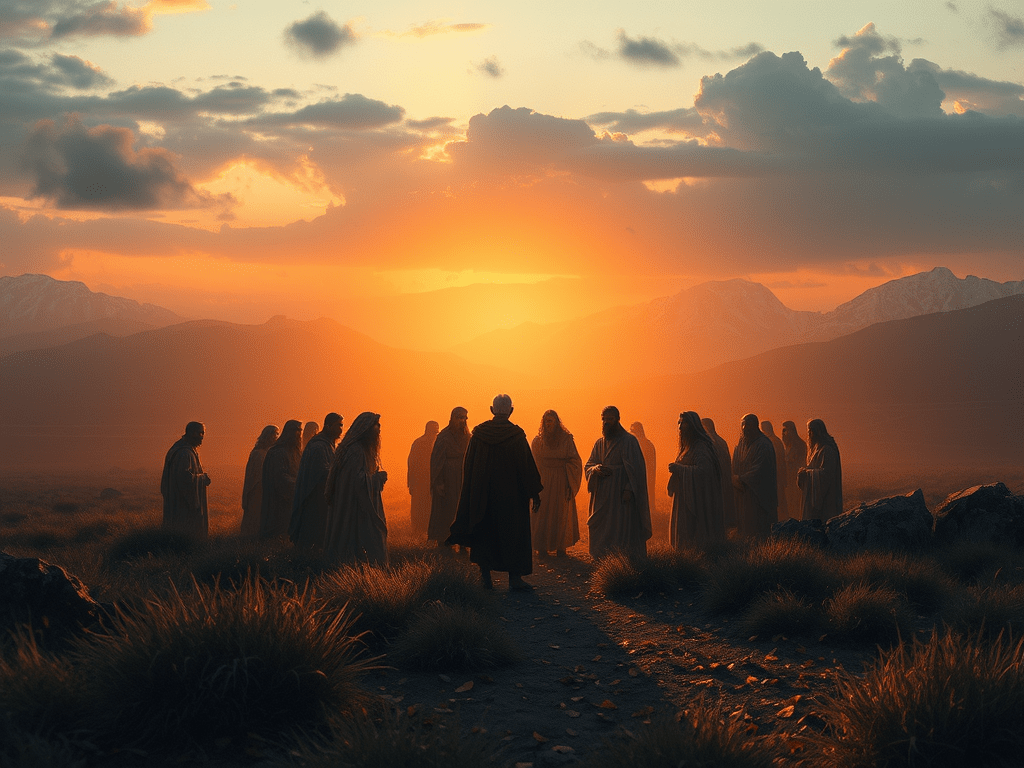
Titles for God’s people: the Remnant and the Elect

What do the terms remnant and elect mean, and to whom do they apply?

Core of the Bible podcast #126: Titles for God’s people – The Remnant and the Elect

As I mentioned last time, we are currently doing a little miniseries on the titles for God’s people. Over these few episodes, we are looking at the following terms in some detail: believer and Christian, the Remnant and the Elect, the Church and the Body, and the Bride of Christ. These are all terms that by most accounts are considered synonymous and applicable to the people today who claim to believe in Messiah. However, I intend to look at scriptural reasons as to why I believe this is not the case, how most of those terms do not apply to God’s people today, and yet how God has worked within these various aspects of his people over the ages to accomplish specific things for the good of all.

The Remnant

Throughout Scripture, the remnant is pictured as a unique group of people who were to be a small portion of all of Israel with whom God would maintain his covenant promises. The term itself means “that which remains” or those who are “left over” or “left behind”. This demonstrates how it has never been the entire nation which was in view, but a specific portion of the nation who were to receive the inheritance.

In modern Christian theology, the idea of a remnant of God’s faithful people is usually thought to be a group of  Christians who are currently remaining faithful during a period of hardship, ultimately to be culminated in the tribulation period at some future time. This comes from a passage in the book of Revelation, especially as it is rendered in the King James Version.

Revelation 12:16-17 KJV – And the earth helped the woman, and the earth opened her mouth, and swallowed up the flood which the dragon cast out of his mouth. And the dragon was wroth with the woman, and went to make war with the remnant of her seed, which keep the commandments of God, and have the testimony of Jesus Christ.

The Seventh Day Adventists have taken this remnant idea and even made it one of their primary points of confession.

  • “The universal church is composed of all who truly believe in Christ, but in the last days, a time of widespread apostasy, a remnant has been called out to keep the commandments of God and the faith of Jesus. This remnant announces the arrival of the judgment hour, proclaims salvation through Christ, and heralds the approach of His second advent.” – Seventh-day Adventist fundamental Belief # 13
  • The remnant spoken of in the Bible is the last group of people living on the earth that God claims as His own. A remnant is exactly the same as the first piece; just so, God’s remnant, His last church, must have the same characteristics as His first church.” – Pastor John J. Grosboll is Director of Steps to Life and pastors the Prairie Meadows Free Seventh-day Adventist Church in Wichita, Kansas

Whether or not you are a Seventh Day Adventist, maybe you agree with that or perhaps you haven’t really considered it in depth, but today I would like to explore the biblical concept of the remnant and the elect and demonstrate how these terms are biblically related, and who they apply to.

So, for a quick historical background, I found that the Wikipedia entry on this topic actually provides some reasonable information to build on.

“The remnant is a recurring theme throughout the Hebrew and Christian Bible. The Anchor Bible Dictionary describes it as “What is left of a community after it undergoes a catastrophe”. The concept has stronger representation in the Hebrew Bible and Christian Old Testament than in the Christian New Testament.

“According to the Book of Isaiah, the “remnant” is a small group of Israelites who will survive the invasion of the Assyrian army under Tiglath-Pileser III (Isaiah 10:20–22). The remnant is promised that they will one day be brought back to the Promised Land by Yahweh (Isaiah 11:11–16). Isaiah again uses the terminology during Sennacherib’s siege of Jerusalem (Isaiah 37).

“The concept of the remnant is taken up by several other prophets, including Micah, Jeremiah and Zephaniah. In Jeremiah 39–40, the “poor people, who had nothing”,[2] who remained in Judah when the rest of its population were deported to Babylon, are referred to as a “remnant”.[3] The post-exilic biblical literature (Ezra–Nehemiah, Haggai and Zechariah) consistently refers to the Jews who have returned from the Babylonian captivity as the remnant.

“New Testament verses that refer to a faithful “remnant” include Romans 11:5 (“Even so then at this present time also there is a remnant according to the election of grace”) and Revelation 12:17 (“And the dragon was wroth with the woman, and went to make war with the remnant of her seed, which keep the commandments of God, and have the testimony of Jesus Christ”). – https://en.wikipedia.org/wiki/Remnant_(Bible)

Now, to get an accurate depiction of who this remnant is, we would do best to refer back to the original scriptures that mention the remnant, and how they are pictured in the prophecies of old.

  • Isaiah 10:21 – The remnant will return, the remnant of Jacob, to the Mighty God.
  • Isaiah 37:31-32 – “The surviving remnant of the house of Judah will again take root downward and bear fruit upward. For a remnant will go out from Jerusalem, and survivors from Mount Zion. The zeal of Yahweh of Armies will accomplish this.’
  • Jeremiah 23:3 – “I will gather the remnant of my flock from all the lands where I have banished them, and I will return them to their grazing land. They will become fruitful and numerous.
  • Micah 2:12 – I will indeed gather all of you, Jacob; I will collect the remnant of Israel. I will bring them together like sheep in a pen, like a flock in the middle of its pasture. It will be noisy with people.
  • Zephaniah 3:13 – The remnant of Israel will no longer do wrong or tell lies; a deceitful tongue will not be found in their mouths. They will pasture and lie down, with nothing to make them afraid.
  • Zechariah 8:12 – “For they will sow in peace: the vine will yield its fruit, the land will yield its produce, and the skies will yield their dew. I will give the remnant of this people all these things as an inheritance.

In these prophetic passages, we can see how this Remnant was identified as a faithful group of believing Israelites or some other title related directly to Israel (Jacob, Judah, “my flock”, this people). These are described as the people who were to receive an inheritance. The apostle Paul captures this remnant terminology in his epistle to the Romans as he quotes Isaiah:

Romans 9:27 – But Isaiah cries out concerning Israel, Though the number of Israelites is like the sand of the sea, only the remnant will be saved…

Paul takes an extended prophecy from Isaiah 10 regarding a judgment upon Israel during the Assyrian captivity and applies it to the events of that first century generation. Isaiah had said only a remnant of Israel would remain faithful during a time of great destruction. Paul then takes that imagery and makes its ultimate application to his generation and the coming destruction upon Jerusalem in that day. He is explaining how much he longs for his Jewish brothers to come to understand the truth, but he knows only a portion will do so. In fact, all of Romans 9-11 is essentially a plea from Paul to God to reconsider his judgment regarding the house of Israel at large.

Romans 10:1-2 – Brothers and sisters, my heart’s desire and prayer to God for Israel is for their salvation. I can testify about them that they have zeal for God, but not according to knowledge.

Throughout these chapters, Paul concedes that the larger group of Israel is being rejected because they are clinging to their own righteousness instead of accepting God’s mercy and grace through Messiah. However, the remnant who have accepted Messiah were to be the light to the rest of the nation, and to the nations in which they had been scattered, thereby including those from among the nations. In this way, representatives from each of the tribes who had been dispersed would also be brought back to God, and in this way “all Israel”, that is, members from all of the twelve tribes, would be saved.

If you’ve reviewed the information covered in my last essay on Believers and Christians, you may recall how I mentioned the terms believer and non-believer were commonly used in the context of those within Israel: some would believe (i.e., the remnant) and others would not believe and remain faithless. This shows how a specific group within the larger population of Israel would be the group that God would “save”, that they would receive the benefits that the rest do not. Paul’s line of reasoning from here in Romans 9 then goes on through chapter 10 into chapter 11, outlining how the majority of Israel is rejected for their faithlessness, while only a portion, the remnant, will be saved by God’s grace.

Romans 11:5 – In the same way, then, there is also at the present time a remnant chosen by grace.

In the same way as what? Using the example of Elijah, the previous verses describe how God always retained a faithful remnant of Israel, even when it was not apparent at that time.

Romans 11:2-5 – God has not rejected his people whom he foreknew. Or don’t you know what the Scripture says in the passage about Elijah ​– ​how he pleads with God against Israel? Lord, they have killed your prophets and torn down your altars. I am the only one left, and they are trying to take my life! But what was God’s answer to him? I have left seven thousand for myself who have not bowed down to Baal. In the same way, then, there is also at the present time a remnant chosen by grace.

Here Paul says there was a remnant “at the present time”. That remnant at that time was the number of faithful from among Israel and Judah, even scattered among the nations, who had placed their faith in Messiah during that generation. The rest of Israel and Judah who were apistos or not faithful were the majority from which the faithful remnant was distinguished. All of this took place in the days of the apostle Paul during the first century.

The Diaspora

In Paul’s day, Jews had remained scattered throughout the known world due to their previous captivities of both the Assyrian and Babylonian empires. This can be evidenced from the list of locations that are described for us in Acts 2, when Jews from all over the known world had returned to Jerusalem for the Feast of Weeks or Pentecost. As the disciples were filled with God’s Spirit and began to preach to all of them about the work of Messiah, a miraculous event of language translation took place:

Acts 2:8-11 – “How is it that each of us can hear them in our own native language? Parthians, Medes, Elamites; those who live in Mesopotamia, in Judea and Cappadocia, Pontus and Asia, Phrygia and Pamphylia, Egypt and the parts of Libya near Cyrene; visitors from Rome (both Jews and converts), Cretans and Arabs ​– ​we hear them declaring the magnificent acts of God in our own tongues.”

All of these place names that may sound strange to our ears today were locations spread out throughout the known world at that time. Notice how Jews had been living in all of these areas, and how God was miraculously drawing a faithful remnant to himself from all of these distant areas. In fact, the text tells us that three thousand from among those various locations became believers in Messiah that day. Peter, speaking to thousands of Jews who had gathered in Jerusalem for the Feast of Weeks speaks to them directly, saying:

Acts 2:39-41 – “For the promise is for you and for your children, and for all who are far off, as many as the Lord our God will call.” With many other words [Peter] testified and strongly urged them, saying, “Be saved from this corrupt generation! ” So those who accepted his message were baptized, and that day about three thousand people were added to them.

God was gathering up the remnant of the faithful Jews and their children from where they had been scattered “afar off” and was calling them to himself. In this way, “all Israel”, that is, representative believers from every tribe, was saved in that generation. The later missionary journeys of the apostle Paul and other disciples only added to this growing group of restored Israelites.

Because this restoration of those estranged tribes was based on faith in Messiah and not just on lineage or ancestry, many converts and “God fearers” (that is, non-Jews who accepted the truth of Yahweh and the Bible but had not officially converted to Judaism) also were considered by Paul to have been included in that “remnant” which was restored in that day.  This is why Paul could boldly state:

Colossians 3:11 – In Messiah there is not Greek and Jew, circumcision and uncircumcision, barbarian, Scythian, slave and free; but Messiah is all and in all.

Once the judgment came to pass on Jerusalem in 68-70 AD, the story of national Israel was concluded. The nation ceased to exist. The prophecies of restoration of the faithful remnant were fulfilled in those closing days before the destruction of Jerusalem, and the scriptural remnant of prophecy no longer exists today.

If we continue to maintain today that anyone who is faithful is included in the remnant, it robs the actual scriptural remnant prophecies of their fulfillment within the nation of Israel during the end of that age. So, if we are to consider ourselves to be in the scriptural remnant today, then we are saying all of those prophecies concerning the remnant have remained unfulfilled for thousands of years and God never fully reconciled his people to himself within that generation as Yeshua, Peter, and Paul had preached.

We know the prophetic perspective was describing a remnant who was to be a faithful minority within the larger nation of Israel. We know they were to be the ones who were to return to the truth of Yahweh compared to the rest of the nation. We know they were to be gathered from all the nations where they had been scattered. Likewise, we know that Messiah taught about this occurring within that generation at that point of time, and we know that the disciples were indeed faithful in reaching the rest of the scattered remnant of Israel throughout the known world with the message of the gospel of the Kingdom in that generation.

When all of these points are taken into consideration, then all of the symmetry of God’s faithfulness with his people is maintained in the fulfillment of everything he had promised them through his prophets. The remnant of that generation is the one that was saved from the disaster that came upon the nation as a whole because of its unfaithfulness, and that’s the meaningful story for the ages. That story is one that can give us confidence that Yahweh God is a God who keeps his word and is faithful to do all that he promises. It is a story that we can praise God for in the demonstration of all that he had promised. Believers today can rejoice that we benefit from the mercy shown to them that was written down for our understanding and recognition of God’s faithfulness with them.

The Elect

Closely aligned with the remnant is the term the “elect”.  In New Testament usage, the elect or election appears to be synonymous with the remnant, or those through whom God would be doing a specific work.

Romans 11:5 – In the same way, then, there is also at the present time a remnant chosen by grace.

The word used here for chosen comes from the same Greek root phrase that is used for the elect, and Paul, speaking of events taking place at that time, says that the elect group, the group of the chosen, was the remnant. Since we just reviewed how the remnant was prophesied to be the group of faithful ones from among Israel, “the elect” then, would be another way of describing those from among Israel who were considered the faithful ones with whom God maintained his covenant relationship in that generation, and through whom God would be glorified.

This term, the elect, is doctrinally charged today because there is a whole doctrine of election or predestination which is built upon this term. However, this is not how the Bible uses the term. Predestination is not an eternal principle for individuals in the sense of some individuals are chosen by God for eternal life and others are not. That is the horror of Calvinistic-type thinking; a philosophical phantom that still haunts the halls of Christendom today.

The elect were the ones who were, as Paul says, a predestined group to believe in Messiah because all of the prophecies had foretold that would occur. Their belief in Messiah during Paul’s generation was indeed the fulfillment of those prophecies! This is why Paul could write:

Romans 8:31-33 – What, then, are we to say about these things? If God is for us, who is against us? He did not even spare his own Son but gave him up for us all. How will he not also with him grant us everything? Who can bring an accusation against God’s elect? God is the one who justifies.

That’s the extent of the “predestination concept” in Scripture. Paul was confirming those remnant prophecies were coming to pass in his day. To be chosen in the sense of the elect was simply a description of active distinction of one group or individuals from others. If you were a believer in Messiah in Paul’s day, then you were a member of the elect group that had been prophesied; therefore who could come against them? It was a bold acknowledgement of prophecy coming to pass before their eyes, and a triumphant statement of hope that God would see them through the difficulties they faced during their extreme persecution in their day, because he had previously declared it to be so.

God’s plan for Israel was consummated within that first century generation, just as Yeshua had predicted that the elect would be gathered from “the four winds”, and the temple would fall before that generation all passed away.

Matthew 24:1-2, 24, 31, 34 – As Yeshua left and was going out of the temple, his disciples came up and called his attention to its buildings. He replied to them, “Do you see all these things? Truly I tell you, not one stone will be left here on another that will not be thrown down …For false messiahs and false prophets will arise and perform great signs and wonders to lead astray, if possible, even the elect. … He will send out his angels with a loud trumpet, and they will gather his elect from the four winds, from one end of the sky to the other…Truly I tell you, this generation will certainly not pass away until all these things take place.”

The apostles recognized the role of the elect during those days, and that they were the recipients and participants in all that had been prophesied before:

2 Timothy 2:10 – This is why I endure all things for the elect: so that they also may obtain salvation, which is in Messiah Yeshua, with eternal glory.

Titus 1:1 – Paul, a servant of God and an apostle of Yeshua Messiah, for the faith of God’s elect and their knowledge of the truth that leads to godliness,

2 John 1:1, 13 – The elder: To the elect lady and her children, whom I love in the truth ​– ​and not only I, but also all who know the truth ​– ​ … The children of your elect sister send you greetings.

Notice how all of these references speak of the elect in the present tense, as the ongoing participation of the Messiah believers in those days. The term itself means those who are chosen, and since they were referred to as “his elect” or “God’s elect”, then we can understand this is a choice that God had made to distinguish this group from others.

The chosen

This concept of being chosen would not be unfamiliar to Hebrew believers, as God had previously and many times demonstrated that the entire nation of Israel had been chosen from among the nations of the world to be the ones to carry his Name.

Ezekiel 20:5-6 – …’This is what the Lord Yahweh says: On the day I chose Israel, I swore an oath to the descendants of Jacob’s house and made myself known to them in the land of Egypt. I swore to them, saying, “I am Yahweh your God.” On that day I swore to them that I would bring them out of the land of Egypt into a land I had searched out for them, a land flowing with milk and honey, the most beautiful of all lands.

A further example of the use of this chosen concept which demonstrates how it is not a term restricted to individual, eternal salvation is how God had made a progression of choices amidst the tribe and family of David. David had been chosen out of all Israel and from among his own family to be king over Israel and Solomon to be king after him.

1 Chronicles 28:4-5 – “Yet Yahweh God of Israel chose me out of all my father’s family to be king over Israel forever. For he chose Judah as leader, and from the house of Judah, my father’s family, and from my father’s sons, he was pleased to make me king over all Israel. “And out of all my sons ​– ​for Yahweh has given me many sons ​– ​he has chosen my son Solomon to sit on the throne of Yahweh’s kingdom over Israel.

God is described here as having chosen Israel as a nation, then Judah as a leading tribe, then David’s family among that tribe, then David as king, then Solomon as king to follow him. All of these “choices” or “elections” are another way of saying those at a given time through whom God was working for his purpose and will to be accomplished. These distinctions of tribes, families, and individuals were isolated from the rest of the nations of the world and the rest of the nation of Israel as a whole because God was going to be working through these specific tribes and individuals during their lifetimes for specific purposes.

Interestingly, another way to demonstrate how this is not some kind of universal election or predestination for all eternity, one needs only to read how all of God’s “chosen” entities in this example, those who were considered “the elect”, had failed at some point. Israel as a whole did not maintain the covenant and was rejected; Judah had failed in his relationship with his father; David failed in the incident with Bathsheba; Solomon failed with corruption through his pagan wives. All these things occurred after they had been “chosen”. The concept of being elect doesn’t mean one is bullet-proof from judgment or failure for all eternity, only that one (or a group) is identified as being used for God’s specific purpose and will at a specific time.

The elect of the first century were simply those who believed Messiah and through whom God maintained his covenantal faithfulness, as contrasted with the rest or the majority of Israel which did not believe in Messiah. This was predestined to occur, being foretold, as we have seen, in all of the “remnant” prophecies.

If I was to try to create an analogy here, it’s as if God was writing a story as a novelist. His “elect” would be the main character (or characters), while all others would be supporting characters in the story he was telling. In this way, he could tell his story through his main characters, even though they were not perfect. They still had their flaws and made their mistakes, just like everyone else does, but they were the focus of the story he was telling, to the exclusion of all of the other details or people in other places that may not be pertinent to the specific story he was telling. This doesn’t mean that no one else was faithful, just that his main characters were living out the point that he was making.

Looked at in this light, the term election becomes less doctrinally charged regarding individual, eternal salvation and begins to take on its rightful meaning regarding the distinctions for specific purposes regarding the nation of Israel as a whole. It is used of those faithful believers amidst Israel through whom God’s will would be accomplished and those to whom his covenant and promises would be maintained. In New Testament application, it was because of the nation’s general disobedience and failing within the covenant (the faithless majority of Israel, the non-believers) that God then refined his chosen people to those who would believe his words through his chosen Messiah. This was a smaller group within the group, including those who had been scattered throughout the known world at that time. Once again, to my way of thinking, the symmetry of the concept is beautiful and poetic within the context of the entire Bible.

If we are to be good Bible students, we need to maintain the distinction that those who are called the elect mentioned in the New Testament writings refers specifically to those first-century believers who accepted the Messiah, both from Israel and from among the nations. Just as the remnant described those same believers, the elect is therefore its synonymous equivalent. Therefore, the remnant and the elect of biblical prophecy was consummated in the first century and no longer exists today.

Believers today

So what about believers today? If we are not to consider ourselves the remnant and we are not the elect, who are we within the biblical narrative? Have I just written us out of the story? By no means!

The apostle Paul speaks to the culmination of all of those prophecies with Israel being the very catalyst that would bring believers from all nations to Yahweh God.

Romans 15:8-9 – For I say that Messiah became a servant of the circumcised [i.e., the Jews] on behalf of God’s truth, to confirm the promises to the fathers, [all of those former prophecies] and so that nations may glorify God for his mercy.

Here Paul then goes into a list of quotes from the Tanakh that demonstrate how God’s ultimate purpose in fulfilling his word to the Jews would ultimately bring people from all nations to himself:

Romans 15:9-12 – As it is written, Therefore I will praise you among the nations, and I will sing praise to your name.  [Psalm 18:49] Again it says, Rejoice, you nations, with his people! [Deuteronomy 32:43] And again, Praise Yahweh, all you nations; let all the peoples praise him! [Psalm 117:1]  And again, Isaiah says, The root of Jesse [i.e., the Messiah] will appear, the one who rises to rule the nations; the nations will hope in him. [Isaiah 11:10]

Today, we are those from among all nations who have come to praise Yahweh through seeing the promises that were confirmed to Israel at the culmination of that age!  We can join together glorifying God for his mercy to his people at that time which has allowed us the same access to him through faith in Messiah, just as they had, and still have to this day. Our hope today is in the same Messiah whom they trusted in faith.

This is our identity in Messiah today: no longer a small remnant within the nation of Israel, but a vast multitude of those who are the receivers of the eternal Kingdom that Messiah inaugurated! We are a rag-tag lot from among every nation and tribe, worshiping the one true God through faith in his Messiah! We are the ongoing fulfillment of the promises made to Abraham (that all nations would be blessed through him), and the promises made to ancient Israel that nations would come to worship their God, Yahweh, and that his Messiah would also rule the nations and become their hope. We are still a people fulfilling prophecy, although we are now fulfilling the prophecies that relate, not to the remnant or the elect, but to the eternal Kingdom of God!

Daniel 2:44 – “In the days of those kings, the God of the heavens will set up a kingdom that will never be destroyed, and this kingdom will not be left to another people. It will crush all these kingdoms and bring them to an end, but will itself endure forever.

Though it may at first feel strange to not be a direct participant in the story of the prophetic remnant or the elect of Scripture, it does not diminish our responsibility to this generation, and every generation into the future. The consummation of the prophecies of the elect remnant of the first century should provide us the hope and inspiration we need to know that God never abandons his faithful, and that those who choose the path of life will be provided for and ultimately be participants in his purposes coming to pass for all eternity. If he fulfilled his prophecies to the elect remnant in the first century, then he will fulfill his prophecies to establish his Kingdom over all the earth. Therefore, we should be encouraged to press on; we must continue to stay on the path of life, to be the city on the hill, the light of the world, and the salt of the earth.

We should be able to pray with the Psalmist:

Psalm 57:11 – God, be exalted above the heavens; let your glory be over the whole earth.


Well, as we wrap up for today, I hope there are at least a couple of concepts and ideas to encourage you to meditate on and to study out further on your own. Next time, we will investigate another related term to this remnant and the elect, the “church”, or the assembly of “called-out-ones,” and how this term has been used in conjunction with another familiar phrase: the Body of Christ. I hope you will be able to come back and visit for more perspectives on these titles of God’s people. But remember, if you have thoughts or comments that you would like to explore further with me, feel free to email me at coreofthebible@gmail.com.

Children of Abraham, children of promise

According to Yeshua, the biblical concept of being considered a child of Abraham is to demonstrate the same type of faith that Abraham exhibited when he simply believed what God said.

Core of the Bible podcast #113 – Children of Abraham, children of promise

In my last post, we reviewed the concept of covenants in the Bible, and I concluded by stating how believers today can participate in the promises that God made to Abraham when we simply come to God in faith, believing in his Messiah, Yeshua.

Many people today believe the children of Abraham to be a specific race or line of descendants that can trace their lineage back to him. This was believed in the time of Yeshua, as well. However, we will see that the biblical concept of being considered a child of Abraham is to demonstrate the same type of faith that Abraham exhibited when he simply believed what God said. To understand this, we will need to begin by exploring God’s dealings with Abraham himself.

Promises made to Abram before the covenants

While most people studying the Bible recognize that God made covenants with Abraham, they misunderstand or overlook how Abraham’s relationship with God came about. To begin with, God simply made seven promises to Abraham before any covenants were enacted.

Genesis 12:1-4 Now Yahweh said to Abram, “Go forth from your country, And from your relatives And from your father’s house, To the land which I will show you;

  1. And I will make you a great nation,
  2. And I will bless you,
  3. And make your name great;
  4. And so you shall be a blessing;
  5. And I will bless those who bless you,
  6. And the one who curses you I will curse.
  7. And in you all the families of the earth [ha’adamah] will be blessed.”

So Abram went forth as Yahweh had spoken to him; and Lot went with him. Now Abram was seventy-five years old when he departed from Haran.

At this point, no covenant was in place; God simply promised that all of these things would come about.

Next in the narrative, we find God reaffirming the promise to Abram that he would have numberless descendants, and now he adds the promise that they would also inherit the land of Canaan.

Genesis 13:14-17 Yahweh said to Abram, after Lot had separated from him, “Now lift up your eyes and look from the place where you are, northward and southward and eastward and westward; for all the land which you see, I will give it to you and to your descendants forever. I will make your descendants as the dust of the earth, so that if anyone can number the dust of the earth, then your descendants can also be numbered. Arise, walk about the land through its length and breadth; for I will give it to you.”

God then also promises that a very specific individual, one of his direct descendants, would be receiving the fulfillment of these promises that God was making to Abraham.

Genesis 15:1-4  After these things the word of Yahweh came to Abram in a vision, saying, “Do not fear, Abram, I am a shield to you; Your reward shall be very great.” Abram said, “O Lord Yahweh, what will You give me, since I am childless, and the heir of my house is Eliezer of Damascus?” And Abram said, “Since You have given no offspring to me, one born in my house is my heir.” Then behold, the word of Yahweh came to him, saying, “This man will not be your heir; but one who will come forth from your own body, he shall be your heir.

Then, once again, God reaffirms his promise of many, numerous descendants that Abraham would have.

Genesis 15:5-6 And He took him outside and said, “Now look toward the heavens, and count the stars, if you are able to count them.” And He said to him, “So shall your descendants be.” Then he believed in Yahweh; and He reckoned it to him as righteousness.

So far, no covenants have been enacted; these are all promises that God made with Abraham. At this point, the Bible tells us that Abraham simply believed in these promises of the one true God. This is the exhibition of faith that Abraham is primarily remembered for. Understanding this principle is key to how the apostle Paul would use this simple faithfulness of Abraham later on in his letters to illustrate faith in Messiah.

The first covenant with Abraham

As the narrative now moves from promises to covenants, the focus shifts from the spiritual aspect of God’s promises to the concrete realities of what, to a middle eastern person living in ancient times, would be the realization of the spiritual realities coming to pass. The first covenant God made with Abraham was to guarantee him and his descendants the physical land of Canaan in a way that he would recognize and understand its reality. God was simply using the covenant process as a way of guaranteeing to Abraham that it would come to pass. It is important to also note that this was an unconditional covenant; there was nothing Abraham needed to do to bring it about.

Genesis 15:7-21 And He said to him, “I am Yahweh who brought you out of Ur of the Chaldeans, to give you this land to possess it.” He said, “O Lord Yahweh, how may I know that I will possess it?” So He said to him, “Bring Me a three year old heifer, and a three year old female goat, and a three year old ram, and a turtledove, and a young pigeon.” Then he brought all these to Him and cut them in two, and laid each half opposite the other; but he did not cut the birds. The birds of prey came down upon the carcasses, and Abram drove them away. Now when the sun was going down, a deep sleep fell upon Abram; and behold, terror and great darkness fell upon him. God said to Abram, “Know for certain that your descendants will be strangers in a land that is not theirs, where they will be enslaved and oppressed four hundred years. But I will also judge the nation whom they will serve, and afterward they will come out with many possessions. As for you, you shall go to your fathers in peace; you will be buried at a good old age. Then in the fourth generation they will return here, for the iniquity of the Amorite is not yet complete.” It came about when the sun had set, that it was very dark, and behold, there appeared a smoking oven and a flaming torch which passed between these pieces. On that day Yahweh made a covenant with Abram, saying, “To your descendants I have given this land, From the river of Egypt as far as the great river, the river Euphrates: the Kenite and the Kenizzite and the Kadmonite and the Hittite and the Perizzite and the Rephaim and the Amorite and the Canaanite and the Girgashite and the Jebusite.”

The first covenant with Abraham was a guarantee of the promise that God had previously made to Abraham, granting him and his descendants the physical land of Canaan, from river to river. There was nothing Abraham needed to do for this to come about; God alone passed between the animal pieces in the vision Abraham saw. This was an illustration that it was assured God would accomplish this, and Abraham was not a participant to bring it about in any way.

God faithfully delivered on his covenant agreement to give them all of the land by the end of the book of Joshua:

Joshua 21:43-45 – “So the Lord gave Israel all the land which He had sworn to give to their fathers, and they possessed it and lived in it. And the Lord gave them rest on every side, according to all that He had sworn to their fathers, and no one of all their enemies stood before them; the Lord gave all their enemies into their hand. Not one of the good promises which the Lord had made to the house of Israel failed; all came to pass.”

The second covenant with Abraham

The second covenant God made with Abraham was a conditional covenant that would establish Yahweh as the God of Abraham’s descendants. However, it would require a practice for Abraham and any participants in the covenant; circumcision. Participants in this covenant would have to abide by the condition or they would not be included within the parameters of the covenant. This would be the distinguishing mark of the people that God was setting apart for his own purposes, to be their God and for them to be his people.

Genesis 17:1-14 Now when Abram was ninety-nine years old, Yahweh appeared to Abram and said to him, “I am God Almighty; Walk before Me, and be blameless. I will establish My covenant between Me and you, And I will multiply you exceedingly.” Abram fell on his face, and God talked with him, saying, “As for Me, behold, My covenant is with you, And you will be the father of a multitude of nations. No longer shall your name be called Abram, But your name shall be Abraham; For I have made you the father of a multitude of nations. I will make you exceedingly fruitful, and I will make nations of you, and kings will come forth from you. I will establish My covenant between Me and you and your descendants after you throughout their generations for an everlasting covenant, to be God to you and to your descendants after you. I will give to you and to your descendants after you, the land of your sojournings, all the land of Canaan, for an everlasting possession; and I will be their God.”

God said further to Abraham, “Now as for you, you shall keep My covenant, you and your descendants after you throughout their generations. This is My covenant, which you shall keep, between Me and you and your descendants after you: every male among you shall be circumcised. And you shall be circumcised in the flesh of your foreskin, and it shall be the sign of the covenant between Me and you. And every male among you who is eight days old shall be circumcised throughout your generations, a servant who is born in the house or who is bought with money from any foreigner, who is not of your descendants. A servant who is born in your house or who is bought with your money shall surely be circumcised; thus shall My covenant be in your flesh for an everlasting covenant. But an uncircumcised male who is not circumcised in the flesh of his foreskin, that person shall be cut off from his people; he has broken My covenant.”

Twenty-four years after the original promises made to Abraham, God asks Abraham and all of his physical descendants to participate in a covenant of circumcision. This was a fleshly covenant, to participate in a physical community with Yahweh as their God. The land had already been covenanted unconditionally; however, this conditional covenant would regulate the descendant community of Abraham as believers in Yahweh to distinguish them from the current possessors of Canaan.

It would also serve to confirm the original promise God made with him in Genesis 15 that “one who will come forth from your own body [that is, a physical descendant], he shall be your heir.” Thinking that God was primarily speaking of his immediate heirs, Abraham pleads for his son Ishmael to receive God’s favor.

Genesis 17:19-21 – But God said, “No. Your wife Sarah will bear you a son, and you will name him Isaac. I will confirm my covenant with him as a permanent covenant for his future offspring. As for Ishmael, I have heard you. I will certainly bless him; I will make him fruitful and will multiply him greatly. He will father twelve tribal leaders, and I will make him into a great nation. But I will confirm my covenant with Isaac, whom Sarah will bear to you at this time next year.”

Isaac, the miraculous child through Abraham’s wife Sarah,  a child of promise, would be the immediate heir that Abraham was looking for. However, the covenantal practice of ongoing circumcisions in the community would ensure that a future descendant, another child of promise who would be the ultimate recipient of the spiritual promises made previously to Abraham, would be able to be recognized as coming from Abraham’s line.

Since we read in the book of Joshua how the promise to Abraham that his descendants would receive the land was fulfilled, it then makes sense the Bible would also record the fulfilled promise of how a physical descendant beyond the immediate family of Abraham would become his ultimate spiritual heir, the heir of the promises that were originally made to Abraham.

Yeshua as the seed of Abraham

Now we fast-forward almost two thousand years to the time of Yeshua. Abraham’s descendants, through Isaac and then Jacob and his twelve sons, have been faithfully circumcising their male infants and keeping genealogical records throughout their history. There were a few exceptions, such as Israel’s time in the wilderness and some of their captivity, but those were accounted for and rectified upon their return to their land. Based on these records and the faithful practice of circumcision within the community, we know, therefore, that Yeshua was a fleshly descendant of Abraham from these genealogies as recorded in the accounts of Matthew and Luke.

Matthew 1:1 The record of the genealogy of Yeshua the Messiah, the son of David, the son of Abraham:

Luke 3:23, 34 When He began His ministry, Yeshua Himself was about thirty years of age, being, as was supposed, the son of Joseph, the son of Eli, … the son of Jacob, the son of Isaac, the son of Abraham

This lineage is critical to recognizing Yeshua as the rightful heir of the promise that was made to Abraham.

Genesis 15:2-4 Abram said, “O Lord Yahweh, what will You give me, since I am childless, and the heir of my house is Eliezer of Damascus?” And Abram said, “Since You have given no offspring to me, one born in my house is my heir.” Then behold, the word of Yahweh came to him, saying, “This man will not be your heir; but one who will come forth from your own body, he shall be your heir.”

The apostle Paul confirms that this promise of God to Abraham, while immediately fulfilled through Isaac, was ultimately fulfilled in Messiah, the descendant or seed of Abraham.

Galatians 3:16 – Now the promises were spoken to Abraham and to his seed. He does not say, “And to seeds,” as referring to many, but rather to one, “And to your seed,” that is, Messiah.

Yeshua defines who the true children of Abraham are

As the genealogical and covenantal end-stop of the promise made to Abraham, Yeshua is fully qualified to define who the true children of Abraham are. Several times in his teachings, Yeshua equates being a son or daughter of Abraham with being a person of faith in the working of God, NOT just a product of a physical lineage.

Luke 19:1-10 [Yeshua] entered Jericho and was passing through. And there was a man called by the name of Zaccheus; he was a chief tax collector and he was rich. Zaccheus was trying to see who Yeshua was, and was unable because of the crowd, for he was small in stature. So he ran on ahead and climbed up into a sycamore tree in order to see Him, for He was about to pass through that way. When Yeshua came to the place, He looked up and said to him, “Zaccheus, hurry and come down, for today I must stay at your house.” And he hurried and came down and received Him gladly. When they saw it, they all began to grumble, saying, “He has gone to be the guest of a man who is a sinner.” Zaccheus stopped and said to the Lord, “Behold, Lord, half of my possessions I will give to the poor, and if I have defrauded anyone of anything, I will give back four times as much.” And Yeshua said to him, “Today salvation has come to this house, because he, too, is a son of Abraham. “For the Son of Man has come to seek and to save that which was lost.”

Zaccheus may have been a natural descendant of Abraham, but the context demonstrates Yeshua was speaking about his faith which resulted in action. This is what truly qualified him as a son of Abraham. When Yeshua used this phrase, as shown above, it was in the context of someone exhibiting great faith, especially faith in him as the Messiah.

Conversely, when confronted by the Jewish leaders who were clearly physical descendants of Abraham and had the genealogies to prove it, Yeshua contradicts their fleshly ideas that just because of their physical lineage they were entitled to the blessings of Abraham.

John 8:39-40, 47 – They [the Jewish leaders] answered and said to Him, “Abraham is our father.” Yeshua said to them, “If you are Abraham’s children, do the deeds of Abraham. But as it is, you are seeking to kill Me, a man who has told you the truth, which I heard from God; this Abraham did not do. … “He who is of God hears the words of God; for this reason you do not hear them, because you are not of God.”

This shows how the “works of Abraham” are once again equated with faith in Messiah. Since the Jewish leaders did not believe, Yeshua did not consider them in the category of children of Abraham, even though they were Abraham’s physical descendants.

In a similar style, John the baptizer had held nothing back when it came to confronting the religious leaders as he was paving the way for the work of Messiah to follow. Concerning Abraham’s fleshly lineage, he said the following:

Matthew 3:7-9  But when he [John] saw many of the Pharisees and Sadducees coming for baptism, he said to them, “You brood of vipers, who warned you to flee from the wrath to come? “Therefore bear fruit in keeping with repentance; and do not suppose that you can say to yourselves, ‘We have Abraham for our father’; for I say to you that from these stones God is able to raise up children to Abraham.”

Once again, the Jewish leaders were not believing in the work that God was doing at that time in preparing people for the coming Messiah. So John dramatically states that God can create a child of Abraham out of anything, even stones!

Yeshua expands the term to non-Israelites

Matthew 8:5-12 And when Yeshua entered Capernaum, a centurion came to Him, imploring Him, and saying, “Lord, my servant is lying paralyzed at home, fearfully tormented.” Yeshua said to him, “I will come and heal him.” But the centurion said, “Lord, I am not worthy for You to come under my roof, but just say the word, and my servant will be healed. “For I also am a man under authority, with soldiers under me; and I say to this one, ‘Go!’ and he goes, and to another, ‘Come!’ and he comes, and to my slave, ‘Do this!’ and he does it.” Now when Yeshua heard this, He marveled and said to those who were following, “Truly I say to you, I have not found such great faith with anyone in Israel. “I say to you that many will come from east and west, and recline at the table with Abraham, Isaac and Jacob in the kingdom of heaven; but the sons of the kingdom will be cast out into the outer darkness; in that place there will be weeping and gnashing of teeth.”

This passage shows that a centurion, a non-Israelite who expressed faith in Yeshua, was qualified by him to be in the kingdom of God with Abraham. This was due to his faith in the Messiah. However, the “sons of the kingdom,” those Israelites in the physical descendant lineage of Abraham, but not of the faith of Abraham, would be cast out.

From these passages, I believe both John the baptizer and Yeshua defined a child of Abraham, or someone who would be blessed along with Abraham, as someone who exhibited faith in God, just like Abraham did.

The apostle Paul continues the teaching of John and Yeshua

Paul also confirms this is an appropriate view of the term when he writes:

Galatians 3:6-9 Even so Abraham believed God, and it was reckoned to him as righteousness. Therefore, be sure that it is those who are of faith who are sons of Abraham. The Scripture, foreseeing that God would justify the [nations] by faith, preached the gospel beforehand to Abraham, saying, “All the nations will be blessed in you.” So then those who are of faith are blessed with Abraham, the believer.

Galatians 3:26-29 For you are all sons of God through faith in Messiah Yeshua. For all of you who were baptized into Messiah have clothed yourselves with Messiah. There is neither Jew nor Greek, there is neither slave nor free man, there is neither male nor female; for you are all one in Messiah Yeshua. And if you belong to Messiah, then you are Abraham’s descendants, heirs according to promise.

Paul equates the promise that was made to Abraham as being effective for all who exhibit faith in Messiah, just as Abraham exhibited faith in Yahweh.

Romans 4:13-14, 16 For the promise to Abraham or to his descendants that he would be heir of the world was not through the Law, but through the righteousness of faith. For if those who are of the Law are heirs, faith is made void and the promise is nullified; … For this reason it is by faith, in order that it may be in accordance with grace, so that the promise will be guaranteed to all the descendants, not only to those who are of the Law, but also to those who are of the faith of Abraham, who is the father of us all…

We have to remember that Abraham had two prominent sons: Ishmael (born through a slave woman, Hagar) and Isaac (born miraculously through Sara). Isaac was the child of promise through whom God chose to continue the preferred line of Abraham’s descendants.

Genesis 21:12 – But God said to Abraham, “Do not be distressed because of the lad and your maid; whatever Sarah tells you, listen to her, for through Isaac your descendants shall be named.

Isaac then had two twin sons: Jacob and Esau. Jacob gained the name Israel (Genesis 32:28) and was the child through whom God chose to continue Abraham’s fleshly lineage all the way down to his Messiah, almost two thousand years later. So, while both Isaac and Jacob were “children” (that is, descendants) of Abraham, one was the miraculous child of promise chosen by God, and the other was the physical descendant chosen by God.

The apostle Paul capitalizes on this distinction by quoting that Genesis passage in his argument as to why those who believe in Messiah are counted above the physical descendants of Abraham:

Romans 9:6-8 – Now it is not as though the word of God has failed, because not all who are descended from Israel [Jacob] are Israel. Neither is it the case that all of Abraham’s children are his descendants. On the contrary, [the Bible says,] “your offspring will be traced through Isaac.” That is, it is not the children by physical descent who are God’s children, but the children of the promise are considered to be the offspring.

Therefore, while the physical covenants belonged to the physical descendants, the spiritual promises and blessings belong to the miraculous descendants: those who exhibit faith in the promises of God, just like Abraham did. Isaac was the miraculous result of Abraham’s faith, therefore, in like fashion, those who exhibit faith in God receive a miraculous adoption into Abraham’s line of spiritual descendants through Isaac. It can be said that Jews were physically Abraham’s descendants through Jacob, but anyone believing in the Messiah became Abraham’s spiritual descendants through Isaac.

Using the analogy of the long history of Israel as a cultivated olive tree, the apostle Paul wrote about how it was not just the connection to the physical tree that mattered, but belief in the Messiah that allowed the branches to prosper.

Romans 11:17, 24 – Now if some of the branches were broken off, and you, though a wild olive branch, were grafted in among them and have come to share in the root and richness of the cultivated olive tree, … For if you were cut off from your native wild olive tree and against nature were grafted into a cultivated olive tree, how much more will these ​– ​the natural branches ​– ​be grafted into their own olive tree?

According to the Bible, it is the natural thing for Jews to believe in their own Messiah, and they can flourish when they do so. But because of their unbelief, God had chosen to break off some of the natural branches and miraculously graft in believers from among the nations into that same olive tree. But all of the remaining branches stand by faith in Messiah, so technically, all of the remaining branches are branches of promise, according to faith.

For those of us who believe in Yeshua today, we are counted as Abraham’s children (that is, we are considered as descended from the patriarchal olive tree root that Paul mentions) but only because of our faith in God by believing in his Messiah. This is the same type of faith that Abraham exhibited, and we are considered heirs only because we believe in the promised seed of Abraham, the Messiah. We are heirs according to the promise of God to Abraham, NOT by seeking God’s favor through fleshly rule-following (like the Jews of Yeshua’s day), NOT directly by covenant (since God’s New Covenant was made with Israel and Judah), and NOT by genealogy (since we are not direct descendants of Abraham), but strictly by faith in God’s promise, just like Abraham.

As I mentioned in our last study, in the book of Hebrews, quoting from Jeremiah, it is clear that the new covenant was not about starting a new religion with a new group of people, but it was about fulfilling the promises made to Abraham on behalf of Israel and Judah, and it described where God’s eternal law or torah was to be placed.

Heb 8:8-10 For finding fault with them, he saith, Behold, the days come, saith Yahweh, when I will make a new covenant with the house of Israel and with the house of Judah: Not according to the covenant that I made with their fathers in the day when I took them by the hand to lead them out of the land of Egypt; because they continued not in my covenant, and I regarded them not, saith Yahweh. For this is the covenant that I will make with the house of Israel after those days, saith Yahweh; I will put my laws into their mind, and write them in their hearts: and I will be to them a God, and they shall be to me a people…

While the law originally written on stone was placed inside the ark of the covenant within the holiest of places in the tabernacle and then the temple, the new covenant provided for the law to be written on the heart so it could be lived out in practice through his eternal temple, the body of Messiah believers in each generation.

1 Corinthians 3:16 – Don’t you yourselves know that you [plurally] are God’s temple and that the Spirit of God lives in you?

This new covenant was made specifically with and for Judah and Israel, yet it is available to all who would believe in Abraham’s descendant, the Messiah. Though the covenant was not made with believers in this generation directly, we have the privilege of participating in it since we, by faith, are considered to be IN Messiah who was the goal and end of the promise made to Abraham.

Galatians 3:16, 29 Now the promises were spoken to Abraham and to his seed. He does not say, “And to seeds,” as referring to many, but rather to one, “And to your seed,” that is, Messiah … for you are all one in Messiah Yeshua. And if you belong to Messiah, then you are Abraham’s descendants, heirs according to promise.

The physical covenants and genealogies were for physical blessings for Abraham’s fleshly descendants through Jacob. They were necessary and proper until the fulfillment of the promises and covenants in Messiah. From Yeshua’s time on, genealogies would no longer be necessary, since they had served their purpose of identifying Abraham’s ultimate “seed,” Messiah. Physical covenants related to blessings of the land would also no longer be necessary, as the children of Abraham would be defined by their simple faith in God’s Messiah. And this would not be to gain or prosper in a specific, physical land but to live in an eternal, universal Kingdom covering the entire earth.

However, just because the covenants were fulfilled in Messiah, it does not mean that the instruction of God contained within the covenant language has been completely abandoned. It has not been abolished, but fulfilled! Even better, it is my belief that the torah instruction of God has been simplified and elevated into the moral and spiritual principles taught by Yeshua which are summarized in the Sermon on the Mount. These include primarily the principles of the Kingdom (a Kingdom which has been forever established by God upon the Ten Commandments), integrity, vigilance, holiness, trust, forgiveness, and compassion. These are the core Bible principles allowing believers to truly love God and to love others from the heart which is the fulfillment of having the law or torah of the Kingdom placed within the heart. The new covenant is genuinely fulfilled in us when we abide by these principles, and the Kingdom of God then has potential to continue to expand further in each generation!

Those who exhibit this faith in God by believing in his Messiah, just like Abraham’s elementary faith, will be counted within the idiomatic expression of believers spanning many ages, known collectively as “children of Abraham.” These are the ones whom, like Yeshua taught, will “come from east and west, and recline at the table with Abraham, Isaac and Jacob in the kingdom of heaven,” (Matthew 8:11).


Well, I hope this deeper dive into the promises made with Abraham brought you some concepts and ideas to meditate on and to study out further on your own. But remember, if you have thoughts or comments that you would like to explore further with me, feel free to email me at coreofthebible@gmail.com.

The regathering of the tribes resulting in a unified faith

Vigilance and resoluteness of purpose defined the early congregations.

Vigilance and resoluteness of purpose defined the early congregations.

During the first century, the dynamic of the gospel of the kingdom being spread across the known world was one of irregular, but steady growth. One of those stages which took this growth to the next level is when the message began being shared even with those outside the accepted Jewish faith. This group of outsiders consisted of Hellenists.

Acts 11:19-21: “Now those who were scattered because of the persecution that took place over Stephen traveled as far as Phoenicia, Cyprus, and Antioch, and they spoke the word to no one except Jews. But among them were some men of Cyprus and Cyrene who, on coming to Antioch, spoke to the Hellenists also, proclaiming the Lord Messiah. The hand of Yahweh was with them, and a great number became believers and turned to Yahweh.”

Scholars have several opinions about who these Hellenists were. As they are mentioned in the Bible, many times the context determines who is being discussed. Were they former Jews who had assimilated into the surrounding Greek culture, or were they just the pagan Greeks who had never known the Bible, commonly referred to as Gentiles?

The weight of history, at least the history of Christianity, has fallen on the side of these people being Gentiles, explaining why so many non-Jewish believers have populated the “Church” over the millennia. However, a strong case exists for these Hellenists being descendants of the Jews who had been scattered during the Diaspora (the captivities of Assyria and Babylon) and who had over time assimilated into the regional cultures. This makes sense of passages which speak of God bringing all of the former tribes back together into his everlasting kingdom.

One of the most famous and descriptive of these passages is the prophecy of “two sticks” in Ezekiel 37.

Ezekiel 37:19-27 – “tell them, ‘This is what Yahweh GOD says: I am going to take the stick of Joseph, which is in the hand of Ephraim, and the tribes of Israel associated with him, and put them together with the stick of Judah. I will make them into a single stick so that they become one in my hand.’ “When the sticks you have written on are in your hand and in full view of the people, “tell them, ‘This is what Yahweh GOD says: I am going to take the Israelites out of the nations where they have gone. I will gather them from all around and bring them into their own land. “I will make them one nation in the land, on the mountains of Israel, and one king will rule over all of them. They will no longer be two nations and will no longer be divided into two kingdoms. “They will not defile themselves anymore with their idols, their abhorrent things, and all their transgressions. I will save them from all their apostasies by which they sinned, and I will cleanse them. Then they will be my people, and I will be their God. “My servant David will be king over them, and there will be one shepherd for all of them. They will follow my ordinances, and keep my statutes and obey them. ” ‘They will live in the land that I gave to my servant Jacob, where your fathers lived. They will live in it forever with their children and grandchildren, and my servant David will be their prince forever. “I will make a covenant of peace with them; it will be a permanent covenant with them. I will establish and multiply them and will set my sanctuary among them forever. “My dwelling place will be with them; I will be their God, and they will be my people.”

The apostle Paul even quotes this passage directly when speaking of believers as the temple of God:

2 Corinthians 6:16 – And what agreement does the temple of God have with idols? For we are the temple of the living God, as God said: I will dwell and walk among them, and I will be their God, and they will be my people.

This also explains why the “missionary” emphasis was so strong during the first century, since it was imperative the message of the kingdom was spread as far as possible to include all of the former tribes.

Regardless of the specific spiritual intent of these missionary journeys, the ultimate goal was that everyone, Jew, Hellenistic former Jews, and Gentiles would come to Messiah. Once involved in a local congregation, they were all encouraged to respect their differences but to maintain a vigilant unity in Messiah.

Acts 11:22-24: “News of this came to the ears of the church in Jerusalem, and they sent Barnabas to Antioch. When he came and saw the grace of God, he rejoiced, and he exhorted them all to remain faithful to the Lord with steadfast devotion; for he was a good man, full of the Holy Spirit and of faith. And a great many people were brought to Yahweh.”

As Barnabas exhorted the believers in Antioch, he encouraged them all to remain faithful to Yahweh with “steadfast devotion.” This phrase speaks to the demonstrable nature of the early faith of the believing communities. The phrase in the original Greek can be translated as “resolute purpose” or “openness of heart.” It is a phrase that is also used in describing the “showbread,” the twelve loaves of bread that were continually placed before Yahweh in the temple. This bread was a reminder of how each of the twelve tribes of Israel was to recognize how they were to remain purposefully open and evident within the presence of God Almighty at all times.

To me, this is a poignant illustration of the work that God was doing among those first-century believers: calling all of the tribes, whether in scattered Jewish outposts or Hellenists, back to himself with the message of Messiah and the kingdom of God. Through their combined reunification, other “God-fearers” of the Gentiles would also be welcomed into the new movement that would grow to become a worldwide phenomenon, which continues to this day.


If you enjoy these daily blog posts, be sure to visit the growing archive of the Core of the Bible podcast. Each week we take a more in-depth look at one of the various topics presented in the daily blog. You can view the podcast archive on our Podcast Page, at Core of the Bible on Simplecast, or your favorite podcast streaming service.

Now also on YouTube, find us at: Core of the Bible on YouTube.

Questions or comments? Feel free to email me directly at coreofthebible@gmail.com.