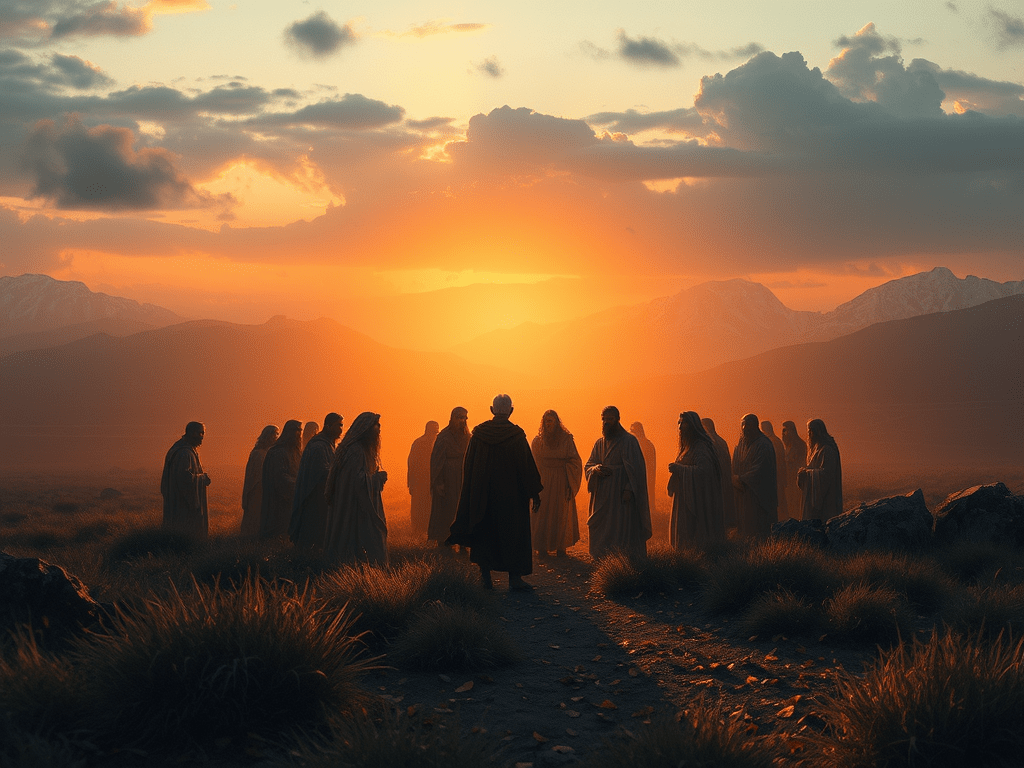
Titles for God’s people: the Remnant and the Elect

What do the terms remnant and elect mean, and to whom do they apply?

Core of the Bible podcast #126: Titles for God’s people – The Remnant and the Elect

As I mentioned last time, we are currently doing a little miniseries on the titles for God’s people. Over these few episodes, we are looking at the following terms in some detail: believer and Christian, the Remnant and the Elect, the Church and the Body, and the Bride of Christ. These are all terms that by most accounts are considered synonymous and applicable to the people today who claim to believe in Messiah. However, I intend to look at scriptural reasons as to why I believe this is not the case, how most of those terms do not apply to God’s people today, and yet how God has worked within these various aspects of his people over the ages to accomplish specific things for the good of all.

The Remnant

Throughout Scripture, the remnant is pictured as a unique group of people who were to be a small portion of all of Israel with whom God would maintain his covenant promises. The term itself means “that which remains” or those who are “left over” or “left behind”. This demonstrates how it has never been the entire nation which was in view, but a specific portion of the nation who were to receive the inheritance.

In modern Christian theology, the idea of a remnant of God’s faithful people is usually thought to be a group of  Christians who are currently remaining faithful during a period of hardship, ultimately to be culminated in the tribulation period at some future time. This comes from a passage in the book of Revelation, especially as it is rendered in the King James Version.

Revelation 12:16-17 KJV – And the earth helped the woman, and the earth opened her mouth, and swallowed up the flood which the dragon cast out of his mouth. And the dragon was wroth with the woman, and went to make war with the remnant of her seed, which keep the commandments of God, and have the testimony of Jesus Christ.

The Seventh Day Adventists have taken this remnant idea and even made it one of their primary points of confession.

  • “The universal church is composed of all who truly believe in Christ, but in the last days, a time of widespread apostasy, a remnant has been called out to keep the commandments of God and the faith of Jesus. This remnant announces the arrival of the judgment hour, proclaims salvation through Christ, and heralds the approach of His second advent.” – Seventh-day Adventist fundamental Belief # 13
  • The remnant spoken of in the Bible is the last group of people living on the earth that God claims as His own. A remnant is exactly the same as the first piece; just so, God’s remnant, His last church, must have the same characteristics as His first church.” – Pastor John J. Grosboll is Director of Steps to Life and pastors the Prairie Meadows Free Seventh-day Adventist Church in Wichita, Kansas

Whether or not you are a Seventh Day Adventist, maybe you agree with that or perhaps you haven’t really considered it in depth, but today I would like to explore the biblical concept of the remnant and the elect and demonstrate how these terms are biblically related, and who they apply to.

So, for a quick historical background, I found that the Wikipedia entry on this topic actually provides some reasonable information to build on.

“The remnant is a recurring theme throughout the Hebrew and Christian Bible. The Anchor Bible Dictionary describes it as “What is left of a community after it undergoes a catastrophe”. The concept has stronger representation in the Hebrew Bible and Christian Old Testament than in the Christian New Testament.

“According to the Book of Isaiah, the “remnant” is a small group of Israelites who will survive the invasion of the Assyrian army under Tiglath-Pileser III (Isaiah 10:20–22). The remnant is promised that they will one day be brought back to the Promised Land by Yahweh (Isaiah 11:11–16). Isaiah again uses the terminology during Sennacherib’s siege of Jerusalem (Isaiah 37).

“The concept of the remnant is taken up by several other prophets, including Micah, Jeremiah and Zephaniah. In Jeremiah 39–40, the “poor people, who had nothing”,[2] who remained in Judah when the rest of its population were deported to Babylon, are referred to as a “remnant”.[3] The post-exilic biblical literature (Ezra–Nehemiah, Haggai and Zechariah) consistently refers to the Jews who have returned from the Babylonian captivity as the remnant.

“New Testament verses that refer to a faithful “remnant” include Romans 11:5 (“Even so then at this present time also there is a remnant according to the election of grace”) and Revelation 12:17 (“And the dragon was wroth with the woman, and went to make war with the remnant of her seed, which keep the commandments of God, and have the testimony of Jesus Christ”). – https://en.wikipedia.org/wiki/Remnant_(Bible)

Now, to get an accurate depiction of who this remnant is, we would do best to refer back to the original scriptures that mention the remnant, and how they are pictured in the prophecies of old.

  • Isaiah 10:21 – The remnant will return, the remnant of Jacob, to the Mighty God.
  • Isaiah 37:31-32 – “The surviving remnant of the house of Judah will again take root downward and bear fruit upward. For a remnant will go out from Jerusalem, and survivors from Mount Zion. The zeal of Yahweh of Armies will accomplish this.’
  • Jeremiah 23:3 – “I will gather the remnant of my flock from all the lands where I have banished them, and I will return them to their grazing land. They will become fruitful and numerous.
  • Micah 2:12 – I will indeed gather all of you, Jacob; I will collect the remnant of Israel. I will bring them together like sheep in a pen, like a flock in the middle of its pasture. It will be noisy with people.
  • Zephaniah 3:13 – The remnant of Israel will no longer do wrong or tell lies; a deceitful tongue will not be found in their mouths. They will pasture and lie down, with nothing to make them afraid.
  • Zechariah 8:12 – “For they will sow in peace: the vine will yield its fruit, the land will yield its produce, and the skies will yield their dew. I will give the remnant of this people all these things as an inheritance.

In these prophetic passages, we can see how this Remnant was identified as a faithful group of believing Israelites or some other title related directly to Israel (Jacob, Judah, “my flock”, this people). These are described as the people who were to receive an inheritance. The apostle Paul captures this remnant terminology in his epistle to the Romans as he quotes Isaiah:

Romans 9:27 – But Isaiah cries out concerning Israel, Though the number of Israelites is like the sand of the sea, only the remnant will be saved…

Paul takes an extended prophecy from Isaiah 10 regarding a judgment upon Israel during the Assyrian captivity and applies it to the events of that first century generation. Isaiah had said only a remnant of Israel would remain faithful during a time of great destruction. Paul then takes that imagery and makes its ultimate application to his generation and the coming destruction upon Jerusalem in that day. He is explaining how much he longs for his Jewish brothers to come to understand the truth, but he knows only a portion will do so. In fact, all of Romans 9-11 is essentially a plea from Paul to God to reconsider his judgment regarding the house of Israel at large.

Romans 10:1-2 – Brothers and sisters, my heart’s desire and prayer to God for Israel is for their salvation. I can testify about them that they have zeal for God, but not according to knowledge.

Throughout these chapters, Paul concedes that the larger group of Israel is being rejected because they are clinging to their own righteousness instead of accepting God’s mercy and grace through Messiah. However, the remnant who have accepted Messiah were to be the light to the rest of the nation, and to the nations in which they had been scattered, thereby including those from among the nations. In this way, representatives from each of the tribes who had been dispersed would also be brought back to God, and in this way “all Israel”, that is, members from all of the twelve tribes, would be saved.

If you’ve reviewed the information covered in my last essay on Believers and Christians, you may recall how I mentioned the terms believer and non-believer were commonly used in the context of those within Israel: some would believe (i.e., the remnant) and others would not believe and remain faithless. This shows how a specific group within the larger population of Israel would be the group that God would “save”, that they would receive the benefits that the rest do not. Paul’s line of reasoning from here in Romans 9 then goes on through chapter 10 into chapter 11, outlining how the majority of Israel is rejected for their faithlessness, while only a portion, the remnant, will be saved by God’s grace.

Romans 11:5 – In the same way, then, there is also at the present time a remnant chosen by grace.

In the same way as what? Using the example of Elijah, the previous verses describe how God always retained a faithful remnant of Israel, even when it was not apparent at that time.

Romans 11:2-5 – God has not rejected his people whom he foreknew. Or don’t you know what the Scripture says in the passage about Elijah ​– ​how he pleads with God against Israel? Lord, they have killed your prophets and torn down your altars. I am the only one left, and they are trying to take my life! But what was God’s answer to him? I have left seven thousand for myself who have not bowed down to Baal. In the same way, then, there is also at the present time a remnant chosen by grace.

Here Paul says there was a remnant “at the present time”. That remnant at that time was the number of faithful from among Israel and Judah, even scattered among the nations, who had placed their faith in Messiah during that generation. The rest of Israel and Judah who were apistos or not faithful were the majority from which the faithful remnant was distinguished. All of this took place in the days of the apostle Paul during the first century.

The Diaspora

In Paul’s day, Jews had remained scattered throughout the known world due to their previous captivities of both the Assyrian and Babylonian empires. This can be evidenced from the list of locations that are described for us in Acts 2, when Jews from all over the known world had returned to Jerusalem for the Feast of Weeks or Pentecost. As the disciples were filled with God’s Spirit and began to preach to all of them about the work of Messiah, a miraculous event of language translation took place:

Acts 2:8-11 – “How is it that each of us can hear them in our own native language? Parthians, Medes, Elamites; those who live in Mesopotamia, in Judea and Cappadocia, Pontus and Asia, Phrygia and Pamphylia, Egypt and the parts of Libya near Cyrene; visitors from Rome (both Jews and converts), Cretans and Arabs ​– ​we hear them declaring the magnificent acts of God in our own tongues.”

All of these place names that may sound strange to our ears today were locations spread out throughout the known world at that time. Notice how Jews had been living in all of these areas, and how God was miraculously drawing a faithful remnant to himself from all of these distant areas. In fact, the text tells us that three thousand from among those various locations became believers in Messiah that day. Peter, speaking to thousands of Jews who had gathered in Jerusalem for the Feast of Weeks speaks to them directly, saying:

Acts 2:39-41 – “For the promise is for you and for your children, and for all who are far off, as many as the Lord our God will call.” With many other words [Peter] testified and strongly urged them, saying, “Be saved from this corrupt generation! ” So those who accepted his message were baptized, and that day about three thousand people were added to them.

God was gathering up the remnant of the faithful Jews and their children from where they had been scattered “afar off” and was calling them to himself. In this way, “all Israel”, that is, representative believers from every tribe, was saved in that generation. The later missionary journeys of the apostle Paul and other disciples only added to this growing group of restored Israelites.

Because this restoration of those estranged tribes was based on faith in Messiah and not just on lineage or ancestry, many converts and “God fearers” (that is, non-Jews who accepted the truth of Yahweh and the Bible but had not officially converted to Judaism) also were considered by Paul to have been included in that “remnant” which was restored in that day.  This is why Paul could boldly state:

Colossians 3:11 – In Messiah there is not Greek and Jew, circumcision and uncircumcision, barbarian, Scythian, slave and free; but Messiah is all and in all.

Once the judgment came to pass on Jerusalem in 68-70 AD, the story of national Israel was concluded. The nation ceased to exist. The prophecies of restoration of the faithful remnant were fulfilled in those closing days before the destruction of Jerusalem, and the scriptural remnant of prophecy no longer exists today.

If we continue to maintain today that anyone who is faithful is included in the remnant, it robs the actual scriptural remnant prophecies of their fulfillment within the nation of Israel during the end of that age. So, if we are to consider ourselves to be in the scriptural remnant today, then we are saying all of those prophecies concerning the remnant have remained unfulfilled for thousands of years and God never fully reconciled his people to himself within that generation as Yeshua, Peter, and Paul had preached.

We know the prophetic perspective was describing a remnant who was to be a faithful minority within the larger nation of Israel. We know they were to be the ones who were to return to the truth of Yahweh compared to the rest of the nation. We know they were to be gathered from all the nations where they had been scattered. Likewise, we know that Messiah taught about this occurring within that generation at that point of time, and we know that the disciples were indeed faithful in reaching the rest of the scattered remnant of Israel throughout the known world with the message of the gospel of the Kingdom in that generation.

When all of these points are taken into consideration, then all of the symmetry of God’s faithfulness with his people is maintained in the fulfillment of everything he had promised them through his prophets. The remnant of that generation is the one that was saved from the disaster that came upon the nation as a whole because of its unfaithfulness, and that’s the meaningful story for the ages. That story is one that can give us confidence that Yahweh God is a God who keeps his word and is faithful to do all that he promises. It is a story that we can praise God for in the demonstration of all that he had promised. Believers today can rejoice that we benefit from the mercy shown to them that was written down for our understanding and recognition of God’s faithfulness with them.

The Elect

Closely aligned with the remnant is the term the “elect”.  In New Testament usage, the elect or election appears to be synonymous with the remnant, or those through whom God would be doing a specific work.

Romans 11:5 – In the same way, then, there is also at the present time a remnant chosen by grace.

The word used here for chosen comes from the same Greek root phrase that is used for the elect, and Paul, speaking of events taking place at that time, says that the elect group, the group of the chosen, was the remnant. Since we just reviewed how the remnant was prophesied to be the group of faithful ones from among Israel, “the elect” then, would be another way of describing those from among Israel who were considered the faithful ones with whom God maintained his covenant relationship in that generation, and through whom God would be glorified.

This term, the elect, is doctrinally charged today because there is a whole doctrine of election or predestination which is built upon this term. However, this is not how the Bible uses the term. Predestination is not an eternal principle for individuals in the sense of some individuals are chosen by God for eternal life and others are not. That is the horror of Calvinistic-type thinking; a philosophical phantom that still haunts the halls of Christendom today.

The elect were the ones who were, as Paul says, a predestined group to believe in Messiah because all of the prophecies had foretold that would occur. Their belief in Messiah during Paul’s generation was indeed the fulfillment of those prophecies! This is why Paul could write:

Romans 8:31-33 – What, then, are we to say about these things? If God is for us, who is against us? He did not even spare his own Son but gave him up for us all. How will he not also with him grant us everything? Who can bring an accusation against God’s elect? God is the one who justifies.

That’s the extent of the “predestination concept” in Scripture. Paul was confirming those remnant prophecies were coming to pass in his day. To be chosen in the sense of the elect was simply a description of active distinction of one group or individuals from others. If you were a believer in Messiah in Paul’s day, then you were a member of the elect group that had been prophesied; therefore who could come against them? It was a bold acknowledgement of prophecy coming to pass before their eyes, and a triumphant statement of hope that God would see them through the difficulties they faced during their extreme persecution in their day, because he had previously declared it to be so.

God’s plan for Israel was consummated within that first century generation, just as Yeshua had predicted that the elect would be gathered from “the four winds”, and the temple would fall before that generation all passed away.

Matthew 24:1-2, 24, 31, 34 – As Yeshua left and was going out of the temple, his disciples came up and called his attention to its buildings. He replied to them, “Do you see all these things? Truly I tell you, not one stone will be left here on another that will not be thrown down …For false messiahs and false prophets will arise and perform great signs and wonders to lead astray, if possible, even the elect. … He will send out his angels with a loud trumpet, and they will gather his elect from the four winds, from one end of the sky to the other…Truly I tell you, this generation will certainly not pass away until all these things take place.”

The apostles recognized the role of the elect during those days, and that they were the recipients and participants in all that had been prophesied before:

2 Timothy 2:10 – This is why I endure all things for the elect: so that they also may obtain salvation, which is in Messiah Yeshua, with eternal glory.

Titus 1:1 – Paul, a servant of God and an apostle of Yeshua Messiah, for the faith of God’s elect and their knowledge of the truth that leads to godliness,

2 John 1:1, 13 – The elder: To the elect lady and her children, whom I love in the truth ​– ​and not only I, but also all who know the truth ​– ​ … The children of your elect sister send you greetings.

Notice how all of these references speak of the elect in the present tense, as the ongoing participation of the Messiah believers in those days. The term itself means those who are chosen, and since they were referred to as “his elect” or “God’s elect”, then we can understand this is a choice that God had made to distinguish this group from others.

The chosen

This concept of being chosen would not be unfamiliar to Hebrew believers, as God had previously and many times demonstrated that the entire nation of Israel had been chosen from among the nations of the world to be the ones to carry his Name.

Ezekiel 20:5-6 – …’This is what the Lord Yahweh says: On the day I chose Israel, I swore an oath to the descendants of Jacob’s house and made myself known to them in the land of Egypt. I swore to them, saying, “I am Yahweh your God.” On that day I swore to them that I would bring them out of the land of Egypt into a land I had searched out for them, a land flowing with milk and honey, the most beautiful of all lands.

A further example of the use of this chosen concept which demonstrates how it is not a term restricted to individual, eternal salvation is how God had made a progression of choices amidst the tribe and family of David. David had been chosen out of all Israel and from among his own family to be king over Israel and Solomon to be king after him.

1 Chronicles 28:4-5 – “Yet Yahweh God of Israel chose me out of all my father’s family to be king over Israel forever. For he chose Judah as leader, and from the house of Judah, my father’s family, and from my father’s sons, he was pleased to make me king over all Israel. “And out of all my sons ​– ​for Yahweh has given me many sons ​– ​he has chosen my son Solomon to sit on the throne of Yahweh’s kingdom over Israel.

God is described here as having chosen Israel as a nation, then Judah as a leading tribe, then David’s family among that tribe, then David as king, then Solomon as king to follow him. All of these “choices” or “elections” are another way of saying those at a given time through whom God was working for his purpose and will to be accomplished. These distinctions of tribes, families, and individuals were isolated from the rest of the nations of the world and the rest of the nation of Israel as a whole because God was going to be working through these specific tribes and individuals during their lifetimes for specific purposes.

Interestingly, another way to demonstrate how this is not some kind of universal election or predestination for all eternity, one needs only to read how all of God’s “chosen” entities in this example, those who were considered “the elect”, had failed at some point. Israel as a whole did not maintain the covenant and was rejected; Judah had failed in his relationship with his father; David failed in the incident with Bathsheba; Solomon failed with corruption through his pagan wives. All these things occurred after they had been “chosen”. The concept of being elect doesn’t mean one is bullet-proof from judgment or failure for all eternity, only that one (or a group) is identified as being used for God’s specific purpose and will at a specific time.

The elect of the first century were simply those who believed Messiah and through whom God maintained his covenantal faithfulness, as contrasted with the rest or the majority of Israel which did not believe in Messiah. This was predestined to occur, being foretold, as we have seen, in all of the “remnant” prophecies.

If I was to try to create an analogy here, it’s as if God was writing a story as a novelist. His “elect” would be the main character (or characters), while all others would be supporting characters in the story he was telling. In this way, he could tell his story through his main characters, even though they were not perfect. They still had their flaws and made their mistakes, just like everyone else does, but they were the focus of the story he was telling, to the exclusion of all of the other details or people in other places that may not be pertinent to the specific story he was telling. This doesn’t mean that no one else was faithful, just that his main characters were living out the point that he was making.

Looked at in this light, the term election becomes less doctrinally charged regarding individual, eternal salvation and begins to take on its rightful meaning regarding the distinctions for specific purposes regarding the nation of Israel as a whole. It is used of those faithful believers amidst Israel through whom God’s will would be accomplished and those to whom his covenant and promises would be maintained. In New Testament application, it was because of the nation’s general disobedience and failing within the covenant (the faithless majority of Israel, the non-believers) that God then refined his chosen people to those who would believe his words through his chosen Messiah. This was a smaller group within the group, including those who had been scattered throughout the known world at that time. Once again, to my way of thinking, the symmetry of the concept is beautiful and poetic within the context of the entire Bible.

If we are to be good Bible students, we need to maintain the distinction that those who are called the elect mentioned in the New Testament writings refers specifically to those first-century believers who accepted the Messiah, both from Israel and from among the nations. Just as the remnant described those same believers, the elect is therefore its synonymous equivalent. Therefore, the remnant and the elect of biblical prophecy was consummated in the first century and no longer exists today.

Believers today

So what about believers today? If we are not to consider ourselves the remnant and we are not the elect, who are we within the biblical narrative? Have I just written us out of the story? By no means!

The apostle Paul speaks to the culmination of all of those prophecies with Israel being the very catalyst that would bring believers from all nations to Yahweh God.

Romans 15:8-9 – For I say that Messiah became a servant of the circumcised [i.e., the Jews] on behalf of God’s truth, to confirm the promises to the fathers, [all of those former prophecies] and so that nations may glorify God for his mercy.

Here Paul then goes into a list of quotes from the Tanakh that demonstrate how God’s ultimate purpose in fulfilling his word to the Jews would ultimately bring people from all nations to himself:

Romans 15:9-12 – As it is written, Therefore I will praise you among the nations, and I will sing praise to your name.  [Psalm 18:49] Again it says, Rejoice, you nations, with his people! [Deuteronomy 32:43] And again, Praise Yahweh, all you nations; let all the peoples praise him! [Psalm 117:1]  And again, Isaiah says, The root of Jesse [i.e., the Messiah] will appear, the one who rises to rule the nations; the nations will hope in him. [Isaiah 11:10]

Today, we are those from among all nations who have come to praise Yahweh through seeing the promises that were confirmed to Israel at the culmination of that age!  We can join together glorifying God for his mercy to his people at that time which has allowed us the same access to him through faith in Messiah, just as they had, and still have to this day. Our hope today is in the same Messiah whom they trusted in faith.

This is our identity in Messiah today: no longer a small remnant within the nation of Israel, but a vast multitude of those who are the receivers of the eternal Kingdom that Messiah inaugurated! We are a rag-tag lot from among every nation and tribe, worshiping the one true God through faith in his Messiah! We are the ongoing fulfillment of the promises made to Abraham (that all nations would be blessed through him), and the promises made to ancient Israel that nations would come to worship their God, Yahweh, and that his Messiah would also rule the nations and become their hope. We are still a people fulfilling prophecy, although we are now fulfilling the prophecies that relate, not to the remnant or the elect, but to the eternal Kingdom of God!

Daniel 2:44 – “In the days of those kings, the God of the heavens will set up a kingdom that will never be destroyed, and this kingdom will not be left to another people. It will crush all these kingdoms and bring them to an end, but will itself endure forever.

Though it may at first feel strange to not be a direct participant in the story of the prophetic remnant or the elect of Scripture, it does not diminish our responsibility to this generation, and every generation into the future. The consummation of the prophecies of the elect remnant of the first century should provide us the hope and inspiration we need to know that God never abandons his faithful, and that those who choose the path of life will be provided for and ultimately be participants in his purposes coming to pass for all eternity. If he fulfilled his prophecies to the elect remnant in the first century, then he will fulfill his prophecies to establish his Kingdom over all the earth. Therefore, we should be encouraged to press on; we must continue to stay on the path of life, to be the city on the hill, the light of the world, and the salt of the earth.

We should be able to pray with the Psalmist:

Psalm 57:11 – God, be exalted above the heavens; let your glory be over the whole earth.


Well, as we wrap up for today, I hope there are at least a couple of concepts and ideas to encourage you to meditate on and to study out further on your own. Next time, we will investigate another related term to this remnant and the elect, the “church”, or the assembly of “called-out-ones,” and how this term has been used in conjunction with another familiar phrase: the Body of Christ. I hope you will be able to come back and visit for more perspectives on these titles of God’s people. But remember, if you have thoughts or comments that you would like to explore further with me, feel free to email me at coreofthebible@gmail.com.

The Bible: A Divine Revelation

What is the Bible and what does it say about itself?

Core of the Bible podcast #104 – The Bible: A Divine Revelation

Today, we will be looking at the Bible itself and what some of the historic creeds have stated about the nature of the Scriptures. I will also be sharing some of my own views on the Bible and aspects of these creedal positions. Before we end today, I would also like to discuss how these positions influence the core Bible principles we discuss here each week.

So I’d like to begin by describing my view of the Bible and its purpose.

The word Bible comes from the Greek “ta biblia” meaning “the books”. It is a collection of books that have been written over a period of one and a half millennia. They were written by a variety of Hebrew people primarily to and about the Hebrew people during various stages of their history as a nation, from approximately 1,500 BC to the 60’s AD.

The Hebrew Bible is generally what would be called by Christians the “Old Testament”. In Hebraic communities, it is known by the acronym TNK, or Tanakh. TNK stands for the Hebrew words Torah (Instruction), Nevi’im (Prophets) and Ketuvim (Writings).

Here is a broad outline of the categories of books contained within the whole Bible:

Beginning with the Tanakh, the Torah (Law or Instruction) is considered to include primarily the first five books of the Bible, and they are attributed to Moses. They describe the beginnings and the establishment of the nation of Israel and its religious system of worship. These books provide a foundation for the rest of the Bible story to be contextually understood and built upon.

The Nevi’im or prophetic books were largely written as urgings to God’s people to return to the right ways of God when they had gone astray, and described the hope for future reconciliation.

The Ketuvim or Writings include the historical books explaining the origins and out-workings of the physical kingdom of Israel, and the rise and fall of various Hebrew leaders. Through these stories we learn of God’s faithfulness and justice with his people and with those of the nations surrounding them. The Ketuvim also include other poetic writings which describe God’s wisdom and care for his people through elaborate word pictures, hymns of praise and worship, and proverbs.

Now as we move from the Tanakh into the “New Testament” writings, we also move from Hebrew documents into Greek. The New Testament or Apostolic Writings is a collection of books written in Greek in the early first century by the followers of Yeshua. Some believe these also may have been originally written in Hebrew or Aramaic. These books relate stories and instruction regarding the life of Yeshua (the Gospels) and the lives and experiences of those who would form new communities based on his teachings (Acts and the letters to the various congregations). They include historical narratives, correspondence between communities, and a form of Hebrew literature known as apocalyptic prophecy (the book of Revelation). They are all filled with references to and quotes from the Tanakh and its stories.

Different groups today will categorize the books of the Bible in different ways, and some will include different books here and there. The important thing to remember, however, is that within these pages, I believe God has revealed his mind and purposes for the benefit of his creation.

Okay, so that’s my perspective on what the Bible is. As we consider the writings in the Bible, it is important to keep in mind that these books are a collection of ancient middle-eastern writings that cover a wide variety of literary styles and are not all literal “newspaper accounts” of God’s dealings with men. They were not written specifically to us in our present day. They were written to the Hebrew people in a context appropriate for their moment in the history and culture of that nation. However, even though they were not written to us, we can say they were written for us, that is, for our benefit. Through these writings we are privileged to see how God has chosen to express himself and work with and among those whom he has chosen to do so. Understanding this distinction is one of the most important aspects of coming to know what the Bible narrative is really all about.

With that background, if we take all of these books as collectively telling a cohesive story, let’s see what the Bible books have to say about themselves.

  • 2 Peter 1:20-21 But know this first of all, that no prophecy of Scripture is a matter of one’s own interpretation, for no prophecy was ever made by an act of human will, but men moved by the Holy Spirit spoke from God.

This statement, attributed to the apostle Peter, demonstrates how the books of the Bible, and here specifically speaking primarily about the Tanakh, claims to be divinely inspired. Believers in Messiah will typically include the New Testament writings within this category of divinely inspired writings, since they are completing the narrative of the Tanakh.

Besides considering the writings to be inspired, the Bible also teaches God has chosen to reveal himself through nature, the people of Israel, and most significantly through his Son, Yeshua.

In regard to the natural revelation of God in nature, the psalmist writes:

  • Psalm19:1-4  The heavens are telling of the glory of God; And their expanse is declaring the work of His hands. Day to day pours forth speech, And night to night reveals knowledge. There is no speech, nor are there words; Their voice is not heard. Their line has gone out through all the earth, And their utterances to the end of the world…

The apostle Paul also used the creation as a basis of his speech to the Greeks assembled in Athens:

  • Acts 17:22-27 So Paul stood in the midst of the Areopagus and said, “Men of Athens, I observe that you are very religious in all respects. “For while I was passing through and examining the objects of your worship, I also found an altar with this inscription, ‘TO AN UNKNOWN GOD.’ Therefore what you worship in ignorance, this I proclaim to you. “The God who made the world and all things in it, since He is Lord of heaven and earth, does not dwell in temples made with hands; nor is He served by human hands, as though He needed anything, since He Himself gives to all [people] life and breath and all things; and He made from one every nation of mankind to live on all the face of the earth, having determined [their] appointed times and the boundaries of their habitation, that they would seek God, if perhaps they might grope for Him and find Him, though He is not far from each one of us…

The Scriptures also portray God specifically revealing himself and His will for men to and through the ancient Hebrew people of Israel.  

  • 1 Kings 8:53 “For You have separated them [Israel] from all the peoples of the earth as Your inheritance, as You spoke through Moses Your servant, when You brought our fathers forth from Egypt, O Lord Yawheh.”
  • 2 Kings 17:13-14 Yet the Lord warned Israel and Judah through all His prophets and every seer, saying, “Turn from your evil ways and keep My commandments, My statutes according to all the law which I commanded your fathers, and which I sent to you through My servants the prophets.” However, they did not listen, but stiffened their neck like their fathers, who did not believe in Yahweh their God.
  • Nehemiah 9:30 “However, You bore with them [Israel] for many years, And admonished them by Your Spirit through Your prophets, Yet they would not give ear. Therefore You gave them into the hand of the peoples of the lands.

Finally, the Bible claims that the ultimate revelation of God has been through his Son, Yeshua:

  • Hebrews 1:1-2 God, after He spoke long ago to the fathers in the prophets in many portions and in many ways, in these last days has spoken to us in His Son, whom He appointed heir of all things…
  • John 1:17 For the Law was given through Moses; grace and truth were realized through Yeshua, Messiah.
  • John 14:6 Yeshua said to him, “I am the way, and the truth, and the life; no one comes to the Father but through Me.
  • 1 John 4:9 By this the love of God was manifested in us, that God has sent His only begotten Son into the world so that we might live through Him.

The Bible therefore claims to reveal God in nature, Israel, and most significantly, through his Messiah, Yeshua. It is in this sense that I believe the Bible to be a divine revelation.

Now let’s take a look at some of the creedal descriptions of various organizations and denominations. All denominations and faith traditions within the Christian tradition understand that if we desire to have a biblical worldview, then we need to recognize some basics about these documents that shape our faith.

Here are a few examples of some random organizations that I pulled up in a quick search for “Statements of Faith”:

  • National Association of Evangelicals: “We believe the Bible to be the inspired, the only infallible, authoritative Word of God.”
  • BasicChristian.org: “We believe the Holy Bible is God’s word Personally spoken by God for mankind for the purpose of revealing who He is and it is without error in all issues to which it speaks.”
  • Chicago Statement on Biblical Application: “We affirm that this God can be known through His revelation of Himself in His inerrant written Word.”
  • Church of God in Christ: “We believe the Bible to be the inspired and only infallible written Word of God.”
  • Torchbearers International: “The Bible is, in its entirety, the revelation of God for mankind, inspired by the Holy Spirit.”
  • Simplyscripture.org: “We believe the Bible to be the only revealed, pure, complete and preserved Word of God throughout all the ages. Scripture is solely contained within the 66 books of the Bible, from Genesis to Revelation. We believe the Scriptures to be the inerrant, infallible, unchangeable Word of God and is the final authority for all matters of faith and practice.”

Okay, so you get the idea. Among the list of qualities about the Bible, it is considered by churches and para-church organizations to be revelatory, inspired, inerrant, infallible. So let’s define some of these qualities for a better understanding of what they are saying, and then I will add some comments about my own perspective on each of these qualities.

First of all is the idea that the Bible is REVELATORY: God has revealed himself in the Bible and he can be known through his workings as related within its pages.

I don’t disagree with this, other than different groups may define what God has revealed about himself differently from one another. I would simply say that God, who is unknowable outside of his own revelation of himself, desires his people to honor and represent him, living according to the principles his kingdom. I would also include the fact that nature itself is a form of God’s revelation of his power and majesty. And while general principles about God can be deduced from nature, it is only in the written revelation of the Bible where the specifics of God’s desires for mankind are revealed.

Secondly, these creeds say that the Bible is INSPIRED:  The writers of the Bible were inspired by God or the spirit of God to convey what he wanted to communicate.

Based on  my previous statement about God being unknowable, then it follows that those who would write about the nature and workings of God would necessarily have to be inspired to do so. This type of inspiration is typically recognized as God working through the various authors of the Bible to communicate. Again, many different groups define this inspiration differently, whether being immersed in God‘s spirit, or receiving ideas and wisdom from God and writing it out in their own way. Even Jewish thinkers throughout the centuries have had varying opinions about levels of inspiration for the various writings.  In my mind, I am simply content to recognize  God‘s influence over those who wrote the actual texts to ensure his will would be made known.

Thirdly, these creeds assert that the Bible is INERRANT. Now the specifics of inerrancy are typically defined further by the organization, but in general, it means the Bible is 100% without error. However, this is usually qualified by saying inerrancy was only in the original written documents, not necessarily the many manuscripts we have today. This qualifier is necessary because, quite honestly, there are errors in the manuscripts that we use for Bible versions that we have today. There are spelling differentials, numerical differences in some generations or years of a king’s reign, and some insertions into the text from later hands.

However, for me, this makes for a more robust understanding of the reality of just how old these documents really are. If we had perfectly preserved autograph documents from the original authors there would be more questions as to how something could be so perfectly preserved when everything else in the natural world of antiquity has been diminished. Therefore, they would more likely be considered forgeries of some type. In reality, the Bible can’t win with this type of logic. Either it’s too perfect, or not perfect enough.

The reason these minor grammatical areas do not pose a problem for me is that through tireless research they have been identified, and we know where they are and how little they impact the overall message of the Bible as a whole. So stating that the Bible is inerrant is kind of not true unless it is defined further. For me, to say the Bible is inerrant is difficult to do. Even to say that the original written documents had no errors is a stretch, because they no longer exist anywhere. Therefore that is a statement that cannot be validated.

Lastly, we come to the topic of the Bible being INFALLIBLE. This theological term simply means the Bible is considered unable to be wrong on the topics it covers.

Again, I don’t necessarily have a problem with this concept in theory, because I do believe the Bible contains the word of God, but infallibility isn’t something practical and  readily understandable to the general person. Infallibility is a theological term that for me connotes a high religious supremacy of some type. This is not untrue about the Bible. But with the concept of infallibility comes judgments of infallibility about practice based on fallible interpretations of these ancient texts, and this is why I try to avoid this type of terminology.

I believe it is simpler to say I believe the Bible is true primarily because Yeshua believed in what the Scriptures said. Since I am a follower of Yeshua, then it makes sense that I would also place the same level of regard on the Scriptures as being God’s word as he did. He repeatedly referred to the authority of Scripture by saying “it is written” and then quoting it, and by using the argument that “Scripture cannot be broken” when making an argument with the religious leaders. Since he trusted the writings as authoritative and reliable, then I also do. To me, this is the crux of the issue: not inerrancy and infallibility but reliability. I want to know the textual basis of my worldview and belief system is reliable.

Now as for the New Testament writings which were penned after Messiah, a primary reason I believe these books are also trustworthy as inspired records is due to the evidence of recurring patterns and consistent themes throughout all of the writings. Many of the patterns and themes begun in the Tanakh are carried over to fulfillment in the writings of the New Testament.


TanakhNew Testament
Paradise lostParadise regained
Scattering of God’s people due to disobedienceReconciliation and return provided for
Seeking of God’s Anointed leader (Messiah)Messiah realized in Yeshua
Natural principles of instructionSpiritual principles based on the natural
Hope for God’s future kingdomGod’s kingdom a present reality

These types of parallels is what makes the Bible such a cohesive whole, and is the joy of those who study it deeply.

I believe it was God‘s good design to entrust the bulk of his communication with the Jewish people who were extremely faithful in maintaining his revealed word. Even in the past one hundred years, this has been evidenced by documents discovered among the dead sea scrolls which were much earlier than previous manuscripts texts available to us. These earlier documents showed remarkable consistency with manuscripts generated centuries later.

So for my own creedal position on this issue, I want to make it clear that I do believe the Bible, as a repository of the witness of God about himself to mankind, is a reliable collection of books in which the truth of God is found. I have come to recognize that even though there are legitimate textual questions about specific biblical passages, the Bible is still trustworthy, and maybe even more authentic because of them.

So if I was to make a declaratory statement regarding the Bible, it would be something like this:

  • I believe that complete message of the Bible points to the faithfulness of God with his people Israel, culminating in the person and ministry of the Lord Yeshua.
  • Through God’s holy Spirit and his Word, the Bible, God desires to lead people to faith in Yeshua and to guide them in a life of faithful obedience to his will.
  • I accept the entire Bible as authoritatively testifying to the nature, work, and wisdom of God. These are the Scriptures or sacred writings concerning God’s revelation of himself to mankind. 
  • God’s purpose in these revelations has been an exhibition of his own glory and the establishment of his Kingdom on the earth.

In summary, the broad statements of my own understanding and faith concerning the Bible are:

  • The Bible is the authoritative revelation of God for us, for the purpose of establishing his Kingdom on the earth.
  • It was not written to us in this 21st century, but it was written for us, for our benefit.
  • I believe it’s a stretch to say the Bible is inerrant, and it’s equally vague to claim infallibility where poor interpretive principles are usually apparent; however, I also believe the intent behind those claims of inerrancy and infallibility are made with the intent to honor God.
  • I do believe the Bible is absolutely reliable and contains the Word of God for people today. Indications of its reliability are found in its recurring themes and patterns.

It is because of the Bible’s reliability we can see the broad basis for the importance of understanding its core principles which I believe God has revealed through the Ten Commandments and the principles of the Sermon on the Mount:

  • Separate yourself to seek first the Kingdom with vigilance.
  • Love God with all of your heart, mind, and strength, trusting him for everything.
  • And love others as yourself with integrity, forgiveness, and compassion.

Next week, closely aligned with this topic of the Bible, we will take on the concept of the Eternal Torah.

Remember, if you are interested in joining the Core of the Bible virtual Bible study, simply download the free Marco Polo app and email me a request to join the group at coreofthebible@gmail.com. I will be happy to send you a link to join the virtual Bible study group.

Honoring of parents respects God’s kingdom authority on earth

A believing father and mother, as God’s agents, can provide the best guidance and direction leading to well-being for the children who are obedient to their instruction.

Core of the Bible podcast #79 – Honoring of parents respects God’s kingdom authority on earth

Today we will be looking at the topic of the fifth commandment about honoring one’s father and mother, and how a believing father and mother, as God’s agents, can provide the best kingdom guidance and direction leading to well-being for the children who are obedient to their instruction.

Exodus 20:12 – Honor your father and your mother, that your days may be long in the land which Yahweh your God gives you.

As God conveyed his Torah, or instruction to Moses, he made it clear that within the kingdom of God, there would be many roles requiring to be fulfilled. While most people today look to define and embrace roles like prophets, priests, teachers, helpers, there are no roles as basic and impactful as the roles within each family: husband and wife, mother and father.

In today’s culture this has become a controversial stance, but I firmly believe that the significance of man and woman in the kingdom is a basic building block upon which everything else is built. The male and female component is inherent within the DNA of the kingdom, right back to its origins in Genesis, in the Garden of Eden.

Genesis 1:27-28 – So God created human beings in his own image. In the image of God he created them; male and female he created them. Then God blessed them and said, “Be fruitful and multiply. Fill the earth and govern it. Reign over the fish in the sea, the birds in the sky, and all the animals that scurry along the ground.”

The very first royal edict of the kingdom had to do with man and woman reigning and having dominion over God’s Creation. So, in Hebrew culture, the father and the mother are therefore figures representing divine authority over the family. They are the representatives of God’s authority because they have been made in his image, and to be respected as possessing and implementing the wisdom of God. In fact, the genealogies that take up roughly 5% of the Bible are based on a deference to authority in the sense of familial descent which is only possible through the recording of historical male-female heritage. This honoring of one’s parents or ancestry also spilled over into the ancient Hebraic view of the afterlife. Upon death, one was considered to be “gathered unto the fathers.”

Genesis 49:29 – Then [Jacob] commanded [his sons] and said to them, “I am to be gathered to my people; bury me with my fathers in the cave that is in the field of Ephron the Hittite…

Judges 2:8, 10 – And Joshua the son of Nun, the servant of Yahweh, died at the age of 110 years. … And all that generation also were gathered to their fathers…

2 Kings 22:20 – Therefore, behold, I will gather you to your fathers, and you shall be gathered to your grave in peace…

Within the conduct of individuals during this life, however, we can see how this understanding of paternal and maternal influence along with marital fidelity carried over into metaphors of God’s care for his people, as well.

Exodus 4:21-22 – And Yahweh told Moses, “When you arrive back in Egypt, go to Pharaoh and perform all the miracles I have empowered you to do. But I will harden his heart so he will refuse to let the people go. Then you will tell him, ‘This is what Yahweh says: Israel is my firstborn son.

Isaiah 43:3, 6 – For I am Yahweh, your God, the Holy One of Israel, your Savior. I gave Egypt as a ransom for your freedom; I gave Ethiopia and Seba in your place. … I will say to the north and south, ‘Bring my sons and daughters back to Israel from the distant corners of the earth.

Isaiah 46:3 – “Listen to me, descendants of Jacob, all you who remain in Israel. I have cared for you since you were born. Yes, I carried you before you were born.

Jeremiah 3:20 – But you have been unfaithful to me, you people of Israel! You have been like a faithless wife who leaves her husband. I, Yahweh, have spoken.”

Individual references cannot convey the depth with which the entire narrative of the Bible is imbued with this type of familial imagery; it is interwoven throughout every page. That parents were to be respected is brought out in the biblical stories conveyed throughout the Tanakh or Old Testament, but is most prominently evident in the Proverbs.

Proverbs 1:8-9 – Listen, my son, to your father’s instruction, and do not forsake the teaching of your mother. For they are a garland of grace on your head and a pendant around your neck.

Proverbs 23:22 – Listen to your father, who gave you life, and don’t despise your mother when she is old.

Proverbs 15:20 – Sensible children bring joy to their father; foolish children despise their mother.

However, children who are disobedient to this most basic sense of authority are also shown the end that results from choosing their own way.

Proverbs 19:26 – Children who mistreat their father or chase away their mother are an embarrassment and a public disgrace.

Proverbs 20:20 – If you insult your father or mother, your light will be snuffed out in total darkness.

Proverbs 28:24 – Anyone who steals from his father and mother and says, “What’s wrong with that?” is no better than a murderer.

Proverbs 30:17 – The eye that mocks a father and despises a mother’s instructions will be plucked out by ravens of the valley and eaten by vultures.

In these passages this sense of structural authority within the family unit provides a powerful basis for wisdom and right actions. It is here that the roots of the kingdom are set deep into the soil so that each generation can continue to rise to the greatest heights in a demonstration of God’s power and glory over his Creation.

In a moment, we will see how this principle of parental authority is also built on by Yeshua and the apostles within the writings of the New Testament.


The God-given authority of the father and mother was an ongoing kingdom principle for the early Messiah believers, also. Before we look at the apostolic writings, though, we can see this principle exemplified most clearly by Messiah himself.

Luke 2:41-51 – Every year Yeshua’ parents went to Jerusalem for the Passover festival. When Yeshua was twelve years old, they attended the festival as usual. After the celebration was over, they started home to Nazareth, but Yeshua stayed behind in Jerusalem. His parents didn’t miss him at first, because they assumed he was among the other travelers. But when he didn’t show up that evening, they started looking for him among their relatives and friends. When they couldn’t find him, they went back to Jerusalem to search for him there. Three days later they finally discovered him in the Temple, sitting among the religious teachers, listening to them and asking questions. All who heard him were amazed at his understanding and his answers. His parents didn’t know what to think. “Son,” his mother said to him, “why have you done this to us? Your father and I have been frantic, searching for you everywhere.” “But why did you need to search?” he asked. “Didn’t you know that I must be in my Father’s house?” But they didn’t understand what he meant. Then he returned to Nazareth with them and was obedient to them. And his mother stored all these things in her heart.

This wonderful passage gives us a rare glimpse into the childhood of Yeshua, and how he viewed his own role in relation to his parents. The typical evaluation of this passage explains how at such an early age, Yeshua understood the uniqueness of his role and how he recognized Yahweh God as his father. Yet, the nugget in the story for our purposes today is that final verse that says, “he returned to Nazareth with them and was obedient to them.” To me, this speaks volumes on Yeshua’s recognition of the established order of parental authority. Even though he was spiritually maturing at an accelerated pace, he chose to remain obedient to his parents in conformity with the overall plan of God’s kingdom. He honored his mother and his father.

He also taught this as an adult as he reiterated the validity of the Ten Commandments. When answering questions from an inquirer about eternal life, Yeshua responded with the necessity of recognizing the authority of the torah, or instruction of God.

Matthew 19:16-19 – Someone came to Yeshua with this question: “Teacher, what good deed must I do to have eternal life?” “Why ask me about what is good?” Yeshua replied. “There is only One who is good. But to answer your question–if you want to receive eternal life, keep the commandments.” “Which ones?” the man asked. And Yeshua replied: “‘You must not murder. You must not commit adultery. You must not steal. You must not testify falsely. Honor your father and mother. Love your neighbor as yourself.'”

Yeshua firmly taught the Ten Commandments as a basis for the kingdom, sometimes used as a synonymous phrase for the principle of eternal life.

Moving to the writings of Yeshua’s apostles, we can see how they continued to emphasize the role of parental authority within the early believing congregations.

Colossians 3:20 – Children, always obey your parents, for this pleases Yahweh.

One of the characteristics required of leaders within the congregation was to be exemplifying this authoritative structure within one’s own family.

1 Timothy 3:1, 4-5 – This is a trustworthy saying: “If someone aspires to be an elder, he desires an honorable position.” … He must manage his own family well, having children who respect and obey him. For if a man cannot manage his own household, how can he take care of God’s congregation?

In this passage, Paul encourages Timothy in a basic and underlying premise of the kingdom: authority rests within the parental structure. If that structure is not present in the family, Paul argues, then how can it be present within the congregation? Besides a recitation of the Ten Commandments, to my way of thinking this is one of the most precise indications of the necessity for parental authority for the success of the kingdom in the entire New Testament.

Additionally, just like in the writings of the prophets in the Tanakh, the metaphors for God’s parental authority are present within the apostolic writings, as well.

Hebrews 12:7-8 – As you endure this divine discipline, remember that God is treating you as his own children. Who ever heard of a child who is never disciplined by its father? If God doesn’t discipline you as he does all of his children, it means that you are illegitimate and are not really his children at all.

1 Peter 1:14 – So you must live as God’s obedient children. Don’t slip back into your old ways of living to satisfy your own desires. You didn’t know any better then.

1 John 2:29 – Since we know that Christ is righteous, we also know that all who do what is right are God’s children.

And finally, Paul writes to the Ephesian congregation about the promise of faithful obedience to parental authority.

Ephesians 6:1-3 Children, obey your parents because you belong to Yahweh, for this is the right thing to do. “Honor your father and mother.” This is the first commandment with a promise: If you honor your father and mother, “things will go well for you, and you will have a long life on the earth.”

Paul writes here that this commandment to honor father and mother is the first command that is not only the right thing to do, but it carries within it a promise for well-being and long life. The idea is that a believing father and mother, as God’s agents, can provide the best guidance and direction that would lead to those things for the children who are obedient to their instruction.

In conclusion, we can see how the respect and honor of father and mother is therefore part of the eternal torah, or instruction, of God for all time. As the mother and father “rule” righteously over the kingdom of their family, they are fulfilling a role that is embedded within the Creation itself, a role that hearkens back through ancestral lines all the way to the original parents in the Garden. The Garden imagery of Paradise (the idealized kingdom) is therefore brought to life for each generation through every faithful father and mother. As believing parents recognize this awesome responsibility of the authority they carry, the Kingdom of God can continue to grow in righteousness, honoring the original parents whom God set over all Creation in the beginning.


If you enjoy these daily blog posts, be sure to visit the growing archive of the Core of the Bible podcast. Each week we take a more in-depth look at one of the various topics presented in the daily blog. You can view the podcast archive on our Podcast Page, at Core of the Bible on Simplecast, or your favorite podcast streaming service.

Now also on YouTube, find us at: Core of the Bible on YouTube.

Questions or comments? Feel free to email me directly at coreofthebible@gmail.com.

Trusting God for who He is, not what He can do for you

Is your salvation an unspoken condition of your trust in God?

Core of the Bible podcast #76 – Trusting God for who He is, not what He can do for you

Is your salvation an unspoken condition of your trust in God?

Today we will be looking at the topic of trust, and how true trust in God does not care for consequences, it only knows what’s true and right and cannot be dissuaded once it is fully embraced.

To help illustrate this principle, we can take a closer look at the story of Shadrach, Meshech, and Abednego. For those who know their Bibles, the story is familiar.

When the Hebrews are captured by the Babylonians, they are taken captive, and the leading families are held in the king’s palace. The king has set up an idolatrous monument to himself and commanded that everyone in the area pay homage to it at a specific time, or be killed by being thrown into a furnace. These three prominent Hebrews with the Babylonian names of Shadrach, Meshech, and Abednego, being Torah-observant, know of course that God has commanded that idolatry is forbidden, and honoring of any other gods is an abomination to him.

Daniel 3:17-18 – “The God we worship can save us from you and your flaming furnace. But even if he doesn’t, we still won’t worship your gods and the gold statue you have set up.”

Their act of defiance enrages the king, and he does indeed throw them bound into the fiery furnace. But, to everyone’s amazement, they not only survive, but their bonds disappear and they are visited by a mysterious angelic individual while in the midst of the flames. The king commands them to come out, and not even their clothes or their hair has been singed or burned.

In response to their miraculous survival, the king, who just previously wanted all people to worship him and his idolatrous monument, now commands everyone to honor the one true God of the Hebrews.

Daniel 3:28-29 – “They trusted their God and refused to obey my commands. Yes, they chose to die rather than to worship or serve any god except their own. And I won’t allow people of any nation or race to say anything against their God.”

While there are many fascinating facets to this story, the essence of what it conveys is both practical and challenging. True trust in God does not care for consequences, it only knows what’s true and right and cannot be dissuaded once it is fully embraced. These men were not trusting God to save them, they were simply trusting God regardless of the outcome. This demonstrates that their trust was not in a hoped-for resolution, their trust was in God alone, whatever was to come of it, even if death resulted.

So, this situation begins to draw us toward our application for today: If you are a believer, why are you trusting God? Are you trusting him to save you from the flames of a fiery hell? What if, for his own purpose and glory, there was no guarantee that he would deliver you from that fate, would you still trust in him? What if when you die, you cease to exist; would you still trust in him today?

Now, most of you might say, “This isn’t a legitimate question, since a belief in God assumes a belief in life after death, and therefore you are setting up a false premise.” Well, I guess that’s fair. But if nothing else, then, try to think hypothetically as if there was no understanding of a heaven or hell or promise of some sort of conscious existence beyond this life. Would you still trust in God based on what he has revealed about himself? I believe a real trust in God would say yes. Real trust believes that God has revealed himself to us as the all-powerful Creator and Sustainer of the universe and he alone is Sovereign. Because this would be accepted as fact, regardless of any consequence, nothing should be able to dissuade that trust. It should have nothing to do with our personal condition or situation, or salvation, for that matter.

Some might say, why believe in a God who doesn’t give you what you want? Isn’t that the purpose of a belief in God, to gain his favor so you can have things go your way? Shouldn’t we believe in him so we don’t go to hell, so we can spend eternity with him? Those kinds of questions belie an undercurrent of self-centeredness masked with false humility that runs deep in this world, and even within the halls of Christendom, today.

If the God of the Bible truly is God of all, then whatever he chooses to do with his creatures and his Creation is up to him. He has demonstrated he won’t ever go against his own word, so he is not arbitrarily creating chaos at his own whim; however, what specifically occurs in each person’s life and how it fits into his overall purpose is not always clear to us. Sometimes deliverance glorifies him most, and sometimes sacrifice.

Cases of deliverance are still circulated among believers today, especially from the mission fields. What follows is a story that took place in Peru in recent decades. I found this story on a website that includes many different examples of recent Christian testimonies:

Julio, a young lay evangelist, had been threatened by a terrorist group. “You must stop preaching,” they said. “If you do not obey us, you will pay with your blood.”

This terrorist group had taken control of the area where Julio walks from town to town to preach. They had closed the police outstations and governed the region by their own rules. Any individual or group that would not cooperate with them was in danger.

Julio ignored the threats and continued his usual rounds, preaching in the small mountain churches and encouraging the believers. Again the terrorists warned Julio, and again he disregarded the threats against his life. The terrorists were outraged. “Our vengeance will be complete. We asked for your cooperation, and you disobeyed us. Now we will make an example of you,” they said.

A few days later Julio was ambushed and taken to the center of one of the larger towns in the area. A crowd gathered to witness the sentencing. The terrorists hoped that Julio’s fate would put fear into the hearts of Christians and perhaps even result in closing some churches.

Julio was tied to a chair and carried to the middle of the square. Sticks of dynamite were tied to each of his arms and legs. The fuses were lit as Julio began singing praises to God. Other Christians joined him in praise, encouraging him with songs about heaven.

Then came the miracle! Suddenly there was a loud boom as the dynamite exploded. The terrorists thought nothing would be left of Julio. But when the smoke cleared, there sat Julio unharmed and still singing praises to God! The terrorists were shocked. They were so overcome by fear that they ran away. At the same time, all the Christians were saying, “It’s a miracle of God!”

Julio left the square with the Christians. He continued his ministry in spite of persecution. He held firmly to the truth that Jesus gives strength to be courageous when needed.

Christian Testimonies – Protection in Peru (the-new-way.org)

Of course, the Bible contains stories of deliverance, like Paul escaping from Damascus, or Peter being set free from prison. But it also contains accounts of those giving the ultimate sacrifice for their faith, such as Stephen being stoned to death, or the apostle James who was killed by the sword at Herod’s direction. Just because someone is a believer is not a guarantee that nothing bad or tragic will ever happen to them. It’s all about what serves God’s purposes best, not the individual.

As a testament to this, a common classic work among Protestant orthodoxy is a book titled “Foxe’s book of Martyrs,” first published in 1563 by John Foxe, detailing primarily Catholic persecution of the Protestants. However, it also covers many stories telling of heroic courage and overcoming faith, stories of the grace of God that enabled men, women, and children to endure persecutions and often horrible deaths. To illustrate, here is an excerpt of some stories regarding persecutions of believing Christians while it was still an “outlaw” religion around the year 200 AD.

“The Fifth Persecution, Commencing with Severus, A.D. 192

Severus, having been recovered from a severe fit of sickness by a Christian, became a great favorer of the Christians in general; but the prejudice and fury of the ignorant multitude prevailing, obsolete laws were put in execution against the Christians. The progress of Christianity alarmed the pagans, and they revived the stale calumny of placing accidental misfortunes to the account of its professors, A.D. 192.

But, though persecuting malice raged, yet the Gospel shone with resplendent brightness; and, firm as an impregnable rock, withstood the attacks of its boisterous enemies with success. Tertullian, who lived in this age, informs us that if the Christians had collectively withdrawn themselves from the Roman territories, the empire would have been greatly depopulated.

Victor, bishop of Rome, suffered martyrdom in the first year of the third century, A.D. 201. Leonidus, the father of the celebrated Origen, was beheaded for being a Christian. Many of Origen’s hearers likewise suffered martyrdom; particularly two brothers, named Plutarchus and Serenus; another Serenus, Heron, and Heraclides, were beheaded. Rhais had boiled pitch poured upon her head, and was then burnt, as was Marcella her mother. Potainiena, the sister of Rhais, was executed in the same manner as Rhais had been; but Basilides, an officer belonging to the army, and ordered to attend her execution, became her convert.

Basilides being, as an officer, required to take a certain oath, refused, saying, that he could not swear by the Roman idols, as he was a Christian. Struck with surpsie, the people could not, at first, believe what they heard; but he had no sooner confirmed the same, than he was dragged before the judge, committed to prison, and speedily afterward beheaded.”

The Fifth Persecution, Commencing with Severus, A.D. 192 – Fox’s Book of Martyrs (biblestudytools.com)

These are just a few of the thousands of examples of courageous conviction throughout this single volume documenting these events. Faced with similar circumstances, would you have responded in like kind with these dedicated men and women?

Returning once again to our story in Daniel, what if God had chosen to abandon those three men in the furnace? Perhaps he could have decided that their perishing in light of their undying trust in him would have better served glorifying his name: three martyrs for Yahweh. It would still be a good story and they would still be honored as heroes of the faith. Yet God chose their miraculous preservation as a way of honoring their faith and converting a pagan king. That served his purpose better. Case in point: we’re still talking about the impact of this incident thousands of years later. It is still serving his purpose to this day.

Do you think those three men had stronger trust in God after that incident? I’m sure they were relieved, but to the point I am attempting to convey here, quite honestly, I believe that if they were asked about it, they would consider that an unnecessary, silly question. I believe they would say the point of their preservation was not to enhance their faith, but to enhance others’ faith by demonstrating God’s glory. As his glory was revealed, others came to know him.

Is your salvation an unspoken condition of your trust in God? Then you are believing in God for what he can do, not for who he is. As believers, we need to remove ourselves from the center of our own faith universe and make sure that we are recognizing and trusting God simply for who he is: God. We need to let him be God, and to unswervingly place our everything: our well-being, our lifestyle, our security, into his hands and let him accomplish his own purpose in his own way. The end result may not look like we expect it to, but it shouldn’t matter. We can be confident it will always be the outcome that best serves his purpose and provides him the most glory.

For me, I believe it would be a fitting testimony to the honor of God to have said about me what was said about those three brave Hebrew men: “he chose to die rather than to worship or serve any god except his own.”

We need to check where our trust is truly placed: in our salvation, or in the God who can provide that salvation. Place your trust in God for who he is, not for what he can do for you.


If you enjoy these daily blog posts, be sure to visit the growing archive of the Core of the Bible podcast. Each week we take a more in-depth look at one of the various topics presented in the daily blog. You can view the podcast archive on our Podcast Page, at Core of the Bible on Simplecast, or your favorite podcast streaming service.

Now also on YouTube, find us at: Core of the Bible on YouTube.

Questions or comments? Feel free to email me directly at coreofthebible@gmail.com.

The eternal Kingdom ushered in by Messiah

Yeshua of Nazareth fulfilled the thousand-year-old prophecy of Nathan to King David.

Yeshua of Nazareth fulfilled the thousand-year-old prophecy of Nathan to King David.

The Kingdom of God had been prophesied throughout Israel’s history. Most notably, this was accomplished in a vision that was presented to David by the prophet Nathan, speaking of the succession of his royal line in perpetuity through his offspring. What is interesting about this passage is that it is not only applicable to David’s son Solomon, but it surpasses David’s immediate successor right down to the Messiah himself. This idea of the Messiah being David’s “son” was understood by the Hebrew people and has been a constant hope of every generation since.

We begin by learning this instruction was received by Nathan as a bona-fide vision and was then shared with David as authoritative instruction from God.

1 Chronicles 17:3, 15 – But that night the word of God came to Nathan … In accordance with all these words and all this vision, Nathan spoke to David.

David had been pondering how there was no permanent temple for the God of Israel. The tabernacle, the Mishkan or tent that Moses had constructed during the wilderness journeys hundreds of years earlier, was still being used as the sanctuary of God. Because of this, David had desired to build a permanent house for God. Even though God ultimately allowed this to be accomplished by David’s son Solomon, God spoke to Nathan and explained how, instead of David building him a house, God was going to build up David’s “house” instead.

1 Chronicles 17:10-11 – Moreover I declare to you [David] that Yahweh will build you a house. When your days are fulfilled to go to be with your ancestors, I will raise up your offspring after you, one of your own sons, and I will establish his kingdom.

This is one of the key Messianic indicators, that the Messiah would have to be a descendant, a “son” of David. We see in the New Testament writings how this was one of the titles assigned to Yeshua as he ministered throughout Israel, and especially upon his arrival in Jerusalem upon a donkey at the beginning of the Passover celebrations in his final days.

Matthew 21:9, 15 – Then the crowds who went ahead of him and those who followed shouted: Hosanna to the Son of David! Blessed is he who comes in the name of the Lord! Hosanna in the highest heaven! … When the chief priests and the scribes saw the wonders that he did and the children shouting in the temple, “Hosanna to the Son of David! ” they were indignant.

Nathan mentioned that this individual, this “son” of David, would be the one to build a house for Yahweh, and his reign would be eternal.

1 Chronicles 17:12 He shall build a house for me, and I will establish his throne forever.

Both the apostle John and the writer of Hebrews confirm that Yeshua fulfilled this role of establishing the house of God.

  • John 14:2 – “In my Father’s house are many rooms; if not, I would have told you. I am going away to prepare a place for you.”
  • Hebrews 10:19-22 – Therefore, brothers and sisters, since we have boldness to enter the sanctuary through the blood of Yeshua — ​ he has inaugurated for us a new and living way through the curtain (that is, through his flesh) ​– ​ and since we have a great high priest over the house of God, let us draw near with a true heart in full assurance of faith, with our hearts sprinkled clean from an evil conscience and our bodies washed in pure water.

Nathan predicted that God would be a father to the Messiah.

1 Chronicles 17:13 I will be a father to him, and he shall be a son to me.

  • Mark 9:2, 7 – After six days Yeshua took Peter, James, and John and led them up a high mountain by themselves to be alone. He was transfigured in front of them, … A cloud appeared, overshadowing them, and a voice came from the cloud: “This is my beloved Son; listen to him! “
  • Hebrews 5:5 – In the same way, Messiah did not exalt himself to become a high priest, but God who said to him, You are my Son; today I have become your Father…

The throne of Messiah was foreseen to be an eternal reign.

1 Chronicles 17: 13-14 – I will not take my steadfast love from him, as I took it from him who was before you [Saul], but I will confirm him in my house and in my kingdom forever, and his throne shall be established forever.

Daniel also prophesied about the eternal nature of Messiah’s kingdom.

Daniel 2:44 – “In the days of those kings, the God of the heavens will set up a kingdom that will never be destroyed, and this kingdom will not be left to another people. It will crush all these kingdoms and bring them to an end, but will itself endure forever.

Peter confirmed the kingdom of Messiah is eternal:

2 Peter 1:10-11- Therefore, brothers and sisters, make every effort to confirm your calling and election, because if you do these things you will never stumble. For in this way, entry into the eternal kingdom of our Lord and Savior Yeshua Messiah will be richly provided for you.

This son of David about whom Nathan prophesied was realized in the life and ministry of Yeshua of Nazareth. This is the gospel message of the entire New Testament repeated over and over! God’s kingdom had come and was to be an eternal kingdom from those days forward.

  • Matthew 4:17 – From then on Jesus began to preach, “Repent, because the kingdom of heaven has come near.”
  • Matthew 5:10 – “Blessed are those who are persecuted because of righteousness, for the kingdom of heaven is theirs.
  • Matthew 10:7 – “As you go, proclaim: ‘The kingdom of heaven has come near.’
  • Matthew 12:28 – “If I drive out demons by the Spirit of God, then the kingdom of God has come upon you.

God had produced a royal lineage that was a thousand years old which culminated in the Messiah Yeshua. With his resurrection from the dead, the eternal kingdom was established that would reign over the kingdoms of the earth for all eternity.

Revelation 11:15 – … there were loud voices in heaven saying, The kingdom of the world has become the kingdom of our Lord and of his Messiah, and he will reign forever and ever.

As believers in the God of Israel and his Messiah, we understand that the reign of God upon this earth is realized during our lifetimes as we abide by the principles he provided us, and that his eternal kingdom in the heavens is the hope of glory when this life is through.


If you enjoy these daily blog posts, be sure to visit the growing archive of the Core of the Bible podcast. Each week we take a more in-depth look at one of the various topics presented in the daily blog. You can view the podcast archive on our Podcast Page, at Core of the Bible on Simplecast, or your favorite podcast streaming service.

Now also on YouTube, find us at: Core of the Bible on YouTube.

Questions or comments? Feel free to email me directly at coreofthebible@gmail.com.

The kingdom which spans multiple ages and realities

We would expect nothing less of an eternal kingdom of God.

The kingdom of God is an historical establishment, a present possession and a future reality.

The kingdom was present throughout the history of the Tanakh (Old Testament). The revelation of God at Sinai began a formal assembly of what would become God’s people.

Exodus 19:5-6 – “Now if you will carefully listen to me and keep my covenant, you will be my own possession out of all the peoples, although the whole earth is mine, “and you will be my kingdom of priests and my holy nation.’ These are the words that you are to say to the Israelites.”

Through the kingdom of Israel, the Torah or Word of God was established and made known. This historical aspect of the kingdom of God was brought to fruition when its prophesied head, the Messiah, taught of its principles to the generation of that age.

Matthew 5:3 – “Blessed are the poor in spirit, for the kingdom of heaven is theirs.
Matthew 5:19 – “Therefore, whoever breaks one of the least of these commands and teaches others to do the same will be called least in the kingdom of heaven. But whoever does and teaches these commands will be called great in the kingdom of heaven.
Matthew 9:35 – Jesus continued going around to all the towns and villages, teaching in their synagogues, preaching the good news of the kingdom, and healing every disease and every sickness.

Yet, there was a sense of the kingdom that had not fully come yet, as the Messiah taught that the kingdom was always near but had not yet fully appeared in this reality.

Matthew 3:2 – and saying, “Repent, because the kingdom of heaven has come near! “
Matthew 4:17 – From then on Jesus began to preach, “Repent, because the kingdom of heaven has come near.”
Matthew 10:7 – “As you go, proclaim: ‘The kingdom of heaven has come near.’
Mark 1:15 – “The time is fulfilled, and the kingdom of God has come near. Repent and believe the good news! “

Beyond these urgent admonitions for repentance, there was a sense in which Messiah conveyed that the kingdom would come in a new way before that generation all passed away. When certain signs of judgment were to be fulfilled, they would know that it was “even at the door,” i.e., extremely imminent.

Matthew 24:33-34 – “In the same way, when you see all these things, recognize that it is near ​– ​at the door. Truly I tell you, this generation will certainly not pass away until all these things take place.
Mark 13:29 – “In the same way, when you see these things happening, recognize that it is near ​– ​at the door.
Luke 21:31 – “In the same way, when you see these things happening, recognize that the kingdom of God is near.

The reason the kingdom almost always appears to always be a future reality is because the writers of the Bible were living at a time where it had not fully blossomed into this reality. At the destruction of Jerusalem, when the old order of things had passed away, when the end of the age of national Israel had come, then could the next age, the age of the spiritual kingdom of God, begin to take hold in this world.

The early believers, the faithful remnant, were the seed that was planted among the nations. At the culmination of that age, the seed that had been planted in the soils of tribulation and watered with the blood of the martyrs then began to shoot forth. The work that was done among the fields of harvest of that chosen generation then began to bear fruit as the teachings of Messiah were taken up by those who had witnessed these things. As the writings of the apostles had been distributed to the congregations among the various nations of the Diaspora, the Tanakh was validated and the entirety of the Word of God began to spread.

Even while the apostles and early believers recognized that they were living at the end of that age, there was still a sense of the kingdom that they knew was beyond this present reality, an eternal inheritance that lie outside of this Created order. It was the inheritance of a heavenly kingdom, one that could only be entered when this earthly life is through.

2 Timothy 4:18 – The Lord will rescue me from every evil work and will bring me safely into his heavenly kingdom. To him be the glory forever and ever! Amen.
2 Peter 1:10-11 – Therefore, brothers and sisters, make every effort to confirm your calling and election, because if you do these things you will never stumble. For in this way, entry into the eternal kingdom of our Lord and Savior Jesus Christ will be richly provided for you.
1 Corinthians 15:49-50 – And just as we have borne the image of the man of dust [Adam], we will also bear the image of the man of heaven [Messiah]. What I am saying, brothers and sisters, is this: Flesh and blood cannot inherit the kingdom of God, nor can corruption inherit incorruption.

While we in this age can experience a spiritual communion with God and with his Messiah in the present spiritual kingdom of God, there remains as a hope for believers today a heavenly kingdom, an eternal reality beyond this Creation, the kingdom that cannot be shaken.

Hebrews 12:28 – Therefore, since we are receiving a kingdom that cannot be shaken, let us be thankful. By it, we may serve God acceptably, with reverence and awe…


If you enjoy these daily blog posts, be sure to visit the growing archive of the Core of the Bible podcast. Each week we take a more in-depth look at one of the various topics presented in the daily blog. You can view the podcast archive at https://core-of-the-bible.simplecast.com/ or your favorite podcast streaming service. Questions or comments? Feel free to email me directly at coreofthebible@gmail.com.