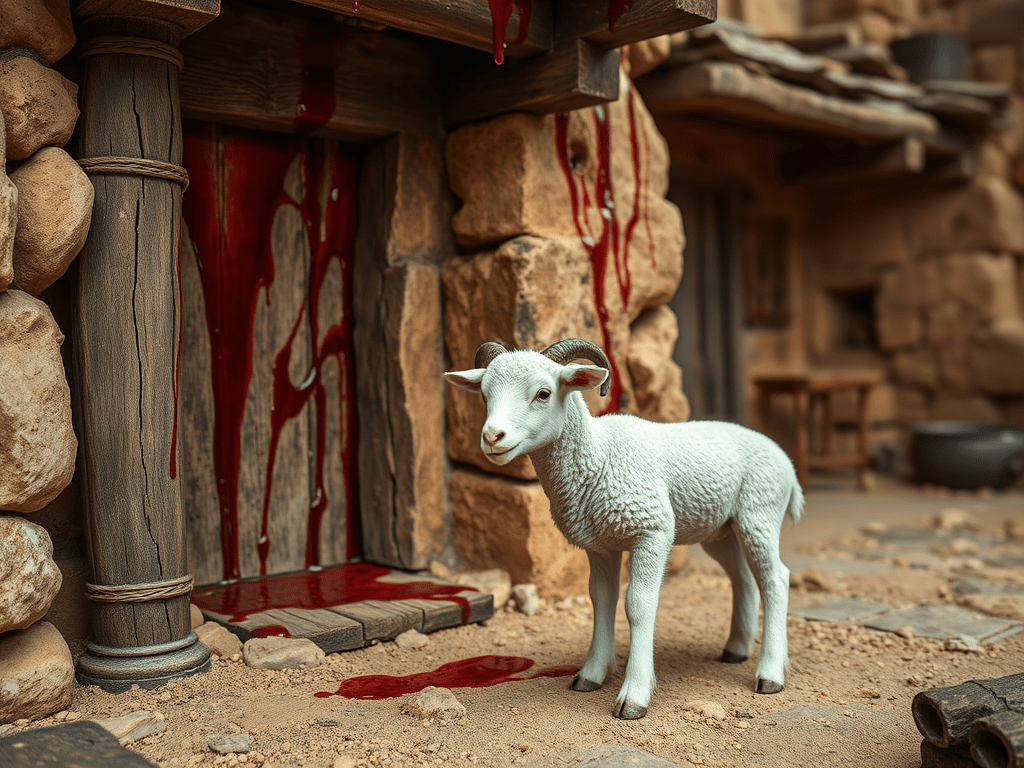
The Significance of Passover for Modern Believers

As the Lamb of God, Yeshua demonstrated he was not only the one who reconciled Jacob’s people, but who would also become the light to the nations.

Core of the Bible podcast #130: The Biblical Calendar and Passover

At the time this essay is issued, we are in the season of Passover. Why is this significant, and why should believers today understand the biblical calendar and the feast days?

Most Christians today do not recognize or observe the biblical feast days. This is due primarily to the fact that Christianity teaches that the sacrificial aspect of the rites conveyed in the Torah have been fulfilled in Messiah Yeshua. I do not disagree. But “fulfilled” does not mean “done away with.” I believe the Bible teaches that in Messiah, that which was a physical requirement for ancient Israel has become a spiritual principle for all time; more on that later.

But what I want to focus on first is how the biblical calendar is filled with symbolism of the Kingdom and God’s relationship with his people. I believe it is as we maintain recognition of these days that we can be reminded of God’s, and our, purpose. These days become practical object lessons that point to the totality of God’s work among his people, and his presence in this world.

The annual biblical calendar contains seven appointed times known in Hebrew as moedim, meaning seasons or appointed times. I believe the annual biblical holidays are the true appointments with God, the seasonal moedim that he has established for all eternity. These moedim focus on seven appointed times which are described as memorials or re-enactments to be used to keep God’s people focused on his will and purpose.

I also find it fascinating that God has placed these appointed memorials on the annual calendar in a way that can still be recognized today, even though worldly calendars and methods of timekeeping have come and gone in the millennia since they have been established. I believe this is why they are described the way they are in the Bible, and why we are still able to observe these appointed memorials with him.

How are we to observe them? Certainly we are not to sacrifice animals; as mentioned earlier all sacrifice has been fulfilled in Messiah. However, on these special days we can still gather together as his people to review the symbolism of those sacrifices to bring greater awareness to our understanding of our relationship with God. Just as a memorial service causes us to reflect fondly on the life of an individual who is no longer physically present, a biblical memorial should also serve a similar purpose of reminding us of its purpose which is now fulfilled in Messiah. After all, it is the symbol and memorial of supreme sacrifice which undergirds the gospel message of Messiah to the nations.

Whether it is through deeper fellowship and community among his people, as well as renewing our total devotion to him and consummation in his service, we can become serious about our faith by living it out as object lessons that others can see and learn from, as well. After all, as you may know from previous episodes, I believe that God’s Torah or Word is eternal, and therefore has lasting influence on those who approach the God of the Bible as his people. These should be as much a part of our doctrinal understanding as any other major proposition such as the study of who God is or the Kingdom of God.

With these foundational statements as an underpinning to our discussion today, let’s review the biblical appointed memorial of Passover.

THE HISTORY

The night of the Passover is one of the pivotal events in the entire Bible. The story is told in the book of Exodus. God had been pronouncing judgment on the nation of ancient Egypt by manifesting various plagues related to their false gods. The final judgment was designed as a response to the horrific practice of the Egyptians killing Israel’s male infants as a way of keeping their slavery in check so they would not overrun the regular population of Egypt. As a result, the final plague from God was a sentence upon the firstborn throughout the land. However, he instructed his people, Israel, to protect their firstborn by remaining in their homes with friends and family and sharing a meal of lamb or goat, placing its blood on their doorway. In this way, any firstborn within the camp of Israel would be protected by the blood of the substitute animal. After the destruction, Pharaoh would be compelled to let the Israelites leave. On that night, God would conclude judgment upon the idolatry of ancient Egypt and at the very same time create a nation of his own people, bringing them out from slavery to become his representative people on the earth into the land he had promised their forefathers.

The story of the Exodus from Egypt has been re-told annually through the Jewish Seder, a story-telling meal on Passover evening as a remembrance of this event. This had been commanded by Moses:

Exodus 12:24-27 – “Keep this command permanently as a statute for you and your descendants. When you enter the land that Yahweh will give you as he promised, you are to observe this ceremony [that is, a re-enactment of the offering of the Passover lamb]. When your children ask you, ‘What does this ceremony mean to you?'” Then you will say, ‘This is the offering of Yahweh’s Passover; for he went over the houses of the children of Israel in Egypt, when he sent death on the Egyptians, and kept our families safe.'”

This was to later become one of the annual memorials that Israel was instructed to keep throughout the year.

Leviticus 23:4-5 – “‘These are Yahweh’s appointed festivals, the sacred assemblies you are to proclaim at their appointed times: Yahweh’s Passover begins at twilight on the fourteenth day of the first month…”

The term itself, pesach, means “to skip over, to leap over, to exempt”, and is used only of this offering in the Bible. It describes how God’s judgment upon the land “skipped over” the Israelites who conducted this ceremony. The word Passover in English seemed to be the closest translation of the Hebrew pesach, and has become the English name of this annual memorial.

The Passover also begins the week of Unleavened Bread, which was to be a reminder of the Israelites’ hurried departure from Egypt, as their dough would not have time to rise before they left on their desert journey. We will focus on that feature of the biblical calendar next time.

In Christendom today, Passover has significance mostly as the background story leading to the death and resurrection of Messiah, and has been superseded by the holiday now known as Easter. Saving the ancient origins of Easter for another essay, the reason this biblical holiday of Passover has significance for us today has to do with the representation of Yeshua as the Lamb of God. This Lamb of God concept forms doctrines relating to atonement, a subject which I covered over several episodes several months ago. If you haven’t listened to those, you may want to catch up on the details presented there. However, because of its extreme relevance to the Passover narrative, I will be revisiting some of those aspects that I discussed regarding the atonement at that time.

YESHUA AS THE LAMB OF GOD

John 1:29 – The next day John saw Yeshua coming toward him and said, “Look, the Lamb of God, who takes away the sin of the world!”

Christians today typically read this verse out of its prophetic context, as they have been taught to view this as John the baptizer proclaiming that Yeshua was destined to die as a literal human sacrifice for everyone who would ever live in the entire world, satisfying God’s bloodthirsty justice and wrath against the sin of all of mankind since the rebellion of Adam. What is implied in this type of interpretation of this verse is theology that wouldn’t even exist until hundreds of years after Messiah. That is a lot of medieval theology packed into a single verse!

We should always do our best to keep things in their contextual and cultural habitat where they belong and to seek to understand Scripture in the way that the original audience would most likely have understood it. From this perspective, we find that John was more likely to have been referencing an aspect of Yeshua’s role that had been conveyed through a prophecy of Isaiah which, at that time, had already been taught to Israel for hundreds of years. As the “Lamb of God who takes away the sin of the world,” John appears to have been referring not to the fall of Adam, but to a prophecy from Isaiah; specifically, that very famous passage in Isaiah 53.

Isaiah 53:5, 7-8, 11-12 – But he was pierced because of our rebellion, crushed because of our iniquities; punishment for our peace was on him, and we are healed by his wounds…He was oppressed and afflicted, yet he did not open his mouth. Like a lamb led to the slaughter and like a sheep silent before her shearers, he did not open his mouth. … For he was cut off from the land of the living; he was struck because of my people’s rebellion. … After his anguish, he will see light and be satisfied. By his knowledge, my righteous servant will justify many, and he will carry their iniquities.  Therefore I will give him the many as a portion, and he will receive the mighty as spoil, because he willingly submitted to death, and was counted among the rebels; yet he bore the sin of many and interceded for the rebels.

This whole passage is an allegory, not of a lamb per se, but of someone named the Servant. Isaiah began this allegory back in chapter 41. By the time the allegory reaches its apex, Isaiah is describing the Servant  who submits to the will of God as being “like a lamb”. This allegorical  “lamb” of God, the Servant of Israel, willingly carries the iniquity and bears the sin of Israel (i.e., “our” iniquities; “my people’s rebellion”) and those “many”  who would be given to him as “a portion” (i.e., the “remnant”). By referencing this passage directly, John the baptizer squarely assigns the role of the Servant in this Isaiah passage to Yeshua as the  Servant of Yahweh to the very Israelite people who have rejected him.

All of this tells us that the Lamb of God imagery here is not literal, but symbolic, representative, and allegorical. Isaiah says the Servant is silent “like” a lamb being led to slaughter or “as” a sheep to the shearer. Yeshua accepted the complicated role of fulfilling these prophetic passages by being the symbolic or representative, voluntarily submissive, lamb-like Servant on behalf of Yahweh’s new covenant with Judah and Israel, and all those from among the nations who would ultimately be joined to God’s people.

Jeremiah 31:31, 33 – “Look, the days are coming” — this is Yahweh’s declaration — “when I will make a new covenant with the house of Israel and with the house of Judah

Luke 22:20 – In the same way he also took the cup after supper and said, “This cup is the new covenant in my blood, which is poured out for you.

Romans 15:8-12 – For I say that Messiah became a servant of the circumcised on behalf of God’s truth, to confirm the promises to the fathers, and so that nations may glorify God for his mercy. As it is written, Therefore I will praise you among the nations, and I will sing praise to your name. Again it says, Rejoice, you nations, with his people! And again, Praise the Lord, all you nations; let all the peoples praise him! And again, Isaiah says, The root of Jesse will appear, the one who rises to rule the nations; the nations will hope in him.

Isaiah 49:5-6 – And now, says Yahweh, who formed me from the womb to be his servant, to bring Jacob back to him so that Israel might be gathered to him; for I am honored in the sight of Yahweh, and my God is my strength — he says, “It is not enough for you to be my servant raising up the tribes of Jacob and restoring the protected ones of Israel. I will also make you a light for the nations, to be my salvation to the ends of the earth.”

The Servant “Lamb of God” spoken of by Isaiah was indeed the Messiah, as proclaimed by John the baptizer. This willing “Lamb” would regain not only his own people, but would also become a light to all nations.

PASCHAL LAMB

Since most of us are so familiar with the Lamb of God imagery conveyed by Isaiah, it is understandable how some of those same principles get pulled into our modern understanding of the Passover lamb. This is evident most notably because the Bible tells us that Yeshua was crucified at the exact same moment the Passover lambs would have been killed in preparation for the Passover memorial in Israel that year. Because our minds are primed to see these lamb sacrifices as being made for sin, we assume that Yeshua, as the symbolic Passover lamb, was sacrificed for sin.

However, we would do better to separate the Servant Lamb of God carrying the sin of his people that Isaiah spoke of as being distinct from the Passover lamb offering. The Bible teaches us that the real reason for the pesach or Passover lamb was not to be a sacrifice for sin, but to redeem the firstborn son in each family and protect them from judgment about to be poured out on the whole land.

Exodus 12:12-13 – “I will pass through the land of Egypt on that night and strike every firstborn male in the land of Egypt, both people and animals. I am Yahweh; I will execute judgments against all the gods of Egypt. The blood on the houses where you are staying will be a distinguishing mark for you; when I see the blood, I will pass over you. No plague will be among you to destroy you when I strike the land of Egypt.”

By killing the pesach, the ransom-lamb, and applying its blood to the doorway, the families gathered in each home were essentially protecting the firstborn male of each family; no one else was in danger of dying.

Remember what Yeshua said about himself:

Mark 10:45  – “For even the Son of Man did not come to be served, but to serve, and to give his life as a ransom for many.”

A ransom is not a “sin-payment,” but an exchange or substitution of one thing for another. In this case, the life of the lamb (symbolized by the blood) had been exchanged for the life of the firstborn. The rest of the family was not at risk of death; however, through being identified by the blood on the doorposts and sharing in the lamb-meal that was meant for the redemption of the firstborn, the entire community participated in the Passover deliverance and was set free from captivity.

In past episodes I have defined a ransom as “a price to be paid, a value to be given, for the changing of a foregone outcome.” In the case of the Passover lamb, the lamb was a ransom for the life of the firstborn male in each family. If the lamb’s blood (the evidence of its life, for the life is in the blood) was on the doorway, the household would be spared the tragedy of losing their firstborn son, the “foregone outcome” that the rest of Egypt suffered.

And here is the critical thing for us to understand: the Passover lamb has nothing to do with forgiveness of sin; it is all and only about ransoming the firstborn from death. The lamb served as a substitute, a “proxy-death” for the firstborn among the houses of Israel. The lambs were the price paid to save the firstborns’ lives. Hence, the life of each firstborn was ransomed from death by the price of the life of the lamb. It could be said that the firstborn of each family gained “life from the dead” by giving up the life of the lamb.

Exodus 4:22-23 – “And you will say to Pharaoh: This is what Yahweh says: Israel is my firstborn son. I told you: Let my son go so that he may worship me, but you refused to let him go. Look, I am about to kill your firstborn son! “

In the New Testament writings, Yeshua was identified with the paschal lamb, not only in the perfect timing of his crucifixion, but even in his followers’ teaching as explained by Paul:

1 Corinthians 5:7 – …For Messiah our Passover lamb has been slaughtered.

In this passage, Paul is using the Passover imagery here as he carries over the statement that Messiah was the ultimate Passover lamb for his people. Since the pesach, the Passover lamb, was known to have redeemed the firstborn from death, and Israel is clearly referenced in the Bible as God’s firstborn, then Paul is communicating here how Messiah ransomed or redeemed his people, just as he had said he would.

Matthew 15:24 – Yeshua replied, “I was sent only to the lost sheep of the house of Israel.”

Mark 10:45 – “For even the Son of Man did not come to be served, but to serve, and to give his life as a ransom for many.”

Redemption has to do with being set free from a captive situation: an individual’s fate has been altered from one path (death/ongoing captivity) to another (life/freedom) through the redemption process. Through redemption, one can claim to have been rescued or saved from a particular fate.

During the original Exodus Passover, the redemption lamb had saved the lives of the firstborn who were protected within their homes by the token (sign) of the lamb’s life-blood on the doorways. As a result, all of the participants in the meal gained freedom from slavery in Egypt to become the nation of God, and representatives of his Kingdom on the earth.

SUMMARY

So we can see how the imagery of the Lamb of God language has multiple layers of meaning. In one sense, Messiah was the submissively lamb-like Servant who (representatively) took on (carried, bore) the iniquities of Israel and the remnant, and was therefore “cut off from the land of the living” on their behalf. That’s the Lamb of God aspect that John refers to in his gospel, harking back to the prophecy of Isaiah.

In another sense, Yeshua represented a different lamb, the Passover Lamb, which was to give its life, through its identifying blood, to ransom the firstborn (Israel) from judgment upon the land and to provide them freedom from slavery to sin.

These are two separate lamb analogies that tend to get run together in our theology of biblical concepts. The sin-bearing Servant of Isaiah who willingly dies “like a lamb” gets conflated with the Passover ransom-lamb. They are both lamb analogies, but they are different; they are both true symbolic representations of the work of Messiah, but with different emphases. The Servant was willing to die as a representative of sinful Israel before God. The Passover Lamb was a representative substitution, ransoming the firstborn (i.e., Israel) from judgment upon the land. These analogies are so closely aligned that it seems natural to blend them together.

Yeshua himself seems to identify directly with both analogies. As the Servant-lamb, he explained how he was giving his life to representatively bear their sin before God:

Matthew 26:28 – “For this is my blood of the covenant, which is poured out for many for the forgiveness of sins.

But Yeshua also identified his mission as the Passover-lamb, as we have just seen:

Mark 10:45 – “For even the Son of Man did not come to be served, but to serve, and to give his life as a ransom for many.”

Additionally, the apostles can be seen using both allegories throughout their writings. In fact, Paul pulls both of these together in his epistles to the Romans and the Ephesians:

Romans 5:8-9 – But God proves his own love for us in that while we were still sinners, Messiah died for us [as the Servant-lamb]. How much more then, since we have now been justified by his blood, will we be saved through him from wrath [the Passover lamb].

Ephesians 1:7 – In him we have redemption through his blood [i.e., the ransom-lamb of Passover], the forgiveness of our trespasses [the Servant-lamb], according to the riches of his grace.

Both serve to illustrate deliverance from God’s judgment: one from judgment upon their own sinful disobedience and the other from God’s righteous judgment upon the land as a whole. They both point to Messiah’s specific ministry to Israel, showing how he was delivering them not only from direct sins committed under the first covenant and their ongoing slavery to sin, but he was also ransoming them from the destruction about to come upon the whole land.

And this is where Yeshua and his disciples got into political hot water with their detractors among the leadership of Israel. By speaking about a coming judgment of God, just like the one that had come upon Egypt long ago, they were using those examples of judgment and applying them to the nation of Israel in that day. They were essentially preaching that Israel in that generation had become as corrupt as ancient Egypt, and was about to be judged in a similar destructive way.

That’s what all of these warnings from John the baptizer, Yeshua and his disciples were about!

Matthew 3:7 – When he [John the baptizer] saw many of the Pharisees and Sadducees coming to his baptism, he said to them, “Brood of vipers! Who warned you to flee from the coming wrath?

Matthew 24:1-2, 34 – As Yeshua left and was going out of the temple, his disciples came up and called his attention to its buildings. He replied to them, “Do you see all these things? Truly I tell you, not one stone will be left here on another that will not be thrown down.” … “Truly I tell you, this generation will certainly not pass away until all these things take place.

Acts 2:40 – With many other words he [Peter] testified and strongly urged them, saying, “Be saved from this corrupt generation! “

So we see how the Messiah had come not only to offer deliverance to Israel from their sinful state before God, but also from the wrath of God over the whole land which was only decades away. Through Messiah, God was focused on teaching Israel that he was redeeming them, his firstborn son, as it were, and providing a way out from death and the coming wrath on their nation. Just like the Hebrew people of old in Egypt, by placing their faith in the true pesach, Yeshua Messiah, they (the firstborn) would be spared the wrath of God to be poured out on Jerusalem and their nation in their day. That was the message to them of Passover and the fulfillment of Yeshua as the paschal lamb.

But at the same time God was also teaching them that Messiah was the fulfillment of that faithful Servant prophesied in Isaiah, and that he would represent them in their sinfulness and willingly die on their behalf. Both of these lamb analogies came to pass, were fulfilled, in the person and work of Messiah.

And because this had become a matter of faith in the Messiah as the sent one of God, the way was opened to anyone who placed their faith in Messiah, and the redemption of Israel became the door through which God’s Kingdom could then spread throughout the world.

APPLICATION FOR TODAY

So, how does all of this lamb-imagery apply to non-Jewish believers today? Why should we have an annual memorial of something that seems to have applied only to ancient Israel? Since I believe God’s Torah or instruction is eternal, it follows that I believe these examples are still valid. I believe it is because of these ancient themes that we are able to grasp the significance of our faith in Messiah today. He came as a fulfillment of these things to demonstrate the reality of who he was to them. The historical fact that his predictions of the judgment of God upon Jerusalem came to pass within that generation legitimize his claims, and those of his followers, that he was also the Servant-lamb predicted by Isaiah hundreds of years earlier. He demonstrated he was not only the one who reconciled Jacob’s people, but who would also become the light to the nations. How could we disregard the very things which help us to understand his role within the history of God’s people, and his influence over all nations as God’s representative king?

As the Servant-lamb, Yeshua symbolically carried the sins of his people and willingly died on their behalf as their representative. As the representative Ransom-lamb, he voluntarily offered himself in order to give them life from the coming judgment and also set them free from their slavery to sin. Because this freedom and life was only available to them through faith in himself fulfilling these symbolic roles, this allowed anyone who placed their faith in Yeshua as the Messiah of God to likewise participate in the reconciliation story of Israel for all time. When he redeemed those who believed in him, they also became an eternal example of God’s faithfulness with his own people, the prophetic City of Zion within God’s Kingdom. Their light now shines upon each generation, inviting all who desire to partake of the river of life and the healing leaves of the tree of life to freely do so.

Revelation 22:1-2, 14, 17 – Then he showed me the river of the water of life, clear as crystal, flowing from the throne of God and of the Lamb down the middle of the city’s main street. The tree of life was on each side of the river, bearing twelve kinds of fruit, producing its fruit every month. The leaves of the tree are for healing the nations, … “Blessed are those who wash their robes, so that they may have the right to the tree of life and may enter the city by the gates. … Both the Spirit and the bride say, “Come! ” Let anyone who hears, say, “Come!” Let the one who is thirsty come. Let the one who desires take the water of life freely.

This is the good news of the Kingdom: anyone can come! All with circumcised (repentant) hearts can join in the annual memorial of the Passover meal and participate in the great liberation of God’s firstborn people! Because Messiah has redeemed Israel as an eternal symbol of God’s faithfulness with his people, we, too can have confidence in Messiah that we may, in like fashion, take the water of life freely and join with the redeemed in the Kingdom of God.


Well, as we wrap up for today, I hope there are at least a couple of concepts and ideas to encourage you to meditate on and to study out further on your own. Next time, we will investigate the week of Unleavened Bread and Firstfruits to see what we can learn from these calendar appointments within the Biblical year. I hope you will be able to come back and visit as we further review these concepts. But remember, if you have thoughts or comments that you would like to explore further with me, feel free to email me at coreofthebible@gmail.com.

Atonement, part 2

The atonement word-pictures in the Bible are best understood as Israel-centric, then flowing out to the nations.

Core of the Bible podcast #116 – Atonement, part 2

Lately we have been reviewing some of the bigger key doctrines in the Bible, and today we are continuing a study on the topic of the atonement. This is a very complex and involved concept to present, not because it is so extremely difficult to understand, but because we have had a certain view over the centuries that may not reflect what the Bible actually teaches about this critical aspect of the biblical faith.

In order to view atonement from an authoritative biblical stance, it made sense to me to consider it by identifying the following categories:

  • How was atonement represented in Israel’s past (the Old Testament, or Tanakh)
  • How did Yeshua view his role in that worldview
  • How were atonement themes viewed by Yeshua’s disciples and the NT writers
  • What does all of this mean for believers today

To quickly review, last time we examined the first two premises: how atonement was represented in the past through the biblical calendar and the Day of Atonement and also the significance of blood sacrifices in general. We also reviewed how Yeshua conveyed his role as the Good Shepherd, the Ransom, and the founder of the new covenant sealed with his own life.

Today, we are now moving into the New Testament writings and how Yeshua’s disciples interpreted his life and death. I am hoping by the end of this to be able to pull all of this information together so that we can draw some practical understanding and application for our lives today.

What atonement themes were conveyed by Yeshua’s disciples in the New Testament writings?

While there are many references to prophetic fulfillment throughout the New Testament writings, I find that there are three main ideas related to atonement that were primary understandings of those early believers, and how they interpreted the life and death of the Messiah.

  • Lamb of God
  • Paschal lamb (lamb sacrificed at Passover)
  • Mediator/High Priest (Day of Atonement)

Yeshua as the Lamb of God

John 1:29 – The next day John saw Yeshua coming toward him and said, “Look, the Lamb of God, who takes away the sin of the world!”

This verse comes to us as a standard understanding within Christianity. When we typically read this, we have been taught to view this as John the baptizer proclaiming that Yeshua was destined to die as a blood sacrifice for everyone who ever lived in the entire world, satisfying God’s righteous justice and wrath against the sin of all of mankind since the rebellion of Adam.  That is a lot of theology packed into a single verse!

And yet, if we are to do our best to keep things in their contextual and cultural habitat where they belong, we find that John was more likely to have been referencing an aspect of Yeshua’s role that had been conveyed through a prophecy that at that time was already hundreds of years old. As the “Lamb of God who takes away the sin of the world”, John appears to be referring not to Adam, but to a prophecy from Isaiah; specifically, that very famous passage in Isaiah 53.

Isaiah 53:7, 11-12 – He was oppressed and afflicted, yet he did not open his mouth. Like a lamb led to the slaughter and like a sheep silent before her shearers, he did not open his mouth.  … After his anguish, he will see light and be satisfied. By his knowledge, my righteous servant will justify many, and he will carry their iniquities.  Therefore I will give him the many as a portion, and he will receive the mighty as spoil, because he willingly submitted to death, and was counted among the rebels; yet he bore the sin of many and interceded for the rebels.

This is the allegorical Lamb of God willingly carrying iniquity and bearing sin. By referencing this passage directly, John squarely assigns the role of the servant in this Isaiah passage to Yeshua as the Messiah of Israel who has rejected him.

We need to briefly discuss these “suffering servant” passages in Isaiah, because they comprise a larger section of Isaiah’s prophecies as a whole. Surprisingly, the Wikipedia entry on these Servant Songs has a decent summary of these passages for us to get our contextual bearings:

The servant songs (also called the servant poems or the Songs of the Suffering Servant) are four songs in the Book of Isaiah in the Hebrew Bible, which include Isaiah 42:1–4; Isaiah 49:1–6; Isaiah 50:4–11; and Isaiah 52:13–53:12. The songs are four poems written about a certain “servant of YHWH” (Hebrew: עבד יהוה, ‘eḇeḏ Yahweh). Yahweh calls the servant to lead the nations, but the servant is horribly abused by them. In the end, he is rewarded.

Most Christians likely don’t recognize this, but these servant passages have had a different meaning among the Semitic community, even into modern Judaism. Although Christians readily attribute these passages to a prophetic foreshadowing of Messiah Yeshua, the Semitic view is that the servant of Yahweh is not an individual, but is the nation of Israel as whole, suffering throughout the nations on behalf of the rest of the world.

“Rabbinic Judaism sees this passage, especially “God’s Suffering Servant” as a reference to the Jewish nation, not to the king Mashiach. Jewish teaching also takes note of the historical context in which God’s Suffering Servant appears, particularly because it speaks in the past tense. The Jewish nation has borne unspeakable injustices, under Assyria, Babylonia, Ancient Greece, ancient Rome, which are all gone, and bears persecution to this day.

“Christians traditionally see the servant as Jesus Christ. The songs are quoted to and applied to Jesus multiple times in the New Testament…

“Another Christian interpretation combines aspects of the traditional Christian and the Jewish interpretation. This position sees the servant as an example of ‘corporate personality’, where an individual can represent a group, and vice versa. Thus, in this case, the servant corresponds to Israel, yet at the same time corresponds to an individual (that is, the Messiah) who represents Israel.”

Looked at in the context of the Bible as a whole, my personal belief is that these “servant” passages do refer to both corporate Israel and the Messiah as Israel’s representative. How can both be true at once? This is because this is the pattern that emerges from the depths of the Bible narrative.  For example, the Levites were the “chosen tribe” out of the twelve tribes of Israel for service of the tabernacle, and yet the High Priest alone is the one who represented the whole nation in intercession before God. In this sense, the Levites were both corporately (as a tribe) and in a single representative individual (the High Priest) the “servant” of the rest of the twelve tribes. From this perspective, this dual identity of the servant in the Isaiah passages solidifies Israel’s role in the world as the chosen people of God who were selected and tried by God on behalf of the rest of the nations, and it also substantiates the Son of God as God’s chosen representative from among that group to intercede for the whole.

To illustrate this further, the famous passage in Isaiah 53 can be viewed from both of these perspectives depending on the emphasis on the pronouns in the passage. So I’d like to read an excerpt of the passage and then substitute the object and subject emphasis of the pronouns used to show you how the passages can be viewed either way.

First, I’ll read it the way it’s generally written.

Isaiah 53:4-6 – Yet he himself bore our sicknesses, and he carried our pains; but we in turn regarded him stricken, struck down by God, and afflicted.  But he was pierced because of our rebellion, crushed because of our iniquities; punishment for our peace was on him, and we are healed by his wounds.  We all went astray like sheep; we all have turned to our own way; and Yahweh has punished him for the iniquity of us all.

Okay, now I’ll read it substituting the pronouns as the Jews might interpret this passage today:

Isaiah 53:4-6 – Yet Israel himself bore the world’s sicknesses, and Israel carried the world’s pains; but the world in turn regarded Israel stricken, struck down by God, and afflicted.  But Israel was pierced because of the world’s rebellion, crushed because of the world’s iniquities; punishment for the world’s peace was on Israel, and we are healed by Israel’s wounds.  We all went astray like sheep; we all have turned to our own way; and Yahweh has punished Israel for the iniquity of the world.

I know this type of interpretation may sound weird to Christian ears, but this is the way the servant concept is identified in Semitic thinking today. To be honest, there is a strong measure of truth to this, as Israel was indeed chosen by God to be the light to the rest of the nations, and in a very real sense, they did go through their trials and rebellion on behalf of providing that light of the Messiah to the rest of the nations.

But now let me read it in the context I believe it was originally intended for that ancient audience.

Isaiah 53:4-6 – Yet Messiah himself bore Israel’s sicknesses, and Messiah carried Israel’s pains; but Israel in turn regarded Messiah stricken, struck down by God, and afflicted.  But Messiah was pierced because of Israel’s rebellion, crushed because of Israel’s iniquities; punishment for Israel’s peace was on Messiah, and Israel is healed by Messiah’s wounds.  All Israel went astray like sheep; all Israel have turned to their way; and Yahweh has punished Messiah for the iniquity of all Israel.

You may be thinking, “Well, that’s closer to the right way to view it, but what are all of these references to Israel; where is the rest of the world in this passage?” That’s just it; the rest of the world isn’t in this passage, at least in the context in which it was originally intended. All of the “we” and “our” pronouns actually belong to them, the nation of Israel, not the rest of the world. Isaiah was Israel’s prophet speaking to Israel, not the rest of the world, at least, not at first. Israel was the one whose iniquities (under the first covenant) were needing to be atoned for. Israel was the people who had all gone astray like sheep from God’s torah, which had been given to them and to no other nation. This is why Messiah could say he came “only for the lost sheep of Israel.” And Messiah was the one who bore the iniquity of all Israel as their representative. Yeshua, rightly assuming his role as Israel’s king, accepted the burden of iniquity for his own people. This was the picture that John describes of the “lamb who takes away the sin of the world”: the Messiah who came to represent the collective “world” of all of the tribes of Israel.

We’ll talk more about the rest of the world in a little bit. But for now, consider how this Israel-centric view also makes sense if you simply keep reading the context into Isaiah 54:

Isaiah 54:6-7, 11-12 – “For Yahweh has called you, like a wife deserted and wounded in spirit, a wife of one’s youth when she is rejected,” says your God.  “I deserted you for a brief moment, but I will take you back with abundant compassion.  … “Poor Jerusalem, storm-tossed, and not comforted, I will set your stones in black mortar, and lay your foundations in lapis lazuli.  I will make your fortifications out of rubies, your gates out of sparkling stones, and all your walls out of precious stones.”

This is the theme of restoration and renewal like in the book of Revelation, where Jerusalem is transformed into the heavenly Zion with allegorical pearly gates and streets of gold. This is Kingdom language that pervades the imagery of the servant’s representative sacrifice for others. The Lamb who takes away their sin would be a leader figure like King David, the one reigning in this restored Kingdom.

Isaiah 55:3-4 – “Pay attention and come to me; listen, so that you will live. I will make a permanent covenant with you on the basis of the faithful kindnesses of David.  Since I have made him a witness to the peoples, a leader and commander for the peoples…”

And here is where the rest of the world comes into the picture in this telling of the good news of the Kingdom:

Isaiah 55:5-7 – “so you will summon a nation you do not know, and nations who do not know you will run to you. For Yahweh your God, even the Holy One of Israel, has glorified you [Israel].”  Seek Yahweh while he may be found; call to him while he is near.  Let the wicked one abandon his way and the sinful one his thoughts; let him [Israel] return to Yahweh, so he may have compassion on him, and [rest of the nations] to our God, for he will freely forgive.”

All of this tells us that the Lamb of God imagery is symbolic, representative, and allegorical, not literal. Yeshua accepted the role of fulfilling these prophetic passages by being the voluntarily obedient, symbolic or representative covenant-victim for Yahweh’s new covenant with Judah and Israel (Jer. 31:31; Matt. 26:28; Mark 14:24; Luke 22:20; 1 Cor. 11:25), and all those from among the nations who would ultimately be joined to God’s people.

Paschal lamb

Tied up with all of this lamb imagery in our modern minds is now the concept of the Passover lamb. This is evident most notably because Yeshua was crucified at the exact same moment the Passover lambs would have been being sacrificed for the people in that year. The New Testament writings all convey that Yeshua’s crucifixion was at the start of the week of Unleavened Bread. Because our minds are primed to see sacrifices as being made for sin, we assume that Yeshua, as the symbolic Lamb, was sacrificed for the sin of the world, just as we think the Passover lamb was sacrificed for the sins of Israel.

However, the Bible teaches us that the real reason for the pesach or Passover lamb was not to be sacrificed for sin, but to redeem the firstborn son in each family and protect them from death.

Exodus 12:12-13 – “I will pass through the land of Egypt on that night and strike every firstborn male in the land of Egypt, both people and animals. I am Yahweh; I will execute judgments against all the gods of Egypt. The blood on the houses where you are staying will be a distinguishing mark for you; when I see the blood, I will pass over you. No plague will be among you to destroy you when I strike the land of Egypt.”

By killing the pesach, the lamb-offering, and applying its blood to the doorway, the families gathered in each home were essentially protecting the firstborn male of each family; no one else was in danger of dying. This is why we reviewed the biblical concept of ransom and redemption last time, and I mentioned we would revisit it as we studied the paschal lamb.

Remember what Yeshua said about himself:

Mark 10:45  – “For even the Son of Man did not come to be served, but to serve, and to give his life as a ransom for many.”

Last time I defined a ransom as “a price to be paid, a value to be given, for the changing of a foregone outcome.” In the case of the Passover lamb, the lamb was a ransom for the life of the firstborn male in each family. If the lamb’s blood (the evidence of its sacrifice) was on the doorway, the household would be spared the tragedy of losing their firstborn son, the “foregone outcome” that the rest of Egypt suffered.

And here is the critical thing for us to understand: the Passover lamb has nothing to do with forgiveness of sin; it is all and only about ransoming the firstborn from death.

Exodus 4:22-23 – “And you will say to Pharaoh: This is what Yahweh says: Israel is my firstborn son. I told you: Let my son go so that he may worship me, but you refused to let him go. Look, I am about to kill your firstborn son! “

I believe it is clear in the New Testament writings that Yeshua was identified with the paschal lamb, not only in the perfect timing of his crucifixion, but even in his followers’ teaching as explained by Paul:

1 Corinthians 5:7 – …For Messiah our Passover lamb has been sacrificed.

In this passage, Paul is using the Passover imagery here as he carries over the statement that Messiah was the ultimate Passover lamb. Since the pesach, the Passover lamb, was known to have redeemed the firstborn from death, and Israel is clearly referenced in the Bible as God’s firstborn, then the imagery has gone full circle back to the Israel-centric view we discussed earlier.

It’s been said that if God was to synchronize his Messiah’s death with the biblical holidays, it would have made way more sense to have him be crucified on the Day of Atonement rather than on Passover. This would have better corroborated his death for the sins of the people in a much more understandable way. But the reason this is not the way God actually worked it out was because he was more focused on teaching Israel that he was redeeming them, his firstborn son, as it were, and providing a way out from death and the coming wrath on their nation. Just like the Hebrew people of old in Egypt, by placing their faith in the true pesach, Yeshua Messiah, they (the firstborn) would be spared. That is the message of Passover and Yeshua as the paschal lamb.

So now we have seen Yeshua represented as the lamb who takes away Israel’s sin as the obedient servant in Isaiah’s prophecy, to his coming to redeem Israel as the paschal lamb. Now let’s see another picture that is presented by the early believers in the book of Hebrews: Yeshua as the High Priest of Israel.

Mediator/High Priest

Yeshua’s role of redemptive mediator is expressed in symbolic fashion in the book of Hebrews.

Hebrews 9:15 – Therefore, he [Yeshua] is the mediator of a new covenant, so that those who are called might receive the promise of the eternal inheritance, because a death has taken place for redemption from the transgressions committed under the first covenant.

The writer of Hebrews tells us that the primary purpose of this mediation concerns sins that were committed under the first covenant. Who was the first covenant made with? Israel, of course; this reinforces Yeshua’s claim that he was sent to Israel.

Once again, this imagery of Yeshua as the High Priest is not literal, but figurative. In fact, the writer of Hebrews goes out of his way to explain how Yeshua could NOT be a literal priest in this world, because he was not from the priestly tribe of Levi, but he was from Judah.

Hebrews 7:14-17 – Now it is evident that our Lord [Yeshua] came from Judah, and Moses said nothing about that tribe concerning priests. And this becomes clearer if another priest like Melchizedek appears, who did not become a priest based on a legal regulation about physical descent but based on the power of an indestructible life. For it has been testified: You are a priest forever according to the order of Melchizedek.

The idea being conveyed here is that Yeshua functions as a priest, not as a physical descendant of Levi, but as a spiritual descendant of Melchizedek because he lives forever.

Who is this Melchizedek? He is a character related to us in only three spare verses in the book of Genesis as having met Abraham after Abraham won a private war with five kings in the region of the Dead Sea.

Genesis 14:18-20 – Melchizedek, king of Salem, brought out bread and wine; he was a priest to God Most High. He blessed him and said: Abram is blessed by God Most High, Creator of heaven and earth,  and blessed be God Most High who has handed over your enemies to you. And Abram gave him a tenth of everything.

The mystery surrounding Melchizedek has spawned many theories, but what we do know from the text is that this individual was a king reigning in Salem (before it became Jerusalem) who was also a priest of the Most High God (before there were any Levites to be priests). This is why he becomes such an important figure for those early believers who were looking for a way to explain the relevance of Messiah in their day. Melchizedek was a Messiah-like figure, a foreshadowing of the roles that Messiah would be fulfilling: that of both king and priest. Messiah was to rule over God’s kingdom and be the one who mediates between God and men in the role of priest.

This is why the Levitical priesthood is no longer needed: it was fulfilled and ended when Messiah arrived, and the only priesthood that now exists is the spiritual High Priesthood of Melchizedek. It is a spiritual priesthood needing no successors on earth because the Messiah lives forever and does not need to be replaced. In a grand spiritual allegory, he alone is the eternal representative before Yahweh interceding, as it were, between Yahweh and believers. This is what the role of the priesthood was designed to do: provide atonement (mercy and reconciliation) between Yahweh God, the one whose instruction had been violated (that is, the offended party) and the offender (the person who had sinned). This is the atonement process which the priesthood of Levi taught us about, but was ended forever with the arrival of the Messiah and is no longer needed.

This is why a true understanding of biblical atonement is so needed today. When we see how Messiah fulfilled that spiritual priestly role of eternal mediator providing eternal reconciliation, we realize we no longer need any priests here on earth; there is no point. This is not to denigrate those who have committed their lives to God by serving as priests among the various denominations, whether Catholics, Anglicans, Eastern Orthodox and such. I’m sure those commitments are by and large sincere and made with the best intentions of helping others. But a priest’s primary function, his one job as it were, is to serve as a mediator, a go-between between God and people, and according to the Bible, that role is currently and eternally filled by Messiah Yeshua because he lives forever.

Messiah is also to serve as a king, reigning over the heavenly Jerusalem as God’s faithful representative. This is why he is recognized as “Lord” throughout the New Testament writings, because that is what he is: the authoritative ruler, like David of old, whom God has chosen to reign within his Kingdom. And if we consider ourselves to be participators in that Kingdom, then he is our authoritative ruler, as well; he is our King.

Summary

The scope of Yeshua’s impact on the world of the ancient nation of Israel and on the rest of the world now begins to come into view. The early believers recognized this and explained all of this two thousand years ago; we have just been too distracted with our own theories over the centuries, many of which became traditions, to recognize this.

Last time, we looked at the Old Testament example of the Day of Atonement as the baseline for understanding the process of reconciliation through representative sacrifice, which is what atonement is. We then looked at how Yeshua viewed himself as the Good Shepherd for Israel’s lost sheep, the representative ransom for that nation, and the institutor of the new covenant for Israel and Judah with the extreme commitment of his life, his own blood. Today we viewed how his followers connected him with the allegorical lamb of Isaiah’s servant passages, how they saw the redemption of their own people in his role as the paschal or Passover lamb, and how he fulfilled and superseded the Levitical priesthood as an eternal mediator after the pattern of Melchizedek for all who place their trust in him as Messiah. Each one of these topics could be its own study to flesh out the full ramifications of each; however, I believe we can still draw some overall conclusions to help us maintain a biblical perspective of these ancient patterns and ideas.

First of all, it becomes apparent that not one of these word pictures conveying atonement is meant to be taken literally. Yeshua is not really a lamb, he is not really a shepherd of sheep, he is not literally a priest standing at an altar, which also means he was not literally a sacrifice for sin. Yeshua could not have been a literal sacrifice for sin, because that would mean Yahweh condones human sacrifice, along with punishing the innocent for the guilty and justifying the wicked, which is all against his own Torah, or instruction.

Jeremiah 32:35 – “They [Judah] have built the high places of Baal in Ben Hinnom Valley to sacrifice their sons and daughters in the fire to Molech ​– ​something I had not commanded them. I had never entertained the thought that they do this detestable act causing Judah to sin!

Exodus 23:7 – “… Do not kill the innocent and the just, because I will not justify the wicked.

No, in all of these examples, God was teaching his people through object lessons, patterns, and foreshadowing that they would have understood from their own writings of how the fulfillment of these preparatory examples were completed and fulfilled in his Anointed One, his Messiah. We see Yeshua as coming for his people, Israel, as their Messiah; their redeemer, their priest and mediator.

So, if that’s the case, how does all of this good news for Israel mean anything to the rest of us who are not descended by flesh from Abraham, Isaac, and Jacob? How does the atonement provided by their Messiah have any relevance for us?

The apostle John sadly relates to us how their Messiah was rejected by them.

John 1:11 – He came to his own, and his own people did not receive him.

But in the very next breath, John also shares the good news of the Kingdom with all who will listen:

John 1:12-13 – But to all who did receive him, he gave them the right to be children of God, to those who believe in his name, who were born, not of natural descent, or of the will of the flesh, or of the will of man, but of God.

To receive Yeshua, to accept that he truly is the Anointed One of God who came to reveal the Kingdom of God, is to become born from above as a true child of Yahweh God. This is a status that is not bound by blood heritage from Israel; it is based on the heartfelt faith that Abraham expressed when he simply believed what God said was true.

Paul writes:

Romans 1:16 – For I am not ashamed of the good news of Messiah, for it is the power of God to salvation for everyone who believes, for the Jew first and also for the Greek.

All of this imagery that we have been looking at is for the Jew first, which is why it is all stated in word pictures and allegories that they would have understood and been familiar with. But Paul says it is also for the Greek, that is, the Hellenists. The Hellenists were those Jews who had been scattered throughout the empire and had succumbed to the Greek culture and lifestyle. But Hellenists were also descriptive of those non-Jews among them who became “God-fearers” through their interest in, and learning the ways of, this Jewish God. We who are non-Jews are always at a disadvantage until we can begin to understand how these Semitic word pictures and allegories are to be understood. This is why our Bibles contain both the Old Testament writings or Tanakh, and the New Testament writings of the apostles: We need to fully grasp the concepts presented in the Old Testament and not just continue to re-hash New Testament principles taken out of their cultural and historical context.

Once we rise above the limiting horizon of scholarly theories, tradition, and orthodoxy, we can then begin to see the biblical picture of atonement for what it truly is. The atonement that Messiah provided was not one of literal blood sacrifice to calm the wrath of an angry deity, but a representative and allegorical atonement providing mercy and reconciliation that reaches into the very depths of each soul who trusts in him, Jew and non-Jew alike. The mercy and reconciliation of this atonement provides true freedom from sin and causes us to walk in the righteous ways of Yahweh as he always intended: from the heart, not through the traditions and rituals of men. Anyone, therefore, who exhibits faith in Messiah is therefore accepted into the Kingdom, and this is how it was always designed by God to be from the very beginning: to start like a seed from Abraham, Isaac, and Jacob, and then at the fulfillment of all things in Messiah, to spread and grow like a blossoming tree until it fills the earth.


Well, I hope this two-part study on the atonement brought you some concepts and ideas to meditate on and to study out further on your own. But remember, if you have thoughts or comments that you would like to explore further with me, feel free to email me at coreofthebible@gmail.com.

Atonement, part 1

In atonement, blood is substituted in a representative way for the life of the one presenting the sacrifice.

Core of the Bible podcast #115 – Atonement, part 1

Lately we have been reviewing some of the bigger key doctrines in the Bible, and today we are beginning a study on the topic of the atonement. This is a very complex and involved concept to present, not because it is so extremely difficult to understand, but because we have had a certain view over the centuries that may not reflect what the Bible actually teaches about this critical aspect of the biblical faith.

So let’s begin with a basic description of the common understanding of the atonement, taken from Wikipedia’s entry on the topic:

Atonement in Christianity, in western Christian theology, describes beliefs that human beings can be reconciled to God through Christ’s sacrificial suffering and death. Atonement refers to the forgiving or pardoning of sin in general and original sin in particular through the suffering, death and resurrection of Jesus. Throughout the centuries, Christians have used different metaphors and given differing explanations of atonement to express how atonement might work. Churches and denominations may vary in which metaphor or explanation they consider most accurately fits into their theological perspective; however all Christians emphasize that Jesus is the Saviour of the world and through his death the sins of humanity have been forgiven, enabling the reconciliation between God and his creation.

As the article says, many Christians may not be aware of this, but like every other great piece of doctrine, there are widely different scholarly views of the specifics of how the atonement should be interpreted, such as:

  • Ransom theory: Yeshua paid a ransom to the devil to free humanity from sin and death.
  • Christus Victor theory: Yeshua defeated the powers of evil and liberated humanity from their bondage.
  • Recapitulation theory: Yeshua recapitulated or summed up the stages of human life and reversed the effects of Adam’s disobedience.
  • Satisfaction theory: Yeshua satisfied the honor and justice of God by offering himself as a sacrifice for human sin.
  • Penal substitution theory: Yeshua bore the penalty and wrath of God for human sin in their place.
  • Moral Influence theory: Yeshua Messiah came and died in order to bring about a positive change to humanity. This moral change comes through the teachings of Yeshua alongside His example and actions.

Depending on which church or denomination you may belong to, one of these views is likely favored. Most of these theories are ways of dealing philosophically with the concept of how Yeshua overcame original sin. However, in the previous episode 111 of Humans and Sin, we have already explored how the philosophical concept of original sin is itself a theory and is not actually biblical. This obviously takes away the importance of establishing how these theories of atonement justify a different theory of original sin.

While I would personally love to geek out and explore each of those theories in detail (something I may do in a subsequent episode if there is interest in it), I would rather spend this initial run-through of atonement by looking at the actual biblical themes that discuss what is represented by the concept of atonement. If we can start the journey on a biblical basis, then I believe the theories will sort themselves out as to how useful they may or may not be.

In order to view atonement from an authoritative biblical stance, it made sense to me to consider it by identifying the following categories:

  • How was atonement represented in Israel’s past (the Old Testament, or Tanakh)
  • How did Yeshua view his role in that worldview
  • How were atonement themes viewed by Yeshua’s disciples and the NT writers
  • What does all of this mean for believers today

And, because this is such a convoluted topic that intertwines with so many other biblical themes, I think it’s important to spend some time developing some of these pictures more fully for a better overall view. This will require more than one episode, so today I would like to cover atonement as represented in the Tanakh, and also how Yeshua viewed himself and his role in relation to that. Next time, we will look at atonement themes in the New Testament and then see how all of this information comes together for believers today, so I hope you will make the time to listen to both episodes for the full review of this topic.

Atonement in the Tanakh

The term itself is a theological word based on the Hebrew concept of covering, mercy, and reconciliation. As defined by Strong’s, the word kaphar is: “A primitive root; to cover (specifically with bitumen); figuratively, to expiate or condone, to placate or cancel — appease, make (an atonement, cleanse, disannul, forgive, be merciful, pacify, pardon, purge (away), put off, (make) reconcile(-liation).”

The most prominent example of this type of transaction in the Old Testament is captured in the ceremony of the scapegoat ritual which was to take place once a year on the Day of Atonement, or Yom Kippur.

Leviticus 16:9-10  – “[Aaron] is to present the goat chosen by lot for Yahweh and sacrifice it as a sin offering. But the goat chosen by lot for an uninhabitable place is to be presented alive before Yahweh to make atonement with it by sending it into the wilderness for an uninhabitable place.”

Without going into extreme detail, once a year on Yom Kippur, the Day of Atonement, the high priest would present two goats to Yahweh. One was sacrificed as a national representative substitution for the sin of the community, and the other was symbolically imbued with the sins of the nation and sent off into the wilderness never to return. The entire process is fascinating symbology and can be reviewed in total in Leviticus 16. We will spend some more time reviewing this as we draw near to the actual Day of Atonement at the beginning of the fall season in a few months.

A key portion of the ritual was that the high priest would take the blood of the sacrificed goat and pour it out on the cover of the ark of the covenant, covering the lid. Since the Bible teaches that the life of the creature is in the blood, the life of the goat was substituted for the collective life of the congregation. This “life” was then poured out upon the ark of the covenant containing the ten commandments, covering the covenantal agreement. In so doing, the community was essentially committing their collective “life” before Yahweh to follow the law that he himself  pronounced from Sinai to the entire assembled community that had been ransomed from Egypt. Because of the atonement offering, God extends his mercy to the community and forgives their offenses against his covenant, resulting in reconciliation. This whole ritual is a vivid illustration of themes that would have been commonly understood within that culture and that are continually built on in later biblical stories.

The life is in the blood

Leviticus 17:11  – “For the life of a creature is in the blood, and I have appointed it to you to make atonement on the altar for your lives, since it is the lifeblood that makes atonement.

This principle is one of practical understanding and symbolic representation. When an animal (or human for that matter) has the blood drained from their body, they die. All other medical considerations aside, this dying due to loss of blood demonstrates practically that blood carries the life of the creature. However, God has ordained that the the symbolic aspect of animal sacrifice in the process of atonement is that its blood is substituted in a representative way for the life of the one presenting the sacrifice. The one offering the sacrifice is essentially saying to God, “My life is now intertwined with the life of this creature which is provided completely to you.” While the offerer continues to live, they have had to provide something of great value to them as a substitute for their own life. This then would become the deterrent to future sin because of the high cost of sacrificing a perfectly good animal which would have had great value to an agrarian family, especially one that was perfectly healthy as it had to be provided without blemish.

The net result of the sacrifice would be that the offerer would have had their sinful behavior “covered” by the life of the animal so that they could be reconciled and continue to live in their relationship with God. And as mentioned, the value of the sacrificial animal would provide a deterrent against future sin.

What this whole sacrificial ritual demonstrates in a practical way is that when wrongs are committed, there are consequences, and also a God-provided mode of overcoming those consequences. Atonement as a biblical concept is a symbolic principle of substitution value, not a token of having to give God something he desires for himself.  It is a principle which says, “God, I recognize I have done something you didn’t want me to do. I’m sorry and won’t do it again. Please accept this thing of value in place of my own life to demonstrate my sincerity.”  God then views the value of this thing (sincerely offered) as a token of sincerity and he subsequently responds with mercy and forgiveness, resulting in reconciliation between him as the offended party, and the offerer, as the offender.

This is why atonement was able to be provided by money, as well, because money has value and requires sacrifice to offer it to God. We’ll take a look more closely at that concept as we explore how Yeshua viewed his role in atonement.

Yeshua’s view of his role

We have to always remember that Yeshua did not just arrive on the scene at the start of his ministry drawing on a blank piece of paper. To the contrary, everything he did was as a culmination of all the revelation that had come previously, to fulfill all of those things the ancients had been looking forward to. He did not come to start a new religion, but to bring the one faith in Yahweh into its fullest prophetic expression. As such, everything in his life and ministry has deep roots in his Hebraic culture and the life of the nation of Israel up to that point. The New Testament writers were constantly quoting from Old Testament passages to demonstrate how Yeshua validated the Messianic role by fulfilling all of these Old Testament types and symbols.  As we spend some time on these concepts, we can gain the most wisdom as to what the meaning of his life, and his death, was all about.

As the primary indicator of atonement, I think it’s most important to see how Yeshua himself viewed his role and mission as it applies to this concept. These include the themes of the Good Shepherd, the Ransom, and as the institution of a new blood covenant.

Good Shepherd

John 10:11  – “I am the good shepherd. The good shepherd lays down his life for the sheep.”

This idea of a shepherd is not just a cool metaphor that Yeshua came up with for himself. The Shepherd was a reference to several prophecies in the Tanakh or Old Testament, most notably Jeremiah.

Jeremiah 50:6  – “My people [that is, Israel] were lost sheep; their shepherds led them astray, guiding them the wrong way in the mountains. They wandered from mountain to hill; they forgot their resting place.”

The redemptive work of Israel’s Messiah was to be their Good Shepherd; to provide a path of redemption for Israel from their sins that they and their ancestors had committed under the first covenant. Now as a good shepherd who lays down his life, it’s important to note that a shepherd can’t do anything for his sheep when he is dead, but he does have to demonstrate his commitment to his flock by being willing to die, if needed, in order to protect the sheep. This is what Yeshua was conveying; Yeshua knew that he would be killed for his teachings and taught it plainly to his disciples and also in parables to those who gathered to hear him. But he was adamant that he was going to shepherd them for as long as possible so that they could grasp how all things were being fulfilled. Now, besides this quote from Luke, there are at least four other parallel references in Matthew and Mark (Matthew 16:21, 17:22-23; Mark 9:31, 10:33-34).

Luke 18:31-33  – Then he took the Twelve aside and told them, “See, we are going up to Jerusalem. Everything that is written through the prophets about the Son of Man will be accomplished. For he will be handed over to the Gentiles, and he will be mocked, insulted, spit on; and after they flog him, they will kill him, and he will rise on the third day.”

Even though he mentions resurrection in each of these passages, a concept that the disciples didn’t yet fully grasp (and one that we will pursue more deeply in a future episode), Yeshua knew that he was going to be killed and tried to prepare them as best he could ahead of time. He even taught the Jewish leaders they would do this to him, and he conveyed this by using the parable of the tenant farmers. I am quoting here from Luke but the parable is also in Matthew and Mark:

Luke 20:14, 19  – “But when the tenant farmers saw him, they discussed it among themselves and said, ‘This is the heir. Let’s kill him, so that the inheritance will be ours.’ … Then the scribes and the chief priests looked for a way to get their hands on him that very hour, because they knew he had told this parable against them, but they feared the people.

Yeshua even confronted the Jewish leaders openly on several occasions about their plans to murder him:

John 7:19  – “Didn’t Moses give you the law? Yet none of you keeps the law. Why are you trying to kill me?

John 8:37, 40  – “I know you are descendants of Abraham, but you are trying to kill me because my word has no place among you. … “But now you are trying to kill me, a man who has told you the truth that I heard from God. Abraham did not do this.”

Regardless of this known fact, Yeshua was adamant that he was the fulfillment of the role of that Good Shepherd, the one who would be willing to lay down his life for the sake of the flock.

Ransom/redemption

Mark 10:45  – “For even the Son of Man did not come to be served, but to serve, and to give his life as a ransom for many.”

Yeshua also defined his own purpose as being a ransom for many. What does this mean? We know that a ransom in modern vernacular is typically an amount of money paid to a kidnapper to gain the release of a hostage. But is this what is meant in the Bible? If this is the case, and we are the kidnapped hostages, then what is the ransom and who is it being paid to? Some have suggested that this ransom, Yeshua’s life, was paid to the devil to secure our freedom from his clutches. If that is the case, then the devil won. Well, that can’t be right because the Bible teaches that Yeshua defeated the works of the devil, not cooperated with him.

Instead of going down these rabbit holes of conjecture with our wrong-headed modern cultural perspective, let’s just see what the Bible actually means by a ransom.

Exodus 21:28-30  – “When an ox gores a man or a woman to death, the ox must be stoned, and its meat may not be eaten, but the ox’s owner is innocent. However, if the ox was in the habit of goring, and its owner has been warned yet does not restrain it, and it kills a man or a woman, the ox must be stoned, and its owner must also be put to death. If instead a ransom is demanded of him, he can pay a redemption price for his life in the full amount demanded from him.

Exodus 30:11-12, 16  – The Yahweh spoke to Moses: “When you take a census of the Israelites to register them, each of the men must pay a ransom for his life to Yahweh as they are registered. Then no plague will come on them as they are registered. … “Take the atonement price from the Israelites and use it for the service of the tent of meeting. It will serve as a reminder for the Israelites before Yahweh to atone for your lives.”

In these instances, we can see the concepts of ransom, redemption and atonement are becoming equivocated. In these passages, a price of money, a ransom, is paid to Yahweh (or his representative leaders) as a means of avoiding death. In the first instance, the ox owner was sentenced to death, but the leaders could provide him a price to be paid to avoid execution, sort of like bail is today when someone is to be released from custody. In the second instance, Yahweh institutes a ransom, or life-price, for the members of the life of the community to avoid any potential plague that might come upon them for taking a census. Why would this be the case? Censuses were usually taken as a measure of the pride of the nation, showing how numerous its fighting force could be. To avoid this connection with trusting in one’s army over trusting in Yahweh, the Israelites could demonstrate their honoring of God during a census by providing an atonement price to be used for his service. This money was to be used to maintain the tabernacle and its implements. Later on, this would be corrupted by the Jewish authorities to become the justification for the temple-tax in New Testament times.

As touched on earlier, we see how the principle of redemption is closely allied with the ransom, as the ransom is equated with the redemption money. Biblical redemption is essentially the process of intervening in an established process, statute, or condition to provide something of value which then allows for a different outcome. A redemption price could be paid for a person’s life (Exodus 30-11-12); it could be paid for land or a residence in a city prior to Jubilee (Leviticus 25:24, 29); or it could be paid to provide for a ministry representative for the firstborn males (Numbers 3:44-48). These examples are all using money or land value as an acceptable substitute for some other process, statute, or condition which God had ordained. Since Yeshua considered himself a ransom, instead of money as a value, he would provide his life.

Mark 10:45  – “For even the Son of Man did not come to be served, but to serve, and to give his life as a ransom for many.”

Clearly, this is an allegorical ransom on behalf of the lives of others (those who would believe in him), not a literal ransom that was demanded to be paid to either God or the devil. While he did literally gave his life, the ransom/redemption he provided is a representative one based on the biblical pattern that the Israelites would have understood, not some cosmic balancing of the scales of justice. Once again, we have to keep things in their proper perspective as much as possible within the bounds of the cultural understanding of the time. Yeshua saying that he was giving his life as a ransom would be a word picture that the Israelites would have immediately picked up on as being represented physically in these other biblical motifs, or types and foreshadows. It is only in our modern era (the last 500 years or so) that these ideas have been solidified into philosophical and legal, cosmic absolutes which were never intended by God in the first place.

We will explore this concept of the ransom and redemption a little further next time when we look at Yeshua represented as the Paschal Lamb in New Testament writings. However, for now, it is important to note that the ransom was essentially a price to be paid, a value to be given, for the changing of a foregone outcome. In the sense that Yeshua is using it, the foregone outcome is that Israel was about to be judged in that generation for their sins under the first covenant and he was offering his own life as a representative ransom on the behalf of all who would believe in him. Those who placed their faith in him would have their sins forgiven, and they would not come under God’s judgment which was about to be poured out.

Covenant in blood

Now we come to one of the most prominent themes that Yeshua considered about his own life: that he was giving it up voluntarily to seal the new covenant.

Matthew 26:28  – “For this is my blood of the covenant, which is poured out for many for the forgiveness of sins.

Mark 14:24  – “This is my blood of the covenant, which is poured out for many.

Luke 22:20  – “This cup is the new covenant in my blood, which is poured out for you.

Hopefully, after reviewing the Day of Atonement and how blood represented the life of the sacrificial victim, I’m hoping we can now come to these passages with a little more Hebraic perspective. Remember, we saw how on the Day of Atonement the blood of the sacrificial animal was poured out on the ark of the covenant. This was the vessel that contained the actual Ten Commandments, the original covenant between God and believers. This “life” blood being poured out symbolically represented the life of the community committing to follow the covenant in stone upon which it was based, and for them to be reconciled with God whom they had offended by disobeying that covenant agreement.

This is the way the blood of the new covenant is intended to be viewed, as well. Yeshua is capitalizing on that imagery, which would have been readily understood by his disciples, as a way of saying his blood (that represents his life) would be poured out on their behalf (that is, for any who believed in him as the Messiah) for the sake of the new covenant. The new covenant was not about a new set of instructions; it was about a new location for the existing instructions: on the heart instead of on pieces of stone in a box.

Jeremiah 31:31-33  – “Look, the days are coming” ​– ​this is Yahweh’s declaration ​– ​”when I will make a new covenant with the house of Israel and with the house of Judah. This one will not be like the covenant I made with their ancestors on the day I took them by the hand to lead them out of the land of Egypt ​– ​my covenant that they broke even though I am their master” ​– ​Yahweh’s declaration. “Instead, this is the covenant I will make with the house of Israel after those days” ​– ​Yahweh’s declaration. “I will put my teaching within them and write it on their hearts. I will be their God, and they will be my people.”

Interestingly, we see that in all of these views that Yeshua held about himself, they were all in relation to the nation of Israel. That new covenant was for Israel and Judah. The ransom was for Israel’s forgiveness of sin under the first covenant. The Good Shepherd was a shepherd to lead Israel faithfully.

Matthew 15:24  – He replied, “I was sent only to the lost sheep of the house of Israel.”

Yes, all of these concepts are Israel-centric, but not exclusively so. It’s important for us to keep all of these things in their original perspective as much as possible. We have to remember, if these concepts seem difficult for us to grasp today, it is because all of this was originally intended for an ancient audience halfway around the world in other languages and another culture. Yet, because the new covenant is based on the simple faith of Abraham believing God, and on the heart application of God’s eternal instruction, we, too, in this day and age can participate in the fulfillment of these things, because that was also prophesied to that ancient audience:

Romans 15:8-13  – For I say that Messiah became a servant of the circumcised on behalf of God’s truth, to confirm the promises to the fathers, and so that nations may glorify God for his mercy. As it is written, Therefore I will praise you among the nations, and I will sing praise to your name.  Again it says, Rejoice, you nations, with his people! And again, Praise Yahweh, all you nations; let all the peoples praise him!  And again, Isaiah says, The root of Jesse will appear, the one who rises to rule the nations; the nations will hope in him.  Now may the God of hope fill you with all joy and peace as you believe so that you may overflow with hope by the power of the Holy Spirit.

Okay, so far we have reviewed the atonement as represented in the Tanakh or Old Testament and we have looked at how Yeshua represented himself within that ideology and culture as fulfilling those types and foreshadows that were present in Old Testament prophecy. Next time, we will continue into the writings of the New Testament to see how this concept of atonement was viewed in relation to the work of Yeshua, and I will hopefully be able to provide some measure of summarizing all of this information in order to make it more applicable for us today.


Well, I hope this first part of our study on the atonement brought you some concepts and ideas to meditate on and to study out further on your own. But remember, if you have thoughts or comments that you would like to explore further with me, feel free to email me at coreofthebible@gmail.com.