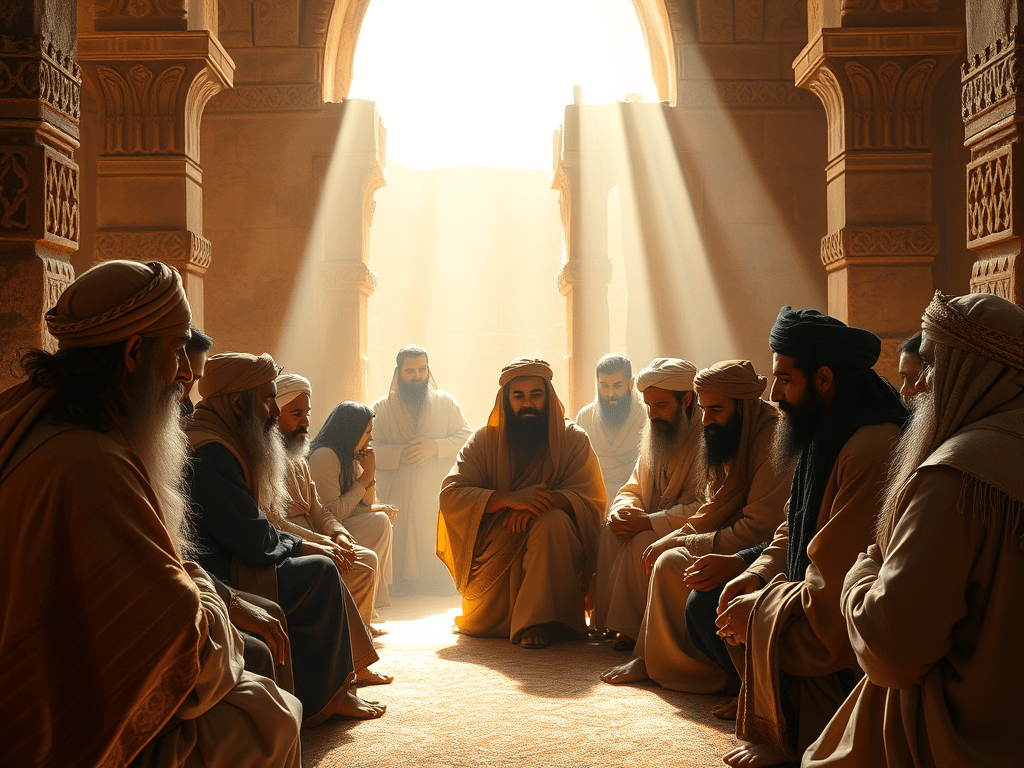
Titles for God’s people: Believers and Christians

Not all of the titles we see in the Bible apply to God’s people today.

Core of the Bible podcast #125: Titles for God’s people – Believers and Christians

Over the next several weeks, I will be exploring the topic of titles used to describe God’s people throughout the Bible, but primarily titles used for his first century people in the writings of the New Testament. These terms do indeed all have significance and definitions are important, which is why I am taking the time to break down biblical terms so we can have a better grasp of how to apply them appropriately.

We will be looking at the following terms in some detail: believer and Christian, the Remnant and the Elect, the Church and the Body, and the Bride of Christ. These are all terms that by most accounts are considered synonymous and applicable to the people today who claim to believe in Messiah. However, I intend to look at scriptural reasons as to why I believe this is not the case, how most of those terms do not apply to God’s people today, and yet how God has worked within these various aspects of his people over the ages to accomplish specific things for the good of all.

As is usually the case, I began this as a single essay, but as I continued to delve into the particulars of these various designations I found that more and more details would present themselves for further study. Hopefully, breaking some of these up into smaller segments will be easier to grasp the essential points along with some relatively unusual perspectives for further study on your own.

Believers

Let’s begin with a basic term that is used to describe God’s people throughout the Bible: belief. You may notice that generally when I speak of those who follow Yahweh and Messiah Yeshua, I choose to use the term believers rather than Christians. This is the one term out of all of those previously mentioned which I believe does apply to God’s people today. This stems from the thrust of the biblical narrative and some particulars about the designation of Christian (which we will explore in a little bit).

All throughout the Bible there are people who are listed as those who believe and also those who do not believe.

Exodus 4:5 – “This will take place,” he continued, “so that they will believe that Yahweh, the God of their ancestors, the God of Abraham, the God of Isaac, and the God of Jacob, has appeared to you.”

Deuteronomy 9:23 – “When Yahweh sent you from Kadesh-barnea, he said, ‘Go up and possess the land I have given you’; you rebelled against the command of Yahweh your God. You did not believe or obey him.

2 Kings 17:14 – But they would not listen. Instead they became obstinate like their ancestors who did not believe Yahweh their God.

Psalm 78:32 – Despite all this, they kept sinning and did not believe his wondrous works.

Isaiah 43:10 – “You are my witnesses” — this is Yahweh’s declaration — “and my servant whom I have chosen, so that you may know and believe me and understand that I am he. No god was formed before me, and there will be none after me.

An interesting facet to all of these belief passages in the Tanakh is that they are expressed within the context of Israel; as in, there are those who believe and who do not believe in Yahweh within the nation of Israel. It is not used as a phrase for those outside of the national identity. As we move through the discussion in the coming studies, you will see how that becomes an important understanding in terms of God’s dealings with his people, especially when we come to consider the terms “remnant” and “elect”.

In the New Testament, we find belief, especially a belief in Messiah (which is said to be an indication of receiving him) to be a core aspect of Messiah’s purpose:

John 1:11-12 – He came to his own, and his own people did not receive him. But to all who did receive him, he gave them the right to be children of God, to those who believe in his name,

John 6:29 – Yeshua replied, “This is the work of God ​– ​that you believe in the one he has sent.”

John 14:1 – “Don’t let your heart be troubled. Believe in God; believe also in me.

Followers of Messiah even used this type of descriptive terminology:

Acts 16:15 – After she and her household were baptized, she urged us, “If you consider me to be believing in the Lord, come and stay at my house.” And she persuaded us.

Acts 16:34 – He brought them into his house, set a meal before them, and rejoiced because he had come to believe in God with his entire household.

The writer to the Hebrews makes it clear that faith is essential to pleasing God:

Hebrews 11:6 – Now without faith it is impossible to please God, since the one who draws near to him must believe that he exists and that he rewards those who seek him.

The apostle Paul emphasized that belief was the foundation of the collective group of those who were in Messiah:

Romans 3:22 – The righteousness of God is through faith in Yeshua Messiah to all who believe, since there is no distinction.

But then, in another passage, Paul draws a more specific distinction between those who were to be considered believers with those who were non-believers. In contrast with the Tanakh passages which seemed to focus on believers and non-believers within the nation of Israel, Paul appears to be discussing non-believers in the wider context of the general population of Corinth, known for its idolatry.

2 Corinthians 6:14-15 – Do not be yoked together with those who do not believe. For what partnership is there between righteousness and lawlessness? Or what fellowship does light have with darkness? What agreement does Messiah have with Belial? Or what does a believer have in common with an non-believer?

Now, it could be argued that Paul was addressing those who claimed to be among the scattered Israelites in Corinth who gave lip service to Yahweh and yet were just as likely to be found among the idolatrous temples of the culture around them. In this passage, Paul uses this unusual term Belial, along with lawlessness and darkness, as contrasting terms to Messiah. Since this appears to be the only place this term Belial is used in the New Testament Greek, if we pursue this term back to its Hebrew root, we find it less of a proper name and more of a description of those who were considered wicked or worthless.

Deuteronomy 13:12-14 – “If you hear it said about one of your cities Yahweh your God is giving you to live in, “that wicked men have sprung up among you, led the inhabitants of their city astray, and said, ‘Let’s go and worship other gods,’ which you have not known, “you are to inquire, investigate, and interrogate thoroughly…

1 Samuel 2:12 – Eli’s sons were wicked men; they did not respect Yahweh

2 Samuel 23:6 – But all the wicked are like thorns raked aside; they can never be picked up by hand.

2 Chronicles 13:7 – “Then worthless and wicked men gathered around him to resist Rehoboam son of Solomon when Rehoboam was young, inexperienced, and unable to assert himself against them.

Proverbs 6:12 – A worthless person, a wicked man goes around speaking dishonestly,

Nahum 1:11 – One has gone out from you, who plots evil against Yahweh, and is a wicked counselor.

Sometimes the term used in these passages is the phrase ben belial, meaning “a son of wickedness/worthlessness”. It is from this Hebraism that the term could be considered as a proper name of some wicked entity, sometimes associated with Satan. But to be a “son of” something was to be considered the offspring of, or participant in, something larger than oneself.

Exodus 19:6 – and you shall be to Me a kingdom of priests and a holy nation.’ These are the words that you shall speak to the sons of Israel.”

  • These sons of Israel weren’t just Jacob’s sons particularly, because there were also some Egyptians and others who had come out of Egypt with the Hebrews at that time, but it is here speaking of participants in the nation of Israel, much like we might say “sons of America” today.

Matthew 8:12 – “But the sons of the kingdom will be thrown into the outer darkness where there will be weeping and gnashing of teeth.”

  • Here, Yeshua uses the same type of language regarding those who were considered to be participants within the Kingdom of God, yet were being rejected for their lack of faith.

To be a son in the most basic sense of the Hebrew is to be a builder, as in the builder of the family line or family name. In this sense, to be a son of the Kingdom is to be a builder of the Kingdom. To be a son of belial is to be a builder of wickedness and worthlessness. And in the passage of 2 Corinthians where Paul is drawing a distinction between those of Messiah and those of Belial, whether these individuals were simply wicked fellow citizens of their pagan culture or if they were lawless scattered Israelites, either way, these individuals are the ones whom Paul is warning believers in Messiah to stay away from.

In the Bible, it is also clear that belief is closely aligned with and only visible through actions and lifestyle. You may recall that the Tanakh passages we reviewed earlier use this phrase as a verb describing an action, believing and obeying or not believing and remaining obstinate or disobedient. In the New Testament writings, James defines this Hebraic way of understanding faith a little further:

James 2:17-18 – In the same way faith, if it does not have works, is dead by itself.  But someone will say, “You have faith, and I have works.” Show me your faith without works, and I will show you faith by my works.

And this is one of the places where I get on my little hobby horse about English translations (and there are many!). In the 2 Corinthians 6 passage, Paul uses the term “non-believer” as a contrast to those who are in Messiah. Many English Bibles might phrase this statement by rendering it as “unbeliever”. While this is most likely just me splitting semantic hairs (please bear with me), this term “unbeliever” in English is a phrase which I greatly dislike because it seems imprecise when discussing this biblical concept. To me it is a nonsensical term; how can you un-believe something? You either believe it or you don’t. In the original Greek, non-believers are called apistos which literally means faithless,  without demonstrating faith in Yahweh.

I think the phrase “unbeliever” bothers me because it appears to describe an inherent characteristic of unbelief, like it’s just some sort of opinion one holds. But we just saw how the Bible uses the term faith as a verb describing an action, not just a static state of being or an opinion. Those who do not believe are actively not believing, and their lifestyles and their actions show it. To say someone is apistos does not just mean they are unbelieving in opinion, they are literally without faithful actions. I know that unbeliever is an acceptable use of the term in English, but for some reason it just gets under my skin and seems inaccurate. To me, those who demonstrate by their actions that they do not believe are not “unbelievers”, they are more accurately without faithful actions and are, by default (whether knowingly or unknowingly), obstinately living in disobedience to God.

So as we begin this journey on titles used to describe God’s people, I would strongly argue that the concept of faith must be included. While biblical faith is used in the verb sense throughout the Bible, I am of the opinion that to call someone a believer in the noun sense still adequately describes who they are by what they do. My definition of a biblical believer is someone whose actions and lifestyle express their faith in Yahweh as the one true God, and in Yeshua as his Messiah, or Anointed One. A non-believer’s actions demonstrate that they have no faith in Yahweh as the one true God, or in Yeshua as the Messiah, even if they claim to be associated with believers.

Christians

While the term Christian has become an acceptable description of one who follows Christ, or the Messiah, in our present day it is actually a term that has come to mean anyone who believes a specific orthodoxy about the person of Messiah and the message of the Bible as a whole. To be a Christian today, one must affirm that they agree with a framework of stated beliefs in order to qualify as a Christian. Most congregations today even have a public “statement of faith” which defines how they choose to align with the major Christian propositions, such as the trinity, virgin birth of Messiah, and perspectives on eschatology like the end times. This is understandable, for to belong to any type of specific group one must have points of agreement in order to be in fellowship.

However, in point of fact, there is a scholarly perspective that the term Christian as it is actually used in the Bible was not a statement of belief but it was initially used as a pejorative term against the believers in the first century.

The term itself is used only in three New Testament passages:

Acts 11:26 –  The disciples were first called Christians at Antioch.

Acts 26:28 – Agrippa said to Paul, “Are you going to persuade me to become a Christian so quickly? “

1 Peter 4:14-16 – If you are ridiculed for the name of Christ, you are blessed, because the Spirit of glory and of God rests on you. Let none of you suffer as a murderer, a thief, an evildoer, or a meddler. But if anyone suffers as a Christian, let him not be ashamed but let him glorify God in having that name.

Now, most people who call themselves Christians today are not aware of the academic dispute about the actual phrase used in the Greek: was it christianoi meaning “anointed ones” or “those who follow the anointed” or was the term chrestianoi meaning “good ones” or “those who do good”? There is only one letter difference in the Greek between these two terms, and based on some convincing manuscript evidence (like the Codex Sinaiticus of the 4th century), some scholars think that chrestianoi is the original or preferred rendering. Someone who is a chrestianon is considered useful, pleasant, kind, or good. Believers living out the teachings of Messiah could certainly be classified as such, since they were instructed by Messiah not only to be kind to one another, but to extend that kindness even to their enemies. This would definitely be a distinctive characteristic worthy of some unique terminology.

The influential Biblical scholar of the last century, F.F. Bruce, wrote the following in his commentary on the book of Acts:

“Xrestus (“useful, kindly”) was a common slave-name in the Graeco-Roman world. It appears as a spelling variant for the unfamiliar Christus (Xristos). (In Greek the two words were pronounced alike.)” – F. F. Bruce, The Books of Acts, 368.

We can see how there was a close correlation between the two terms, and how the term chrestianoi could be applied to those who saw themselves as slaves to that which is good, because they would be known for always doing good to others. However, in a negative connotation, a chrestianon could also have been someone whom we might call today a “goody two-shoes”, or a “do-gooder”; as someone who is annoyingly righteous in what they say and do. And to be honest, this seems to me to be the way the term was employed in Scripture.

Notice, in the passages we just reviewed how if we substitute the negative connotation for the traditional rendering of Christian, it can apply equally as well as the positive.

  • Acts 11:26 – The disciples were first called Christians at Antioch.
    • It could just as easily be said that the disciples were first called “do-gooders” at Antioch. This would mean that this would have been the first place that believers were recognized collectively as a group with characteristics of doing good that were unique enough to have earned the name.
  • Acts 26:28 – Agrippa said to Paul, “Are you going to persuade me to become a Christian in so little time?”
    • Again, if we substitute the alternative, it could be that Agrippa said to Paul, “Are you going to persuade me to becomea ‘do-gooder’ in so little time?” Agrippa, in context, is sarcastically accusing Paul of trying to convert him to become something he is not. If this “do-gooder” tag was a name that had been applied to the movement many years before, Agrippa, as a controversial politician at best, could easily be seen as conveying his unlikely conversion to being someone who is considered “doing good”.
  • 1 Peter 4:16 – But if anyone suffers as a Christian, let him not be ashamed but let him glorify God in having that name.
    • Peter here is contrasting the believers with those who are murderers, thieves, evildoers and those who defraud others (v. 15). “But if anyone suffers as a “doer of good”, let him not be ashamed but let him glorify God in having that name,” (v. 16). This rendering can be further substantiated by v. 19 which says, “So then, let those who suffer according to God’s will entrust themselves to a faithful Creator while doing what is good.” Peter could easily be saying the “doer of good” term was used as a way of ridiculing those who had chosen to follow the Messiah, and he is encouraging them to not be ashamed of those who would use this term in a derogatory fashion. It’s as if Peter is saying, “Don’t stop doing good just because people are making fun of you for doing so.”

To me, this does not seem to be such a difficult perspective to hold, as even today, many believers are ridiculed for having integrity and doing what is right when peer pressure or cultural dictates are otherwise. If we are truly living according to the teachings of Yeshua, then exhibiting forgiveness to others and extending compassion when it is not customary to do so can certainly be considered abrasive amidst a culture that primarily promotes self-benefit in every aspect. Some things regarding human nature don’t appear to have changed in the millennia since Messiah walked the earth, but then again, as followers of Messiah and slaves to that which is good, we are still called to be the light of the world (that which illuminates) and the salt of the earth (that which heals and preserves).

SUMMARY

Let’s summarize what we have looked at so far in this study on titles for God’s people. We saw that faith was the primary distinction of those who followed the Messiah, so using the term believers seems appropriate and right, as long as the actions of those who claim to be believers bear out their testimony. However, we noted that the term “unbeliever” seems unusual when the actual phrase used in Scripture means one who is faithless or without faithful actions, and is actively living in disobedience. We also saw how there could be both believers and faithless within the group of those considered as God’s people at any given time, based on how they demonstrated their faith (or lack of it) by their ongoing actions.

We then considered how, in today’s usage, a Christian is typically defined as one who holds to a certain set of orthodox beliefs about Christ and the Bible worldview as a whole. However, from the passages where the term may have been used in Scripture, we then saw how the term (whether meaning slave of Christ or one who does good) was likely used in a derogatory way to malign those who were known for excessive acts of kindness and charity amidst a corrupt society.  As “slaves” of Christ, according to Peter, believers were to consider that term a badge of honor rather than the term of derision that it was.


Well, as we wrap up for today, I hope there are at least a couple of concepts and ideas to encourage you to meditate on and to study out further on your own. Next time, we’ll be looking at the terms “remnant and elect”, so be sure to come back and visit for more perspectives on these titles of God’s people. But remember, if you have thoughts or comments that you would like to explore further with me, feel free to email me at coreofthebible@gmail.com.

Trusting God for who He is, not what He can do for you

Is your salvation an unspoken condition of your trust in God?

Core of the Bible podcast #76 – Trusting God for who He is, not what He can do for you

Is your salvation an unspoken condition of your trust in God?

Today we will be looking at the topic of trust, and how true trust in God does not care for consequences, it only knows what’s true and right and cannot be dissuaded once it is fully embraced.

To help illustrate this principle, we can take a closer look at the story of Shadrach, Meshech, and Abednego. For those who know their Bibles, the story is familiar.

When the Hebrews are captured by the Babylonians, they are taken captive, and the leading families are held in the king’s palace. The king has set up an idolatrous monument to himself and commanded that everyone in the area pay homage to it at a specific time, or be killed by being thrown into a furnace. These three prominent Hebrews with the Babylonian names of Shadrach, Meshech, and Abednego, being Torah-observant, know of course that God has commanded that idolatry is forbidden, and honoring of any other gods is an abomination to him.

Daniel 3:17-18 – “The God we worship can save us from you and your flaming furnace. But even if he doesn’t, we still won’t worship your gods and the gold statue you have set up.”

Their act of defiance enrages the king, and he does indeed throw them bound into the fiery furnace. But, to everyone’s amazement, they not only survive, but their bonds disappear and they are visited by a mysterious angelic individual while in the midst of the flames. The king commands them to come out, and not even their clothes or their hair has been singed or burned.

In response to their miraculous survival, the king, who just previously wanted all people to worship him and his idolatrous monument, now commands everyone to honor the one true God of the Hebrews.

Daniel 3:28-29 – “They trusted their God and refused to obey my commands. Yes, they chose to die rather than to worship or serve any god except their own. And I won’t allow people of any nation or race to say anything against their God.”

While there are many fascinating facets to this story, the essence of what it conveys is both practical and challenging. True trust in God does not care for consequences, it only knows what’s true and right and cannot be dissuaded once it is fully embraced. These men were not trusting God to save them, they were simply trusting God regardless of the outcome. This demonstrates that their trust was not in a hoped-for resolution, their trust was in God alone, whatever was to come of it, even if death resulted.

So, this situation begins to draw us toward our application for today: If you are a believer, why are you trusting God? Are you trusting him to save you from the flames of a fiery hell? What if, for his own purpose and glory, there was no guarantee that he would deliver you from that fate, would you still trust in him? What if when you die, you cease to exist; would you still trust in him today?

Now, most of you might say, “This isn’t a legitimate question, since a belief in God assumes a belief in life after death, and therefore you are setting up a false premise.” Well, I guess that’s fair. But if nothing else, then, try to think hypothetically as if there was no understanding of a heaven or hell or promise of some sort of conscious existence beyond this life. Would you still trust in God based on what he has revealed about himself? I believe a real trust in God would say yes. Real trust believes that God has revealed himself to us as the all-powerful Creator and Sustainer of the universe and he alone is Sovereign. Because this would be accepted as fact, regardless of any consequence, nothing should be able to dissuade that trust. It should have nothing to do with our personal condition or situation, or salvation, for that matter.

Some might say, why believe in a God who doesn’t give you what you want? Isn’t that the purpose of a belief in God, to gain his favor so you can have things go your way? Shouldn’t we believe in him so we don’t go to hell, so we can spend eternity with him? Those kinds of questions belie an undercurrent of self-centeredness masked with false humility that runs deep in this world, and even within the halls of Christendom, today.

If the God of the Bible truly is God of all, then whatever he chooses to do with his creatures and his Creation is up to him. He has demonstrated he won’t ever go against his own word, so he is not arbitrarily creating chaos at his own whim; however, what specifically occurs in each person’s life and how it fits into his overall purpose is not always clear to us. Sometimes deliverance glorifies him most, and sometimes sacrifice.

Cases of deliverance are still circulated among believers today, especially from the mission fields. What follows is a story that took place in Peru in recent decades. I found this story on a website that includes many different examples of recent Christian testimonies:

Julio, a young lay evangelist, had been threatened by a terrorist group. “You must stop preaching,” they said. “If you do not obey us, you will pay with your blood.”

This terrorist group had taken control of the area where Julio walks from town to town to preach. They had closed the police outstations and governed the region by their own rules. Any individual or group that would not cooperate with them was in danger.

Julio ignored the threats and continued his usual rounds, preaching in the small mountain churches and encouraging the believers. Again the terrorists warned Julio, and again he disregarded the threats against his life. The terrorists were outraged. “Our vengeance will be complete. We asked for your cooperation, and you disobeyed us. Now we will make an example of you,” they said.

A few days later Julio was ambushed and taken to the center of one of the larger towns in the area. A crowd gathered to witness the sentencing. The terrorists hoped that Julio’s fate would put fear into the hearts of Christians and perhaps even result in closing some churches.

Julio was tied to a chair and carried to the middle of the square. Sticks of dynamite were tied to each of his arms and legs. The fuses were lit as Julio began singing praises to God. Other Christians joined him in praise, encouraging him with songs about heaven.

Then came the miracle! Suddenly there was a loud boom as the dynamite exploded. The terrorists thought nothing would be left of Julio. But when the smoke cleared, there sat Julio unharmed and still singing praises to God! The terrorists were shocked. They were so overcome by fear that they ran away. At the same time, all the Christians were saying, “It’s a miracle of God!”

Julio left the square with the Christians. He continued his ministry in spite of persecution. He held firmly to the truth that Jesus gives strength to be courageous when needed.

Christian Testimonies – Protection in Peru (the-new-way.org)

Of course, the Bible contains stories of deliverance, like Paul escaping from Damascus, or Peter being set free from prison. But it also contains accounts of those giving the ultimate sacrifice for their faith, such as Stephen being stoned to death, or the apostle James who was killed by the sword at Herod’s direction. Just because someone is a believer is not a guarantee that nothing bad or tragic will ever happen to them. It’s all about what serves God’s purposes best, not the individual.

As a testament to this, a common classic work among Protestant orthodoxy is a book titled “Foxe’s book of Martyrs,” first published in 1563 by John Foxe, detailing primarily Catholic persecution of the Protestants. However, it also covers many stories telling of heroic courage and overcoming faith, stories of the grace of God that enabled men, women, and children to endure persecutions and often horrible deaths. To illustrate, here is an excerpt of some stories regarding persecutions of believing Christians while it was still an “outlaw” religion around the year 200 AD.

“The Fifth Persecution, Commencing with Severus, A.D. 192

Severus, having been recovered from a severe fit of sickness by a Christian, became a great favorer of the Christians in general; but the prejudice and fury of the ignorant multitude prevailing, obsolete laws were put in execution against the Christians. The progress of Christianity alarmed the pagans, and they revived the stale calumny of placing accidental misfortunes to the account of its professors, A.D. 192.

But, though persecuting malice raged, yet the Gospel shone with resplendent brightness; and, firm as an impregnable rock, withstood the attacks of its boisterous enemies with success. Tertullian, who lived in this age, informs us that if the Christians had collectively withdrawn themselves from the Roman territories, the empire would have been greatly depopulated.

Victor, bishop of Rome, suffered martyrdom in the first year of the third century, A.D. 201. Leonidus, the father of the celebrated Origen, was beheaded for being a Christian. Many of Origen’s hearers likewise suffered martyrdom; particularly two brothers, named Plutarchus and Serenus; another Serenus, Heron, and Heraclides, were beheaded. Rhais had boiled pitch poured upon her head, and was then burnt, as was Marcella her mother. Potainiena, the sister of Rhais, was executed in the same manner as Rhais had been; but Basilides, an officer belonging to the army, and ordered to attend her execution, became her convert.

Basilides being, as an officer, required to take a certain oath, refused, saying, that he could not swear by the Roman idols, as he was a Christian. Struck with surpsie, the people could not, at first, believe what they heard; but he had no sooner confirmed the same, than he was dragged before the judge, committed to prison, and speedily afterward beheaded.”

The Fifth Persecution, Commencing with Severus, A.D. 192 – Fox’s Book of Martyrs (biblestudytools.com)

These are just a few of the thousands of examples of courageous conviction throughout this single volume documenting these events. Faced with similar circumstances, would you have responded in like kind with these dedicated men and women?

Returning once again to our story in Daniel, what if God had chosen to abandon those three men in the furnace? Perhaps he could have decided that their perishing in light of their undying trust in him would have better served glorifying his name: three martyrs for Yahweh. It would still be a good story and they would still be honored as heroes of the faith. Yet God chose their miraculous preservation as a way of honoring their faith and converting a pagan king. That served his purpose better. Case in point: we’re still talking about the impact of this incident thousands of years later. It is still serving his purpose to this day.

Do you think those three men had stronger trust in God after that incident? I’m sure they were relieved, but to the point I am attempting to convey here, quite honestly, I believe that if they were asked about it, they would consider that an unnecessary, silly question. I believe they would say the point of their preservation was not to enhance their faith, but to enhance others’ faith by demonstrating God’s glory. As his glory was revealed, others came to know him.

Is your salvation an unspoken condition of your trust in God? Then you are believing in God for what he can do, not for who he is. As believers, we need to remove ourselves from the center of our own faith universe and make sure that we are recognizing and trusting God simply for who he is: God. We need to let him be God, and to unswervingly place our everything: our well-being, our lifestyle, our security, into his hands and let him accomplish his own purpose in his own way. The end result may not look like we expect it to, but it shouldn’t matter. We can be confident it will always be the outcome that best serves his purpose and provides him the most glory.

For me, I believe it would be a fitting testimony to the honor of God to have said about me what was said about those three brave Hebrew men: “he chose to die rather than to worship or serve any god except his own.”

We need to check where our trust is truly placed: in our salvation, or in the God who can provide that salvation. Place your trust in God for who he is, not for what he can do for you.


If you enjoy these daily blog posts, be sure to visit the growing archive of the Core of the Bible podcast. Each week we take a more in-depth look at one of the various topics presented in the daily blog. You can view the podcast archive on our Podcast Page, at Core of the Bible on Simplecast, or your favorite podcast streaming service.

Now also on YouTube, find us at: Core of the Bible on YouTube.

Questions or comments? Feel free to email me directly at coreofthebible@gmail.com.

Contemplating the majesty of God sets believers apart

Be holy, because he is holy.

Core of the Bible podcast #61 – Contemplating the majesty of God sets believers apart

Today we will be looking at the topic of holiness, and how our holiness or being set apart is derived from our contemplation of the One who is uniquely holy and set apart.

In Psalm 29, David provides a poetic allegory of a thunderstorm in order to consider the holiness and majesty of God.

Psalm 29:2 – “Give to Yahweh the glory his name deserves. Worship Yahweh in his holy splendor.”

Within this psalm is a description of God’s awe-inspiring power displayed in the majestic outworking of a tempest. He is extolled in the demonstration of the power of a mighty storm. In this psalm, David uses a repeated phrase which is typically translated as “the voice of Yahweh.”

Psalm 29:4  – “the voice of Yahweh in power, the voice of Yahweh in splendor.”

However, the word that is brought out in English as voice (the Hebrew word qol) can mean sound or noise, as well. Here’s an example from Exodus:

Exodus 19:16 – On the third day, when morning came, there was thunder [qol] and lightning, a thick cloud on the mountain, and a very loud trumpet sound [qol], so that all the people in the camp shuddered.

Albert Barnes in his Notes on the Bible relates the following regarding the voice of Yahweh as used in this psalm:

“The voice of the Lord – The voice of Yahweh. There can be no doubt that the expression here, which is seven times repeated in the psalm, “the voice of Jehovah,” refers to thunder; and no one can fail to see the appropriateness of the expression. In heavy thunder it seems as if God spake. It comes from above. It fills us with awe. We know, indeed, that thunder as well as the other phenomena in the world, is produced by what are called “natural causes;” that there is no miracle in thunder; and that really God does not “speak” anymore in the thunder than he does in the sighing of the breeze or in the gurgling of the rivulet; but:

(a) He seems more impressively to speak to people in the thunder; and

(b) He may not improperly be regarded as speaking alike in the thunder, in the sighing of the breeze, and in the gurgling stream.

In each and all of these ways God is addressing men; in each and all there are lessons of great value conveyed, as if by His own voice, respecting His own existence and character.”

The idea that the voice of Yahweh described in this psalm is a thunderous sound has to do with its depiction throughout each of the various verses:

The voice of Yahweh breaks the cedars; Yahweh shatters the cedars of Lebanon.

The voice of Yahweh flashes flames of fire.

The voice of Yahweh shakes the wilderness; Yahweh shakes the wilderness of Kadesh.

The voice of Yahweh makes the deer give birth and strips the woodlands bare.

All of these things can be said to be the result of a powerful thunder and lightning storm: shattering of trees; flashing light and fire; shaking of the wilderness; stripping the woodlands bare. Making the deer give birth can imply that the frightened deer goes into labor, but it also implies that the thunderous voice of God rumbles through the deserted wilderness places where deer prefer to separate themselves when giving birth.

If you’ve ever been through a close violent thunderstorm, I’m sure you can recall how terrifyingly loud and unnerving the noise and commotion of the wind and rain can be. If you were in an open and unprotected area when experiencing a large storm, I’m certain you can recall how vulnerable and frail you may have felt. The Psalmist here is using this type of imagery as a way of illustrating the power and majesty of God, and how incredibly small and unshielded we are from the elements of this world; how much more does that apply to us spiritually.

Barnes concludes:

“In each and all of these ways God is addressing men; in each and all there are lessons of great value conveyed, as if by His own voice, respecting His own existence and character. Those which are addressed to us particularly in thunder, pertain to His power, His majesty, His greatness; to our own weakness, feebleness, dependence; to the ease with which He could take us away, and to the importance of being prepared to stand before such a God.”

To wander into the realm of God is to be vulnerable and exposed to the power and majesty of the One who is beyond all comprehension. If the power of a single storm on earth can instill fear into the stoutest of hearts, how much more the all-powerful presence of the Almighty God?


These things are not necessarily meant to say that God is purposefully causing these individual occurrences to happen; he certainly could if he chose to. But the emphasis in this psalm is that those wonders and powers of nature demonstrate how all-powerful God really is simply because he created them in the first place. Because of this, it is easy for people to get God mixed up with his Creation.

For example, pantheism says that God is in everything, and therefore everything is God. Wikipedia has a reasonable working definition of pantheism that states:

“Pantheism is the view that everything is part of an all-encompassing, immanent God. All forms of reality may then be considered either modes of that Being, or identical with it. Some hold that pantheism is a non-religious philosophical position. To them, pantheism is the view that the Universe (in the sense of the totality of all existence) and God are identical.”

A common popular trope today is to assign “the universe” as an all-present, all-knowing force that influences the lives of people. This is typically used in kind of an ironic rather than serious fashion. However, there are some who believe that speaking something into the universe will bring an echo of meaning or direction back into their lives. Others believe when some notable event occurs, that the universe has pointed them in a direction or made a choice for them. Most people today engage with this type of thinking not realizing that this is really a form of pantheism.

By contrast, in Hebrew thought, God is not equated with the Creation, but is evidenced in and through his Creation. He can do with it as he wills, using it to accomplish his purposes as he sees fit. For example, he can cause a flood or he can create a drought; he can make a storm appear out of nowhere or he can calm the storm.

But beyond just manipulating the natural order, the God of the Bible is not limited by his Creation; he can cause non-linear things (according to the parameters of our understanding of physics) to occur. He can cause the sun and moon to stand still for a whole day (Joshua 10), or the sun to appear to go backwards (2 Kings 20). He can create a dry path through the depths of a sea in one night (Exodus 14), or cause someone who has died to live again (1 Kings 17, Luke 7, John 11). These are things that go against the natural order of things, and therefore demonstrate that God’s nature is transcendent to this Creation; he is greater than just the sum totality of all of its parts.  Therefore the God of the Bible is greater and more powerful than whatever god is assigned to the pantheistic philosophy of the created universe.

To consider the vastness of God’s power and ability, one needs only to look beyond the created order of even this world. In some psalms attributed to David, he meditates on the expanse of the heavens and the heavenly bodies that are evident there. He explains how this universality of God’s handiwork is evident in all nations under the heavens.

Psalm 19:1-4 – “The heavens declare the glory of God, and the expanse proclaims the work of his hands.  Day after day they pour out speech; night after night they communicate knowledge.  There is no speech; there are no words; their voice is not heard.  Their message has gone out to the whole earth, and their words to the ends of the world.”

Because this aspect of God’s nature is evident everywhere, David ponders man’s role in light of his transcendent nature.

Psalm 8:3-4 – “When I observe your heavens, the work of your fingers, the moon and the stars, which you set in place,  what is a human being that you remember him, a son of man that you look after him?”

David’s conclusion is that viewing the vastness of God’s creation should cause us to be humbled in view of our limited existence and scope of influence.

Our modern astronomical telescopes have transformed how we look at the universe outside of the environs of the earth. We now have space telescopes that can image the farthest reaches of the visible universe. I am fascinated with these types of pictures, and I even have a computer wallpaper that is an image of a spiral galaxy. When I look at such an image depicting a self-contained galaxy with its millions of stars and planets, and knowing that the earth is only one tiny speck in our own galaxy, my mind is immediately humbled to whatever my personal circumstances might be, as this perspective reminds me of how small and finite my view of reality typically is.

In a similar way, when I come to the Bible and explore its depths, I am likewise placed in a position of humility when I consider the magnitude of spiritual revelation that God has provided us in his Word. That God has revealed himself as a being greater than the universe itself is boggling to the mind, and yet necessary for him to demonstrate who he is. His being is so high above all that exists, he is set apart from his Creation; yet he has chosen to maintain a dynamic and ongoing relationship with those whom he has created within that order of Creation that we call the universe.

Our own holiness, or separation from the world, is derived from our perspective and meditation of God as the Creator of all. In our current generation, amidst a people who have no recognition of any god, or who are self-absorbed in the creations of their own making, believers stand apart in our honoring of the one true God of the universe. In so doing, we ourselves become set apart.

1 Peter 1:15-16 – But just as He who called you is holy, so be holy in all you do, for it is written: “Be holy, because I am holy.”

We must recognize that our holiness is derived from his holiness and majesty. If we lose sight of who he is, we become less set apart. Conversely, as we honor him and ascribe to him the glory that his name deserves, then we are elevated into a position of strength and purpose that rises far above our mundane existence.


If you enjoy these daily blog posts, be sure to visit the growing archive of the Core of the Bible podcast. Each week we take a more in-depth look at one of the various topics presented in the daily blog. You can view the podcast archive on our Podcast Page, at Core of the Bible on Simplecast, or your favorite podcast streaming service.

Now also on YouTube, find us at: Core of the Bible on YouTube.

Questions or comments? Feel free to email me directly at coreofthebible@gmail.com.

Trusting in the God who is over all

The message of the Bible is clear that God reigns supreme.

Matthew 6:13 …For Yours is the kingdom and the power and the glory forever. Amen.’

If God has all power, receives all glory, and the kingdom is his, there is nothing outside of all he is and does. Therefore, why should we, as believers in him, be anxious about anything?

Many scholars believe this doxology to the Lord’s Prayer in Matthew 6:13 is not original to the text, and was a later addition. While this may or may not be the case, it is important to note that it is not beyond Hebraic practice to do so.

For example, one of the most used and loved practices of Jews even to this day is to recite the Shema; or Hear O Israel:

“Hear O Israel, the Lord our God, the Lord is one.”

This is a straight recitation of Deuteronomy 6:4, however, in true Hebraic fashion they have added: “Blessed be his Name and his glorious kingdom forever.”

This is almost a word for word parallel to the doxology of Matthew 6:13. Beyond this traditional practice, the Bible supports the content and message it contains.

2 Chronicles 20:6 – He said: LORD, God of our ancestors, are you not the God who is in heaven, and do you not rule over all the kingdoms of the nations? Power and might are in your hand, and no one can stand against you.
Jeremiah 10:12 – He made the earth by his power, established the world by his wisdom, and spread out the heavens by his understanding.
Daniel 2:19-22 – …Daniel praised the God of the heavens and declared: May the name of God be praised forever and ever, for wisdom and power belong to him. He changes the times and seasons; he removes kings and establishes kings. He gives wisdom to the wise and knowledge to those who have understanding. He reveals the deep and hidden things; he knows what is in the darkness, and light dwells with him.
Revelation 7:12 – saying, Amen! Blessing and glory and wisdom and thanksgiving and honor and power and strength be to our God forever and ever. Amen.

Daniel even ascribes the same type of “kingly doxology” to Nebuchadnezzar:

Daniel 2:37 – “Your Majesty, you are king of kings. The God of the heavens has given you sovereignty, power, strength, and glory.

But notice, the sovereignty, power, strength, and glory that an earthly king may have comes ultimately from God; they therefore are inherently his.

Scholarly debates notwithstanding, the Bible makes it clear that to trust God is to know that he has all power and is over all kingdoms and nations, all of his Creation, forever. This type of assurance can ground our faith and trust and allow us to operate from a source of strength and confidence in him, in all we do every day.


If you enjoy these daily blog posts, be sure to visit the growing archive of the Core of the Bible podcast. Each week we take a more in-depth look at one of the various topics presented in the daily blog. You can view the podcast archive at https://core-of-the-bible.simplecast.com/ or your favorite podcast streaming service. Questions or comments? Feel free to email me directly at coreofthebible@gmail.com.