The Significance of Passover for Modern Believers

As the Lamb of God, Yeshua demonstrated he was not only the one who reconciled Jacob’s people, but who would also become the light to the nations.

Core of the Bible podcast #130: The Biblical Calendar and Passover

At the time this essay is issued, we are in the season of Passover. Why is this significant, and why should believers today understand the biblical calendar and the feast days?

Most Christians today do not recognize or observe the biblical feast days. This is due primarily to the fact that Christianity teaches that the sacrificial aspect of the rites conveyed in the Torah have been fulfilled in Messiah Yeshua. I do not disagree. But “fulfilled” does not mean “done away with.” I believe the Bible teaches that in Messiah, that which was a physical requirement for ancient Israel has become a spiritual principle for all time; more on that later.

But what I want to focus on first is how the biblical calendar is filled with symbolism of the Kingdom and God’s relationship with his people. I believe it is as we maintain recognition of these days that we can be reminded of God’s, and our, purpose. These days become practical object lessons that point to the totality of God’s work among his people, and his presence in this world.

The annual biblical calendar contains seven appointed times known in Hebrew as moedim, meaning seasons or appointed times. I believe the annual biblical holidays are the true appointments with God, the seasonal moedim that he has established for all eternity. These moedim focus on seven appointed times which are described as memorials or re-enactments to be used to keep God’s people focused on his will and purpose.

I also find it fascinating that God has placed these appointed memorials on the annual calendar in a way that can still be recognized today, even though worldly calendars and methods of timekeeping have come and gone in the millennia since they have been established. I believe this is why they are described the way they are in the Bible, and why we are still able to observe these appointed memorials with him.

How are we to observe them? Certainly we are not to sacrifice animals; as mentioned earlier all sacrifice has been fulfilled in Messiah. However, on these special days we can still gather together as his people to review the symbolism of those sacrifices to bring greater awareness to our understanding of our relationship with God. Just as a memorial service causes us to reflect fondly on the life of an individual who is no longer physically present, a biblical memorial should also serve a similar purpose of reminding us of its purpose which is now fulfilled in Messiah. After all, it is the symbol and memorial of supreme sacrifice which undergirds the gospel message of Messiah to the nations.

Whether it is through deeper fellowship and community among his people, as well as renewing our total devotion to him and consummation in his service, we can become serious about our faith by living it out as object lessons that others can see and learn from, as well. After all, as you may know from previous episodes, I believe that God’s Torah or Word is eternal, and therefore has lasting influence on those who approach the God of the Bible as his people. These should be as much a part of our doctrinal understanding as any other major proposition such as the study of who God is or the Kingdom of God.

With these foundational statements as an underpinning to our discussion today, let’s review the biblical appointed memorial of Passover.

THE HISTORY

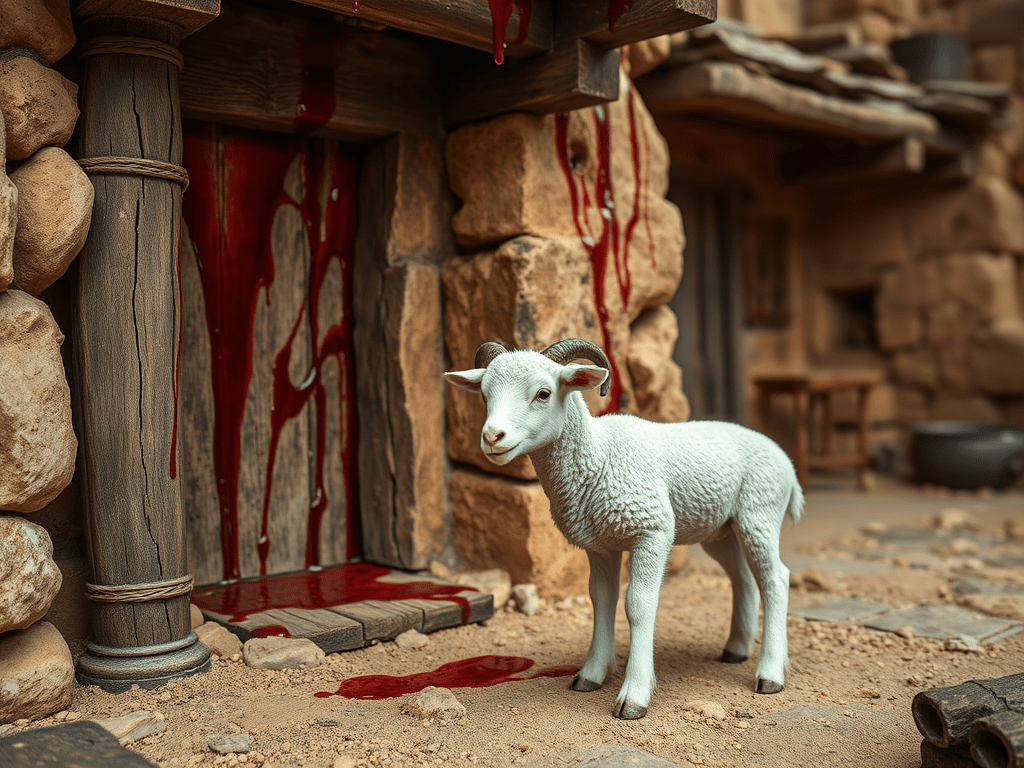
The night of the Passover is one of the pivotal events in the entire Bible. The story is told in the book of Exodus. God had been pronouncing judgment on the nation of ancient Egypt by manifesting various plagues related to their false gods. The final judgment was designed as a response to the horrific practice of the Egyptians killing Israel’s male infants as a way of keeping their slavery in check so they would not overrun the regular population of Egypt. As a result, the final plague from God was a sentence upon the firstborn throughout the land. However, he instructed his people, Israel, to protect their firstborn by remaining in their homes with friends and family and sharing a meal of lamb or goat, placing its blood on their doorway. In this way, any firstborn within the camp of Israel would be protected by the blood of the substitute animal. After the destruction, Pharaoh would be compelled to let the Israelites leave. On that night, God would conclude judgment upon the idolatry of ancient Egypt and at the very same time create a nation of his own people, bringing them out from slavery to become his representative people on the earth into the land he had promised their forefathers.

The story of the Exodus from Egypt has been re-told annually through the Jewish Seder, a story-telling meal on Passover evening as a remembrance of this event. This had been commanded by Moses:

Exodus 12:24-27 – “Keep this command permanently as a statute for you and your descendants. When you enter the land that Yahweh will give you as he promised, you are to observe this ceremony [that is, a re-enactment of the offering of the Passover lamb]. When your children ask you, ‘What does this ceremony mean to you?'” Then you will say, ‘This is the offering of Yahweh’s Passover; for he went over the houses of the children of Israel in Egypt, when he sent death on the Egyptians, and kept our families safe.'”

This was to later become one of the annual memorials that Israel was instructed to keep throughout the year.

Leviticus 23:4-5 – “‘These are Yahweh’s appointed festivals, the sacred assemblies you are to proclaim at their appointed times: Yahweh’s Passover begins at twilight on the fourteenth day of the first month…”

The term itself, pesach, means “to skip over, to leap over, to exempt”, and is used only of this offering in the Bible. It describes how God’s judgment upon the land “skipped over” the Israelites who conducted this ceremony. The word Passover in English seemed to be the closest translation of the Hebrew pesach, and has become the English name of this annual memorial.

The Passover also begins the week of Unleavened Bread, which was to be a reminder of the Israelites’ hurried departure from Egypt, as their dough would not have time to rise before they left on their desert journey. We will focus on that feature of the biblical calendar next time.

In Christendom today, Passover has significance mostly as the background story leading to the death and resurrection of Messiah, and has been superseded by the holiday now known as Easter. Saving the ancient origins of Easter for another essay, the reason this biblical holiday of Passover has significance for us today has to do with the representation of Yeshua as the Lamb of God. This Lamb of God concept forms doctrines relating to atonement, a subject which I covered over several episodes several months ago. If you haven’t listened to those, you may want to catch up on the details presented there. However, because of its extreme relevance to the Passover narrative, I will be revisiting some of those aspects that I discussed regarding the atonement at that time.

YESHUA AS THE LAMB OF GOD

John 1:29 – The next day John saw Yeshua coming toward him and said, “Look, the Lamb of God, who takes away the sin of the world!”

Christians today typically read this verse out of its prophetic context, as they have been taught to view this as John the baptizer proclaiming that Yeshua was destined to die as a literal human sacrifice for everyone who would ever live in the entire world, satisfying God’s bloodthirsty justice and wrath against the sin of all of mankind since the rebellion of Adam. What is implied in this type of interpretation of this verse is theology that wouldn’t even exist until hundreds of years after Messiah. That is a lot of medieval theology packed into a single verse!

We should always do our best to keep things in their contextual and cultural habitat where they belong and to seek to understand Scripture in the way that the original audience would most likely have understood it. From this perspective, we find that John was more likely to have been referencing an aspect of Yeshua’s role that had been conveyed through a prophecy of Isaiah which, at that time, had already been taught to Israel for hundreds of years. As the “Lamb of God who takes away the sin of the world,” John appears to have been referring not to the fall of Adam, but to a prophecy from Isaiah; specifically, that very famous passage in Isaiah 53.

Isaiah 53:5, 7-8, 11-12 – But he was pierced because of our rebellion, crushed because of our iniquities; punishment for our peace was on him, and we are healed by his wounds…He was oppressed and afflicted, yet he did not open his mouth. Like a lamb led to the slaughter and like a sheep silent before her shearers, he did not open his mouth. … For he was cut off from the land of the living; he was struck because of my people’s rebellion. … After his anguish, he will see light and be satisfied. By his knowledge, my righteous servant will justify many, and he will carry their iniquities.  Therefore I will give him the many as a portion, and he will receive the mighty as spoil, because he willingly submitted to death, and was counted among the rebels; yet he bore the sin of many and interceded for the rebels.

This whole passage is an allegory, not of a lamb per se, but of someone named the Servant. Isaiah began this allegory back in chapter 41. By the time the allegory reaches its apex, Isaiah is describing the Servant  who submits to the will of God as being “like a lamb”. This allegorical  “lamb” of God, the Servant of Israel, willingly carries the iniquity and bears the sin of Israel (i.e., “our” iniquities; “my people’s rebellion”) and those “many”  who would be given to him as “a portion” (i.e., the “remnant”). By referencing this passage directly, John the baptizer squarely assigns the role of the Servant in this Isaiah passage to Yeshua as the  Servant of Yahweh to the very Israelite people who have rejected him.

All of this tells us that the Lamb of God imagery here is not literal, but symbolic, representative, and allegorical. Isaiah says the Servant is silent “like” a lamb being led to slaughter or “as” a sheep to the shearer. Yeshua accepted the complicated role of fulfilling these prophetic passages by being the symbolic or representative, voluntarily submissive, lamb-like Servant on behalf of Yahweh’s new covenant with Judah and Israel, and all those from among the nations who would ultimately be joined to God’s people.

Jeremiah 31:31, 33 – “Look, the days are coming” — this is Yahweh’s declaration — “when I will make a new covenant with the house of Israel and with the house of Judah

Luke 22:20 – In the same way he also took the cup after supper and said, “This cup is the new covenant in my blood, which is poured out for you.

Romans 15:8-12 – For I say that Messiah became a servant of the circumcised on behalf of God’s truth, to confirm the promises to the fathers, and so that nations may glorify God for his mercy. As it is written, Therefore I will praise you among the nations, and I will sing praise to your name. Again it says, Rejoice, you nations, with his people! And again, Praise the Lord, all you nations; let all the peoples praise him! And again, Isaiah says, The root of Jesse will appear, the one who rises to rule the nations; the nations will hope in him.

Isaiah 49:5-6 – And now, says Yahweh, who formed me from the womb to be his servant, to bring Jacob back to him so that Israel might be gathered to him; for I am honored in the sight of Yahweh, and my God is my strength — he says, “It is not enough for you to be my servant raising up the tribes of Jacob and restoring the protected ones of Israel. I will also make you a light for the nations, to be my salvation to the ends of the earth.”

The Servant “Lamb of God” spoken of by Isaiah was indeed the Messiah, as proclaimed by John the baptizer. This willing “Lamb” would regain not only his own people, but would also become a light to all nations.

PASCHAL LAMB

Since most of us are so familiar with the Lamb of God imagery conveyed by Isaiah, it is understandable how some of those same principles get pulled into our modern understanding of the Passover lamb. This is evident most notably because the Bible tells us that Yeshua was crucified at the exact same moment the Passover lambs would have been killed in preparation for the Passover memorial in Israel that year. Because our minds are primed to see these lamb sacrifices as being made for sin, we assume that Yeshua, as the symbolic Passover lamb, was sacrificed for sin.

However, we would do better to separate the Servant Lamb of God carrying the sin of his people that Isaiah spoke of as being distinct from the Passover lamb offering. The Bible teaches us that the real reason for the pesach or Passover lamb was not to be a sacrifice for sin, but to redeem the firstborn son in each family and protect them from judgment about to be poured out on the whole land.

Exodus 12:12-13 – “I will pass through the land of Egypt on that night and strike every firstborn male in the land of Egypt, both people and animals. I am Yahweh; I will execute judgments against all the gods of Egypt. The blood on the houses where you are staying will be a distinguishing mark for you; when I see the blood, I will pass over you. No plague will be among you to destroy you when I strike the land of Egypt.”

By killing the pesach, the ransom-lamb, and applying its blood to the doorway, the families gathered in each home were essentially protecting the firstborn male of each family; no one else was in danger of dying.

Remember what Yeshua said about himself:

Mark 10:45  – “For even the Son of Man did not come to be served, but to serve, and to give his life as a ransom for many.”

A ransom is not a “sin-payment,” but an exchange or substitution of one thing for another. In this case, the life of the lamb (symbolized by the blood) had been exchanged for the life of the firstborn. The rest of the family was not at risk of death; however, through being identified by the blood on the doorposts and sharing in the lamb-meal that was meant for the redemption of the firstborn, the entire community participated in the Passover deliverance and was set free from captivity.

In past episodes I have defined a ransom as “a price to be paid, a value to be given, for the changing of a foregone outcome.” In the case of the Passover lamb, the lamb was a ransom for the life of the firstborn male in each family. If the lamb’s blood (the evidence of its life, for the life is in the blood) was on the doorway, the household would be spared the tragedy of losing their firstborn son, the “foregone outcome” that the rest of Egypt suffered.

And here is the critical thing for us to understand: the Passover lamb has nothing to do with forgiveness of sin; it is all and only about ransoming the firstborn from death. The lamb served as a substitute, a “proxy-death” for the firstborn among the houses of Israel. The lambs were the price paid to save the firstborns’ lives. Hence, the life of each firstborn was ransomed from death by the price of the life of the lamb. It could be said that the firstborn of each family gained “life from the dead” by giving up the life of the lamb.

Exodus 4:22-23 – “And you will say to Pharaoh: This is what Yahweh says: Israel is my firstborn son. I told you: Let my son go so that he may worship me, but you refused to let him go. Look, I am about to kill your firstborn son! “

In the New Testament writings, Yeshua was identified with the paschal lamb, not only in the perfect timing of his crucifixion, but even in his followers’ teaching as explained by Paul:

1 Corinthians 5:7 – …For Messiah our Passover lamb has been slaughtered.

In this passage, Paul is using the Passover imagery here as he carries over the statement that Messiah was the ultimate Passover lamb for his people. Since the pesach, the Passover lamb, was known to have redeemed the firstborn from death, and Israel is clearly referenced in the Bible as God’s firstborn, then Paul is communicating here how Messiah ransomed or redeemed his people, just as he had said he would.

Matthew 15:24 – Yeshua replied, “I was sent only to the lost sheep of the house of Israel.”

Mark 10:45 – “For even the Son of Man did not come to be served, but to serve, and to give his life as a ransom for many.”

Redemption has to do with being set free from a captive situation: an individual’s fate has been altered from one path (death/ongoing captivity) to another (life/freedom) through the redemption process. Through redemption, one can claim to have been rescued or saved from a particular fate.

During the original Exodus Passover, the redemption lamb had saved the lives of the firstborn who were protected within their homes by the token (sign) of the lamb’s life-blood on the doorways. As a result, all of the participants in the meal gained freedom from slavery in Egypt to become the nation of God, and representatives of his Kingdom on the earth.

SUMMARY

So we can see how the imagery of the Lamb of God language has multiple layers of meaning. In one sense, Messiah was the submissively lamb-like Servant who (representatively) took on (carried, bore) the iniquities of Israel and the remnant, and was therefore “cut off from the land of the living” on their behalf. That’s the Lamb of God aspect that John refers to in his gospel, harking back to the prophecy of Isaiah.

In another sense, Yeshua represented a different lamb, the Passover Lamb, which was to give its life, through its identifying blood, to ransom the firstborn (Israel) from judgment upon the land and to provide them freedom from slavery to sin.

These are two separate lamb analogies that tend to get run together in our theology of biblical concepts. The sin-bearing Servant of Isaiah who willingly dies “like a lamb” gets conflated with the Passover ransom-lamb. They are both lamb analogies, but they are different; they are both true symbolic representations of the work of Messiah, but with different emphases. The Servant was willing to die as a representative of sinful Israel before God. The Passover Lamb was a representative substitution, ransoming the firstborn (i.e., Israel) from judgment upon the land. These analogies are so closely aligned that it seems natural to blend them together.

Yeshua himself seems to identify directly with both analogies. As the Servant-lamb, he explained how he was giving his life to representatively bear their sin before God:

Matthew 26:28 – “For this is my blood of the covenant, which is poured out for many for the forgiveness of sins.

But Yeshua also identified his mission as the Passover-lamb, as we have just seen:

Mark 10:45 – “For even the Son of Man did not come to be served, but to serve, and to give his life as a ransom for many.”

Additionally, the apostles can be seen using both allegories throughout their writings. In fact, Paul pulls both of these together in his epistles to the Romans and the Ephesians:

Romans 5:8-9 – But God proves his own love for us in that while we were still sinners, Messiah died for us [as the Servant-lamb]. How much more then, since we have now been justified by his blood, will we be saved through him from wrath [the Passover lamb].

Ephesians 1:7 – In him we have redemption through his blood [i.e., the ransom-lamb of Passover], the forgiveness of our trespasses [the Servant-lamb], according to the riches of his grace.

Both serve to illustrate deliverance from God’s judgment: one from judgment upon their own sinful disobedience and the other from God’s righteous judgment upon the land as a whole. They both point to Messiah’s specific ministry to Israel, showing how he was delivering them not only from direct sins committed under the first covenant and their ongoing slavery to sin, but he was also ransoming them from the destruction about to come upon the whole land.

And this is where Yeshua and his disciples got into political hot water with their detractors among the leadership of Israel. By speaking about a coming judgment of God, just like the one that had come upon Egypt long ago, they were using those examples of judgment and applying them to the nation of Israel in that day. They were essentially preaching that Israel in that generation had become as corrupt as ancient Egypt, and was about to be judged in a similar destructive way.

That’s what all of these warnings from John the baptizer, Yeshua and his disciples were about!

Matthew 3:7 – When he [John the baptizer] saw many of the Pharisees and Sadducees coming to his baptism, he said to them, “Brood of vipers! Who warned you to flee from the coming wrath?

Matthew 24:1-2, 34 – As Yeshua left and was going out of the temple, his disciples came up and called his attention to its buildings. He replied to them, “Do you see all these things? Truly I tell you, not one stone will be left here on another that will not be thrown down.” … “Truly I tell you, this generation will certainly not pass away until all these things take place.

Acts 2:40 – With many other words he [Peter] testified and strongly urged them, saying, “Be saved from this corrupt generation! “

So we see how the Messiah had come not only to offer deliverance to Israel from their sinful state before God, but also from the wrath of God over the whole land which was only decades away. Through Messiah, God was focused on teaching Israel that he was redeeming them, his firstborn son, as it were, and providing a way out from death and the coming wrath on their nation. Just like the Hebrew people of old in Egypt, by placing their faith in the true pesach, Yeshua Messiah, they (the firstborn) would be spared the wrath of God to be poured out on Jerusalem and their nation in their day. That was the message to them of Passover and the fulfillment of Yeshua as the paschal lamb.

But at the same time God was also teaching them that Messiah was the fulfillment of that faithful Servant prophesied in Isaiah, and that he would represent them in their sinfulness and willingly die on their behalf. Both of these lamb analogies came to pass, were fulfilled, in the person and work of Messiah.

And because this had become a matter of faith in the Messiah as the sent one of God, the way was opened to anyone who placed their faith in Messiah, and the redemption of Israel became the door through which God’s Kingdom could then spread throughout the world.

APPLICATION FOR TODAY

So, how does all of this lamb-imagery apply to non-Jewish believers today? Why should we have an annual memorial of something that seems to have applied only to ancient Israel? Since I believe God’s Torah or instruction is eternal, it follows that I believe these examples are still valid. I believe it is because of these ancient themes that we are able to grasp the significance of our faith in Messiah today. He came as a fulfillment of these things to demonstrate the reality of who he was to them. The historical fact that his predictions of the judgment of God upon Jerusalem came to pass within that generation legitimize his claims, and those of his followers, that he was also the Servant-lamb predicted by Isaiah hundreds of years earlier. He demonstrated he was not only the one who reconciled Jacob’s people, but who would also become the light to the nations. How could we disregard the very things which help us to understand his role within the history of God’s people, and his influence over all nations as God’s representative king?

As the Servant-lamb, Yeshua symbolically carried the sins of his people and willingly died on their behalf as their representative. As the representative Ransom-lamb, he voluntarily offered himself in order to give them life from the coming judgment and also set them free from their slavery to sin. Because this freedom and life was only available to them through faith in himself fulfilling these symbolic roles, this allowed anyone who placed their faith in Yeshua as the Messiah of God to likewise participate in the reconciliation story of Israel for all time. When he redeemed those who believed in him, they also became an eternal example of God’s faithfulness with his own people, the prophetic City of Zion within God’s Kingdom. Their light now shines upon each generation, inviting all who desire to partake of the river of life and the healing leaves of the tree of life to freely do so.

Revelation 22:1-2, 14, 17 – Then he showed me the river of the water of life, clear as crystal, flowing from the throne of God and of the Lamb down the middle of the city’s main street. The tree of life was on each side of the river, bearing twelve kinds of fruit, producing its fruit every month. The leaves of the tree are for healing the nations, … “Blessed are those who wash their robes, so that they may have the right to the tree of life and may enter the city by the gates. … Both the Spirit and the bride say, “Come! ” Let anyone who hears, say, “Come!” Let the one who is thirsty come. Let the one who desires take the water of life freely.

This is the good news of the Kingdom: anyone can come! All with circumcised (repentant) hearts can join in the annual memorial of the Passover meal and participate in the great liberation of God’s firstborn people! Because Messiah has redeemed Israel as an eternal symbol of God’s faithfulness with his people, we, too can have confidence in Messiah that we may, in like fashion, take the water of life freely and join with the redeemed in the Kingdom of God.


Well, as we wrap up for today, I hope there are at least a couple of concepts and ideas to encourage you to meditate on and to study out further on your own. Next time, we will investigate the week of Unleavened Bread and Firstfruits to see what we can learn from these calendar appointments within the Biblical year. I hope you will be able to come back and visit as we further review these concepts. But remember, if you have thoughts or comments that you would like to explore further with me, feel free to email me at coreofthebible@gmail.com.

The Biblical Calendar and Sukkot, the Festival of Shelters

We are still invited to recognize and take to heart some of the great truths of these festival days.

Core of the Bible podcast #119 – The Biblical Calendar and Sukkot, the Festival of Shelters

Having looked at Yom Kippur or the Day of Atonement in our last episode, we now come to the third of the fall holiday celebrations: the festival of Sukkot, or Shelters.

Leviticus 23:33-36, 39-43 – Yahweh spoke to Moses: “Tell the Israelites: The Festival of Shelters to Yahweh begins on the fifteenth day of this seventh month and continues for seven days. There is to be a sacred assembly on the first day; you are not to do any daily work. You are to present a food offering to Yahweh for seven days. On the eighth day you are to hold a sacred assembly and present a food offering to Yahweh. It is a solemn assembly; you are not to do any daily work.  … You are to celebrate Yahweh’s festival on the fifteenth day of the seventh month for seven days after you have gathered the produce of the land. There will be complete rest on the first day and complete rest on the eighth day. On the first day you are to take the product of majestic trees ​– ​palm fronds, boughs of leafy trees, and willows of the brook ​– ​and rejoice before Yahweh your God for seven days. You are to celebrate it as a festival to Yahweh seven days each year. This is a permanent statute for you throughout your generations; celebrate it in the seventh month. You are to live in shelters for seven days. All the native-born of Israel must live in shelters, so that your generations may know that I made the Israelites live in shelters when I brought them out of the land of Egypt; I am Yahweh your God.”

The Story of the Wilderness

During the Exodus, after the Israelites were delivered from Egypt, they were brought out into the desert wilderness on their way to the land that God had promised Abraham. After receiving the covenant of the Ten Commandments, they were to trust God and take the land. 

Deuteronomy 1:21 [Moses said,] ‘See, Yahweh your God has placed the land before you; go up, take possession, as Yahweh, the God of your fathers, has spoken to you. Do not fear or be dismayed.’

However, due to their fear of those dwelling in the land, they chose instead to rebel and to try to revert course back to Egypt.

Numbers 14:2-4 All the sons of Israel grumbled against Moses and Aaron; and the whole congregation said to them, “Would that we had died in the land of Egypt! Or would that we had died in this wilderness! “Why is Yahweh bringing us into this land, to fall by the sword? Our wives and our little ones will become plunder; would it not be better for us to return to Egypt?” So they said to one another, “Let us appoint a leader and return to Egypt.”

Moses recounts what he told them at that time.

Deuteronomy 1:26-27, 34-36, 38 “Yet you were not willing to go up, but rebelled against the command of Yahweh your God; and you grumbled in your tents and said, ‘Because Yahweh hates us, He has brought us out of the land of Egypt to deliver us into the hand of the Amorites to destroy us. … Then Yahweh heard the sound of your words, and He was angry and took an oath, saying, ‘Not one of these men, this evil generation, shall see the good land which I swore to give your fathers, except Caleb the son of Jephunneh; he shall see it, and to him and to his sons I will give the land on which he has set foot, because he has followed Yahweh fully.’ … ‘Joshua the son of Nun, who stands before you, he shall enter there; encourage him, for he will cause Israel to inherit it.'”

Because they did not trust God but were stubborn in their hearts, God forced them to wander in the desert wilderness for 40 years until that rebellious generation all died off. However, he had promised to remain with them to guide and provide for them.

Exodus 25:8 – “They are to make a sanctuary for me so that I may dwell among them…”

While they were in the wilderness, God still provided food (manna) and water and whatever else was needed for them to survive. During this time, they lived in tent-like dwellings or shelters (sukkot). This was a long-lasting event that Moses encouraged them to recall with each generation.

Deuteronomy 8:2-5 “You shall remember all the way which Yahweh your God has led you in the wilderness these forty years, that He might humble you, testing you, to know what was in your heart, whether you would keep His commandments or not. He humbled you and let you be hungry, and fed you with manna which you did not know, nor did your fathers know, that He might make you understand that man does not live by bread alone, but man lives by everything that proceeds out of the mouth of Yahweh. Your clothing did not wear out on you, nor did your foot swell these forty years. Thus you are to know in your heart that Yahweh your God was disciplining you just as a man disciplines his son.”

The forty year wandering was a discipline process, readying the next generation to be faithful to inherit the land and everything that had been promised to Abraham and the patriarchs. Now, let’s take a look at some of the symbolism of these activities.

The Sukkot

To begin with, these events were to be remembered symbolically by living in sukkot for a week once a year to remind them of those desert wanderings and the provision of God. The sukkot or shelters served as a reminder, not only of the shelters they lived in during that time, but of the shelter and protection of God during the desert wanderings. For example, in Psalm 31, we are shown how God protects those who take refuge in him:

Psalm 31:19-20 – How great is your goodness, which you have stored up for those who fear you. In the presence of everyone you have acted for those who take refuge in you.  You hide them in the protection of your presence; you conceal them in a shelter [besukKah] from human schemes, from quarrelsome tongues.

The prophet Isaiah reveals a majestic vision of prophetic Zion or the Kingdom of God would have deep ties back to the provision and protection of Yahweh over his people during their desert journeys.

Isaiah 4:5-6 – Then Yahweh will create a cloud of smoke by day and a glowing flame of fire by night over the entire site of Mount Zion and over its assemblies. For there will be a canopy [vesukKah] over all the glory, and there will be a shelter for shade from heat by day and a refuge and shelter from storm and rain.

Just as God demonstrated he could protect them for those forty years, he was revealing how he would provide that same shield and protection over his eternal Kingdom.

The harvest

Additional symbols of this week include the command to rejoice in that which God has provided. This is a harvest festival after all, sometimes called the Feast of Ingathering, as it is in the book of Exodus.

  • Exodus 23:16 – “Also … observe the Festival of Ingathering at the end of the year, when you gather your produce from the field.”
  • Exodus 34:22 – “Observe … the Festival of Ingathering at the turn of the agricultural year.”

The bounty of the fall harvest is brought in and shared among friends and family, kind of like an ancient Thanksgiving. Actually it is believed by some that the American Thanksgiving holiday was based on the festival of Sukkot by the biblically literate Pilgrims who were looking for a way to honor God with their survival in the New World.

Rest

Along with celebration in the provision of God is the theme of rest, with the first and last days being Sabbaths, or days of rest. The rest after a great harvest provides a deep sense of satisfaction and joy, as it is the completion of all of the hard work that has occurred throughout the spring and summer months. A seven-day festival indicates a complete cycle, just like the seven days of Creation. The fact that it takes place in the seventh month illustrates the sabbath-rest of the eternal kingdom of God, with God ever dwelling, tabernacle-like, in its midst.

Offerings

Each day was also to have an offering made by fire, which as we have seen in other studies as being representative of complete consummation in service to God. Even through the rejoicing in the hard physical work which has been completed, there was always to be a remembrance of who was ultimately responsible for their bounty, and their undivided devotion to his purposes.

On the subject of offerings, we find that the narrative in Numbers 29 regarding this holiday defines a very detailed and specific number of offerings that were to take place each day, inclusive of bulls, rams, lambs and goats, along with grain and drink offerings. Now this very specific numeration of sacrificial animals could be a whole study within itself. But what I find interesting is the sheer magnitude of trying to sacrifice, for example, thirteen bulls in one day, besides the 2 rams and 14 lambs and the goat. Additionally, the number of bulls diminishes each day, beginning at 13 on the first day, then the next day at 12, 11, and so on, until by the seventh day, they reach seven bulls in number. Therefore, when all the bull sacrifices are added up, you reach seventy bulls sacrificed over seven days, ending with seven bulls on the seventh day.

There are many extra-biblical references to the number seventy relating to the totality of the world. Even among ancient Hebrew oral traditions, seventy is considered the number of nations outside of the nation of Israel. At the Jewish site Chabad.org we can find the following explanatory quotes:

Rabbi Avraham Dov Auerbach of Avritch: “It is the task of the People of Israel to bring the glory of G‑d’s kingdom to all of creation, even to the nations of the world, and the offering of the seventy bulls on the festival of Sukkot is in order that the influx of G‑d’s kingdom flows to all of the seventy nations.”

Elana Mizrahi: “In the times of the Holy Temple, not only did everyone come to the Temple to celebrate and wave the lulav and etrog [the fruit and branches], but they also came to bring offerings to G‑d. Each day a number of animals were brought, including bulls. On the first day 13 bulls were brought, and each day one less bull was brought, totaling 70 bulls. These 70 bulls represent the 70 nations of the world.”

This is why, according to rabbinic sources, that only one bull is sacrificed on the Eighth Day of the festival, as it represents the sacrifice for the one remaining nation, Israel. We’ll talk more about the Eighth Day significance in our next episode.

From my perspective, considering there were seventy bulls over seven days, I was also reminded of Peter’s inquiry of Yeshua as to how many times we should forgive those who sin against us:

Matthew 18:21-22 – Then Peter approached him and asked, “Lord, how many times must I forgive my brother or sister who sins against me? As many as seven times? ”  “I tell you, not as many as seven,” Yeshua replied, “but seventy times seven.”

Such an odd way of phrasing this famous response: “seventy times seven.” Now, I wouldn’t be dogmatic about this, but could it be that Yeshua was hinting at the responsibility of believers to mimic the totality of forgiveness that Yahweh annually offers the nations of the world in the seventy bulls over seven days? In this sense, seventy times seven would be indicative of complete forgiveness of everyone, something which also very closely aligned with the mission of Messiah in this world.

The branches and fruit

Leviticus 23:40 – On the first day you are to take the product of majestic trees ​– ​palm fronds, boughs of leafy trees, and willows of the brook ​– ​and rejoice before Yahweh your God for seven days.

Now this aspect of the holiday week has a certain meaning among modern Jews, as they believe that this verse relates to a specific group of “four species” of plants that they are commanded to worship with each day. These consist of the following:

  • Lulav: A ripe green, closed frond from a date palm tree.
  • Etrog: A citron fruit with a thick rind and a sweet fragrance.
  • Hadas: Three myrtle branches with leaves.
  • Arava: Two willow branches with long, narrow leaves

There is, in fact, ancient extra-biblical historical evidence that this rejoicing with the fruit and branches was a practice that, to outsiders, appeared to be a revelry similar to that of honoring Bacchus, the god of wine, or other pagan deities. The Greek philosopher Plutarch relates the following in his text Table Talk:

“First of all, he said, the time and character of the greatest, most sacred holiday of the Jews clearly befit Dionysus. For when they celebrate their so-called Fast, at the height of the vintage, they set out tables of all sorts of fruit under tents and huts plaited for the most part of vines and ivy. They call the first of the days Booth. A few days later they celebrate another festival, called openly, no longer through obscure hints, a festival of Bacchus. This festival of theirs is a sort of bearing of branches and of thyrsi [“rods”] in which they enter the temple carrying the thyrsi. What they do after entering we do not know, but it is probable that what they are doing is a Bacchic revelry, for in fact they use little trumpets to invoke their god as do the Argives at their Dionysia.”

Now while Plutarch may be interpreting the actions of the Jews in light of the pagan Greek gods, it is evident that there was a celebratory mood among the Jews during the time of Sukkot and the bearing of the branches into the Temple area. The waving of branches was an act of celebration, much like waving a team flag at a sporting event might be today. Today it is customary to wave these “four species” in a specific fashion each day of Sukkot, as this waving becomes be a representation of “rejoicing with the fruit and branches.” It is considered to be an exhibition of praise to Yahweh for his good provision in the land that he had promised them.

Waving branches as an act of celebration and acclaim should not be unfamiliar to believers in Messiah, as a similar practice was bestowed upon Yeshua as he entered Jerusalem on a donkey in fulfillment of prophetic texts:

John 12:12-13 – The next day, when the large crowd that had come to the festival heard that Yeshua was coming to Jerusalem, they took palm branches and went out to meet him. They kept shouting: “Hosanna! Blessed is he who comes in the name of the Lord ​– ​the King of Israel! “

Besides the celebratory aspect of the waving of the branches, this command in Leviticus comes on the heels of the previous verse which states to celebrate the holiday “for seven days after you have gathered the produce of the land,” (Leviticus 23:39). This produce of the land would naturally include the fruit of the various fruit-producing trees of the land as well.

But the branches and fruit also have prophetic overtones for the future of Israel as God’s eternal kingdom, as well:

Hosea 14:1, 4-7 – Israel, return to Yahweh your God, for you have stumbled in your iniquity. … I will heal their apostasy; I will freely love them, for my anger will have turned from him. I will be like the dew to Israel; he will blossom like the lily and take root like the cedars of Lebanon. His new branches will spread, and his splendor will be like the olive tree, his fragrance, like the forest of Lebanon. The people will return and live beneath his shade. They will grow grain and blossom like the vine. His renown will be like the wine of Lebanon.

Messiah Yeshua captures some of this prophetic imagery in his parable of the mustard seed:

Mark 4:30-32 – And he said, “With what can we compare the kingdom of God, or what parable can we use to describe it? “It’s like a mustard seed that, when sown upon the soil, is the smallest of all the seeds on the ground. “And when sown, it comes up and grows taller than all the garden plants, and produces large branches, so that the birds of the sky can nest in its shade.

Ultimately, he claims to be the very source of the true branches and fruit in which believers can rejoice for all time:

John 15:5 – “I am the vine; you are the branches. The one who remains in me and I in him produces much fruit, because you can do nothing without me.

If this meaning is layered onto the celebration of Sukkot at this time of year, there is additional reason for rejoicing in the living and fruit-producing branches of the Kingdom of God, harvesting the nations of the world for Yahweh.

Living in the shelters

Leviticus 23:42 – “You are to live in shelters for seven days. All the native-born of Israel must live in shelters…”

It’s interesting how a distinction appears to be made between the native-born and those who are resident-aliens in the land. Only the native-born are required to live in shelters during the festival. By contrast, in the instructions for the Passover feast, it is stated that if the resident-alien desires to keep the Passover, they and their households have to be circumcised.

Exodus 12:48 – “If an alien resides among you and wants to observe Yahweh’s Passover, every male in his household must be circumcised, and then he may participate; he will become like a native of the land. But no uncircumcised person may eat it.

Here at Sukkot there is no such caveat. It’s almost as if this command is specifically for those descendants of the generation which wandered in the desert, as the resident alien would have no connection to that event, and no need for the discipline of heart that that generation struggled with. God was very clear when he told the Israelites the reason they should reenact this scenario of living in shelters for a week each year: “so that your generations may know that I made the Israelites live in shelters when I brought them out of the land of Egypt…” (Leviticus 23:43).

It’s not that the resident-aliens could not learn from that event, just that they were not required to live in sukkot for that week, even though they were still invited to participate in the festivities. Moses had instructed them:

Deuteronomy 16:13-14 – “You are to celebrate the Festival of Shelters for seven days when you have gathered in everything from your threshing floor and winepress. Rejoice during your festival ​– ​you, your son and daughter, your male and female slave, as well as the Levite, the resident alien, the fatherless, and the widow within your city gates.

So this command to live in shelters appears to be more directed toward the physical descendants of that generation that was forced to wander in the wilderness, as an echo of their ancestral propensity toward stubbornness of heart. To live in shelters for a week would remind them to never again engage in that level of disobedience to the commands of God in establishing his Kingdom.

Probably the best applications of this biblical festival can be drawn from the Deuteronomy 8 passage we read earlier, a passage where Moses is recounting to the Israelites everything he has ministered to them over the past forty years in the wilderness before they enter the land of Canaan.

Deuteronomy 8:2-5

“You shall remember all the way which Yahweh your God has led you in the wilderness these forty years…”

They were to be reminded that even in their unfaithfulness and stubbornness of heart, God still chose to live among them, to lead them safely through the wilderness, and provide for all of their needs.

“…that He might humble you, testing you, to know what was in your heart, whether you would keep His commandments or not.”

Through this process, God was determining what was really in their hearts, demonstrated by how faithfully they were to keep his commands. It is one thing to believe what is right; it is another thing to show how strong the belief is by what is done. The apostle James famously stated this truth:

James 2:18 – But someone will say, “You have faith, and I have works.” Show me your faith without works, and I will show you faith by my works.

This disciplinary process of the desert experience was more for the Israelites to learn about their own hearts, and for them to demonstrate what it is they really wanted in their relationship with God.

“He humbled you and let you be hungry, and fed you with manna which you did not know, nor did your fathers know, that He might make you understand that man does not live by bread alone, but man lives by everything that proceeds out of the mouth of Yahweh.”

The miraculous provision of food during their wilderness journeys was because God had promised he would take care of them. If he declared they would have food, they would have food, even if it was miraculous bread from heaven. But it was not the bread that they should focus on, but the faithfulness of God. The bread was a demonstration that they should honor his words because he is a faithful God. His words were the true source of their life.

“Your clothing did not wear out on you, nor did your foot swell these forty years.”

There were no clothing stores and no medical facilities in that desert wasteland. Forty years is a long time to go wandering about in the same clothes, and to not have major physical problems due to all of that travel on foot. And yet, once again, God miraculously provided for them.

“Thus you are to know in your heart that Yahweh your God was disciplining you just as a man disciplines his son.”

And here is where the rubber meets the road, where the real need for remembering those forty years would come into play. They were being disciplined because they had rejected God’s command early on to take the land. Because they feared the Amorites more than they trusted Yahweh, he caused them to wander in the desert until all of the stubborn generation died off. Only then could they enter the land of Canaan. Discipline is real, and hard to endure, but it bears fruit in the end.

  • Hebrews 12:9-11 Furthermore, we had earthly fathers to discipline us, and we respected them; shall we not much rather be subject to the Father of spirits, and live? For they disciplined us for a short time as seemed best to them, but He disciplines us for our good, so that we may share His holiness. All discipline for the moment seems not to be joyful, but sorrowful; yet to those who have been trained by it, afterwards it yields the peaceful fruit of righteousness.
  • Proverbs 3:11-12  My son, do not reject the discipline of Yahweh or loathe His reproof, for whom Yahweh loves He reproves, even as a father corrects the son in whom he delights.

If the week of Sukkot was to be a reminder of those forty years in the wilderness, then these are the things that they were to be reminded of. It was to show them how stubbornness of heart has consequences, even though Yahweh was still willing to be faithful. Even in the most trying of circumstances, God was able to provide for them when they recognized they truly lived by every word that God had spoken. These were the lessons that were to be handed down to each generation at the annual week of Sukkot.

Second Exodus fulfillment and application for today

Just as the Israelites wandered for forty years in the desert wilderness, there was also a forty-year duration between Messiah and the destruction of the Temple and nation in 70 AD. This has been suggested to be a Second Exodus, a calling out of a faithful remnant from among the unfaithful of the corrupted religiosity of carnal Judaism which held its man-made traditions and rituals above the Word of God.

So if we are to carry the themes of the First Exodus with Moses into this Second Exodus beginning with the ministry of Messiah Yeshua, we can conclude the nation of Israel in the first century was being disciplined during this time for rejecting God’s promised kingdom which Yeshua announced during his ministry. Yeshua had taken them to the brink of the land so they could see the Kingdom of God for themselves, but they wavered in faith and rejected his message, just as Caleb and Joshua’s report was denied. They were choosing instead to hold tight to the principles of Egypt (the political world and their traditions) rather than recognize the presence of God among his people to lead them into the spiritual land of promise: Zion. 

Yet, just as the protege of Moses, Joshua (whose Hebrew name is Yeshua), caused Israel to inherit the physical land, another Yeshua caused them to inherit the spiritual land. Those who were faithful, the disciples and those who believed in Messiah, were provided for with supernatural gifts of the Spirit of God, and with hope for the soon-coming consummation of the national promises. The faithful were brought into the kingdom, while that rebellious generation perished.

Even for believers today, just like the resident-aliens who were not required to live in Sukkot for that week, we are still invited to be involved in the memorial of this festival time of our spiritual ancestors and recognize and take to heart some of these great truths:

  • We can be reminded that if we are disobedient to God’s commands, God still provides for our needs while he may be disciplining us for our own good. 
  • As a harvest festival, it teaches us to be thankful for all that God has provided for us each year, and to rejoice in God’s ongoing harvest of faithful believers everywhere. 
  • As a time of rejoicing, we are to celebrate the establishment and growth of the vine-branches and fruit of the kingdom of God until it grows to fill the earth.

So as we view this seasonal moed or appointed time of Sukkot, we can catch a glimpse of its renewed nature and purpose in the symbolism of the core of the Bible parameters. Having received the Ten Commandments and the covenant of God, the Israelites were to establish the Kingdom of God on the earth in the Promised Land. Just as Yeshua taught, this was to be a Kingdom based on the structure of those Ten Commandments, as both a near and present reality. There were many dangers in the desert that the Israelites had to be aware of and avoid, so this was a life where vigilance would be required of those who sought to participate. The believers in Messiah would be set apart and holy, trusting God for all of their needs, just as their forefathers had to do in the desert wilderness, and they were to operate with God’s characteristics of forgiveness and compassion, demonstrating that they are the children of God.


Well, I hope these studies on the fall festivals of the biblical calendar are bringing you some concepts and ideas to meditate on and to study out further on your own. But remember, if you have thoughts or comments that you would like to explore further with me, feel free to email me at coreofthebible@gmail.com.

The Biblical Calendar and Yom Teruah, the Day of Trumpets

On this day of Yom Teruah, we are to remember the voice of God, and to not refuse him who spoke on that day.

Core of the Bible podcast #117 – The Biblical Calendar and Yom Teruah, the Day of Trumpets

Lately we have been reviewing some of the bigger key doctrines in the Bible. However, for today and the next several weeks, we will be returning to the biblical calendar as we are, at the recording of these podcasts, about to enter the fall season of the biblical year. But before we jump into the first of the fall holidays, Yom Teruah, I would like to quickly recap why I feel it is imperative for believers today to understand the biblical calendar and the feast days.

Most Christians today do not recognize or celebrate the biblical feast days. Yet, the biblical calendar is filled with symbolism of the Kingdom and God’s relationship with his people. I believe it is as we maintain recognition of these days that we can be reminded of God’s, and our, purpose. Just as the recurring physical seasons bring annual holidays and traditions to remembrance, these biblical days become recurring, practical, object lessons that point to the totality of God’s work among his people, and his presence in this world.

The annual biblical calendar contains seven special times known in Hebrew as moedim, meaning seasons or appointed times. I believe the annual biblical holidays are the true appointments with God, the seasonal moedim that he has established for all eternity. They are centered around three central “feasts” or “festival gatherings:” Unleavened Bread, Weeks/Shavuot, and Tabernacles/Sukkot. These occur in the first, third, and seventh months of the annual biblical calendar.

Deuteronomy 16:16 – “All your males are to appear three times a year before Yahweh your God in the place he chooses: at the Festival of Unleavened Bread (first month), the Festival of Weeks (third month), and the Festival of Tabernacles (seventh month).”

Interestingly, these festival-gatherings follow the agrarian timelines of the early barley harvest (first month), the early wheat harvest (third month) and the ingathering of all of the remaining crops (seventh month). All of these festivals surround God’s provision for his people. These three annual gathering seasons focus on seven appointed times which are described as memorials or re-enactments which I believe are to be used to keep God’s people focused on his will and purpose.

I also find it fascinating that God has placed these appointments on the annual calendar in a way that can still be recognized today, even though worldly calendars and methods of timekeeping have come and gone. I believe this is why they are described in the Bible the way they are, and why we are still able to keep those appointments with him.

How are we to keep these appointments? Certainly we are not to sacrifice animals as all sacrifice and temple service has been fulfilled in Messiah. However, on these special days we can still gather together as his people to review the symbolism of those days to bring greater awareness to our understanding of our relationship with God. Whether it is through deeper fellowship and community among his people, as well as renewing our total devotion to him and consummation in his service, we can become serious about our faith by living it out as object lessons that others can see and learn from, as well. After all, as you may know from previous episodes, I believe that God’s Torah or Word is eternal, and therefore has lasting influence on those who approach the God of the Bible as his people. These should be as much a part of our doctrinal understanding as any other major proposition such as the study of who God is or the Kingdom of God.

When viewed from this perspective, the biblical calendar becomes an annual reminder of God’s dealings with his people, Israel, from beginning to end. While the story isn’t necessarily about us directly, we find ourselves in that story when we come to know Yahweh and his son, Yeshua the Messiah.

So, with that basic understanding restated, we can now begin to take a look at our focus for the next several weeks: the fall festivals. In this time, the biblical calendar now starts its second “cycle”, the autumn cycle. By its very nature, the autumn cycle is the antithesis of the spring cycle. Spring themes are about new beginnings and ripening crops. Autumn themes are about endings and harvests. Just as the end of the harvest looks forward in hope to the beginning of the crop season in the next year, so the end of the autumn cycle looks forward in hope to the beginning of existence in the next reality. 

YOM TERUAH – TRUMPETS

The first of the fall holidays is known as Yom Teruah, which literally means “day of horn-blasts/shouts”.

Numbers 29:1: “And in the seventh month, on the first day of the month, you shall have a holy convocation; you shall do no regular work: it is a day of blowing the trumpets unto you.” This is how the day has come to be known as the Feast or Festival of Trumpets.

But the phrase used here in the Hebrew is Yom Teruah, “the day of blasting noise”, not necessarily a word describing trumpets, per se. Teruah is a word that describes a severely loud noise which a trumpet or horn, or even someone shouting would make. Taking the word back to its root meaning, it means “to mar (especially by breaking)” or figuratively “to split the ears with sound”.

Now, this is a curious development. If we review the parallel description of this day in Leviticus 23, it is described there as “a sabbath-rest, a memorial of “blasting-noise’, a holy convocation.” The day is described in that place as zikronteruah, a memorial of an accompanying blast or horn-like noise.

Leviticus 23:23-25 Again Yahweh spoke to Moses, saying, “Speak to the sons of Israel, saying, ‘In the seventh month on the first of the month you shall have a rest, a reminder by blowing of trumpets, a holy convocation. ‘You shall not do any laborious work, but you shall present an offering by fire to Yahweh.'”

Interestingly, today this simple instruction from Yahweh has been changed from its Scriptural meaning into what the Jews traditionally call Rosh Hashanah or New Years Day. On this day, there are the mournful blasts of shofarim, that is, trumpet-like horns made of actual animal horns, which are blown throughout the land to signal the coming of the new civil year.

If this is different than what was originally intended by Yahweh, then how did this come about? Well it seems that Jewish tradition of this day is based on a different passage of scripture which also has significant meaning but it’s different than that which is expressed as we have just seen in Numbers 29.

Leviticus 25:8-10: ““‘You shall count off seven Sabbaths of years, seven times seven years; and there shall be to you the days of seven Sabbaths of years, even forty-nine years. Then you shall sound the loud trumpet on the tenth day of the seventh month.On the Day of Atonement you shall sound the trumpet throughout all your land. You shall make the fiftieth year holy, and proclaim liberty throughout the land to all its inhabitants. It shall be a jubilee to you; and each of you shall return to his own property, and each of you shall return to his family.”

This instruction specifically concerns the announcing of the year of jubilee which was to be done once every 50 years. If you have listened to the podcast on Shavuot or the Festival of Weeks, you may recall we discussed the symbolism of the Jubilee that was also represented numerically in the 50th day after Passover. However, because of this scriptural declaration of the Jubilee being counted during the fall festival, Jewish sages adopted the tradition of counting the civil calendar year from the first day of the seventh month in the fall while also simultaneously counting the religious calendar year beginning on the first day of the first month in the spring. As if their calendar based on both lunar and solar cycles wasn’t complicated enough already!

As can be seen in the Leviticus 25 passage, the horns were not supposed to be blown on the first day of the seventh month (which is when Rosh Hashanah is recognized today) but they were to be blown on the 10th day of the seventh month, which is the Day of Atonement. We will be looking at the significance of the Day of Atonement in the next episode, so be sure to listen in there if you would like to find out more about this pivotal day in the biblical calendar. So if Jews were to be consistent with what Scripture says, they should be proclaiming new year not on the first day of the seventh month but on the Day of Atonement which is the 10th day. And, they shouldn’t be doing it every year, only once every fifty years.

So, all of this is to say that the current traditional practice of Jews celebrating the beginning of the new year on the first day of the seventh month is tradition only and is not biblically accurate, although it is based in the writings of the Talmud. It is a strong and a unyielding tradition and has been celebrated among Rabbinic Judaism since about the second century A.D.

So if Yom Teruah or the day of trumpets is not about the beginning of the new year, what does it signify and why is it important for us to know this today?

Yom Teruah represents the themes of REMINDER and PROCLAMATION with loud noise. It’s a call to action: a preparation of repentance and a reminder to be obedient to the ways of God. This is to be a day which memorializes a loud blasting noise that could have potentially “split the ears with sound”. Is there such a day recorded for us in Israel’s history? When surveying the experiences of the ancient Israelites for an instance where there was a loud blast or trumpet-like sound of alarm that they should be reminded of, one experience shared by the entire nation stands out above all others: the presence of God at Sinai.

Exodus 19:16-19 So it came about on the third day, when it was morning, that there were thunder and lightning flashes and a thick cloud upon the mountain and a very loud shofar sound, so that all the people who were in the camp trembled. And Moses brought the people out of the camp to meet God, and they stood at the foot of the mountain. Now Mount Sinai was all in smoke because Yahweh descended upon it in fire; and its smoke ascended like the smoke of a furnace, and the whole mountain quaked violently. When the sound of the shofar grew louder and louder, Moses spoke and God answered him with thunder.

In verse 16, the sound heard that day is described as chazaq, meaning “mighty, sharp, loud”. In verse 19 it is said to have grown louder and louder, literally meaning it “traversed” the entire assembly, growing even mightier and louder as Yahweh descended in fiery smoke upon Mount Sinai.

In fact, this event is so pivotal in the history of Israel that even to this day this event at Sinai is the cornerstone of contemporaneous Jewish belief and identity. It is known throughout the world through the Abrahamic religions: Judaism, Islam, and Christianity. This demonstrates how that sharp, blasting, penetrating sound like a mighty shofar from 3,500 years ago has changed all of history and continues to influence the majority of the world to this very day.

In the Exodus narrative, we learn that the presence of God on Sinai with this shofar-blast was the occasion in which he himself spoke the Ten Commandments (or Ten Words) to the entire nation at once. Because the force and sound of the words were so frightening (perhaps so loud as to have been considered “ear-splitting”), the Israelites begged Moses, as their representative, to go and speak with God himself, and then bring the information back to them so they could be spared having to listen to God speak directly to them. God then delivered to him the Ten Commandments, which became the cornerstone of the covenant that the people made with God in that day.

The Symbolism of Yom Teruah

The piercing, mighty shofar-like sound is the central symbol of this day. The sound at Sinai was not the sound of a man-made trumpet as we might think of the musical instrument today, but the plaintive cry of a type of sounding instrument made from the animal horn of a ram, known in Hebrew as a shofar.

Exodus 19:16 So it came about on the third day, when it was morning, that there were thunder and lightning flashes and a thick cloud upon the mountain and a very loud trumpet [shofar] sound, so that all the people who were in the camp trembled.

This shofar-sound was so penetrating, it shook the people to their core. In fact, the writer of the book of Hebrews in the New Testament refers to it as an event that even Moses himself feared.

Hebrews 12:18-21 For you have not come to a mountain that can be touched and to a blazing fire, and to darkness and gloom and whirlwind, and to the blast of a shofar and the sound of words which sound was such that those who heard begged that no further word be spoken to them. … And so terrible was the sight, that Moses said, “I am full of fear and trembling.”

On this annual appointment day, the shofar is sounded as a reminder, a memorial, of the importance of God’s instruction (torah) which was summarized in the Ten Commandments. The trumpet represents God appearing on Sinai and announcing his standards of conduct for his covenant people. They were to be his physical kingdom representatives on earth, and this was the outline of their constitution. This Kingdom of God was about to become a physical reality on the earth, and they were expected to be obedient to his ways and to abandon the ways of Egypt and the surrounding nations. This horn-blast was a symbol of awe to remind them of God’s power and majesty, which was to have brought them to self-reflection and repentance.

In the same way, this day should be for us a memorial of that same event, as if we were standing at the foot of that fiery, quaking mountain, a shofar-like blast piercing through our bodies amidst the deafening peals of thunder at the awesome sound of God’s voice. Remember the voice of God; this is what the day is for. On that day he spoke his torah, his instruction, in the declaration of those ten phrases we have come to know as the Ten Commandments.

The spring festivals of the biblical calendar cover the events of the Exodus from Egypt to Sinai. It was there at Sinai that they received the charter of the Kingdom, setting them free from the tyranny of worldly slavery. The fall festivals pick up at that same event, not as a declaration of freedom, but as a reminder of God’s awesome power and majesty and as a call to repentance and renewal. The fall feasts then continue the Exodus story through discussion of atonement, and the miraculous provision of God through their wilderness journeys while they lived in tents, or sukkot. It culminates on the feast of the Eighth Day, signifying the arrival into the Promised Land, an eternal inheritance.

Hebrews 12:18-19, 22-25, 28-29 – For you have not come to what may be touched, a blazing fire and darkness and gloom and a tempest andthe sound of a shofar and a voice whose words made the hearers beg that no further messages be spoken to them. … But you have come to Mount Zion and to the city of the living God, the heavenly Jerusalem, and to innumerable angels in festal gathering, and to the assembly of the firstborn who are enrolled in heaven, and to God, the judge of all, and to the spirits of the righteous made perfect, and to Yeshua, the mediator of a new covenant, and to the sprinkled blood that speaks a better word than the blood of Abel. See that you do not refuse him who is speaking. For if they did not escape when they refused him who warned them on earth, much less will we escape if we reject him who warns from heaven. … Therefore let us be grateful for receiving a kingdom that cannot be shaken, and thus let us offer to God acceptable worship, with reverence and awe, for our God is a consuming fire.

Application for today

On this day of Yom Teruah, we are to remember the voice of God, and to not refuse him who spoke on that day. We are to be mindful of those Ten Commandments, be repentant of our failings in those things, and remain in awe and reverence of the might and all-consuming power of God.

Just like the earthly Kingdom that was established that day on Sinai, the eternal kingdom that began with Yeshua is continuing to become an expanding reality within each generation. We are expected to be obedient to God’s ways and to abandon the ways of Egypt (i.e., the world) in order for the kingdom to grow. We are to be God’s kingdom representatives on earth, following the patterns and principles of his instruction (torah) as our constitution of faith and practice.

The whole biblical calendar is a testimony to the faithfulness of God in bringing his people to himself. It is a type and shadow of the work of Messiah in leading his faithful remnant out of worldly religion into the eternal Kingdom of God. This is a process which continues to this day, and is prophesied to continue until it fills the earth.

So, as we view this seasonal moed or appointed time of Yom Teruah, we can catch a glimpse of its renewed nature and purpose in the symbolism of its biblical parameters. That ear-splitting shofar-blast of the voice of God on Sinai declared the eternal nature of the Kingdom of God summarized in only ten phrases. Just as Yeshua taught, this was to be a Kingdom based on the structure of those Ten Commandments, as both a near and present reality, a realm where vigilance would be required of those who sought to participate. These believers would be set apart and holy, trusting God for all of their needs, just as Yeshua did, and they would operate with God’s characteristics of forgiveness and compassion, demonstrating that they are the children of God.


Well, I hope this introduction to the fall festivals of the biblical calendar brought you some concepts and ideas to meditate on and to study out further on your own. But remember, if you have thoughts or comments that you would like to explore further with me, feel free to email me at coreofthebible@gmail.com.

The Biblical Calendar and Shavuot, the Festival of Weeks or Pentecost

I believe the annual biblical holidays are the true appointments with God that he has established for all eternity.

Core of the Bible podcast #109 – The Biblical Calendar and Shavuot, the Festival of Weeks or Pentecost

In today’s episode, we are continuing our doctrinal topics but taking a slight detour from our study of the nature of God to discuss the biblical holiday of Shavuot, also known as Weeks and sometimes Firstfruits. Why is this significant, and why should believers today understand the biblical calendar and the feast days?

Most Christians today do not recognize or celebrate the biblical feast days. This is due primarily to the fact that Christianity teaches that the sacrificial aspect of the rites conveyed in the Torah have been fulfilled in Messiah Yeshua. I agree one hundred percent. But “fulfilled” does not mean “done away with.” I believe the Bible teaches that in Messiah, that which was a physical requirement for ancient Israel has become a spiritual reality for all time; more on that later. But what I want to focus on first is how the biblical calendar is filled with symbolism of the Kingdom and God’s relationship with his people. I believe it is as we maintain recognition of these days that we can be reminded of God’s, and our, purpose. These days become practical object lessons that point to the totality of God’s work among his people, and his presence in this world.

The annual biblical calendar contains seven appointed times known in Hebrew as moedim, meaning seasons or appointed times. I believe the annual biblical holidays are the true appointments with God, the seasonal moedim that he has established for all eternity. They are centered around three central “feasts” or “festival gatherings:” Unleavened Bread, Weeks/Shavuot, and Tabernacles/Sukkot. These occur in the first, third, and seventh months of the annual biblical calendar.

Deuteronomy 16:16 – “All your males are to appear three times a year before Yahweh your God in the place he chooses: at the Festival of Unleavened Bread (first month), the Festival of Weeks (third month), and the Festival of Tabernacles (seventh month).”

Interestingly, these festival-gatherings follow the agrarian timelines of the early barley harvest (first month), the early wheat harvest (third month) and the ingathering of all of the remaining crops (seventh month). All of these festivals surround God’s provision for his people. These three annual gathering seasons focus on seven appointed times which are described as memorials or re-enactments to be used to keep God’s people focused on his will and purpose.

I also find it fascinating that God has placed these appointments on the annual calendar in a way that can still be recognized today, even though worldly calendars and methods of timekeeping have come and gone. I believe this is why they are described the way they are, and why we are still able to keep those appointments with him.

How are we to keep these appointments? Certainly we are not to sacrifice animals; as mentioned earlier all sacrifice has been fulfilled in Messiah. However, on these special days we can still gather together as his people to review the symbolism of those sacrifices to bring greater awareness to our understanding of our relationship with God. Whether it is through deeper fellowship and community among his people, as well as renewing our total devotion to him and consummation in his service, we can become serious about our faith by living it out as object lessons that others can see and learn from, as well. After all, as you may know from previous episodes, I believe that God’s Torah or Word is eternal, and therefore has lasting influence on those who approach the God of the Bible as his people. These should be as much a part of our doctrinal understanding as any other major proposition such as the study of who God is or the Kingdom of God.

I would like to discuss all of these biblical holidays throughout the course of the coming year, but as I record today’s podcast, we are in the season of Shavuot or Weeks, which was recently completed. It is the festival which follows Passover and Unleavened Bread by seven weeks, hence its immediate namesake in Hebrew. The day itself falls on the day following the conclusion of 49 days from the barley firstfruits. This was technically the 50th day and became known by its Greek title of Pentecost, meaning “fiftieth.” 

Many Christians may recognize Pentecost as the day the holy Spirit came upon the disciples in a powerful way, allowing them to speak in different languages to the assembled Jews in Jerusalem, telling the Good News about the Kingdom of God. It is defined by many as “the birthday of the church,” but I believe that definition is not only a misnomer about its purpose, but a misunderstanding of the nature of the day itself.

To gain a better grasp of this holiday, we need to go back to its ancient Hebrew understanding as it is related in Torah.

Leviticus 23:16-21 – “You are to count fifty days until the day after the seventh Sabbath [that is, seven weeks after the barley firstfruits] and then present an offering of new grain to Yahweh. Bring two loaves of bread from your settlements as a presentation [wave] offering, each of them made from four quarts of fine flour, baked with yeast, as firstfruits to Yahweh. You are to present with the bread seven unblemished male lambs a year old, one young bull, and two rams. They will be a burnt offering to Yahweh, with their grain offerings and drink offerings, a fire offering of a pleasing aroma to Yahweh. You are also to prepare one male goat as a sin offering, and two male lambs a year old as a fellowship sacrifice. The priest will present the lambs with the bread of firstfruits as a presentation offering before Yahweh; the bread and the two lambs will be holy to Yahweh for the priest. On that same day you are to make a proclamation and hold a sacred assembly. You are not to do any daily work. This is to be a permanent statute wherever you live throughout your generations.”

Okay, so in this detailed passage we can learn several things. Shavuot was to be a special appointed day where no customary work was done, in which the people of God would gather and sacrifices and offerings were brought to the Temple. The primary offering of this day involves two loaves of bread as a grain offering of the firstfruits of the wheat harvest. Along with the loaves are included burnt offerings, drink offerings, sacrifices for sin and sacrifices for fellowship.

How do these ancient sacrifices and offerings apply to believers today? Even though we don’t bring actual sacrificial animals before Yahweh anymore, I believe these offerings were designed by Yahweh to represent real aspects of our spiritual lives, and I think it’s important that we continue to recognize these. So let’s take a look at what each of these different types of sacrifices means from a symbolic perspective:

  • A burnt offering represents total consummation in God’s service.
  • A sin offering represents that which is a substitute for us due to our disobedience to God’s torah.
  • The trespass offering was offered for unintentional or unknown sin.
  • A fellowship or peace offering represents thankfulness for God’s mercy and enjoyment of his relationship.
  • The grain and drink offerings represent our gratitude for God’s provision as firstfruits of all he has provided us.

I think it becomes readily apparent how these emblematic sacrifices apply in the life of the modern believer. If we are to honor these appointed times throughout the year, I believe they should be memorialized in the spirit of these attributes.

There are many facets to the symbolism of the biblical moedim or appointed times, but one of the most glaring attributes relates to their numerical significance. As rich and enlightening as this can be to review, unfortunately, many people over the centuries have taken to a kind of numerology or study of biblical numbers which has become quite complex and frankly, unhelpful. Even the contemporary expression of Judaism has devised a whole system of numerology and mysticism known as Kabbalah, which is not at all what I am proposing here. I simply look for patterns in the Bible to see how they relate to and bring meaning to one another.

For example, the Bible outlines seven days in a week. Shavuot pertains to seven “sevens” of weeks. On the day of Shavuot, all of the sacrificial symbolism falls on the fiftieth day that occurs after the week of Passover and Unleavened Bread, both of which represent the miraculous rescue from the worldliness and slavery of Egypt.

Now it’s important to understand something here from a Hebraic perspective. In this worldly existence, seven is a number that represents this Creation. Why? Well, the weekly Sabbath was given to God’s people as a reminder that God is the Creator of all.

Exodus 20:8, 11 – Remember the Sabbath day, to keep it holy:  … For Yahweh made the heavens and the earth, the sea, and everything in them in six days; then he rested on the seventh day. Therefore Yahweh blessed the Sabbath day and declared it holy.

In Hebraic understanding, the weekly Sabbath is the Sabbath of Creation. Everything in this Creation is governed by the limit of a cycle of seven. For example, a week is a cycle of seven days; there are seven appointed times throughout the year occurring within a seven-month time period. Even in the broader calendrical cycle of the Bible, every seventh year was to be a sabbatical year, a year of rest for the land.

Leviticus 25:1-4 – Yahweh spoke to Moses on Mount Sinai: “Speak to the Israelites and tell them: When you enter the land I am giving you, the land will observe a Sabbath to Yahweh. “You may sow your field for six years, and you may prune your vineyard and gather its produce for six years. “But there will be a Sabbath of complete rest for the land in the seventh year, a Sabbath to Yahweh: you are not to sow your field or prune your vineyard.

Additionally, after seven “sevens” of sabbath years, or forty-nine years, the Israelites were to set aside the fiftieth year as a “Jubilee,” a sort of re-set for all economic activity, freedom for all slaves, and a realignment of all of the tribes with their heritage.

Leviticus 25:8-10 – “You are to count seven sabbatical years, seven times seven years, so that the time period of the seven sabbatical years amounts to forty-nine. Then you are to sound a trumpet loudly in the seventh month, on the tenth day of the month; you will sound it throughout your land on the Day of Atonement. You are to consecrate the fiftieth year and proclaim freedom in the land for all its inhabitants. It will be your Jubilee, when each of you is to return to his property and each of you to his clan.”

Through these we can see how the Bible relates sevens of days, sevens of weeks, sevens of months and sevens of years, but the fiftieth is something special, something that points to realities beyond these sevens of this world.

I found this editorial comment in the Voice version of the Bible, relating the nature of the Jubilee in Leviticus 25:

“The year of jubilee is a far-reaching idea in the ancient world. In the 50th year, land that has been sold to pay debts during the preceding 49 years returns to its original owners. Israelites who had to sell themselves into slavery to pay debts are set free. All debts are declared “paid in full.” The jubilee is a regular reminder to God’s covenant people that every acre of ground, every soul belongs to God, not to those rich enough to buy them.”

So, the timing of the annual festival of Shavuot also has great significance mirroring that of the sabbatical years and the year of Jubilee which focuses on the centrality of Yahweh as Creator and Owner of all that exists. Shavuot, also being based on this principle of fifty, is a fulfillment of seven weeks (seven “sevens” of days) and then takes place on “the day after the seventh sabbath,” the fiftieth day. The remembrance, this regular reminder every year of the Exodus events on this fiftieth day represents a re-set, a new beginning, freedom from captivity and a restoration of all things to the God of the universe.  In a spiritual sense, it points to realities beyond this Creation, to eternal principles that exist outside of the sevens of this world. To my way of thinking, this is a perfect illustration of what occurred on that very famous Restoration Shavuot two thousand years ago.

Let’s take a closer look at that famous Restoration Shavuot or Day of Pentecost in which the holy Spirit came upon the disciples in a powerful way, allowing them to speak in different languages to the assembled Jews in Jerusalem, telling the Good News about the Kingdom of God. I said a few moments ago that this event is defined by many as “the birthday of the church,” and that I believe that this definition is not only a misnomer about its purpose, but a misunderstanding of the nature of the day itself.

You see, to say that is the birthday of the church is to imply that the “church” never existed prior to that time. What many call the “church” today (universally speaking) is called the ekklesia in Greek terminology, and it simply means “a called out assembly.” But the ekklesia was not “born” on that day, it had existed since the times of Moses. This is revealed in the speech of Stephen in his defense before the Sanhedrin.

Acts 7:38  – “He [Moses] is the one who was in the assembly in the wilderness, with the angel who spoke to him on Mount Sinai, and with our ancestors. He received living oracles to give to us.”

If you check your King James or American Standard Versions of the Bible, you may notice that this verse here says that it was the “church in the wilderness” who received the living oracles. The translators were simply using the Greek word in a consistent fashion. But this highlights the point: if there was an assembly, something which could be called the church which was present in the wilderness with Moses, how could it have been “born” on Pentecost in the early part of the first century? I believe it can be shown that the ekklesia, the called out assembly, was always present in those through whom God was working at any given time in the biblical narrative.

For us to approximate a Hebraic understanding of this, it can be said that there has always been a faithful remnant among God’s people, even when the nation as a whole was steeped in idolatry and wickedness. For example, when Jerusalem was being attacked by Sennacherib’s Syrian army, Isaiah the prophet revealed how God would protect them:

2 Kings 19:30-31 – “The surviving remnant of the house of Judah will again take root downward and bear fruit upward. “For a remnant will go out from Jerusalem, and survivors, from Mount Zion. The zeal of Yahweh of Armies will accomplish this.”

When returning from captivity in Babylon with only the few thousand faithful who desired to reestablish the Temple, Ezra prayed the following prayer:

Ezra 9:8 – But now, for a brief moment, grace has come from Yahweh our God to preserve a remnant for us and give us a stake in his holy place. Even in our slavery, God has given us a little relief and light to our eyes.

Even the apostle Paul, in teaching about the faithful among God’s people in that day, illustrates this idea of the remnant with the story of Elijah:

Romans 11:2-5 – God has not rejected his people whom he foreknew. Or don’t you know what the Scripture says in the passage about Elijah ​– ​how he pleads with God against Israel? Lord, they have killed your prophets and torn down your altars. I am the only one left, and they are trying to take my life! But what was God’s answer to him? I have left seven thousand for myself who have not bowed down to Baal. In the same way, then, there is also at the present time a remnant chosen by grace.

This “remnant” of God’s people was the assembly at each point in Israel’s history, sometimes even down to one person and their family, such as a Noah or an Abraham, or a Jacob. God’s purpose has always been based on the assembly of those who are faithful to him, so the ekklesia throughout the ages has been comprised of those who feared and served Yahweh.

So to carry this mental understanding into the events of the first century day of Pentecost, we can see that same principle applying there: a faithful remnant, the disciples, faithful to the principles of the Kingdom which Messiah had taught them, were given miraculous abilities by the Spirit of God to testify to the truth of the gospel of the Kingdom to the rest of the Jews who had come from all over the world. This faithful remnant was not “born” on that day, but, in alignment with the Jubilee symbolism of the day of Shavuot, they were the ones proclaiming the eternal re-set, freedom from captivity to sin, and a restoration of all things through the Kingdom of God. In a sense, this was the ultimate Jubilee.

Just as the original ekklesia was comprised of those who were assembled at Sinai and heard Yahweh speak the Ten Commandments of his Kingdom which were written in stone, the renewed ekklesia on that famous Day of Pentecost proclaimed the principles of God’s Kingdom which were to be written on their hearts.

The connection between these events is further established when it can be shown that, at the receiving of the Ten Commandments, due to their rebelliousness and idolatry, three thousand people were killed.

Exodus 32:28 – The Levites did as Moses commanded, and about three thousand men fell dead that day among the people.

However, at the Restoration Pentecost, due to their obedience, three thousand people were added to the ekklesia.

Acts 2:41 – So those who accepted [Peter’s] message were baptized, and that day about three thousand people were added to them.

As another example, the big picture of the Bible story can be described in a similar type of parallelism. God established a physical Kingdom when he revealed his Ten Commandments to his assembled people at Mount Sinai. Those commandments were written in stone by his own finger. In the first century, God established an eternal, spiritual Kingdom when, through his Messiah, he revealed those principles to the to the assembled people listening to the Sermon on the Mount. These were spiritually based on the same commandments, but now they were to be written on the heart by God’s own finger, no longer in stone. These types of parallels and symbolisms are all through the Bible.

The apostle Paul, in the context of speaking about the comparison and contrast of Adam and Yeshua, states a principle that I believe carries over into a well-ordered understanding of the Bible.

1 Corinthians 15:46 – But it is not the spiritual that is first but the natural, and then the spiritual.

In the Bible, the natural things, people, and events were real things that happened to real people, just like those who heard the commandments at Mount Sinai, or those who heard Messiah preach his Sermon on the Mount. But I believe we are to look to those things as types, shadows, and examples of the spiritual realities that have become evident through the restoration of all things in Messiah Yeshua. The prophesied remnant was that first-century assembly, but with all things consummated by the destruction of Jerusalem in 70 AD, believers from that point on up until today are simply members of God’s eternal, universal Kingdom. Since the age of natural Israel ended at that time, there is no longer a “remnant” ekklesia or assembly; it had been fulfilled in that generation in that time.

When Paul illustrated his teaching with stories from Israel’s wilderness journeys, he also emphasizes the purpose of learning and re-telling these stories.

1 Corinthians 10:11 – Now these things happened to them as an example, but they were written down for our instruction, on whom the end of the ages has come.

That first century ekklesia or assembly of Messiah believers in the natural world was to become the touchstone for all future generations of believers as spiritual descendants. The ancient biblical ages, the ages of Abraham, Moses, and of natural Israel, were coming to a consummation in the soon destruction of the city in 70 AD. Beyond that event, the spiritual principles of the Bible would be cast forward into the future, lighting the way for all future generations of believers as the eternal Kingdom of God would continue to spread throughout the world.

So I believe that Shavuot has not been done away, nor have any of the other biblical holidays, but I believe they have been renewed and elevated in this great spiritual restoration accomplished by Messiah. Paul writes how even believers were to view themselves as having been completely renewed within their faith in Messiah.

2 Corinthians 5:17 – Therefore, if anyone is in Messiah, he is a new creation. The old has passed away; behold, the new has come.

In Messiah, all things are new now, not just in the future!

So as we view this seasonal moed or appointed time of Shavuot, we can catch a glimpse of its renewed nature and purpose in the symbolism of its biblical parameters. That first-century restoration Pentecost was the fulfillment of the Jubilee symbolism, the fifty beyond the sevens and forty-nines of this world, declaring the eternal nature of the Kingdom of God. Just as Yeshua taught, this was to be a Kingdom based on the structure of the Ten Commandments, as both a near and present reality, a realm where vigilance would be required of those who sought to participate. These believers would be set apart and holy, trusting God for all of their needs, just as he did, and they would operate with God’s characteristics of forgiveness and compassion, demonstrating that they are the children of God.


Well, I hope this brief introduction to the biblical holidays and the restoration Shavuot or Pentecost brought you some concepts and ideas to meditate on and to study out further on your own. But remember, there is also a Core of the Bible virtual Bible study group that is hosted through the Marco Polo video chat app. It is designed to discuss the topics that we cover each week and to help people with responses to questions that may come up. If you are interested in joining the discussion, simply download the free Marco Polo app and email me a request to join the group at coreofthebible@gmail.com. I will be happy to send you a link to join the virtual Bible study group. You can also feel free to email me any of your thoughts or comments at that email, as well.

Set apart remembrances

How the practices of God’s people continue to set them apart from the culture they live in.

How the practices of God’s people continue to set them apart from the culture they live in.

One of the distinguishing characteristics of God’s people is in recognizing a calendar set in place by him. Most Christians today don’t think much about special religious holidays other than Christmas and Easter. Saving an evaluation of those holidays for another post, I would like instead to focus on the days that do set God’s people apart from all other nations.

Since my focus on this site is the message of the Bible reduced to its simplest form in the Ten Commandments and the Sermon on the Mount, it becomes clear that remembering the Sabbath, the fourth of those Ten Commandments, is one of those set apart times.

But beyond the weekly Sabbath, we find there are other Sabbaths mentioned which should also be remembered: specifically seven of them listed in Leviticus 23. They include the first and last days of Unleavened Bread, Shavuot (Pentecost), Yom Teruah (Day of Trumpets), Yom Kippur (Day of Atonement), the first day of Sukkot (Tabernacles), and Yom HaShemini (Eighth Day). These are listed as Sabbaths, days of rest from regular work, and days of special offerings.

Now, let me be upfront and say that in a liturgical sense, it is impossible to “keep” these days in a Scriptural fashion due to the fact that they involve sacrifices to be presented at the temple, which no longer exists since all of the temple activities have been fulfilled in Messiah. However, I believe there is benefit in observing them and recognizing their meanings for the lessons they can provide to believers even today. I believe that is the primary point as to why God established them in the first place: to teach his people about their history and place within his overall plan for all people.

Many people believe that God’s calendar is one of a prophetic timeline that outlines his plan for the ages in a linear fashion, and that if we just know where we are in the timeline, we will know what to expect is coming next in God’s plan. However, my opinion is that the calendar is not unfulfilled, but has been completed. It now speaks to an everlasting memorial of how God has worked to deliver a people to himself and establish the kingdom of God almost two thousand years ago. By “observing” this calendar today, we honor God by recounting his faithfulness with his own people, and demonstrating the fulfillment of all things in his Messiah, Yeshua.

The calendar is broken up into two main times: the Spring moedim or appointed times (Passover, Unleavened Bread and Pentecost) and the Fall moedim (Day of Trumpets, Day of Atonement and Tabernacles). Each set of appointed times has a one-week festival exactly six months apart (Unleavened Bread in the Spring and Tabernacles in the Fall). The fact that they are spaced equidistantly throughout the year speaks not to a linear progression, but a cycle that is repeated but with a different emphasis. Just as Spring brings new beginnings, the Fall brings plentiful harvest.

For example, the week of Unleavened Bread recounts the miraculous departure from the slavery of Egypt. The week of Tabernacles recounts the wilderness journey where they lived in tents. The first is about deliverance, the second is about provision during their journeys. The first is about separation from worldliness (of Egypt), the second is about preparation for the Promised Land.

In like fashion, the holiday cycles memorialize not only the initiation of the nation of Israel, but its completion. How so? The Spring and Fall holidays also speak to the last days of the nation of ancient Israel.

In approximately AD 30, Yeshua was crucified at Passover, symbolically redeeming God’s “first born” nation. This began a “second Exodus” of the godly remnant coming out of unfaithful Israel in preparation for the Promised Land of God’s spiritual Kingdom. Forty years later, the temple was destroyed as Yeshua had predicted, ending the earthly priesthood once and for all, and ushering in the fullness of God’s Kingdom. The final celebration of Sukkot continues to this day, as more and more believers in each generation join the faithful remnant in the ongoing harvest for God’s Kingdom. The Yom Shemini (Eighth Day) marks the eternal dwelling of believers with God in his Kingdom.

Today I am focusing on one of those seven Sabbath days since the day I am writing this falls on its occurrence in 2022: today is Yom Teruah or the Day of Trumpets. This day memorializes the shouted announcement of the final judgment on that ancient nation.

  • Mark 1:14-15 – After John was arrested, Yeshua went to Galilee, proclaiming the good news of God: “The time is fulfilled, and the kingdom of God has come near. Repent and believe the good news! “
  • Luke 21:20, 22 – “When you see Jerusalem surrounded by armies, then recognize that its desolation has come near. … “because these are days of vengeance to fulfill all the things that are written.”

It simultaneously marks the joyous celebration of the faithful at the arrival of the Kingdom which Yeshua mentioned in parables:

  • Matthew 21:42-43 – Yeshua said to them, “Have you never read in the Scriptures: The stone that the builders rejected has become the cornerstone. This is what the Lord has done and it is wonderful in our eyes? Therefore I tell you, the kingdom of God will be taken away from you [chief priests and Pharisees] and given to a people producing its fruit [the faithful remnant and all who would join them].”
  • Matthew 25:34 – “Then the King will say to those on his right, ‘Come, you who are blessed by my Father; inherit the kingdom prepared for you from the foundation of the world.”

All of this was announced forty years ahead of its coming to pass. God prepared a people for himself to be his own who would inherit the blessing of Abraham through faith in his seed, Messiah Yeshua. The zera Yisra’el (the seed of Israel), the name of God’s Kingdom, continues to this day. Through observance and recognition of these memorial holidays we can teach and celebrate all that God has faithfully provided for his own people, and how he continues to prepare believers for arrival into his heavenly abode when we each reach the Eighth Day, the day of our eternity.


If you enjoy these daily articles, be sure to visit the growing archive of the Core of the Bible podcast. Each week we take a more in-depth look at one of the various topics presented in the daily blog. You can view the podcast archive on our Podcast Page, at Core of the Bible on Simplecast, or your favorite podcast streaming service.

Now also on YouTube, find us at: Core of the Bible on YouTube.

Questions or comments? Feel free to email me directly at coreofthebible@gmail.com